
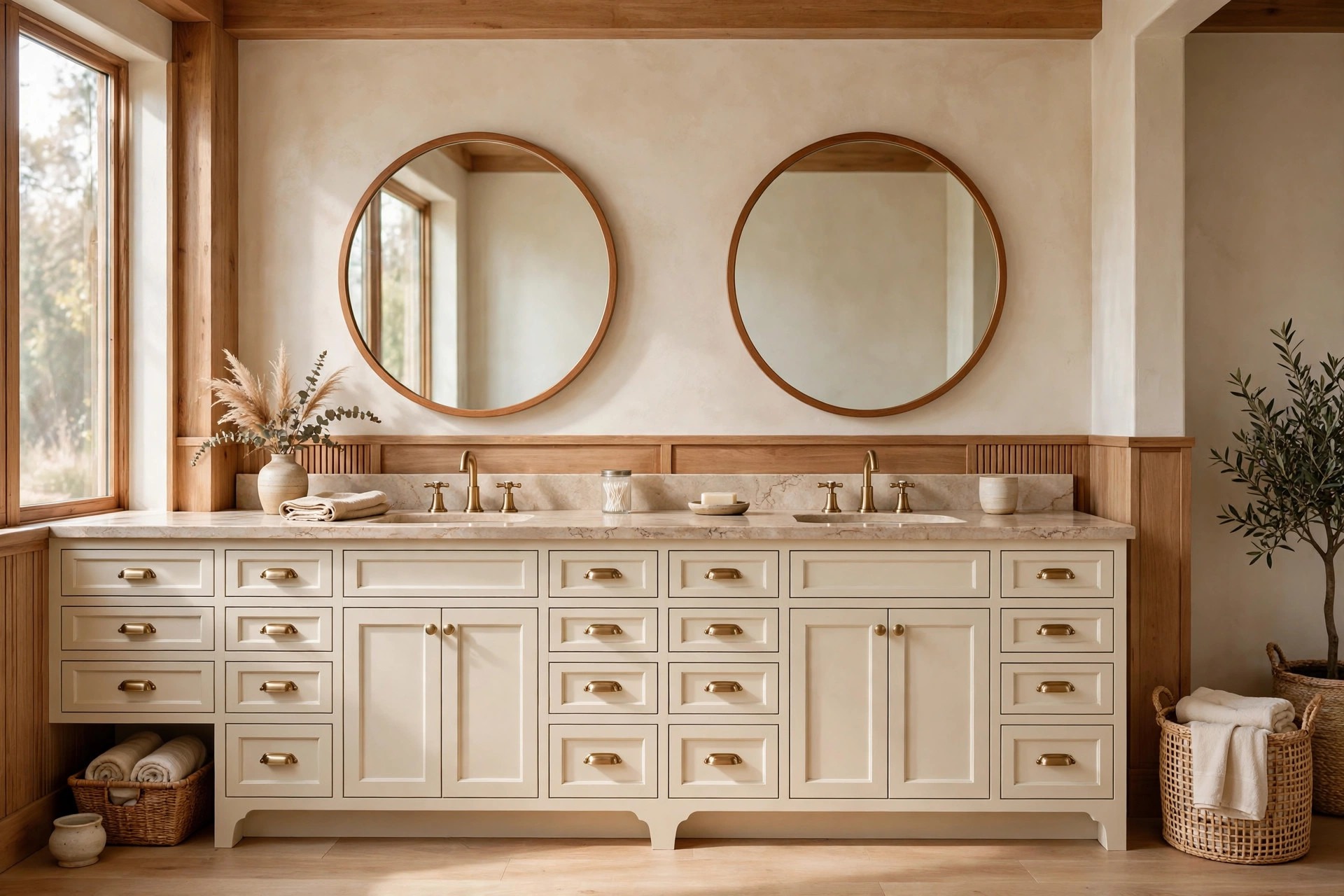
A master bathroom vanity has a lot of jobs to do before you have even had coffee. It holds the morning rush, the evening wind down, and all the small bottles and tools that seem to multiply on their own. When we talk about master bathroom vanity ideas, the pretty part matters, but the storage underneath is usually what decides whether the room feels calm or cluttered.
The good news is that you do not have to choose between a vanity that looks lovely and one that actually works. Cream cabinetry, warm wood, and stone counters can sit happily alongside deep drawers and sensible dividers. It is mostly about planning the inside with the same care you give the outside.
Below are seventeen ideas to borrow, starting with the one vanity or two question and moving through drawers, counters, mirrors, and that final layer of small storage. Take the ones that fit your room and your routine, and leave the rest for later.
One Vanity or Two: Choosing Your Setup
Start with how your mornings actually run, because that answer usually points to the right setup more clearly than any photo does. Think about timing, elbow room, and who tends to linger a little longer.
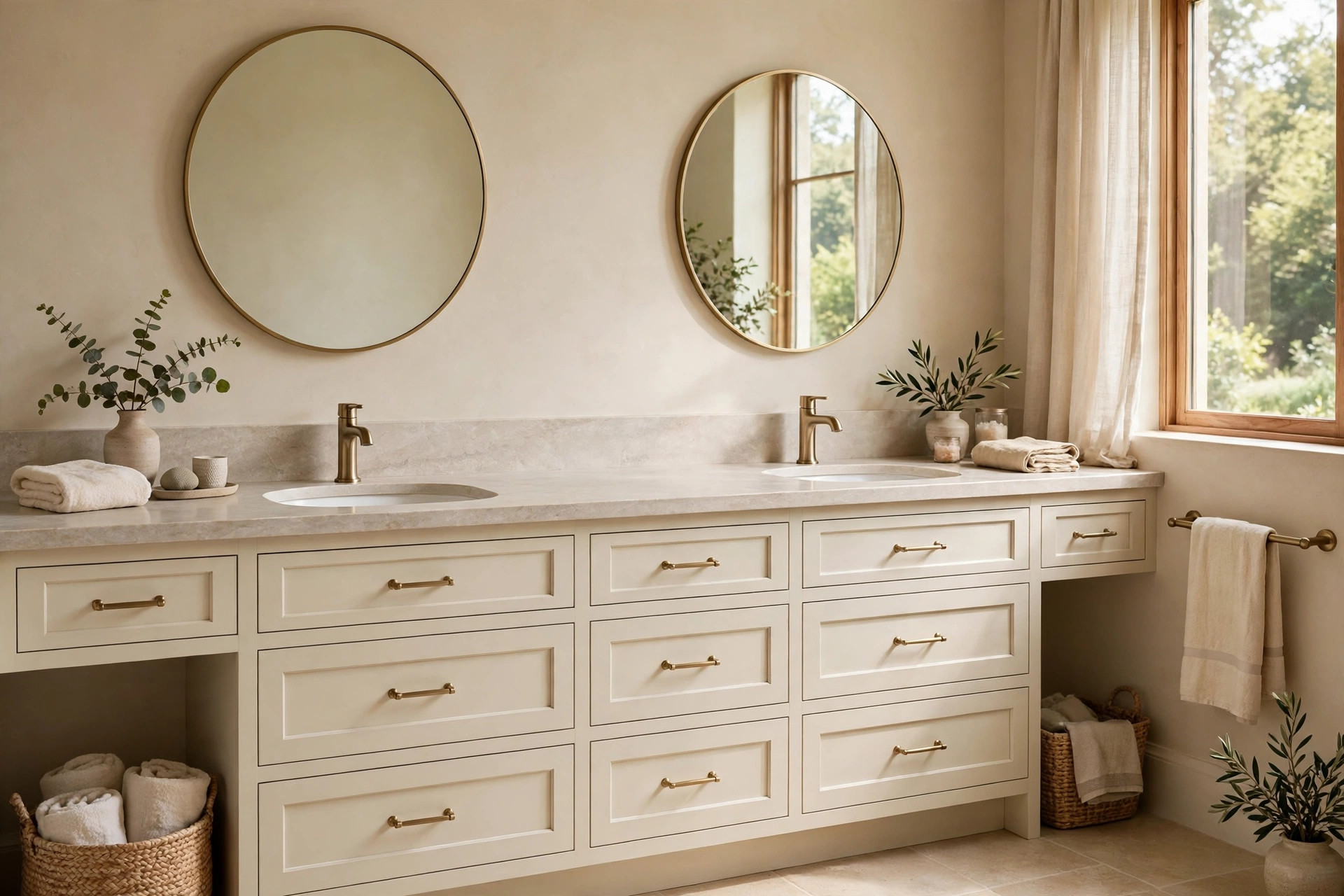
Choose a double vanity when you both get ready at once. Two sinks usually end the quiet negotiation over mirror space, and each person gets a set of drawers to call their own. It typically feels calmer on busy mornings. Just leave a little counter between the sinks if you can, because that shared landing spot gets used more than you would expect.
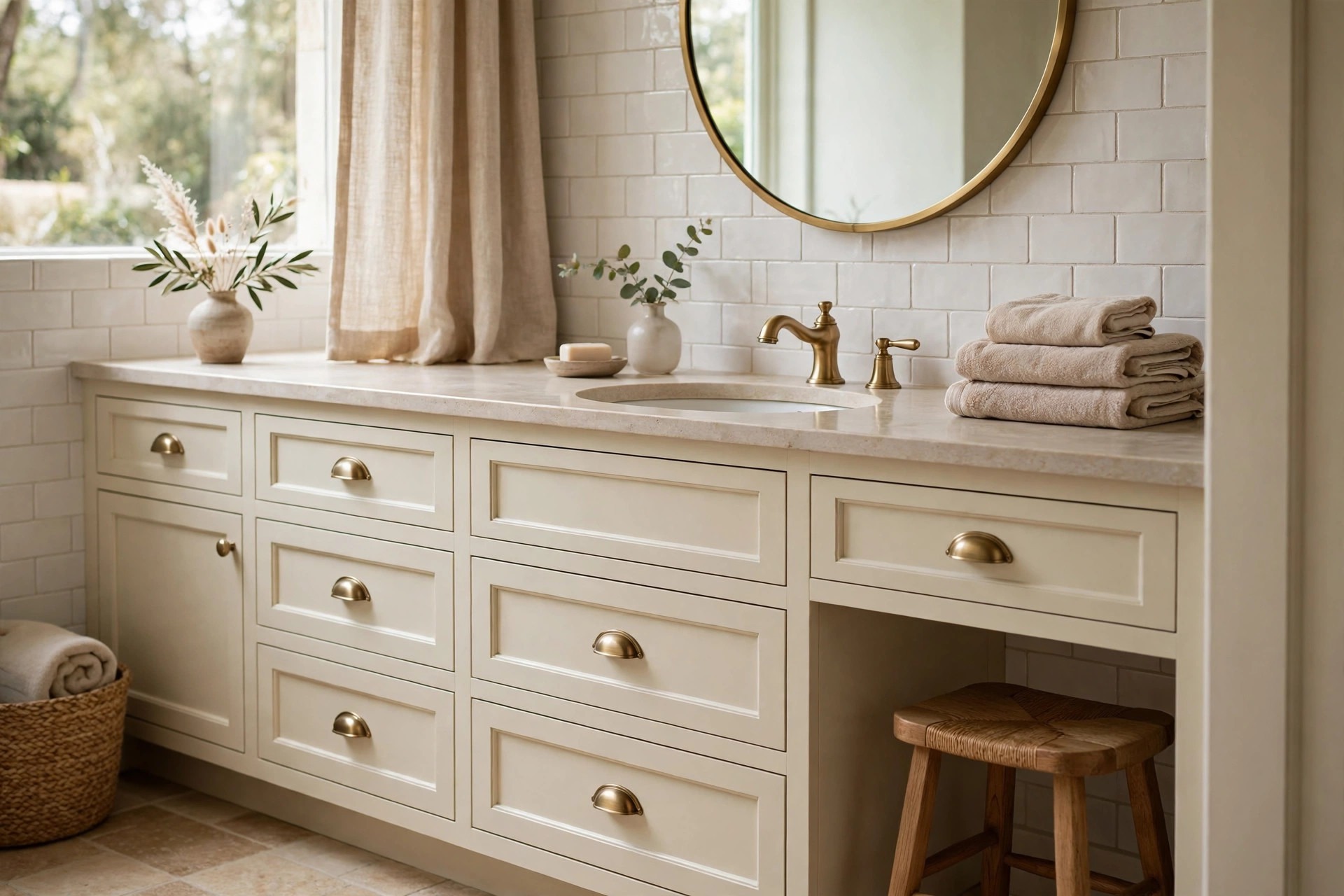
Pick one long single vanity if counter space matters more. If only one of you is in there at a time, a single sink often gives you a calmer, more generous counter for getting ready. You usually gain a wider mirror and a longer run of drawers too, which can feel surprisingly luxurious. It is a friendly choice for anyone who likes to spread out a hair tool or a makeup bag without feeling crowded.
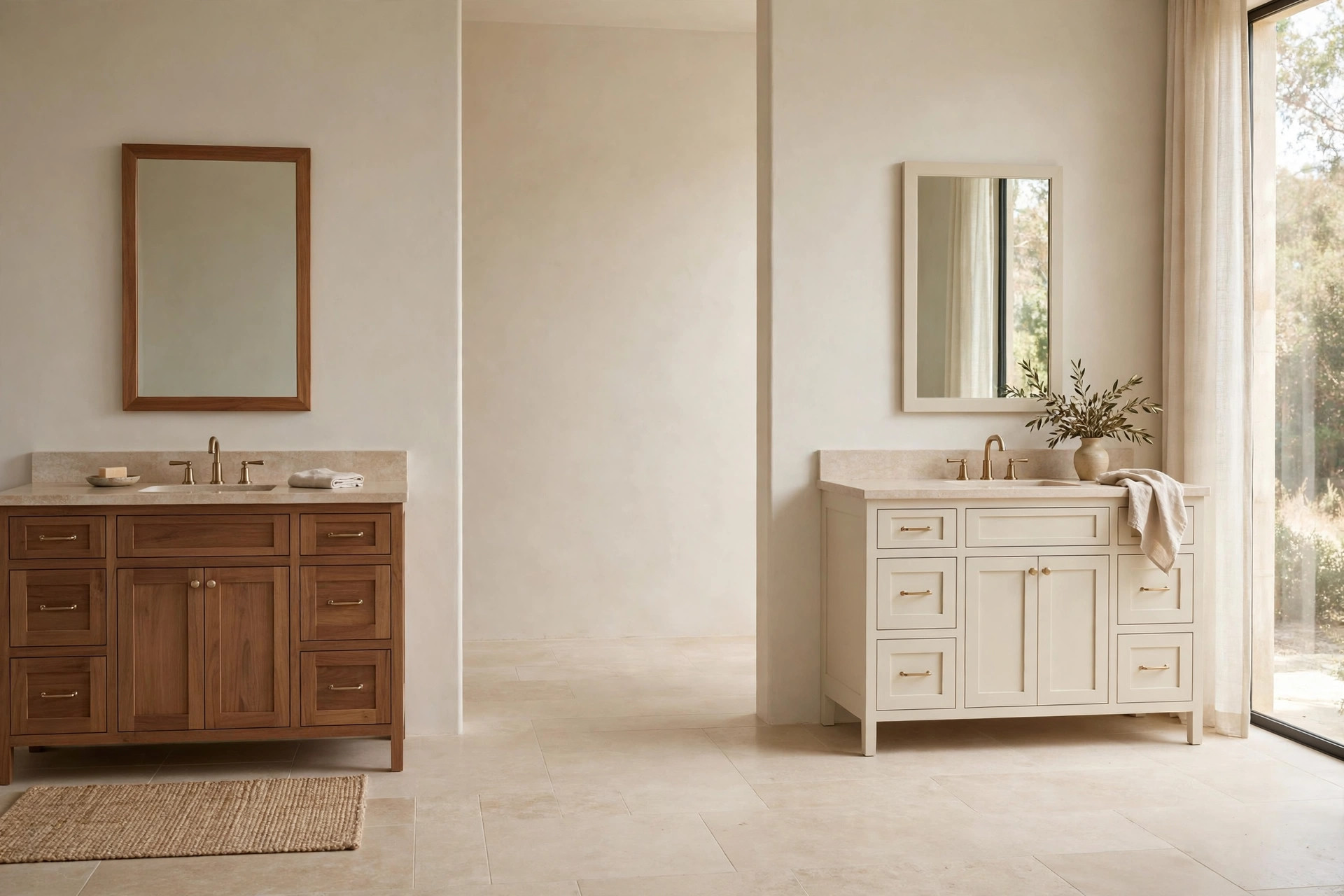
Try two separate vanities for a more personal setup. Splitting the vanity into two smaller pieces can work beautifully when the room is long or a little awkward in shape. Each person keeps their own drawers and their own small mess, and the gap between the two often makes the room feel lighter. This setup typically suits couples with very different routines.
Drawer Layouts That Actually Work
Doors with a big empty space behind them are where bathroom clutter usually goes to hide. Drawers tend to work harder, because you can see everything at once and reach it without kneeling down.
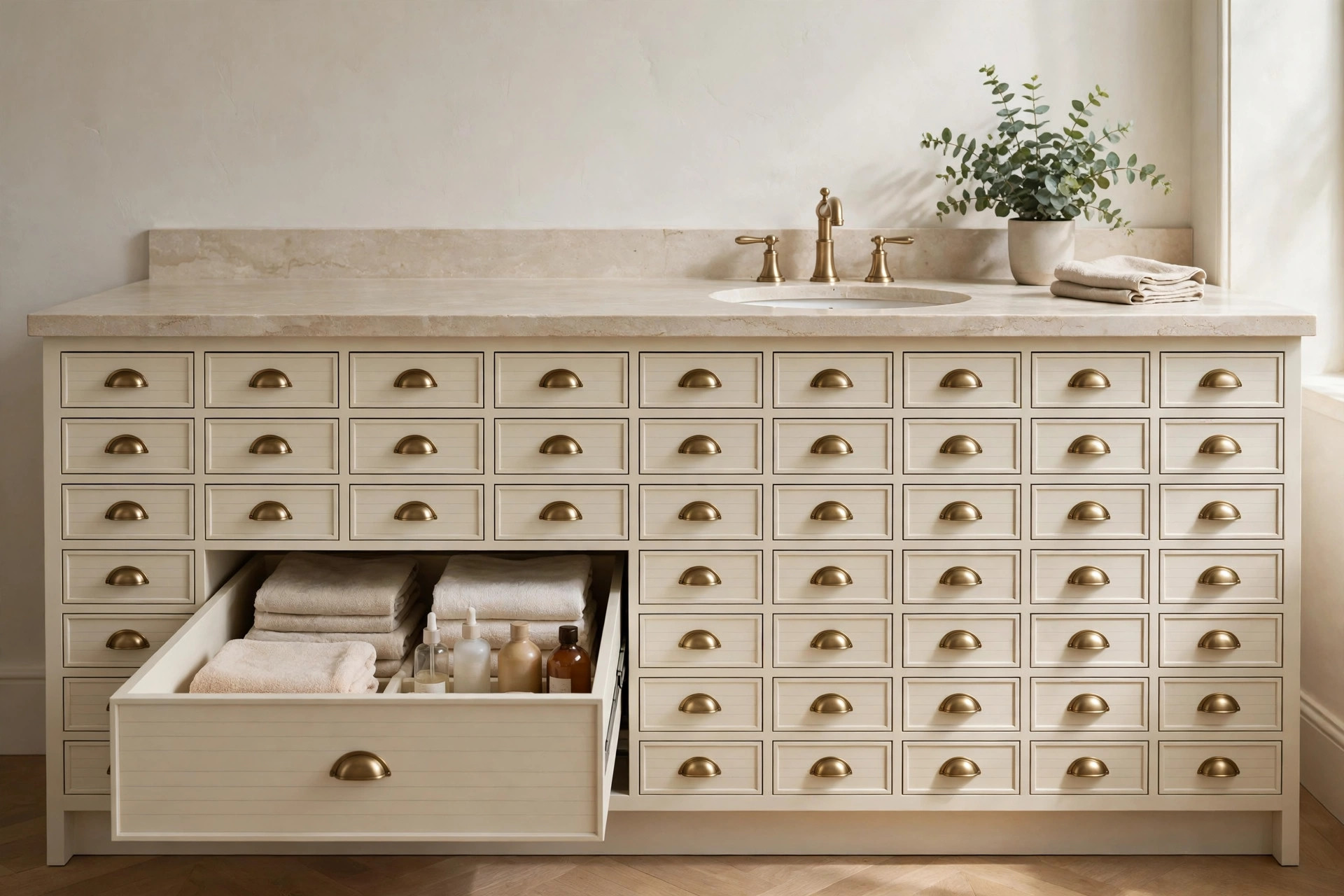
Go drawers first instead of doors where you can. A drawer brings its contents out to you, so the back corners do not become a mystery zone of old bottles. Deep drawers usually handle towels and larger items well, while shallower ones keep daily things visible. If you love the look of doors, you can often keep that style on the front and still have drawers behind it.
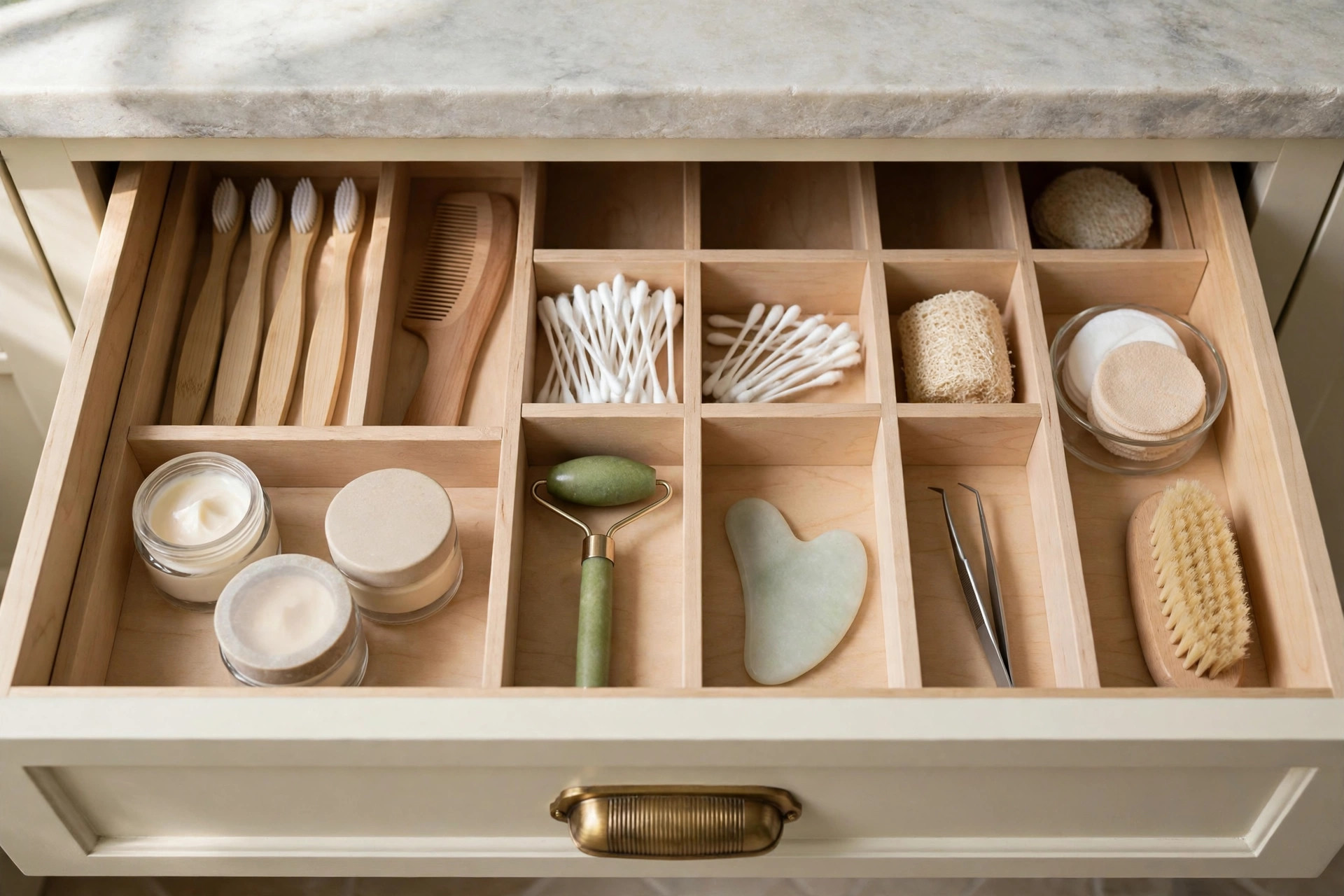
Make the top drawer shallow and give it daily jobs. The top drawer is prime space, so it typically earns its keep with toothbrushes, skincare, and the small things you reach for twice a day. Simple dividers usually stop it turning into a jumble within a week. Keep only what you use every day in there, and the drawer tends to stay tidy with very little effort from you.
U-Shaped Drawers Around the Plumbing
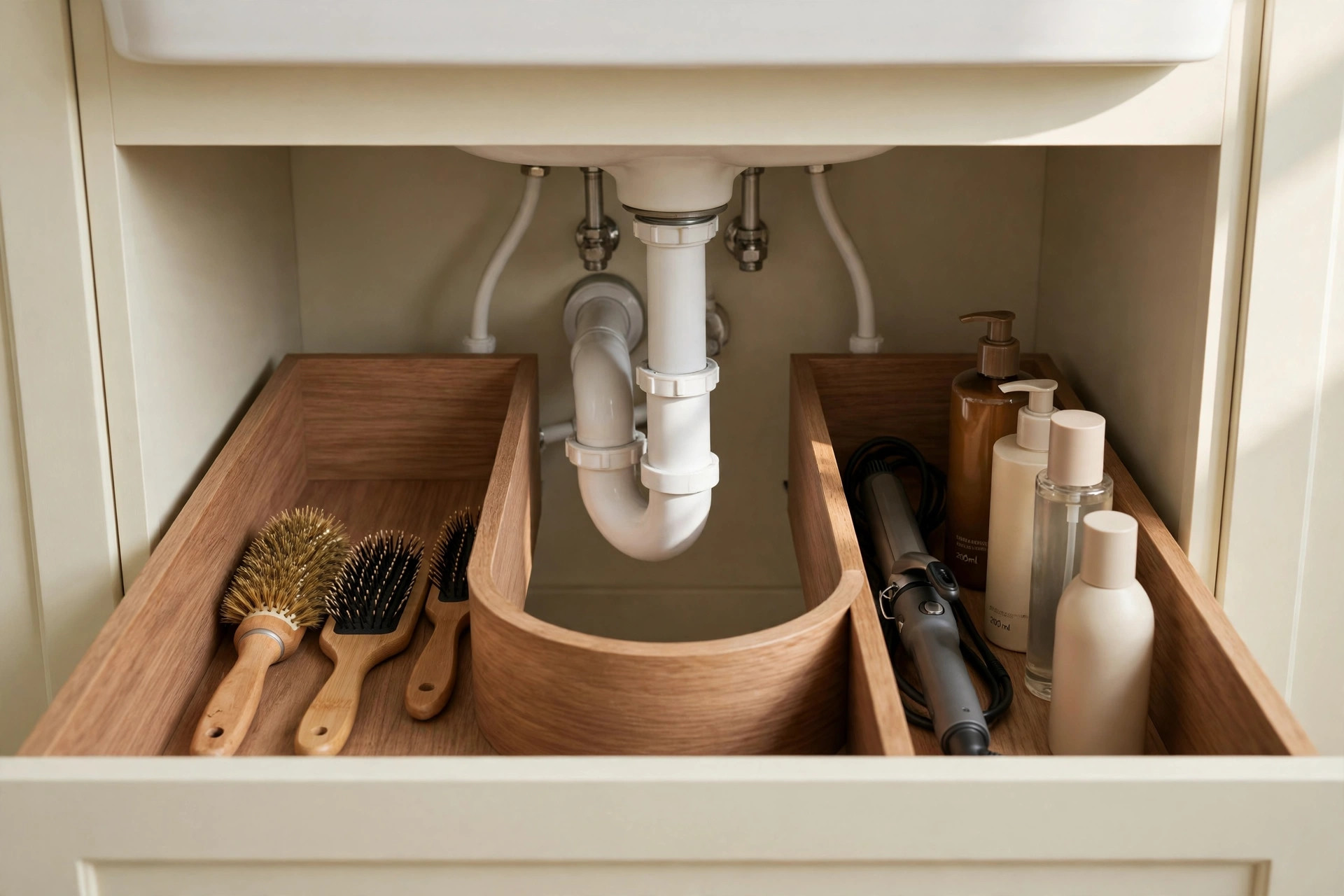
Use a U-shaped drawer to work around the pipes. That space around the plumbing is often written off, but a U-shaped drawer wraps around it and gives you two useful sides plus a back section. It is a lovely spot for hair tools, brushes, and taller bottles that do not fit in a shallow drawer. You typically gain storage you would otherwise lose, without changing anything about how the sink works.
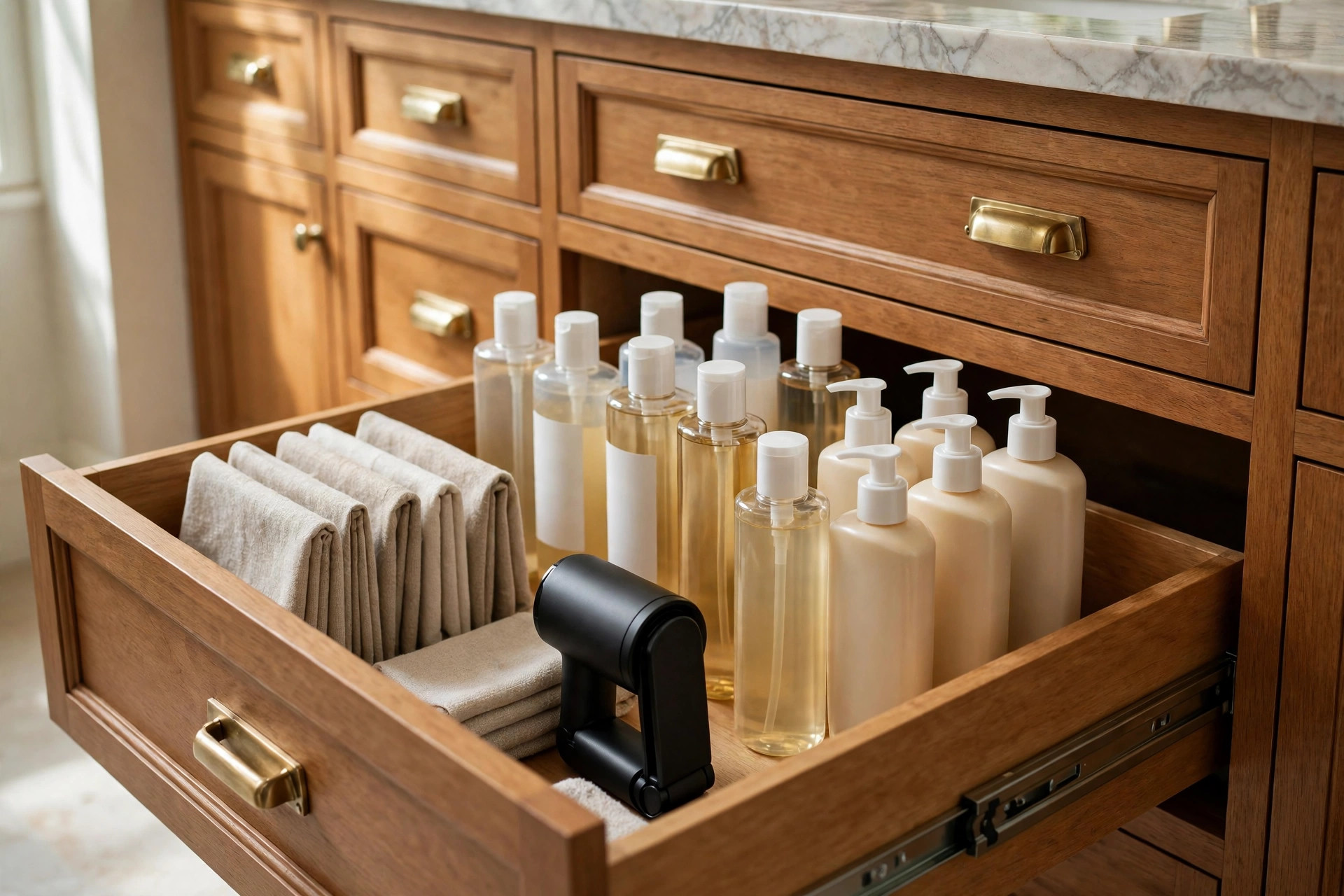
Add a deeper drawer below for taller bottles and backups. Under the U-shaped drawer, a deeper one usually handles the bulky things, like spare shampoo, cleaning cloths, and a small hair dryer. Keeping backups down low means your top drawers can stay light and easy to scan. It also tends to keep the counter clearer, because refills have a home that is not out on display.
Countertops and Sinks That Earn Their Keep
The counter is the hardest working surface in the room, so it helps to choose with your real habits in mind. A calm counter usually comes from easy cleaning and enough clear space, not from having nothing out at all.
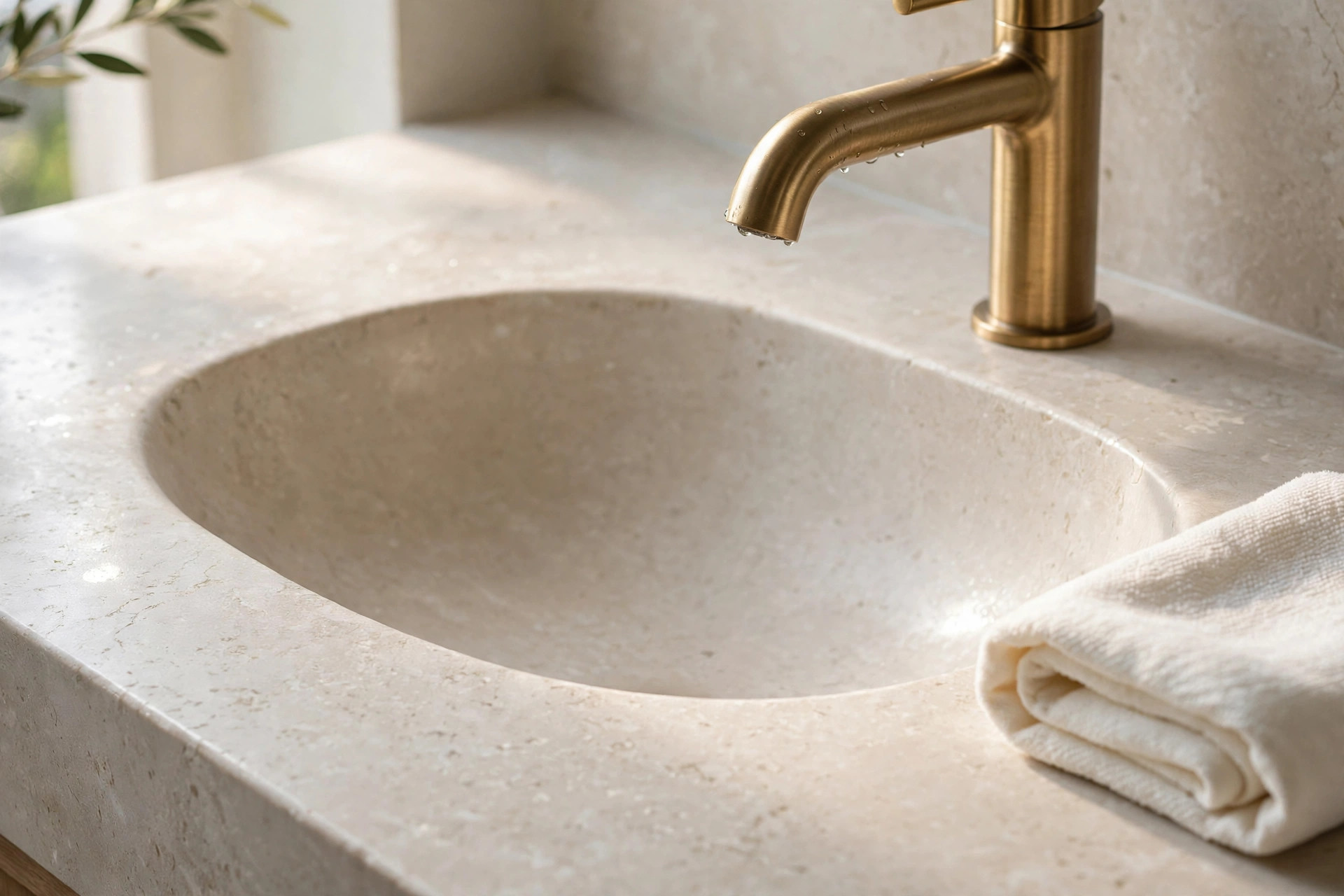
Choose an undermount or integrated sink for easy wipe downs. With no raised rim to catch water and toothpaste, you can usually sweep splashes straight into the basin with one cloth. That small detail typically saves a surprising amount of daily fuss. It also gives the stone counter a clean, unbroken look.
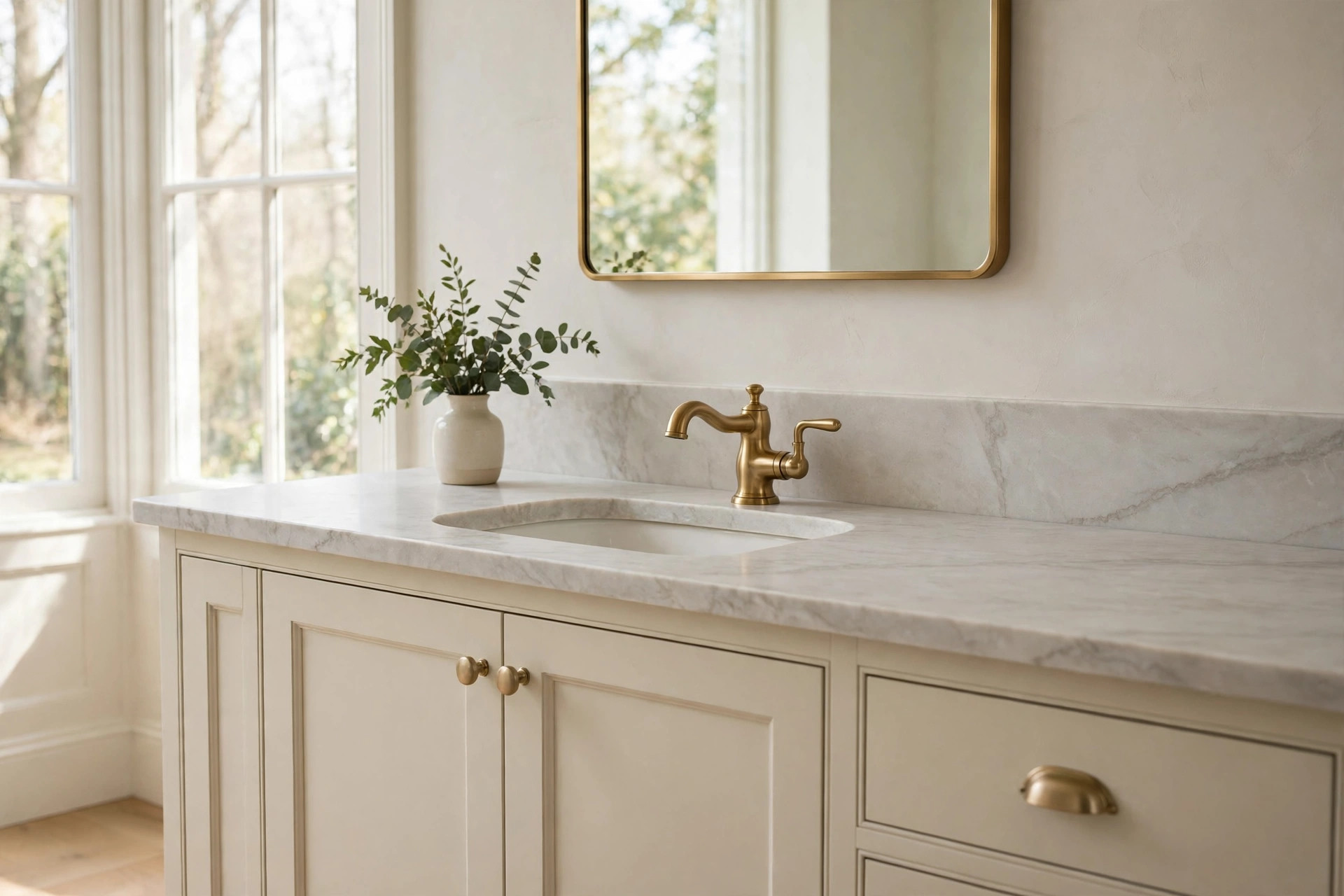
Pick a stone counter with a gentle pattern. A light stone with soft veining usually hides water spots and small splashes better than a plain, flat surface does. It pairs beautifully with cream cabinetry and brushed brass, and it tends to feel timeless rather than trendy. Bring a sample home if you can, because the tone can shift quite a bit in your own daylight.
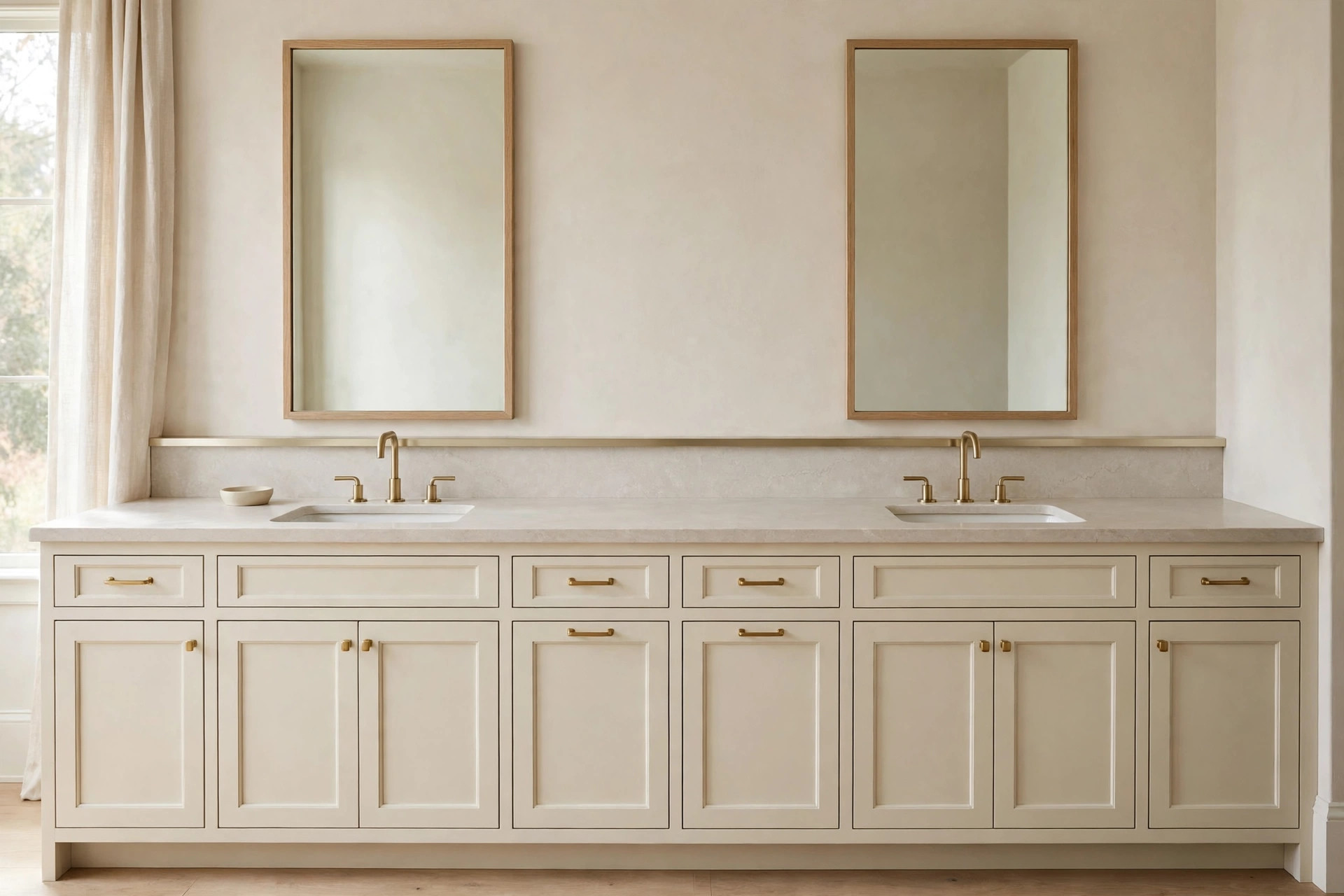
Leave clear landing space beside each sink. A vanity can have two lovely sinks and still feel cramped if there is nowhere to set anything down. A stretch of clear counter on at least one side of each basin usually makes mornings run more smoothly. If space is tight, even a narrow ledge behind the faucet can help.
Floating vs Furniture Style Vanities
Both styles can hold plenty, so this choice is mostly about the feel you want when you walk in. Think about cleaning, floor space, and whether you like a light look or a grounded one.
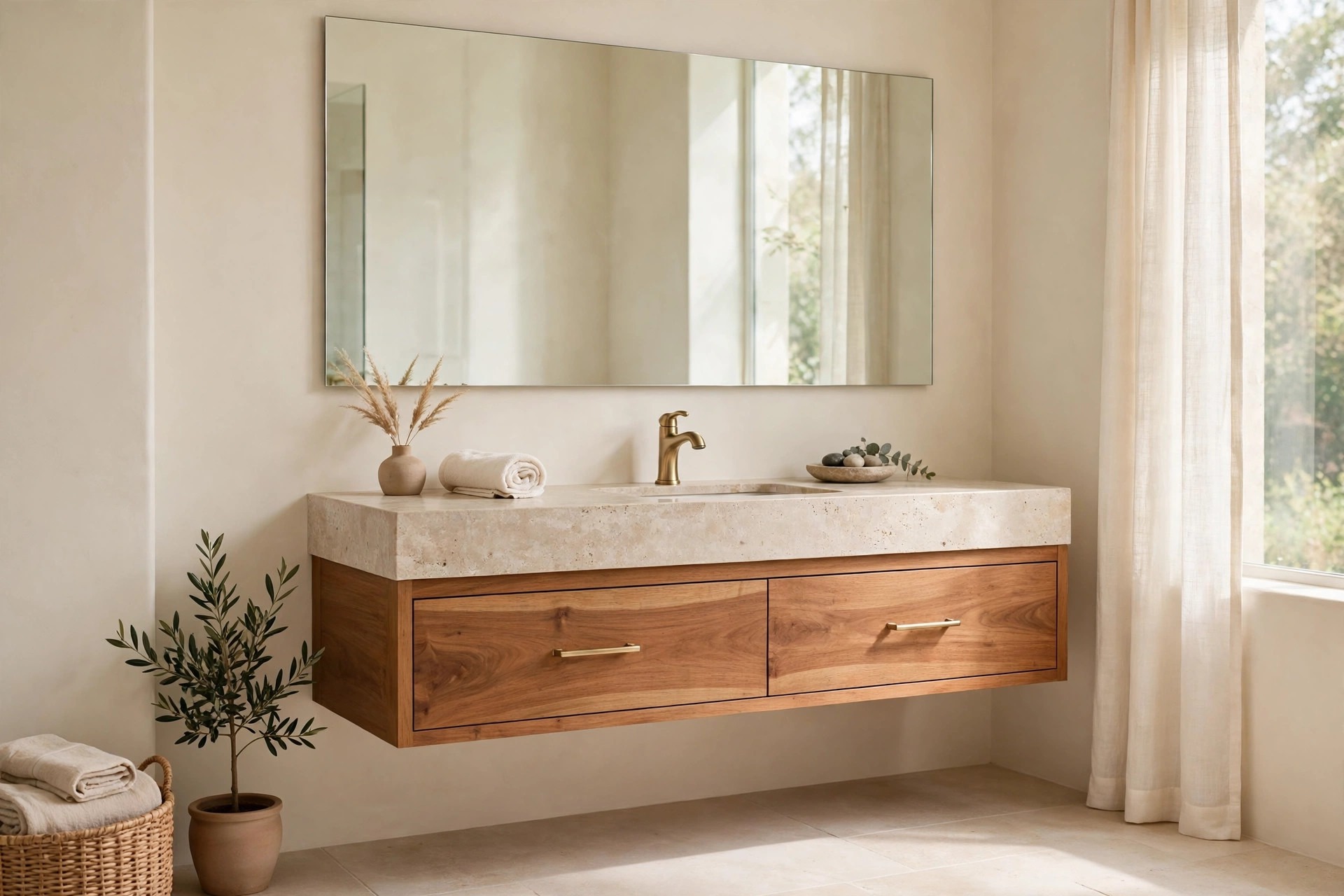
Float the vanity when you want the room to feel bigger. A wall hung vanity shows more floor, which usually makes a master bathroom feel calmer and a little more spacious. It is also easier to mop underneath, and you can tuck a small basket under there if you like. Just remember that floating drawers are typically a touch shallower.
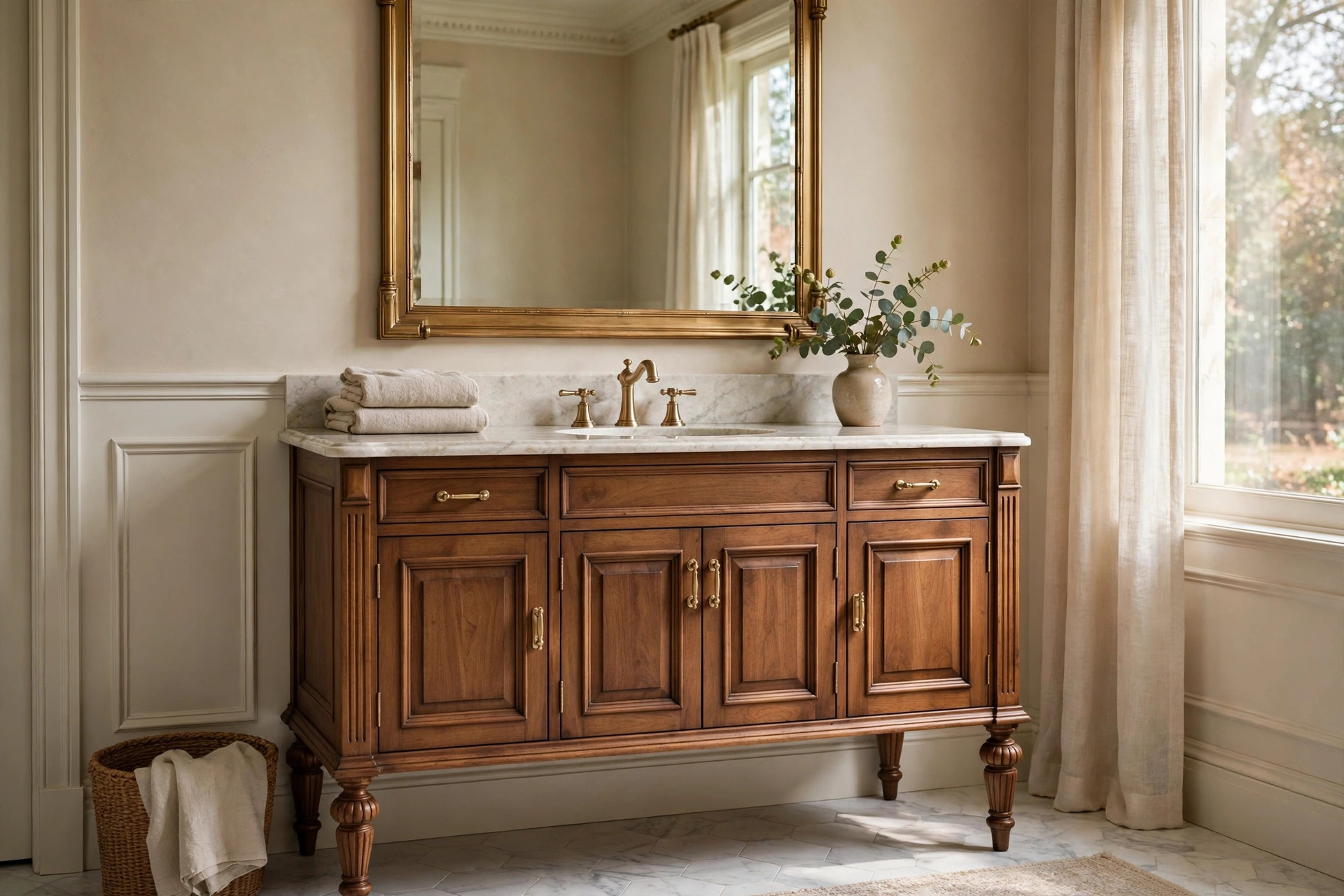
Choose a furniture style vanity for warmth and hidden depth. A vanity on legs or with a solid base often feels like a beautiful piece of furniture, especially in warm wood or a soft cream paint. It usually offers deeper cabinet space, which can help if you store larger items or extra towels in the vanity itself. The grounded look tends to suit classic rooms, and it pairs happily with stone and brass.
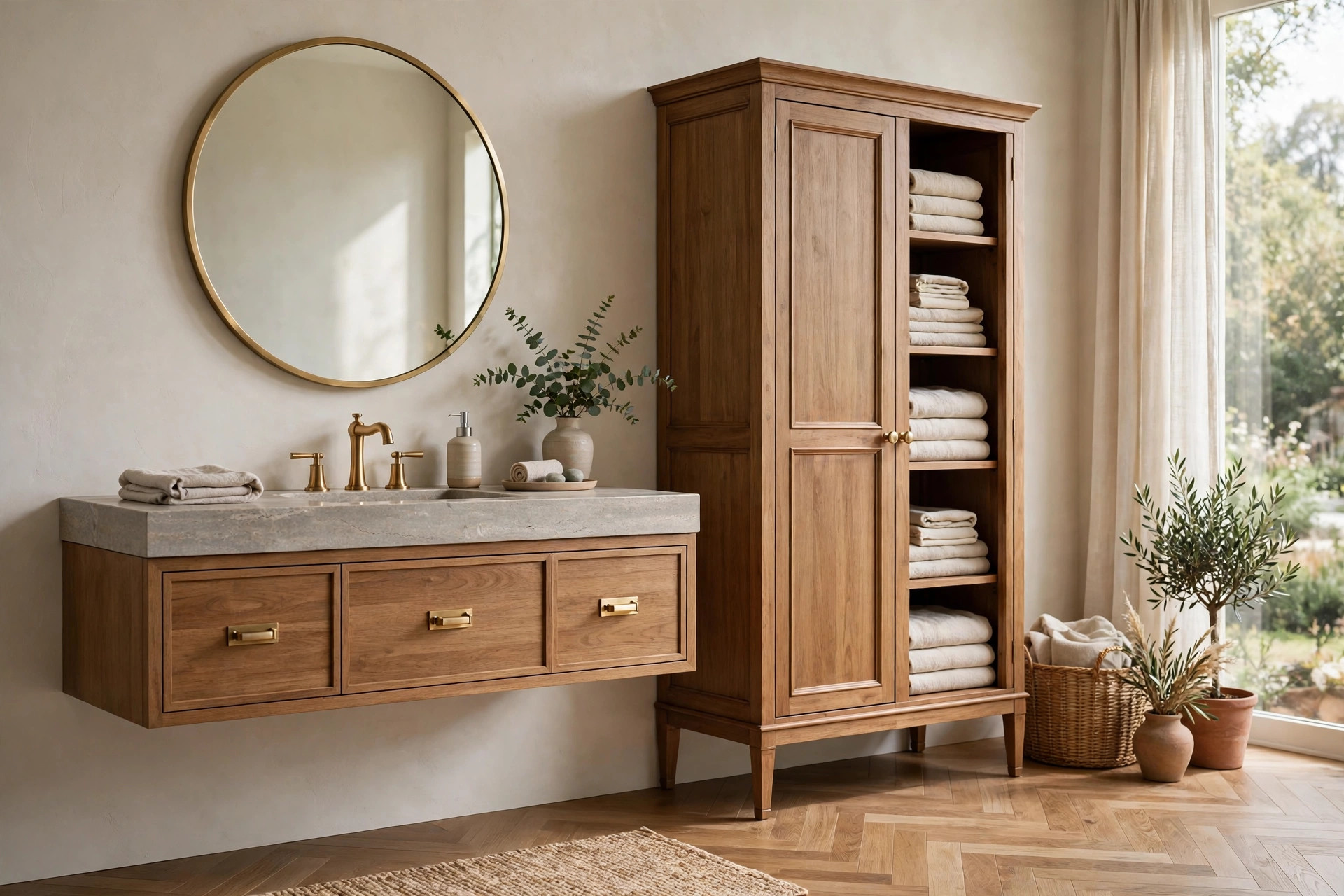
Mix the two if you cannot decide. You do not have to commit to one look across the whole wall, and a mix can feel very natural in a larger room. Some people float the main vanity and add a furniture style linen piece beside it, or choose a floating shape in a warm wood finish. That blend typically gives you easy cleaning plus a cozy, finished feel, which is a nice balance.
Mirrors and Light Above the Vanity
Good light at the vanity changes everything from makeup to shaving, and the mirror is a big part of that. A few thoughtful choices here usually make the whole setup feel more generous.
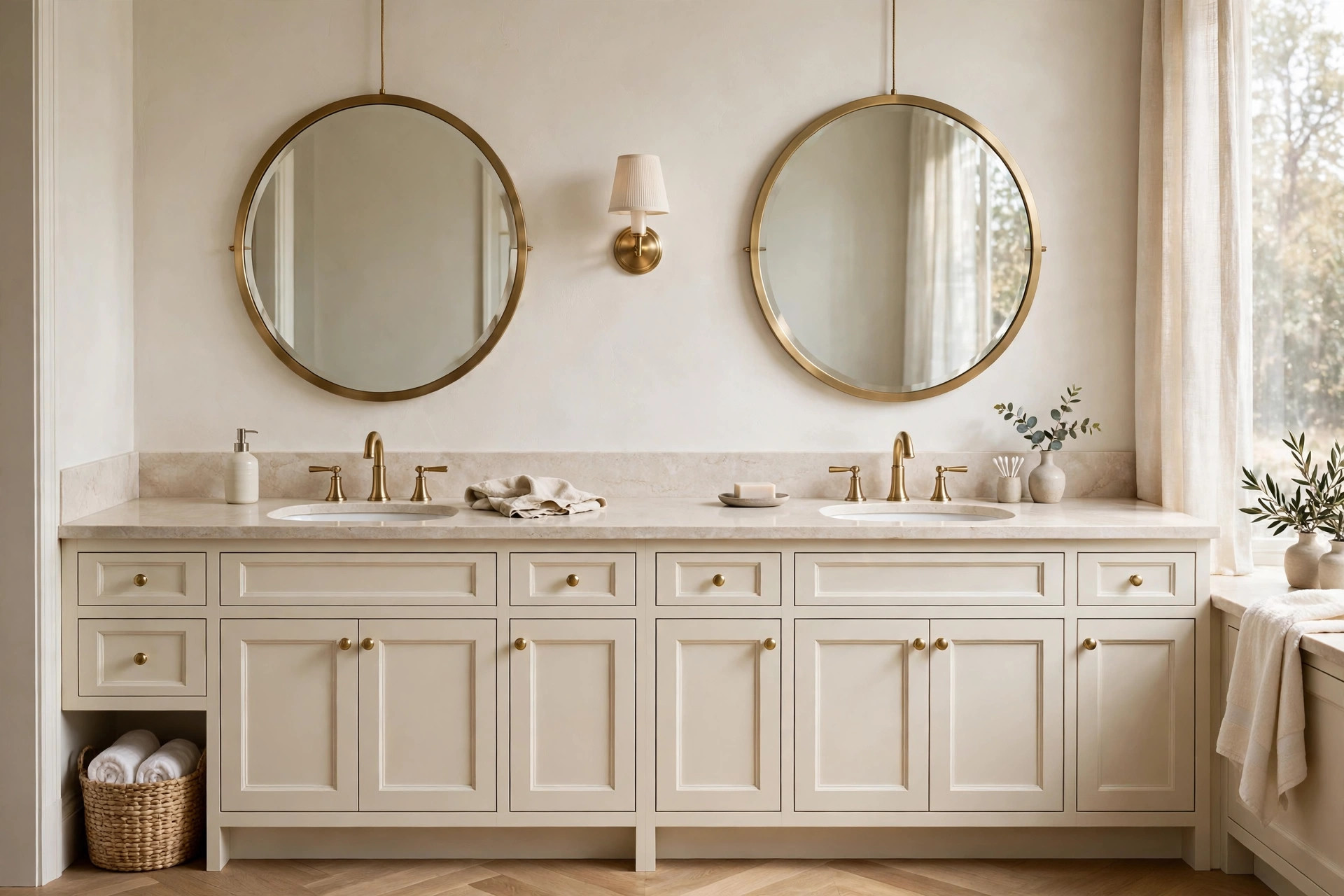
Hang one mirror per sink, or one wide mirror for two. Two separate mirrors often feel personal and pretty, with a little wall space between them for a sconce or a small shelf. One wide mirror typically reflects more light and can make the room feel bigger and brighter. Either way, a simple shape in a warm finish usually keeps the focus on you, not on the frame.
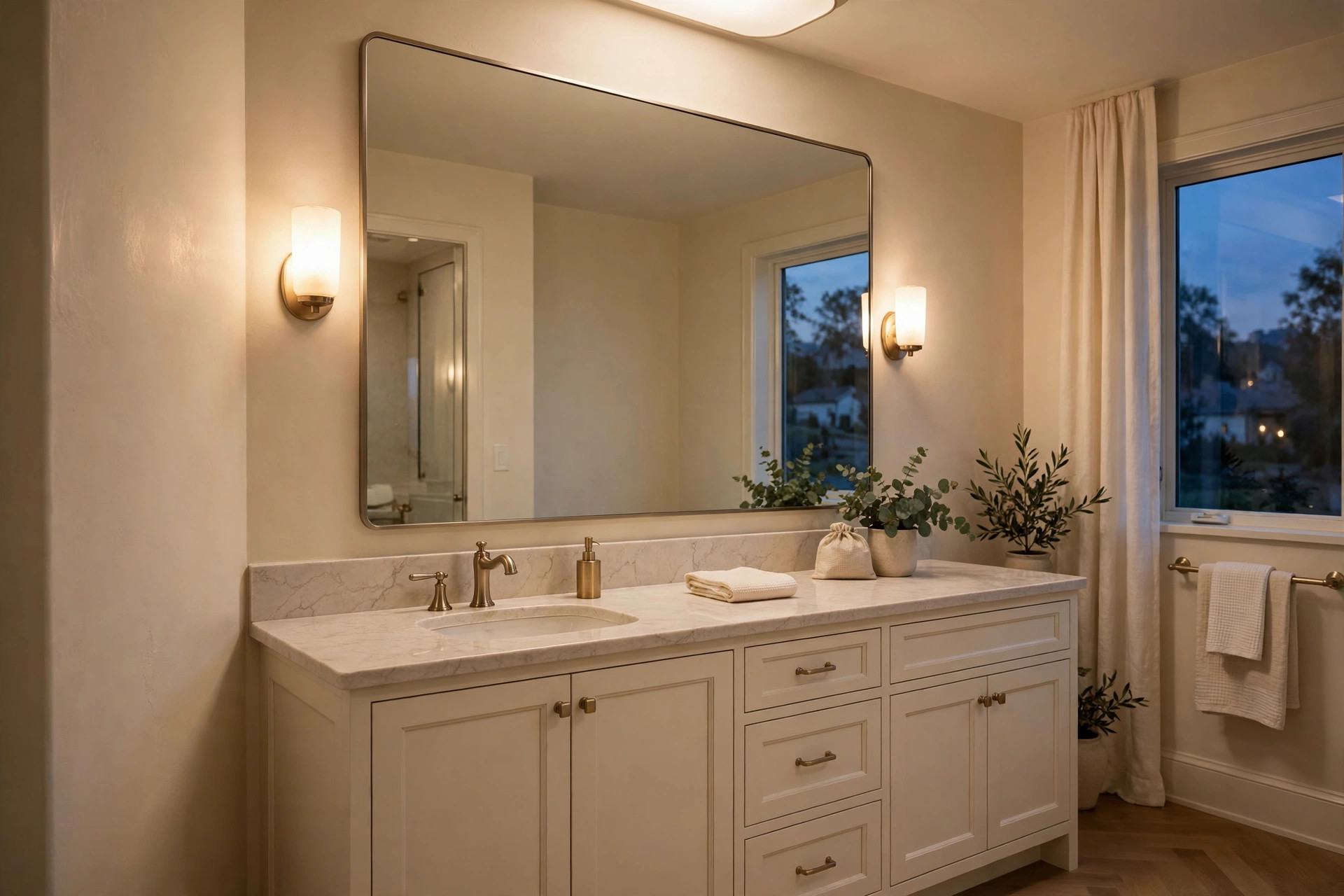
Layer soft light at face height with a gentle overhead. Lights placed beside the mirror at about face level usually give the kindest and clearest light, without harsh shadows. A soft overhead light can then fill the rest of the room. Warm toned bulbs typically flatter skin and suit cream and brass finishes, and dimmers help the room wind down at night.
The Finishing Storage Layer
Once the big pieces are in place, the small storage layer is what keeps the room feeling finished day after day. These are the easy touches you can add slowly, as you learn how you really use the vanity.
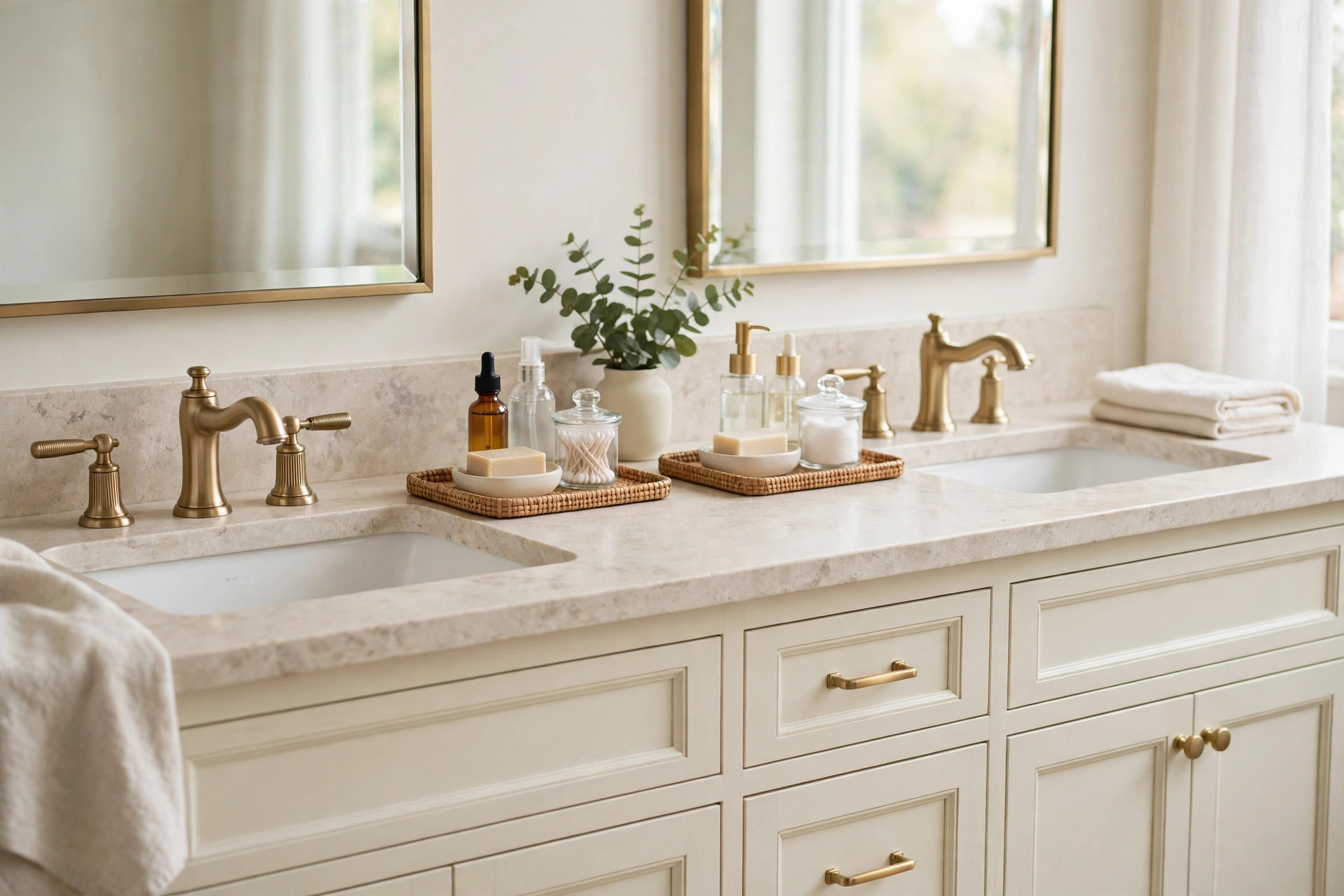
Corral daily items on a small tray by each sink. A tray gives the things you leave out a clear boundary, so the counter reads as styled rather than scattered. It usually holds just a soap dish, a small jar, and one or two daily bottles comfortably. When you clean, you lift one tray instead of a dozen loose items, and that tiny habit tends to keep the whole counter calmer.
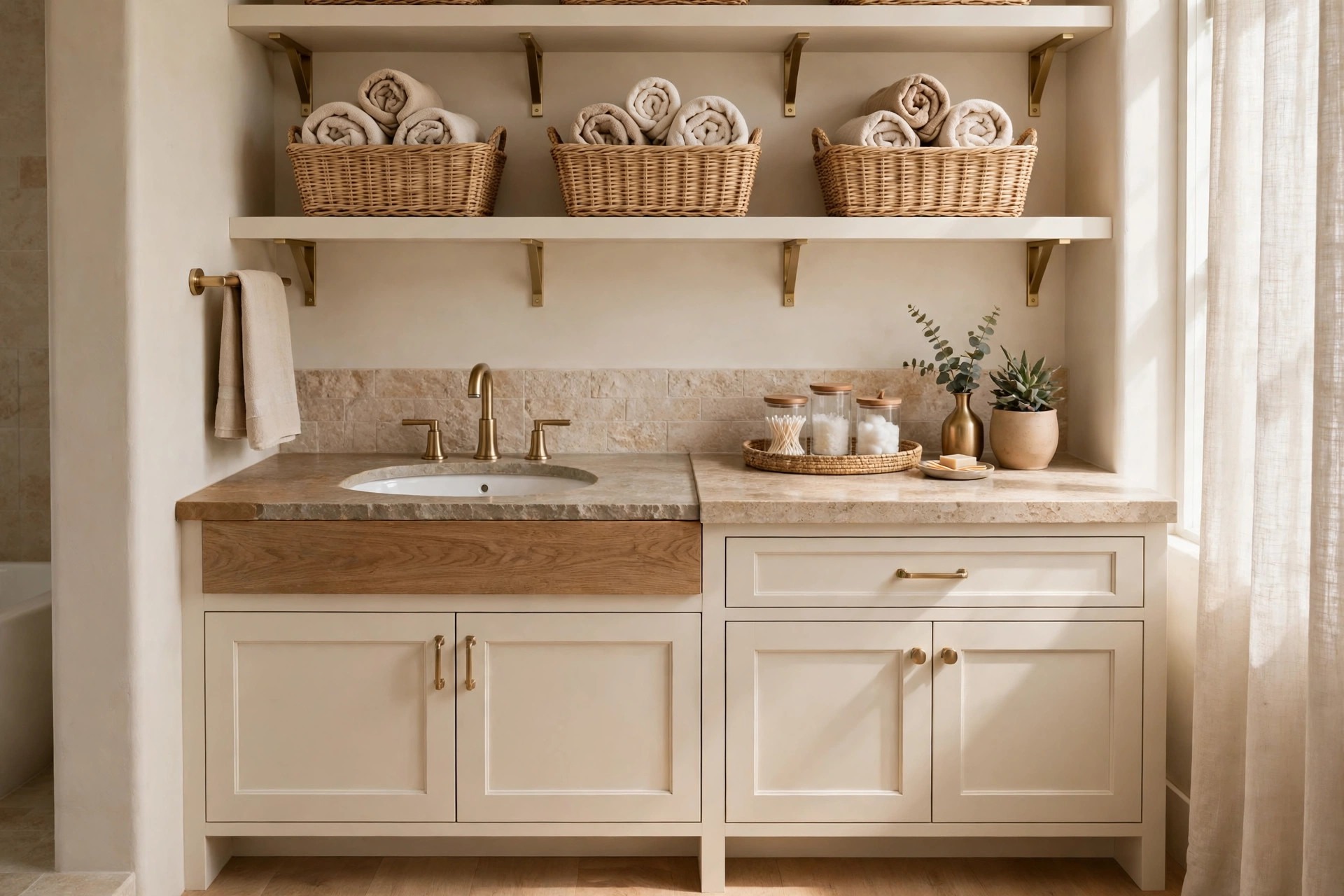
Use baskets and a nearby linen spot for the overflow. Woven baskets inside a cabinet or on an open shelf usually soften all that hard bathroom storage and hide the less pretty necessities. Rolled towels, spare rolls, and cleaning cloths all sit happily in them. If you have room for a narrow linen tower or a shelf nearby, the vanity itself can stay lighter, and that is typically when a master bathroom starts to feel truly restful.
At the end of the day, the best master bathroom vanity is simply the one that holds your real life without fuss and still makes you smile in the morning. Start with the setup that suits your routine, plan the drawers with care, and add the small layers slowly. Your mornings can absolutely feel calmer for it.

Leave a Reply