
18 Dark and Moody Bedroom Ideas That Feel Like a Retreat
Look, we get it. A dark bedroom can sound a little risky at first, especially if you have always been told that bedrooms should be light and bright. But a deep, moody room often feels calmer and more restful than a pale one, because the darker tones quiet everything down at the end of the day. If your current bedroom feels flat or a bit too awake at bedtime, you are not alone. Most people start with one wall or one layer and build from there.
That is what this list is for. You will find ideas for paint colors, bedding, lighting, furniture, and those small finishing touches that turn darkness into comfort rather than gloom. Some of these are easy weekend changes, like swapping in smoky linen or adding brass lamps. Others ask for a little more commitment, like a canopy frame. You do not need to do all eighteen. Two or three that suit your room will usually change how the whole space feels at night.
Start with color if your walls feel too light for rest, then move to texture and light if the room feels cold, and finish with balance so nothing feels heavy. Work in that order and you will typically notice the retreat feeling building gradually. Take your time, live with each change for a few nights, and remember that a moody bedroom should still feel soft and welcoming when you walk in.
In This Article
- Paint the Walls a Deep Charcoal
- Try Forest Green for a Cocooning Feel
- Layer Black Bedding With Warm Texture
- Add Brass Lamps for a Soft Golden Glow
- Use Velvet Cushions in Jewel Tones
- Hang Heavy Curtains for a Sealed-In Feeling
- Choose a Dark Wood Bed Frame
- Add a Moody Landscape Print Above the Bed
- Layer a Dark Rug Over Lighter Floors
- Use Candlelight-Style Sconces by the Bed
- Add Leather Accents for Warmth
- Style With Dark Florals for Soft Drama
- Keep One Light Element to Balance the Dark
- Add a Reading Chair in a Deep Tone
- Use Matte Black Hardware and Details
- Add a Canopy Frame for Extra Drama
- Style the Dresser With Low Warm Light
- Finish With Linen in Smoky Tones
Start With Deep Color and Cozy Layers
Every retreat feeling starts with the envelope of the room, and that usually means the walls, the bedding, and the fabrics closest to you. These first six ideas set the mood with deep paint, rich texture, and soft golden light, so the room feels wrapped around you from the moment you step inside. You can try them one at a time and stop whenever the room feels right.
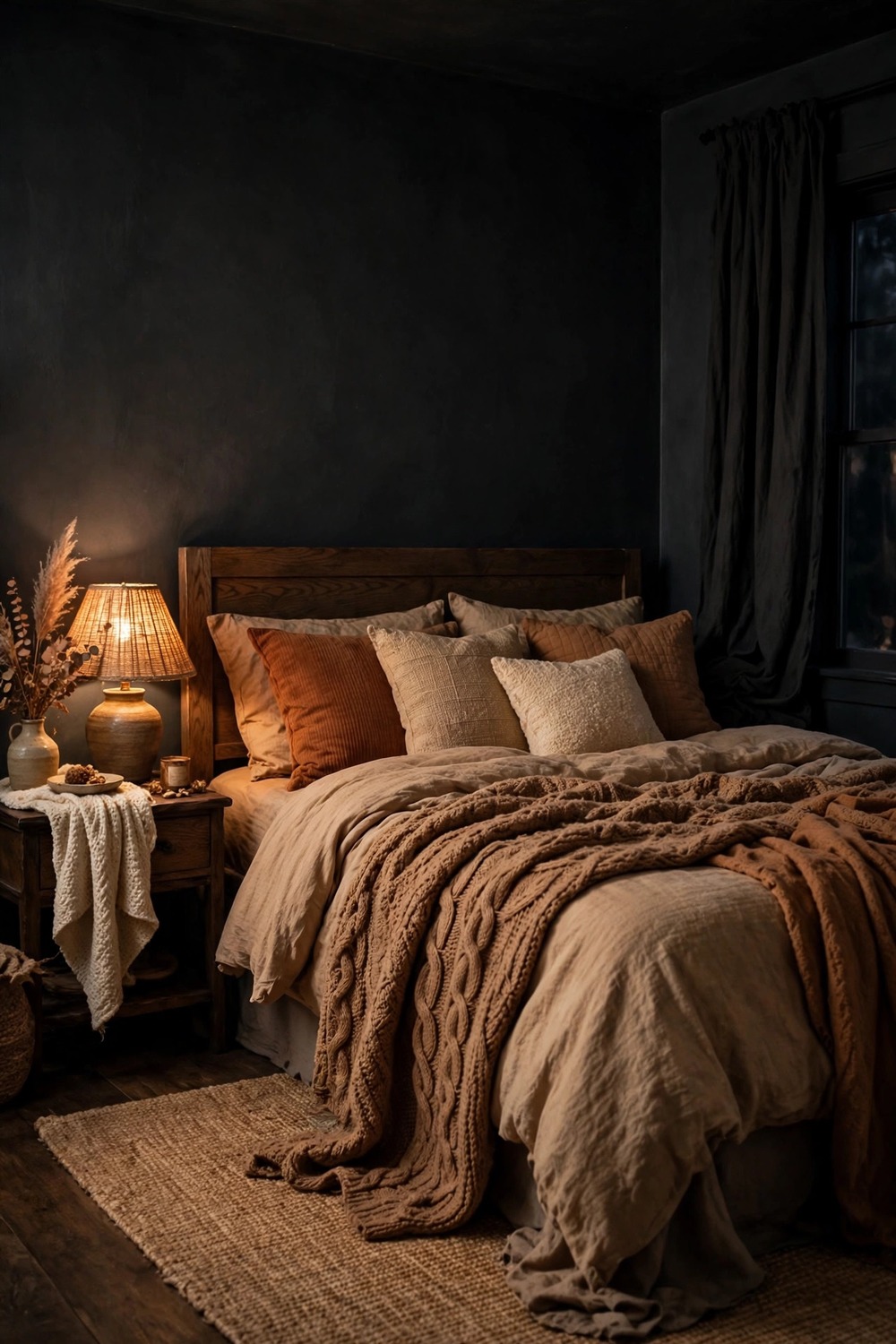
1. Paint the Walls a Deep Charcoal
Deep charcoal is often the easiest dark color to live with because it feels warm and neutral at the same time. Paint all four walls if you want the full cocoon effect, or start with the wall behind the bed if you would like to test the idea first. Charcoal usually looks best with warm white bedding nearby and a little wood or brass to stop it feeling flat. Keep the ceiling lighter if your room is small, because that contrast helps the space breathe. During the day the color will look softer and more grey, and at night it deepens into something calm and quiet. Most people find it makes artwork, mirrors, and lamplight stand out beautifully without any extra effort.
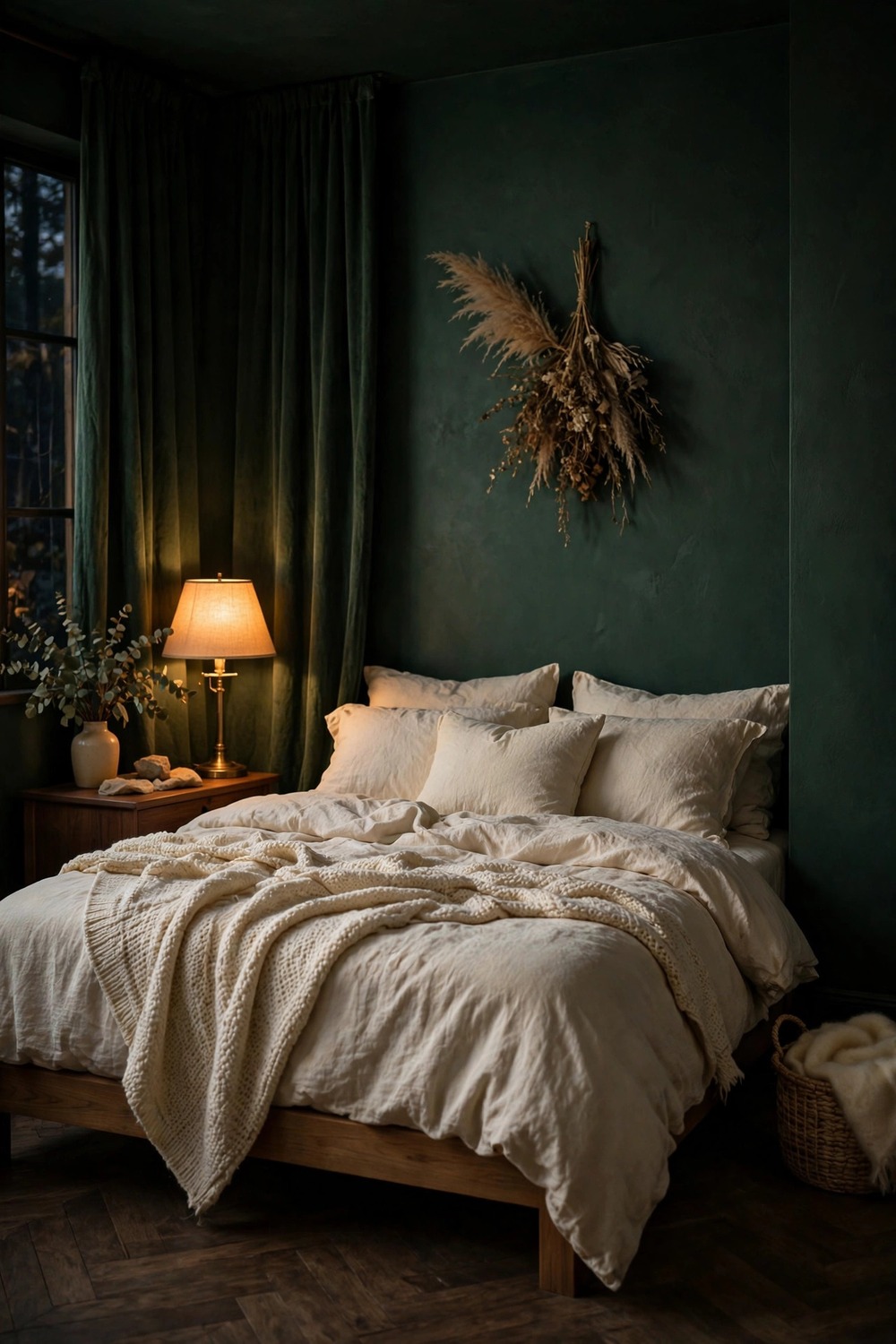
2. Try Forest Green for a Cocooning Feel
Forest green brings a little of the outdoors in, and it has a naturally restful quality that suits bedrooms very well. It feels cocooning without feeling heavy, especially when you pair it with cream linen, warm wood, and soft amber light. If you are nervous about going dark, try it on the bed wall first and live with it through a few evenings, because green changes gently as the light fades. Deeper greens usually work better in bedrooms than brighter ones, since they settle the room rather than energize it. Add a plant or two nearby and the tones will echo each other in a quiet way. It is a color that typically makes people exhale when they walk in.
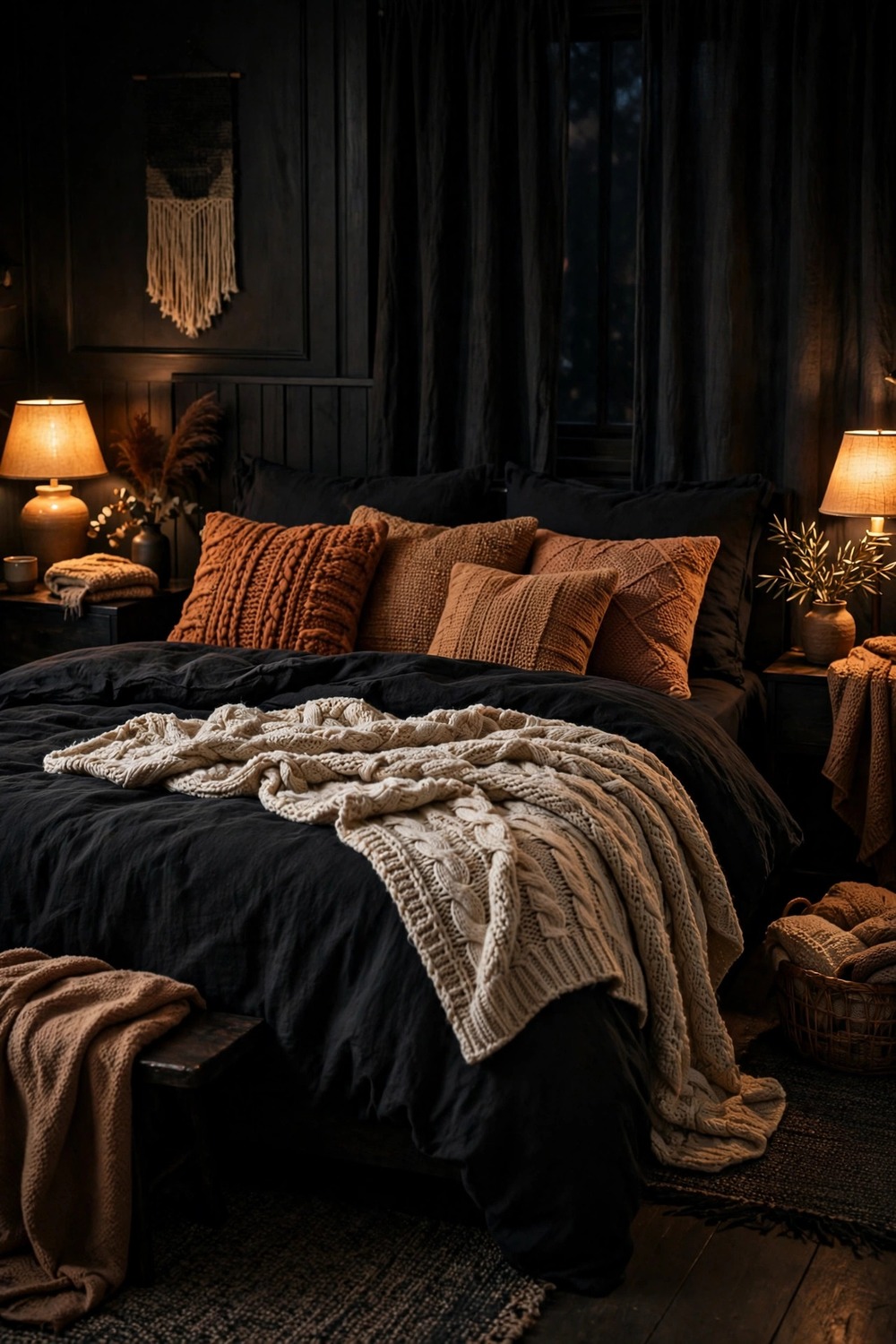
3. Layer Black Bedding With Warm Texture
Black bedding can look stark on its own, so the secret is texture, and lots of it. Start with a black or very dark duvet, then layer a knitted throw across the foot of the bed, a folded quilt, and cushions in different weaves so the light catches each surface differently. That mix usually stops the bed from reading as one flat dark block and makes it look inviting instead. Choose natural fabrics where you can, because cotton, linen, and wool soften the depth of the color against your skin. If pure black feels too strong, a washed charcoal or deep ink will give you a similar mood with a gentler edge. You will typically find the bed becomes the calm center of the whole room.
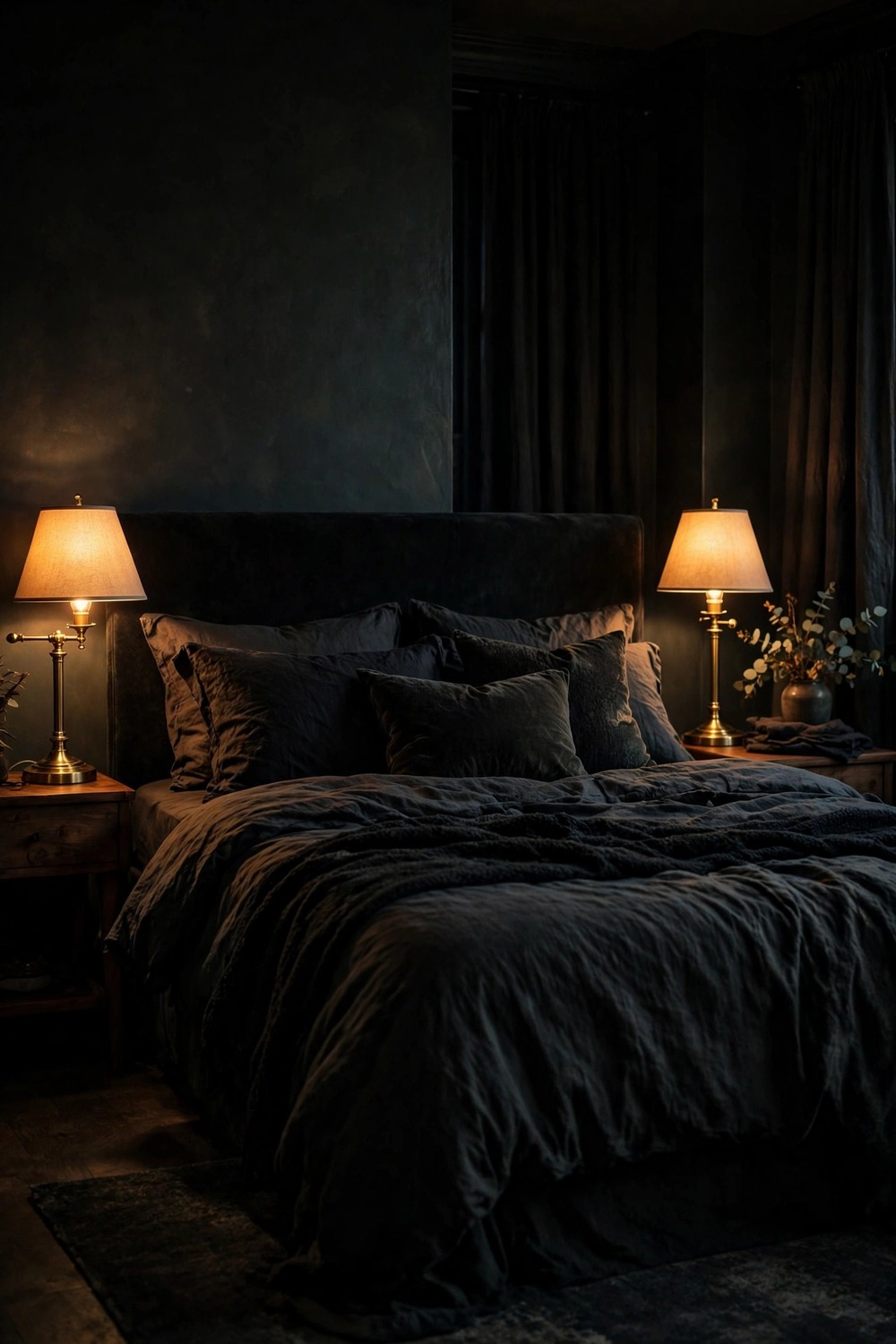
4. Add Brass Lamps for a Soft Golden Glow
Dark rooms live or die by their lighting, and brass lamps are a forgiving place to start. The warm metal reflects a soft golden glow that flatters deep walls and bedding, and it stops the room from feeling cold after sunset. Place one on each bedside table if you can, with warm bulbs and fabric shades that diffuse the light downward and outward. Overhead light alone usually flattens a moody room, so keep it off in the evenings and let the lamps do the work. If your lamps do not match exactly, that is fine, because similar height and finish are typically enough to feel balanced. The glow will make even a simple room feel considered and restful at bedtime.
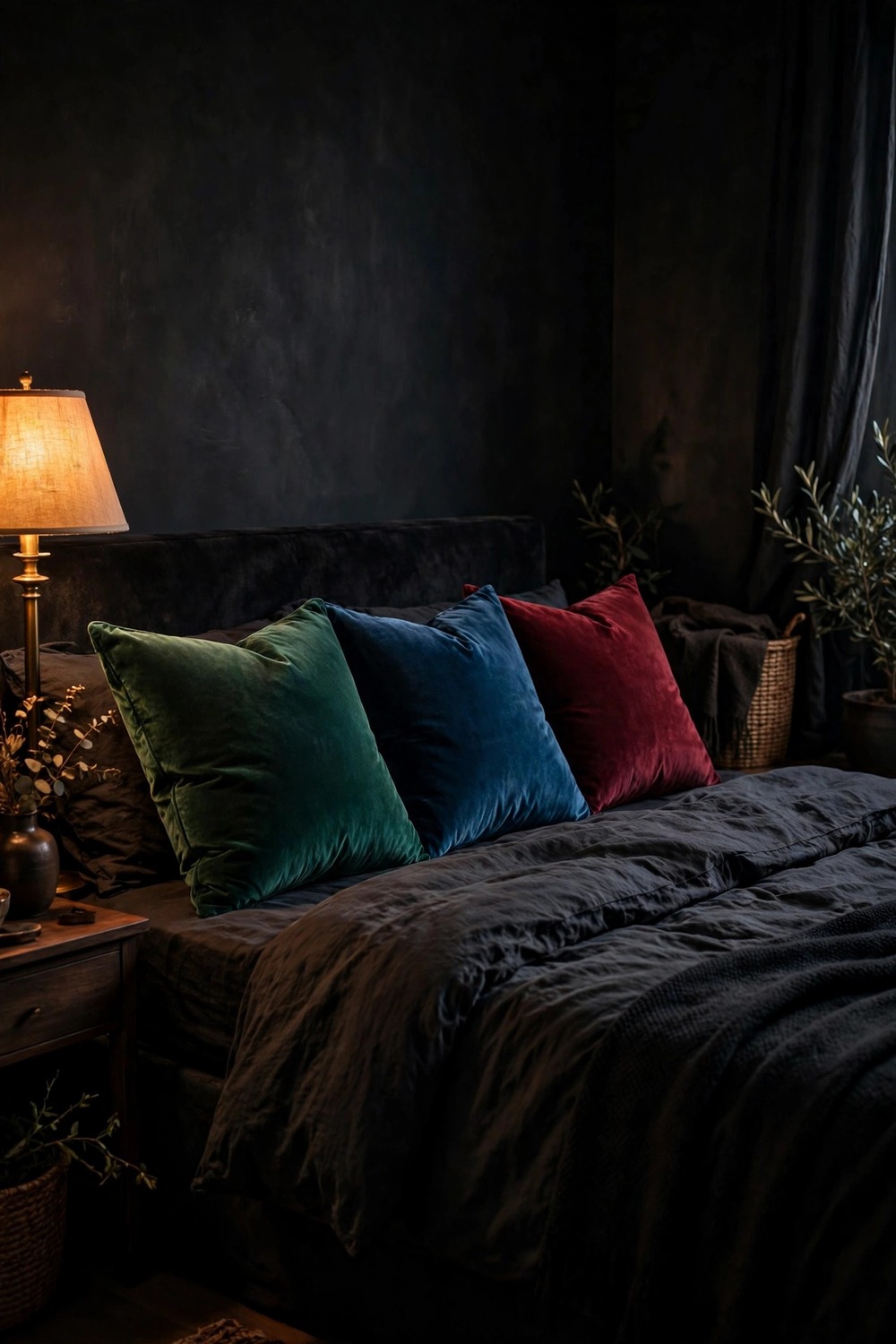
5. Use Velvet Cushions in Jewel Tones
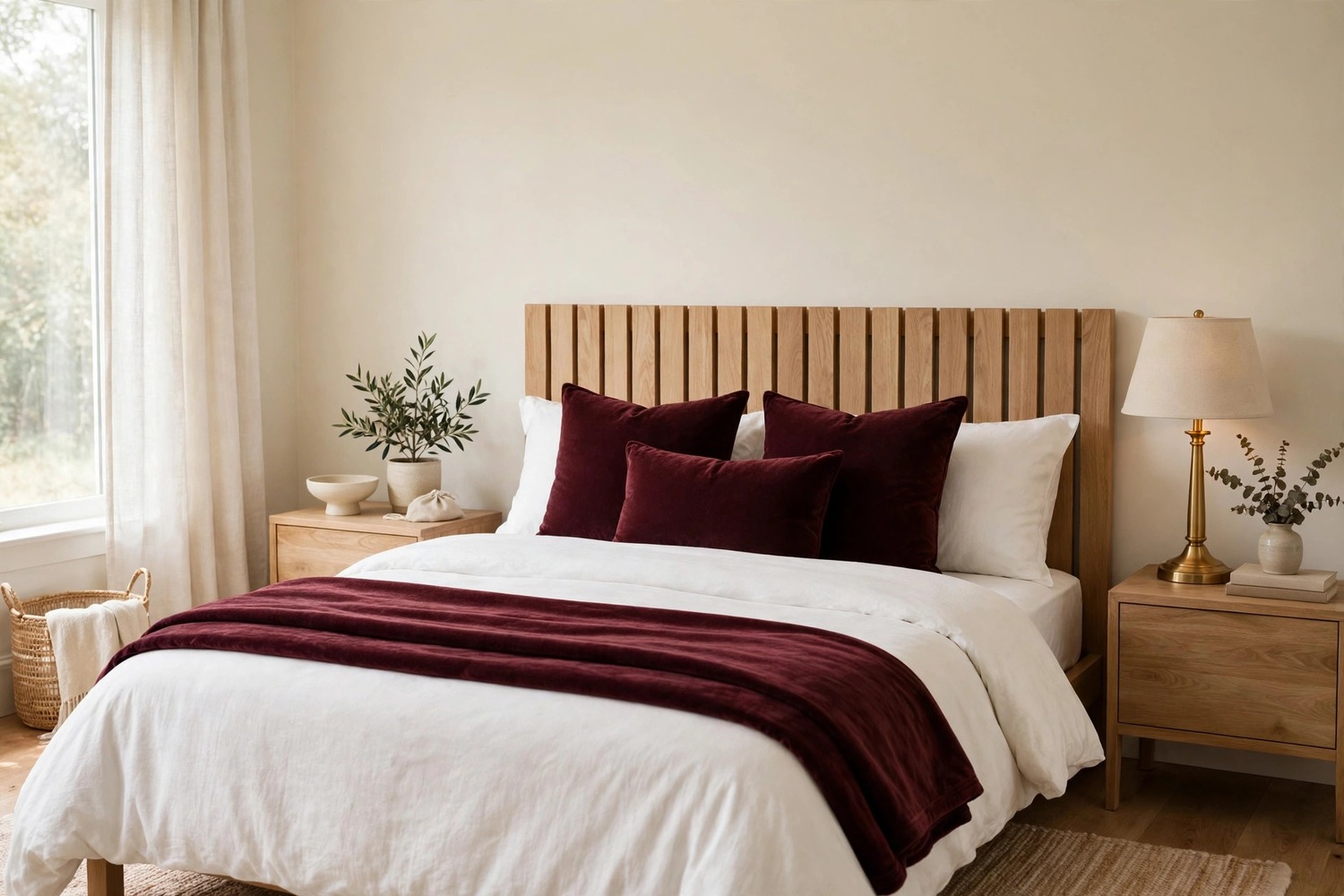
Velvet cushions in jewel tones are a small change that brings a lot of richness to a dark bed. Think deep emerald, sapphire, burgundy, or a warm amber, and choose two or three colors that sit happily together rather than matching everything exactly. Velvet catches lamplight in a soft way, so the cushions will glow a little in the evening and look plush during the day. Keep the number modest, usually three or five across the bed, so you are not moving a mountain of cushions every night. A lumbar cushion in front can pull the group together. If you already have dark bedding, jewel tones typically add just enough color to keep the bed feeling warm and personal rather than plain.
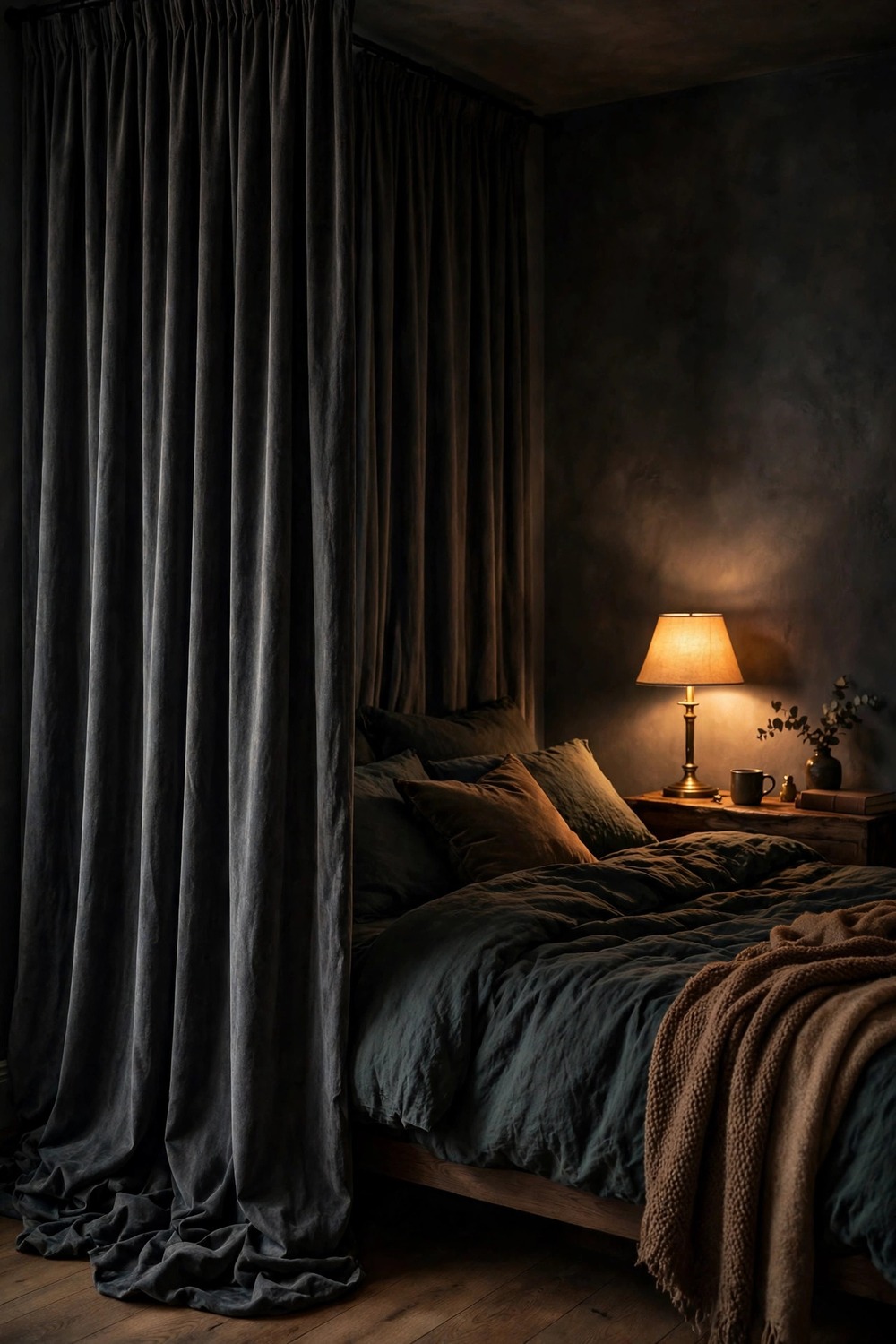
6. Hang Heavy Curtains for a Sealed-In Feeling
Heavy curtains do more than block light. They soften the walls, quiet outside sounds a little, and give the room that sealed in feeling you get in a favorite hotel or a quiet cabin. Choose floor length panels in a deep tone close to your wall color, or a touch darker, and hang them high and wide so the window feels generous. Lined curtains usually drape better and help with early morning light, which matters if you are building a true retreat. Velvet, heavy linen, and wool blends all work well here. During the day you can pull them wide open, and at night closing them becomes a small ritual that tells your body the day is done. That ritual typically helps the whole room feel calmer.
Add Furniture, Art, and Warm Details
Once the color and layers feel right, the next step is the pieces that give the room its shape and story. A grounded bed frame, thoughtful art, a rug underfoot, and warm natural materials can make a dark bedroom feel finished rather than just dark. These six ideas focus on weight, warmth, and gentle drama, using things you will see and touch every day.
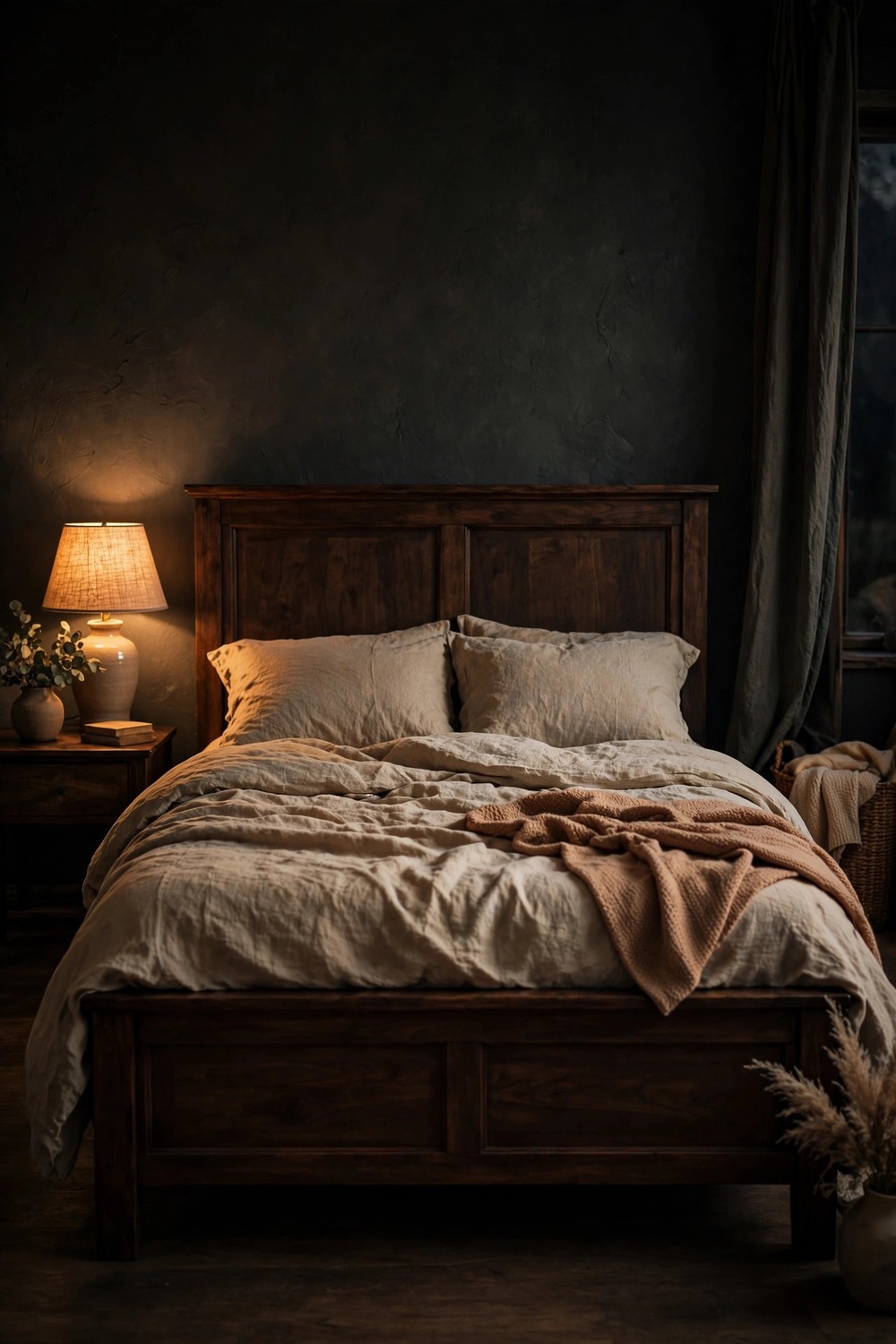
7. Choose a Dark Wood Bed Frame
A dark wood bed frame anchors a moody bedroom in a way that feels steady and timeless. Walnut, stained oak, and other deep woods bring natural warmth that paint alone cannot, and they pair beautifully with charcoal, green, and black bedding. Look for simple lines if your room is already rich in texture, because the wood grain itself provides plenty of detail. A taller headboard usually feels more retreat like, since it creates a soft backdrop for pillows and reading in bed. If a new frame is not possible right now, a dark stain or a deep wood headboard panel can give you a similar effect for less. The frame typically becomes the steady piece everything else quietly gathers around.
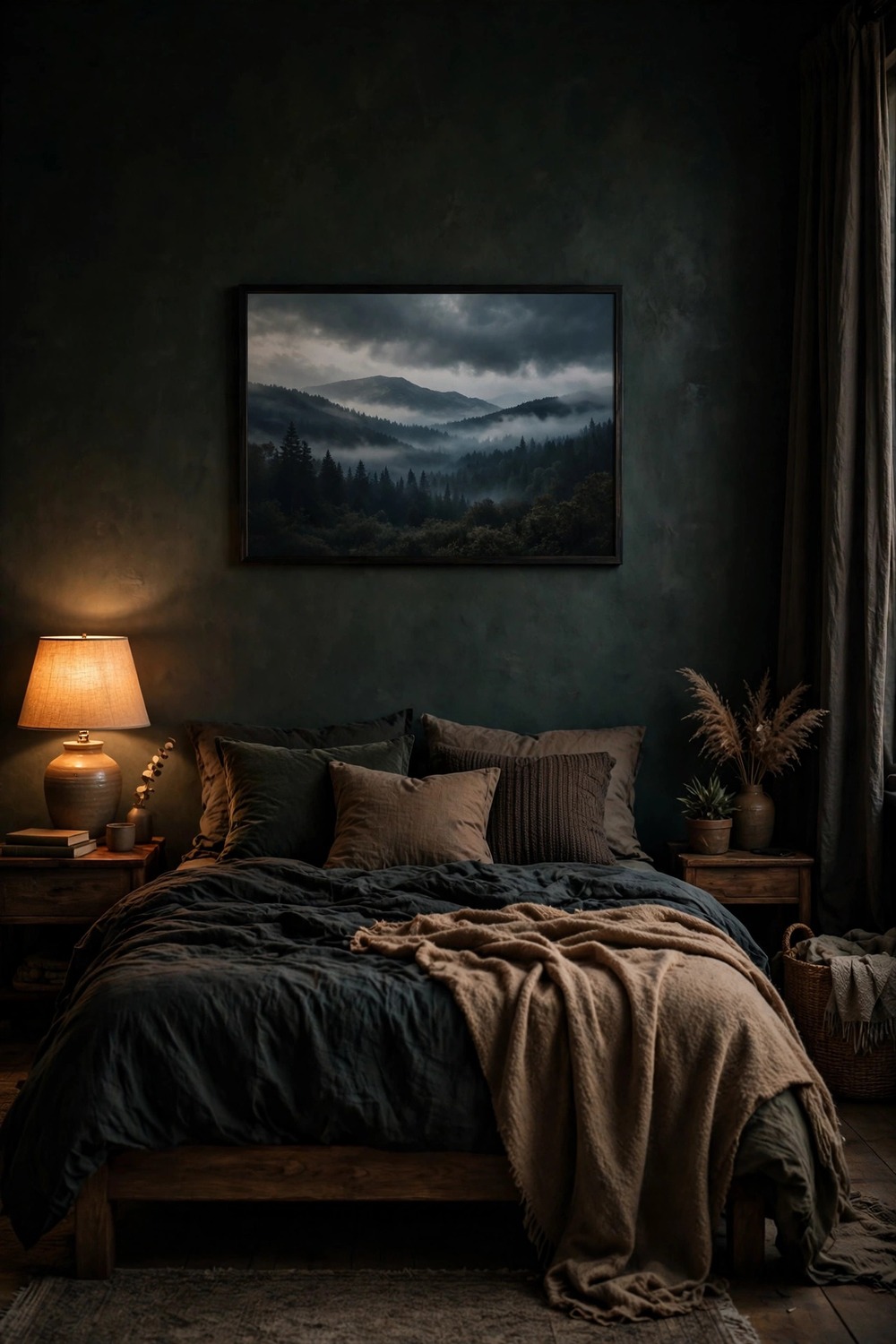
8. Add a Moody Landscape Print Above the Bed
A moody landscape print above the bed gives your eye somewhere gentle to land, and it softens a large dark wall without brightening it too much. Look for misty hills, a quiet forest, a dusky coastline, or fields under a low sky, ideally in muted tones that echo your paint and bedding. One large print usually feels calmer than a busy gallery wall in a restful room, and a thin dark or warm wood frame keeps it connected to the rest of the space. Hang it a little lower than you might in a living room, so it feels part of the bed rather than floating above it. Guests may not comment on it, but you will typically notice how it completes the view from the door.
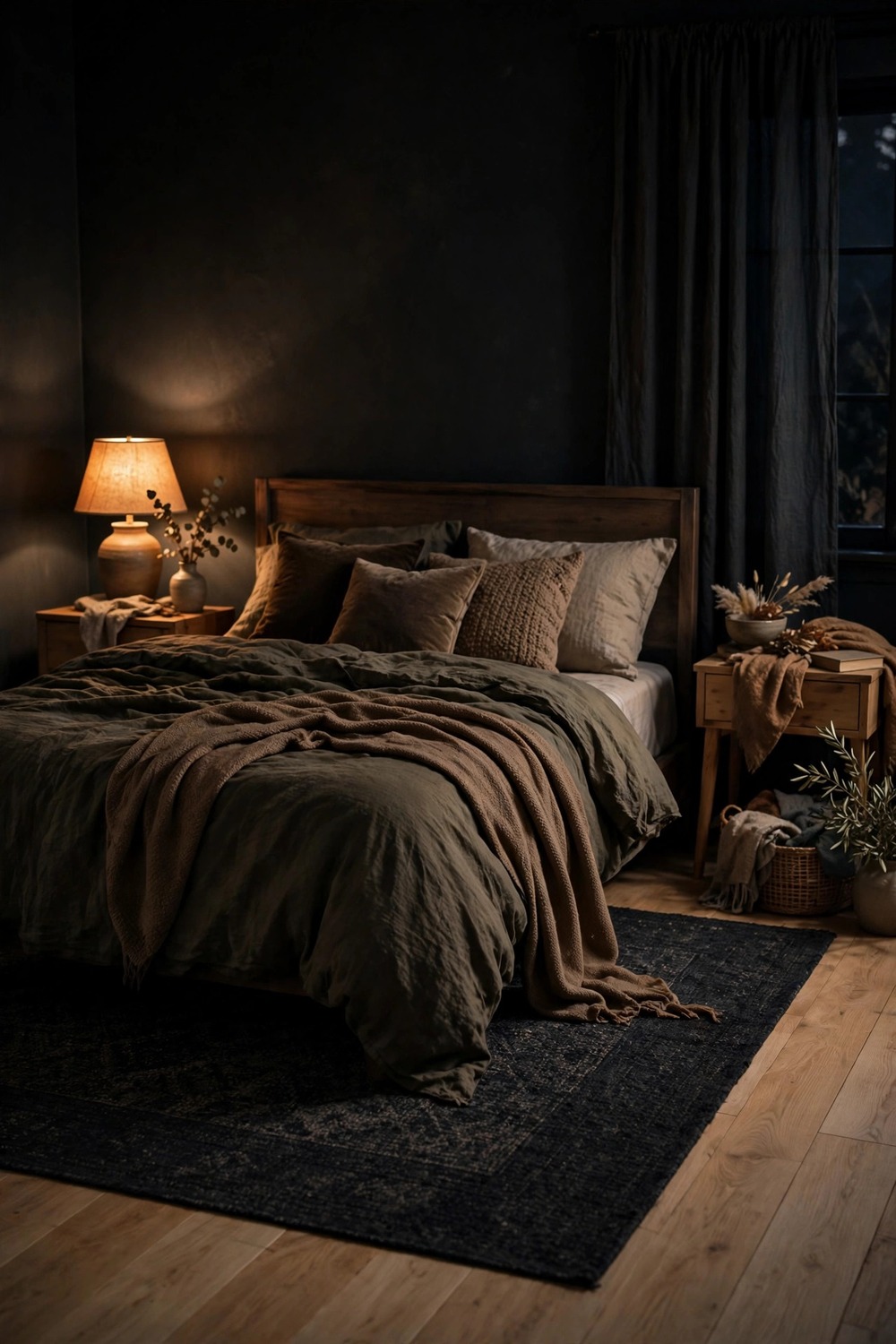
9. Layer a Dark Rug Over Lighter Floors
If your floors are light, a dark rug is an easy way to ground the room without changing anything permanent. Choose a rug large enough to sit under the bed and extend on both sides, so your feet meet something soft and warm when you get up. Deep rust, charcoal, forest, or a faded vintage pattern in dark tones will usually bridge the gap between light floors and dark walls in a natural way. A low pile with a little texture feels practical for a bedroom and still looks rich in lamplight. This layer also helps quiet the room, which adds to the retreat feeling more than you might expect. It is a change you can typically make in an afternoon and undo just as easily.
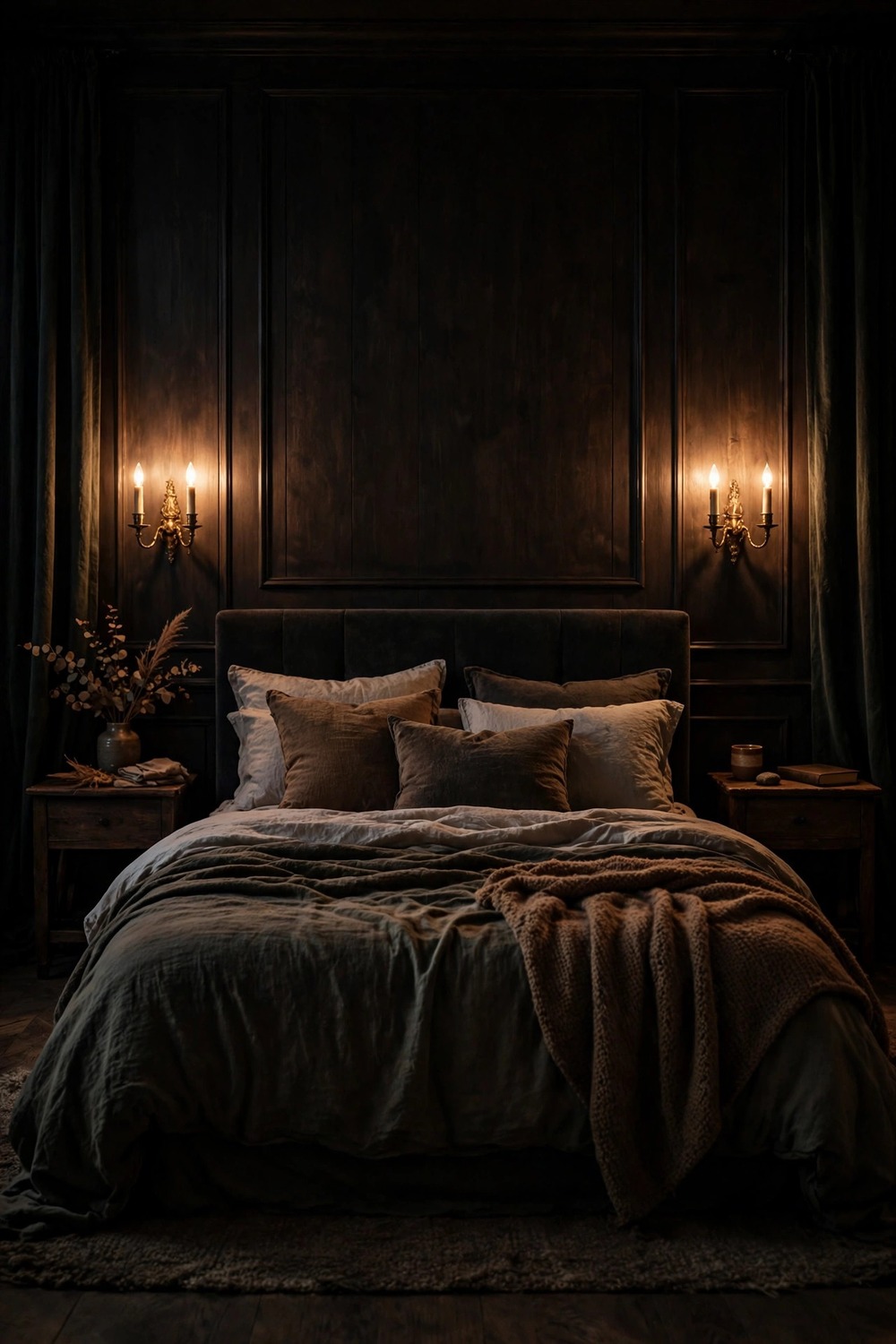
10. Use Candlelight-Style Sconces by the Bed
Candlelight style sconces bring the softest kind of light to a moody bedroom, the kind that flickers gently and never feels harsh. Mount one on each side of the bed at about shoulder height when you are sitting up, so the glow falls nicely for reading without shining in your eyes. Warm, low wattage bulbs are key here, because the goal is atmosphere first and task light second. If wiring feels like too big a job, plug in or battery versions can still give you a similar feeling with less fuss. The sconces also free up your bedside tables for books and water. In the evening, that low warm light typically makes dark walls feel deeply cozy rather than shadowy.
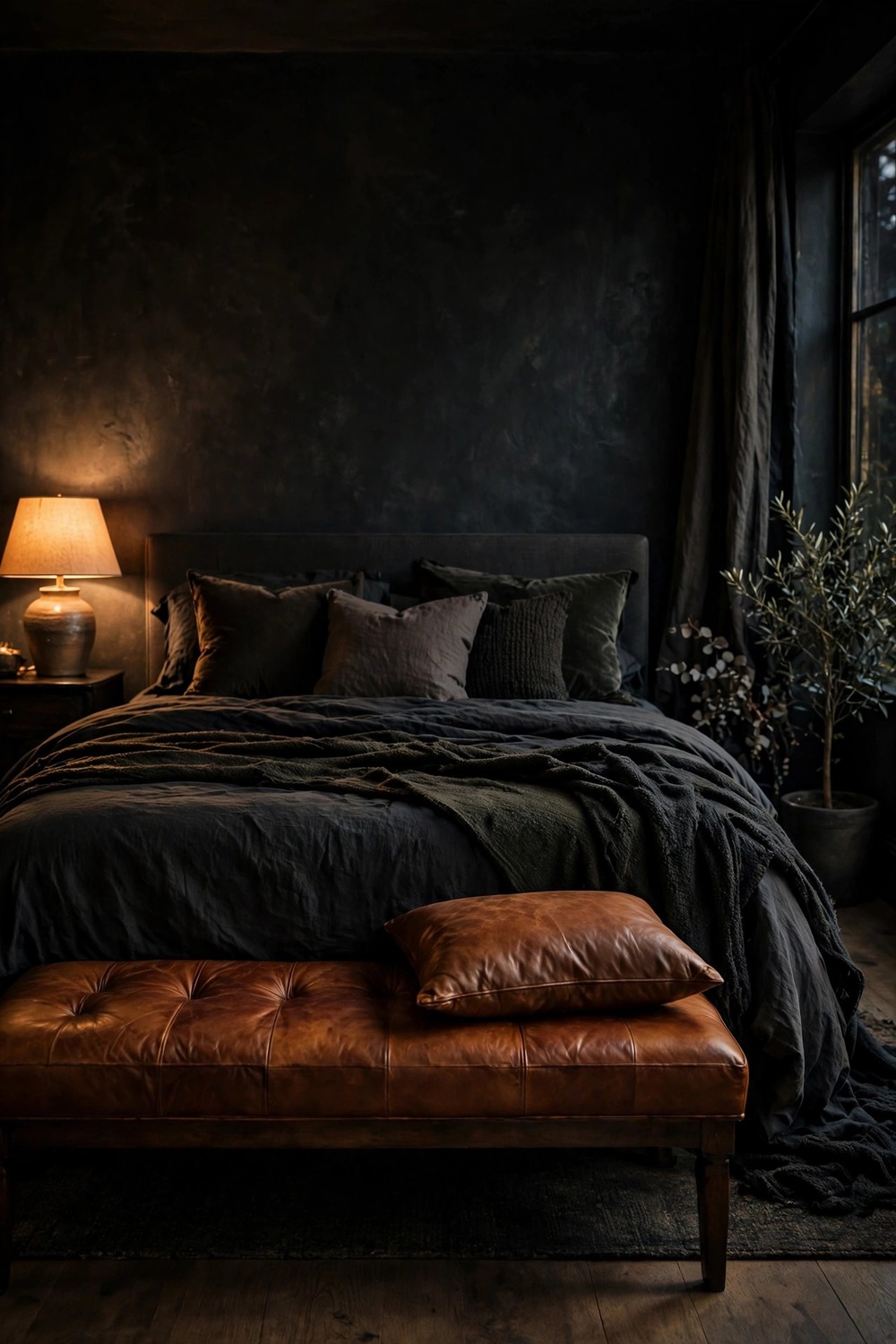
11. Add Leather Accents for Warmth
Leather adds a warm, lived in note that balances cooler dark colors like charcoal and black. You do not need much. A leather bench at the foot of the bed, a single cushion, a small tray on the dresser, or even leather pulls on drawers can be enough. Cognac and warm tan tones usually work best in a moody room because they glow against deep backgrounds and echo brass and wood. Leather also ages kindly, picking up soft marks and sheen that make the room feel personal over time. If real leather is not right for your home, a good faux option in a warm tone can still give you the color and shape. Keep it to one or two accents so the effect stays quiet and confident.
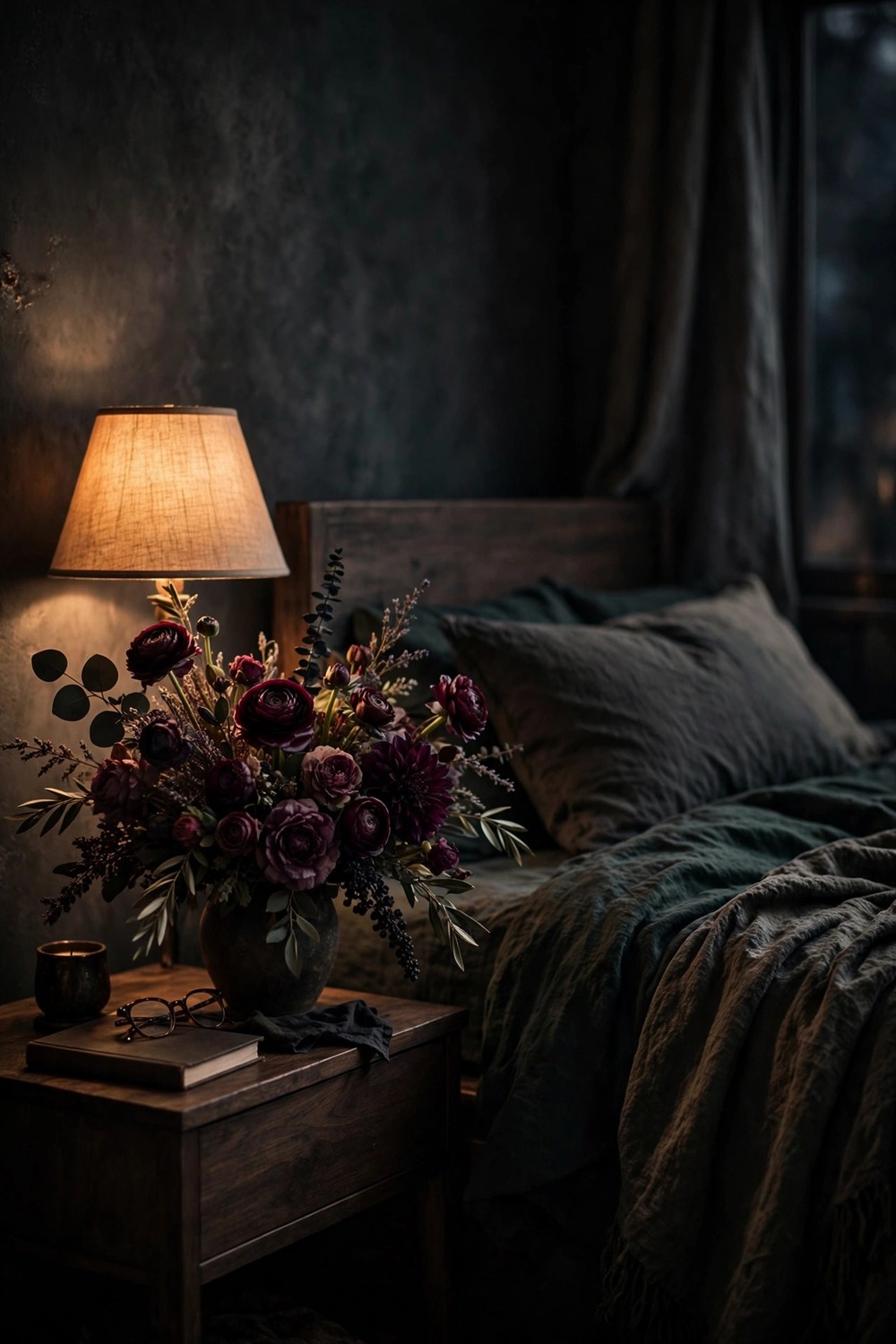
12. Style With Dark Florals for Soft Drama
Dark florals bring soft drama without adding bright color that would fight the mood of the room. Think deep plum dahlias, burgundy roses, dark foliage, or dried stems in smoky tones arranged loosely in a simple vase. A small arrangement on a bedside table or dresser is usually enough, because the shapes and shadows do the work. Real flowers are lovely when you have them, and dried or faux stems can give you the same silhouette with far less upkeep. Keep the vase plain and matte so the florals stay the focus. Against a deep wall, even a modest bunch will typically look rich and a little romantic, which is exactly the note a retreat bedroom wants in the evening.
Balance the Dark and Finish With Light
A moody room still needs balance, or it can tip from cozy into heavy. The final six ideas are about contrast, small black details, a place to sit and read, and lighting low enough to feel like dusk. They are finishing touches, but they are usually the ones that make people say the room feels like a retreat rather than just a dark bedroom.
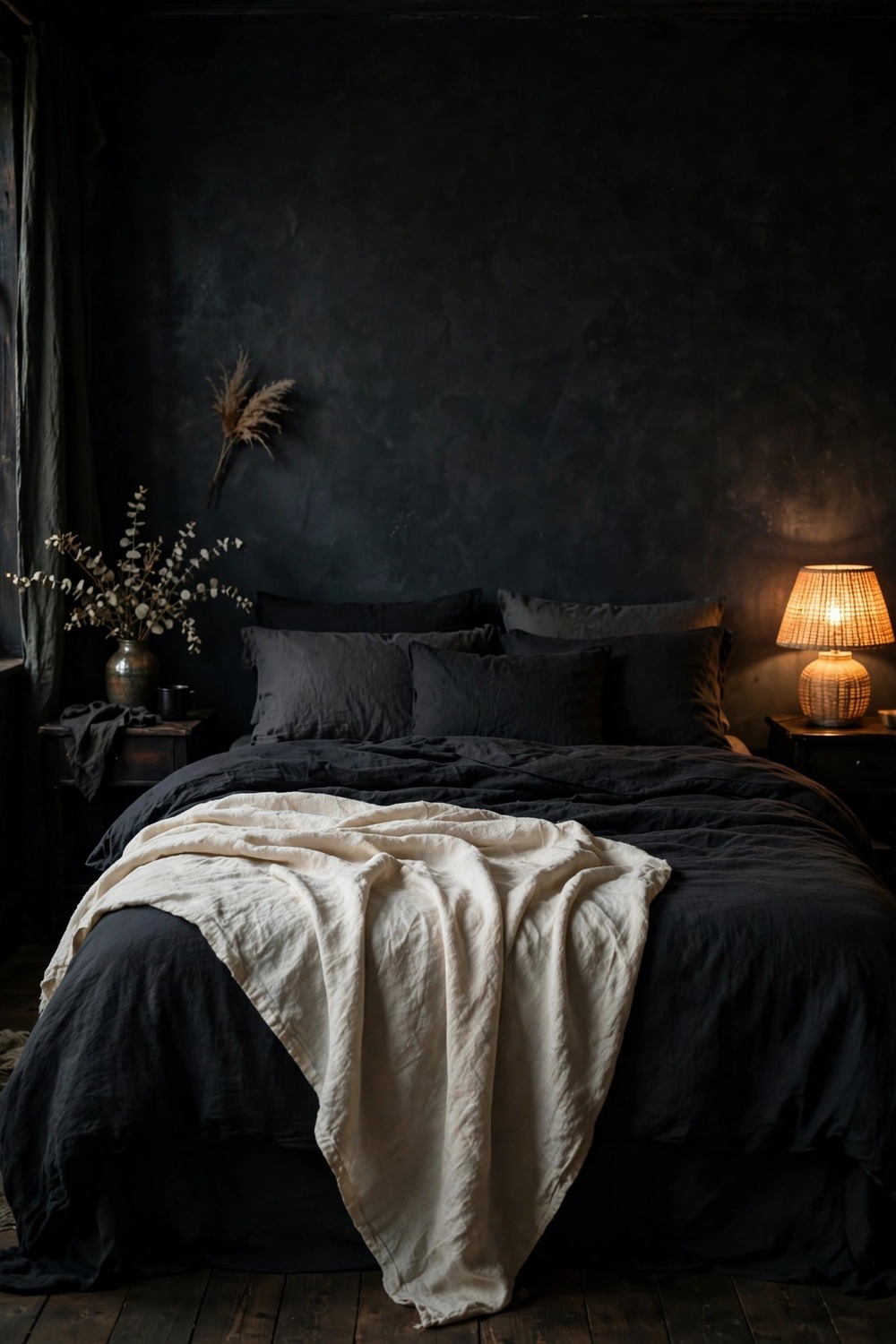
13. Keep One Light Element to Balance the Dark
One light element keeps a dark bedroom from feeling like it is closing in. It could be a cream linen throw across the bed, pale cushions against dark pillows, light curtains against a charcoal wall, or even a light toned rug edge peeking out from under darker layers. The contrast gives your eye relief and actually makes the dark colors look richer by comparison. You only need one or two light touches, placed where you will see them from the bed and from the door, because too many will dilute the mood you have built. Think of it as a pause in music. That small pause typically makes everything around it feel more intentional and more restful at the same time.
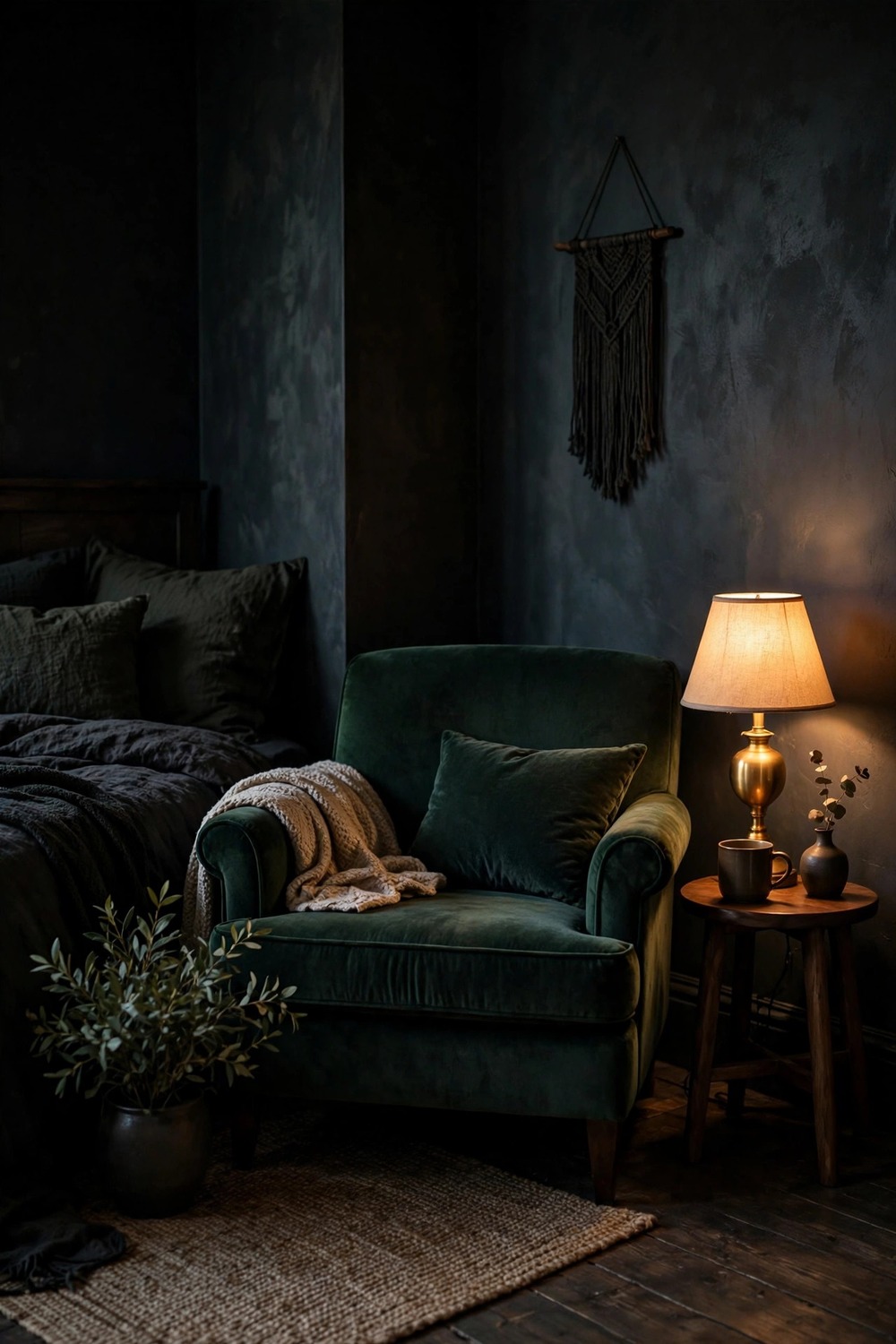
14. Add a Reading Chair in a Deep Tone
A reading chair in a deep tone turns a corner of the bedroom into a tiny retreat within the retreat. Choose a comfortable armchair in forest, navy, charcoal, or burgundy, add a small side table and a warm lamp nearby, and you have a place to read, sip tea, or simply sit that is separate from the bed. That separation usually helps the bed stay associated with sleep, which many people find restful in itself. A folded throw over the arm and a cushion you actually like make it inviting rather than decorative. If space is tight, a smaller slipper chair can still do the job. Pick the quietest corner you have, typically away from the door, and let it become your evening spot.
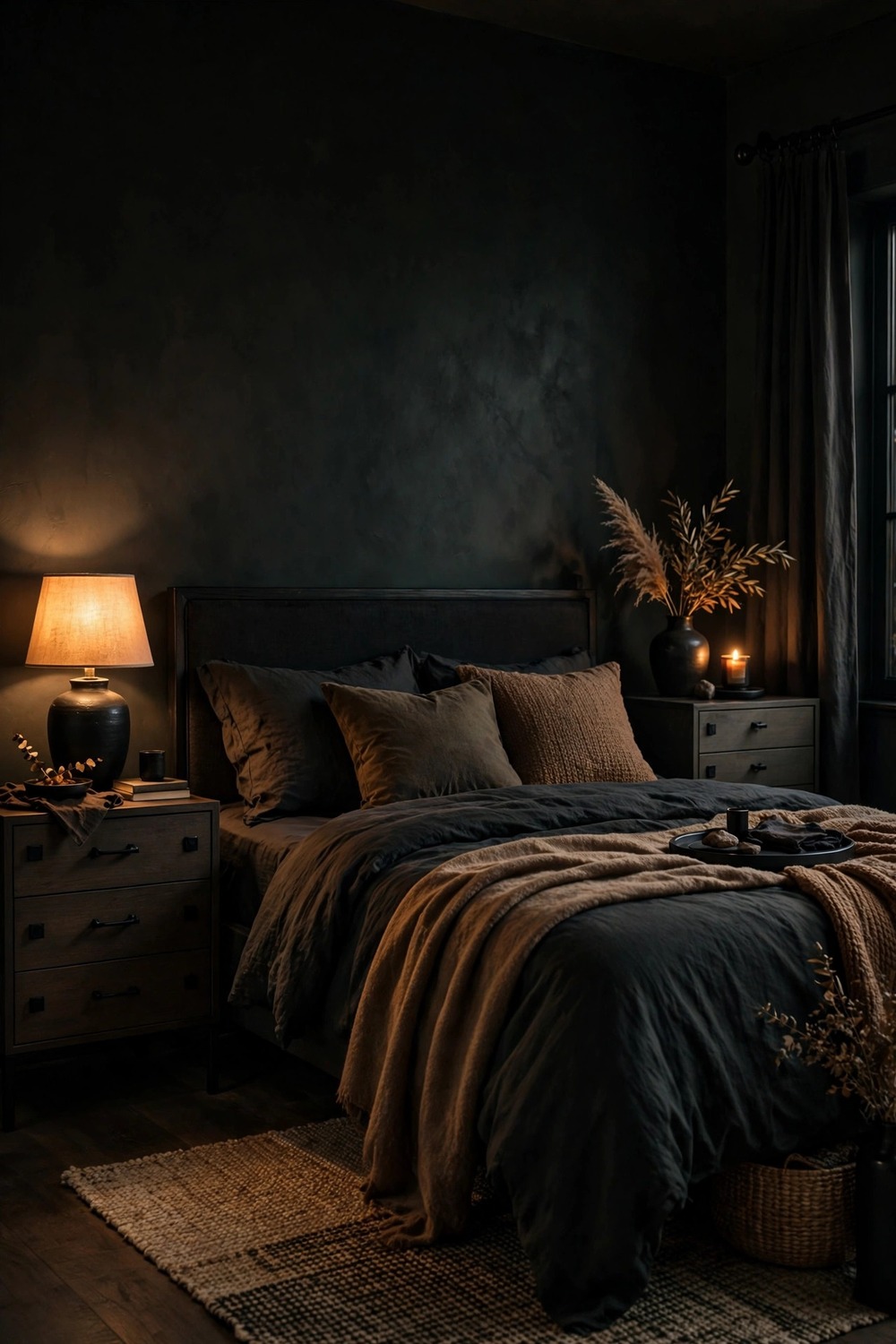
15. Use Matte Black Hardware and Details
Matte black hardware ties a moody bedroom together in a quiet, practical way. Swapping drawer pulls, door handles, lamp bases, or curtain rods to matte black is usually inexpensive and quick, and the flat finish blends into dark rooms without shining or demanding attention. It also creates a gentle thread through the space, so pieces bought at different times still feel like they belong together. Keep the shapes simple and consistent where you can, because repetition is what makes small details feel deliberate. If you already have brass lamps, the mix can still work well, since matte black tends to sit calmly beside warmer metals. These are the kinds of changes guests rarely name, but they typically notice that the room feels finished.
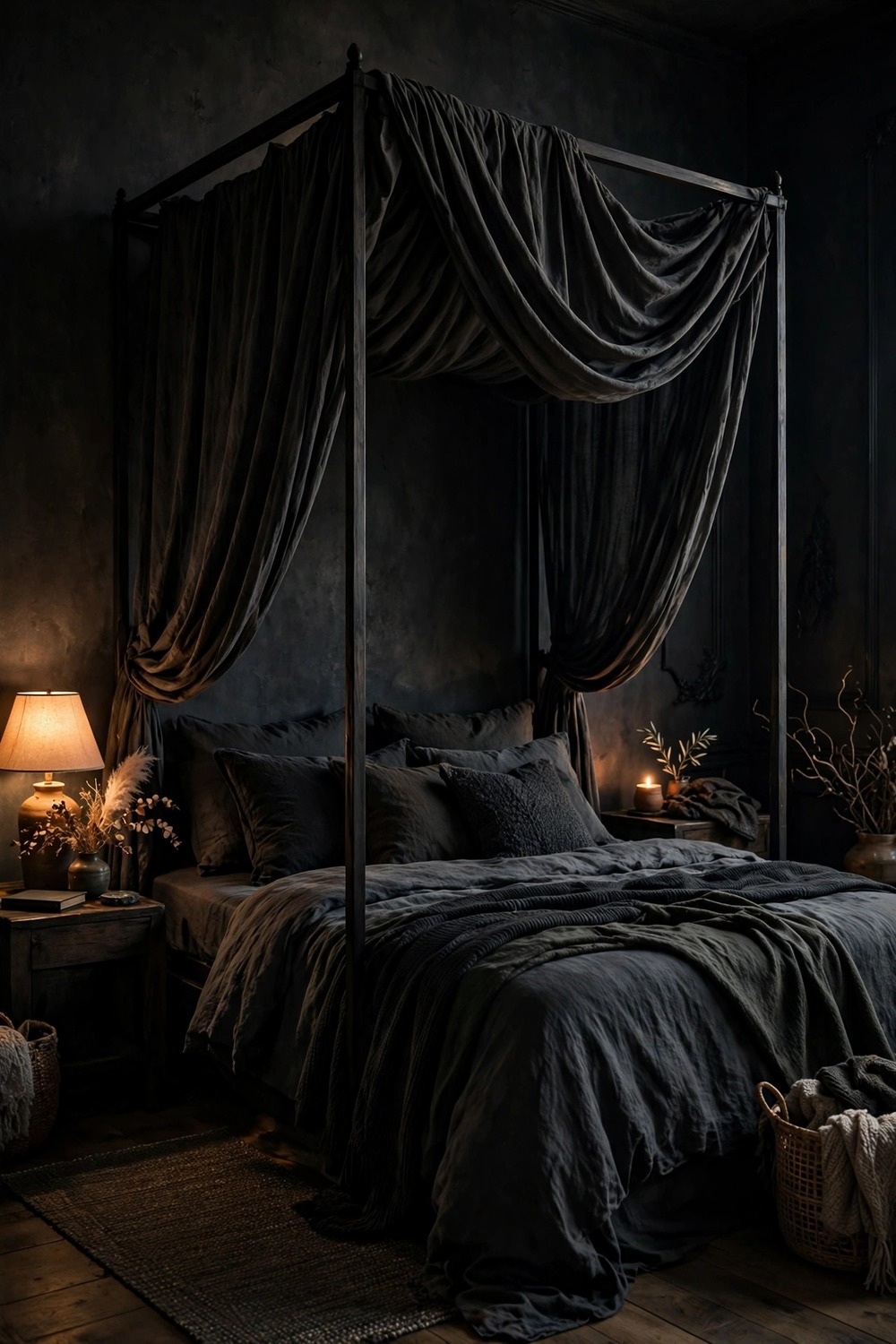
16. Add a Canopy Frame for Extra Drama
A canopy frame adds drama in the best sense, giving the bed a sense of shelter that suits a retreat feeling perfectly. A slim frame in matte black or dark wood keeps the look calm rather than ornate, and you can leave it bare for clean lines or drape a length of sheer linen over one corner for softness. The height draws the eye up and makes the bed feel like a room of its own, which is especially welcome in a larger or plainer space. Make sure you have ceiling height to spare, and keep bedding simple so the frame remains the feature. Most people find that once the canopy is up, the bed becomes the place they most want to be at the end of the day.
17. Style the Dresser With Low Warm Light
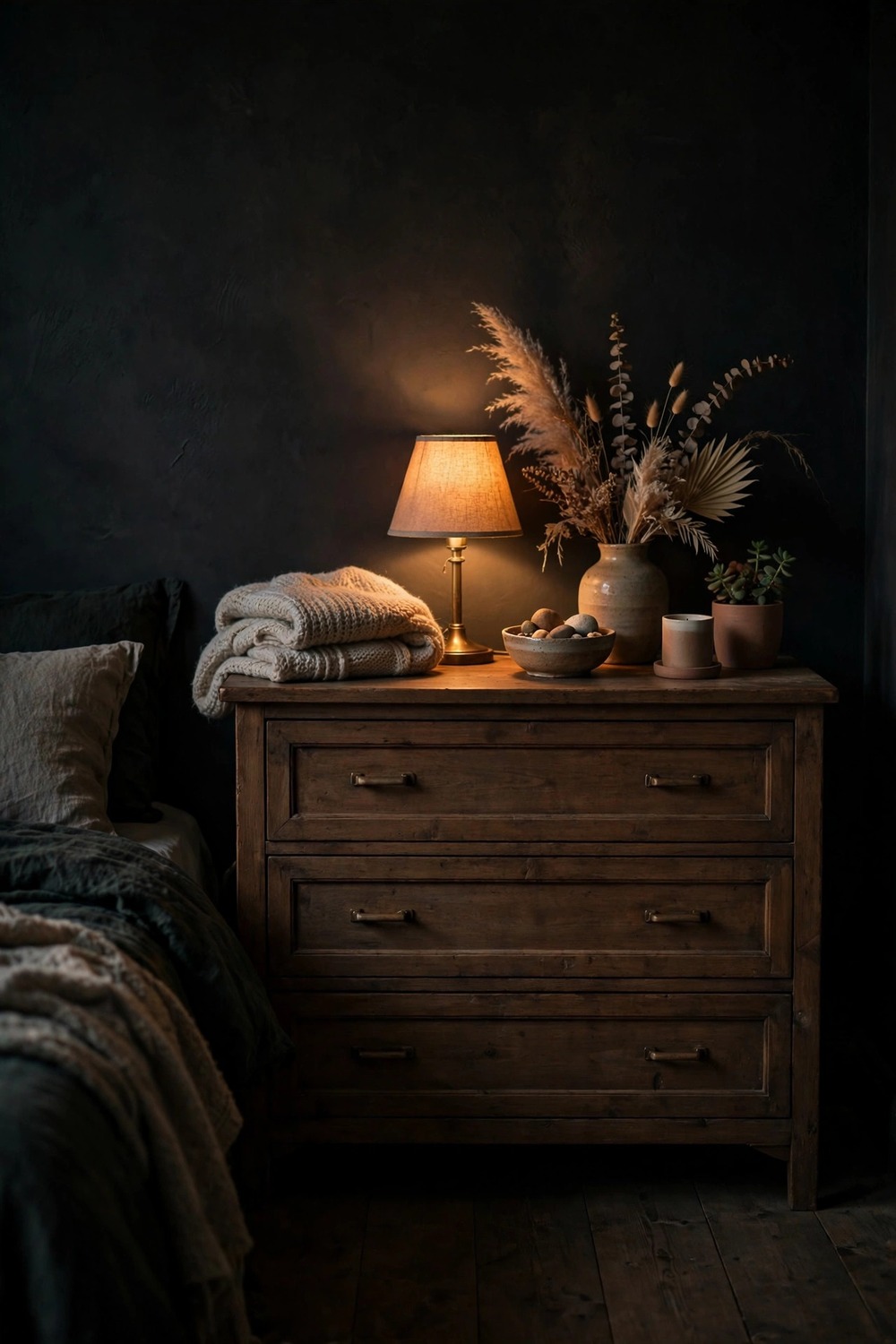
The dresser is often forgotten in bedroom lighting, but a low warm light there can change the whole evening mood. Add a small lamp with a fabric shade, a cluster of candle style lights, or a soft glowing orb, and keep the surface styling simple around it. A small tray for everyday things, a stack of two or three books, and one personal object are usually enough. The low light will reflect gently in a mirror if you have one above the dresser, doubling the warmth without doubling the brightness. This is also a kind light for getting ready for bed, far softer than an overhead fixture. Over time, turning on that little lamp can become the signal that the room is shifting into rest mode.
18. Finish With Linen in Smoky Tones
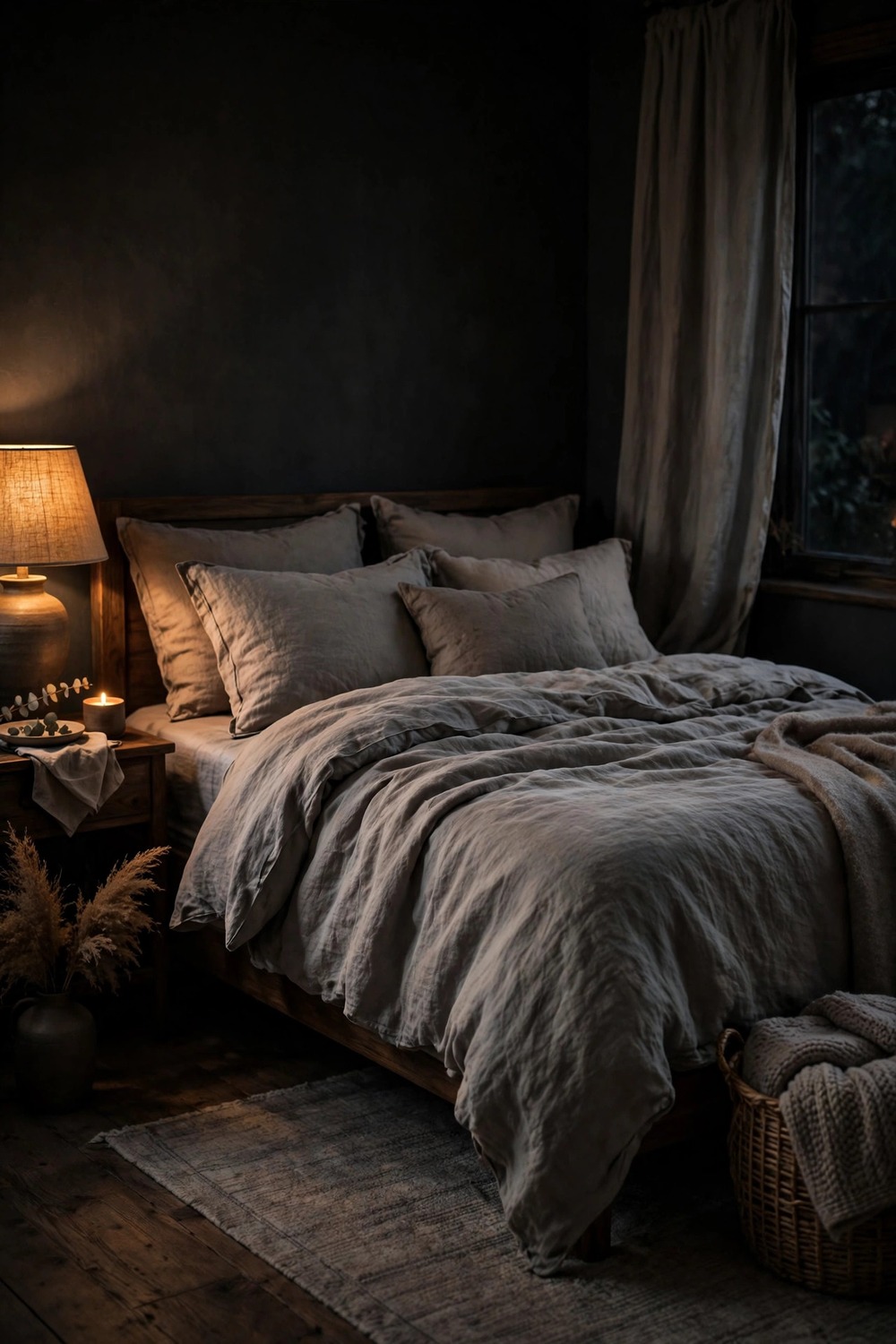
Finish the room with linen in smoky tones, because linen softens everything it touches. Smoky grey, muted taupe, dusky blue, and softened sage all sit beautifully against charcoal, green, and black, and the natural wrinkles in linen keep a dark room from feeling too formal or perfect. A linen duvet cover, pillowcases, or a simple bed throw can be enough to shift the bed from stark to welcoming. Linen also breathes well, so it feels comfortable across seasons, warmer in winter with layers and lighter on its own in summer. Wash it a few times and it will get softer still. It is a quiet final layer, but typically it is the one that makes the bed look like you could fall into it and sleep deeply.
When you step back, your bedroom does not need to be dark in every corner to feel like a retreat. It just needs deep color where it counts, soft texture on the bed, warm light at a low level, and one or two light touches to keep it balanced. If a change feels like too much at first, live with it for a few nights and adjust the lighting before you undo it. Moody rooms usually reveal themselves in the evening, and your room will keep teaching you what it needs as you settle into it.
So start small this week. Pick one easy layer, like smoky linen on the bed or a pair of brass lamps on warm bulbs, and notice how the room feels at bedtime. That single calm change will show you what the rest of the space can become, and the next step will probably suggest itself. Before long, your bedroom will not feel like just another room with the lights off. It will feel like the quiet retreat you go to on purpose.

Leave a Reply