
18 Kitchen Floor Ideas from Checkered Charm to Terrazzo
Look, we get it. You can update your cabinets, swap your hardware, and add a pretty runner, and your kitchen can still feel a little unfinished if the floor underneath is tired, stained, or just not your style anymore. The floor is the biggest surface in the room, and it is the one you walk on in bare feet for that first cup of coffee, so when it feels wrong, the whole kitchen feels wrong too. If you have been living with a floor you do not love because choosing a new one feels overwhelming, you are definitely not alone.
That is why this list goes wide on purpose, from classic black and white checkerboard and playful terrazzo to warm wide plank wood, rustic brick, and smooth modern microcement. You will find ideas for pattern lovers and for calm neutral homes, for small kitchens that need to feel bigger and for busy family kitchens that need to hide a little everyday mess. Some are full renovations and some are refreshes you can do for much less, and you certainly do not need the fanciest option to get a kitchen that feels right. Usually the best floor is simply the one that fits how you actually cook and live.
As you read, think about light, spills, and comfort first, and style second. A darker floor can ground a bright kitchen, while a paler floor typically makes a low light room feel more open. Take photos of your kitchen at different times of day, bring home samples if you can, and live with them next to your cabinets for a few days. Floors stay with you for a long time, so a slow, confident choice is almost always better than a rushed one.
In This Article
- Lay a Classic Black and White Checkerboard
- Choose Speckled Terrazzo for Playful Color
- Install Patterned Tile for Vintage Charm
- Add a Two Tone Border for a Framed Finish
- Lay Small Hexagon Tile for Classic Detail
- Lay Wide Plank Wood for Warmth and Flow
- Try Herringbone Wood for Elegant Movement
- Choose Natural Stone for Lasting Luxury
- Lay Brick Pavers for Rustic Texture
- Warm Up With Terracotta Tiles
- Pour Microcement for a Seamless Modern Look
- Choose Large Format Porcelain for an Open Feel
- Try Concrete Look Tile for Industrial Calm
- Paint Your Floors for a Budget Friendly Refresh
- Bring Back Linoleum for Retro Color and Ease
- Pick Luxury Vinyl Plank for Practical Everyday Living
- Choose Cork for Softness and Quiet
- Mix Two Materials to Define Kitchen Zones
Start With Pattern and Timeless Detail
If your kitchen feels a little plain, pattern underfoot is often the quickest way to give it personality without adding clutter up top. These first five ideas lean classic, from bold checkerboard to delicate hexagon tile, and they work especially well when your cabinets and counters stay fairly simple. Let the floor do the talking here, and keep the rest of the room calm.
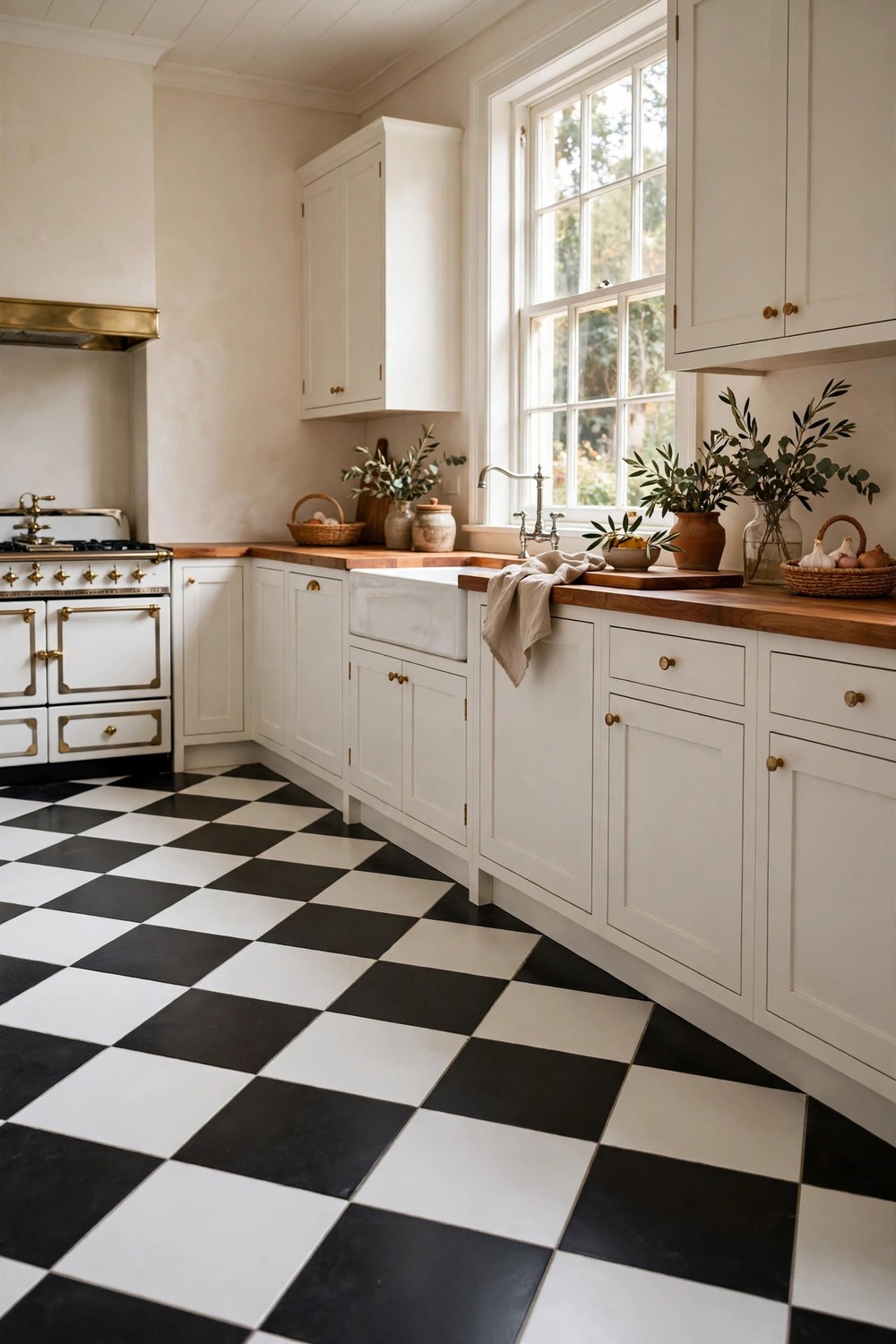
1. Lay a Classic Black and White Checkerboard
A black and white checkerboard is the kitchen floor that never really leaves, and for good reason. That crisp alternating pattern feels cheerful in a small galley, smart in a farmhouse kitchen, and surprisingly elegant beside simple shaker cabinets. You can lay it straight for a clean, orderly look or turn it on the diagonal if you want the room to feel a touch wider and more dynamic. Larger squares usually feel calmer and more modern, while smaller squares lean more vintage. A matte or softly honed finish is typically more forgiving than a high shine, because it does not show every crumb and water spot quite as quickly. If true marble feels like too much upkeep, porcelain or vinyl tile can give you the same graphic charm with easier care. Keep your grout in a soft mid tone so the pattern stays bold without looking harsh, and let this floor be the star while your textiles stay simple.
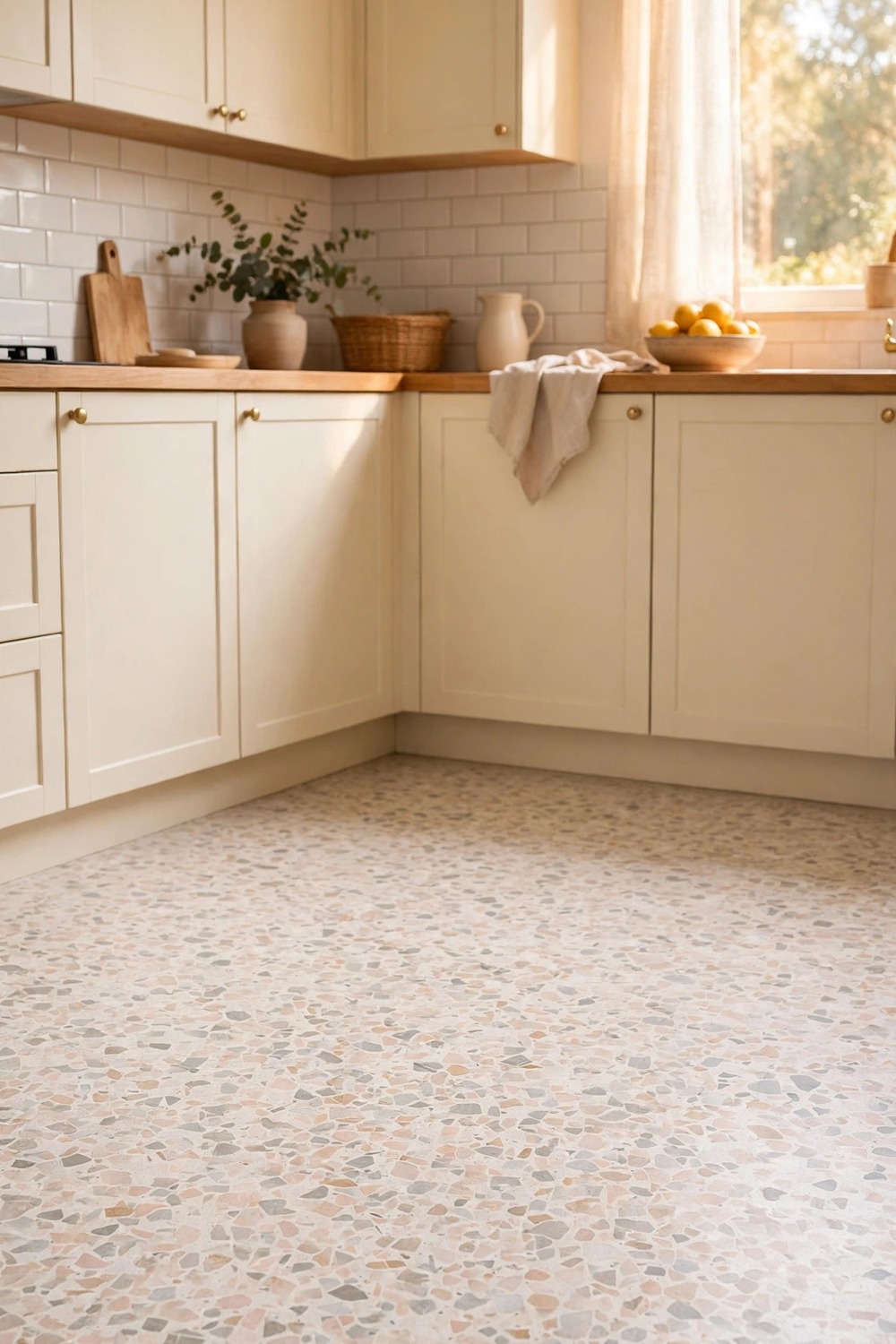
2. Choose Speckled Terrazzo for Playful Color
Terrazzo brings a joyful, speckled energy to a kitchen that plain floors just cannot match. Those little chips of stone in soft gray, blush, sage, or warm beige give you color without a loud pattern, so the floor feels interesting up close and calm from across the room. It is also a practical day to day choice, because that busy speckle typically hides crumbs, dust, and small spills better than a solid pale floor. Real poured terrazzo has a seamless, lasting quality, while terrazzo look porcelain tile gives you a similar feeling with simpler installation and care. Pair it with plain cabinets in white, warm wood, or a soft muted color, and let the floor provide the texture. If your kitchen gets strong sunlight, a lighter terrazzo base usually keeps the room feeling bright. Seal natural terrazzo as recommended and use gentle cleaners, and it will reward you with a floor that feels both playful and grown up.
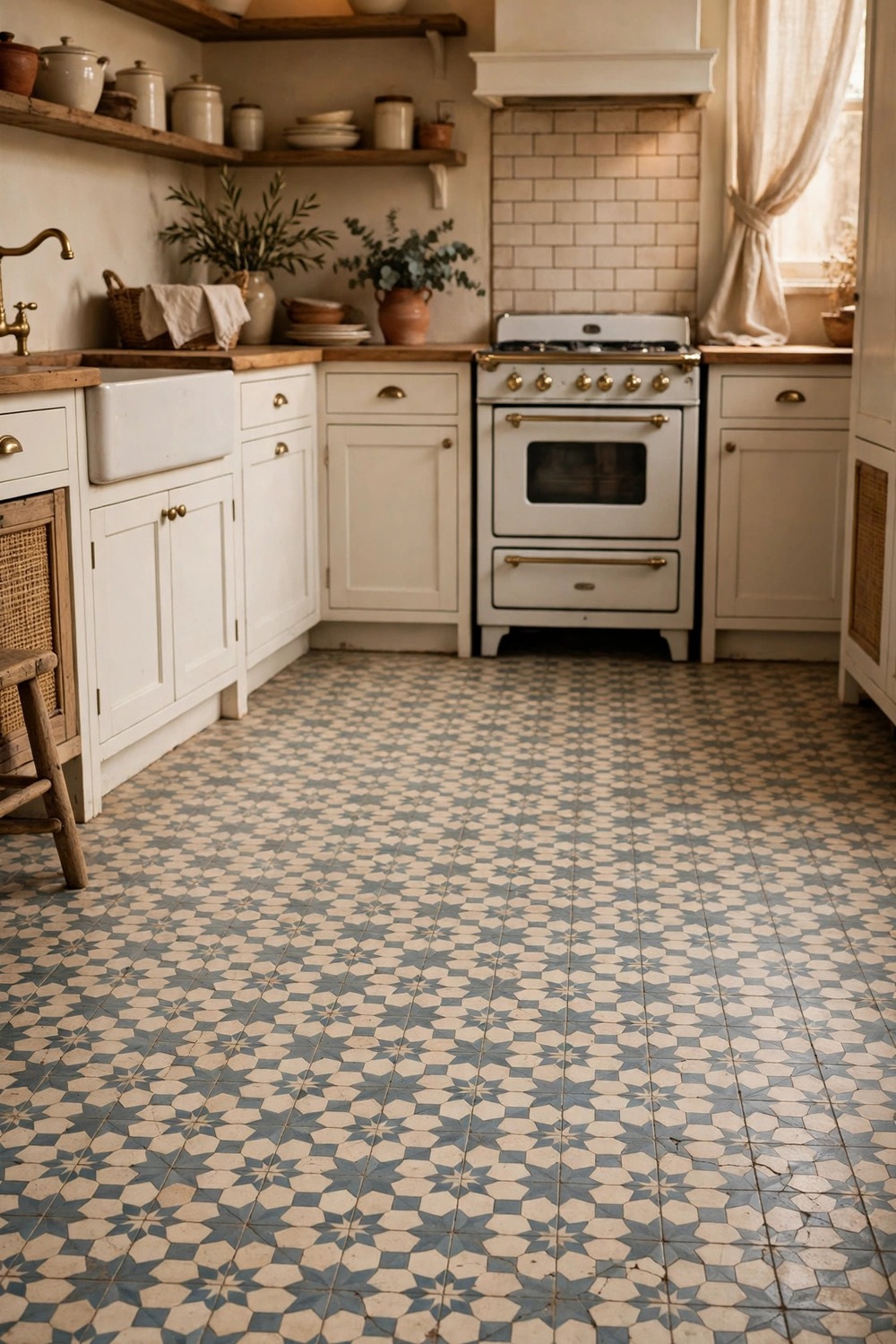
3. Install Patterned Tile for Vintage Charm
Patterned tile is a lovely way to give a newer kitchen a sense of history, or to bring an older kitchen back to life. Think soft encaustic style stars, gentle geometrics, or faded floral motifs in muted blues, grays, and creams. The pattern adds warmth and story underfoot, and it usually makes a simple kitchen feel collected rather than decorated all at once. Because patterned tile is visually busy, it works best when your cabinets are plain and your counters are not competing with another strong pattern. Lay out a few tiles on the floor for at least a day before you commit, because a pattern that feels charming in a small sample can feel much bolder across a whole room. A matte finish keeps the vintage feeling honest and helps with grip near the sink. If a full floor of pattern feels like too much, try it just in the cooking zone or under the table area for a rug like effect.
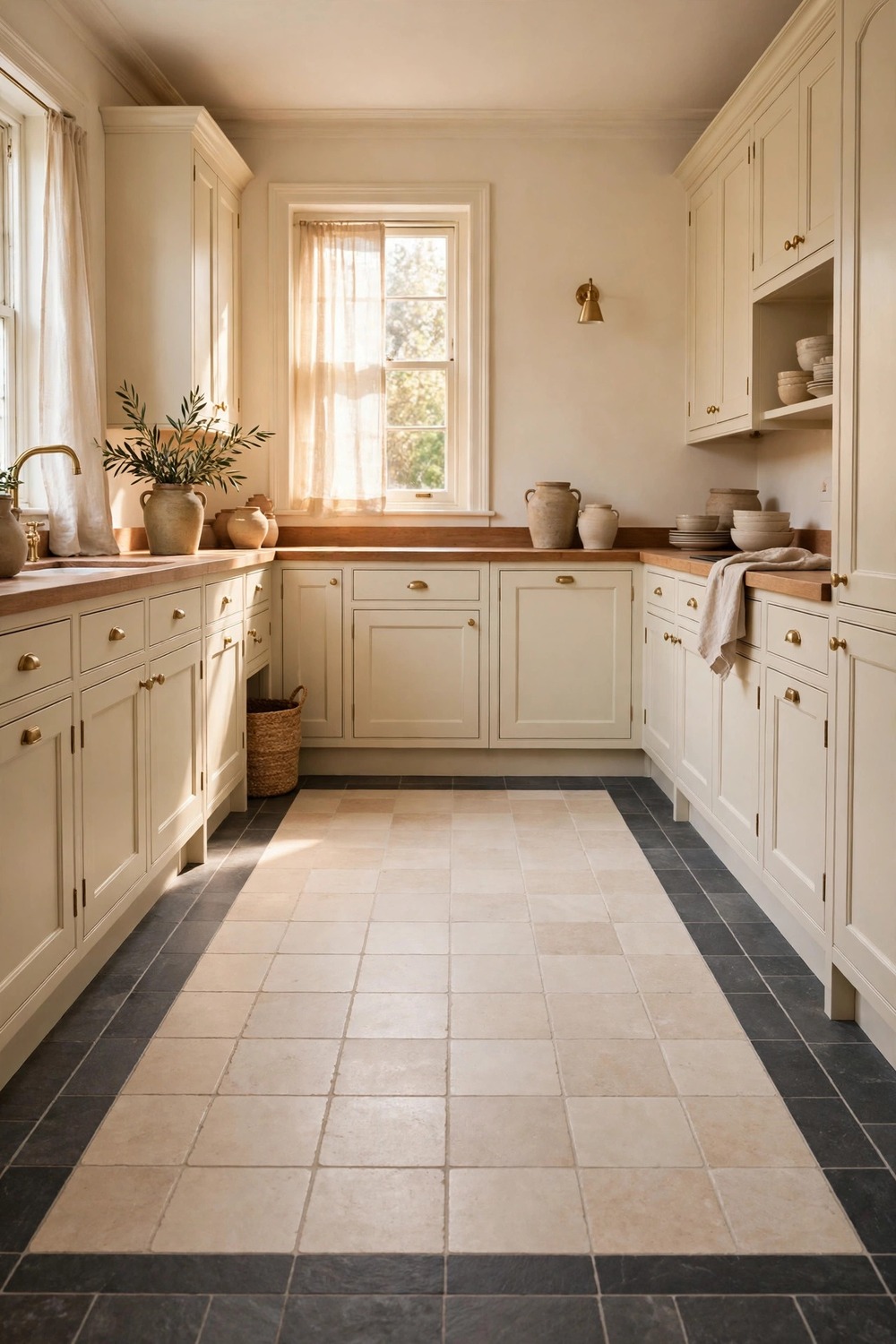
4. Add a Two Tone Border for a Framed Finish
A two tone border turns a simple kitchen floor into something that looks planned and finished, almost like a framed picture. You might run a darker band of tile or wood around the edge of a paler center, or outline the room in a contrasting strip that echoes your cabinet color. That border quietly defines the kitchen, which is especially helpful in an open plan home where the cooking space needs a gentle boundary. It also gives you a forgiving place to transition to the flooring in the next room. Keep the border width in proportion to your room, narrower in a small kitchen and a little wider where you have space to spare. Using just two tones keeps the look calm and classic rather than fussy. If you are working with tile, a border is also a practical way to use a more special or pricier tile in a small amount while a simpler tile fills the center.
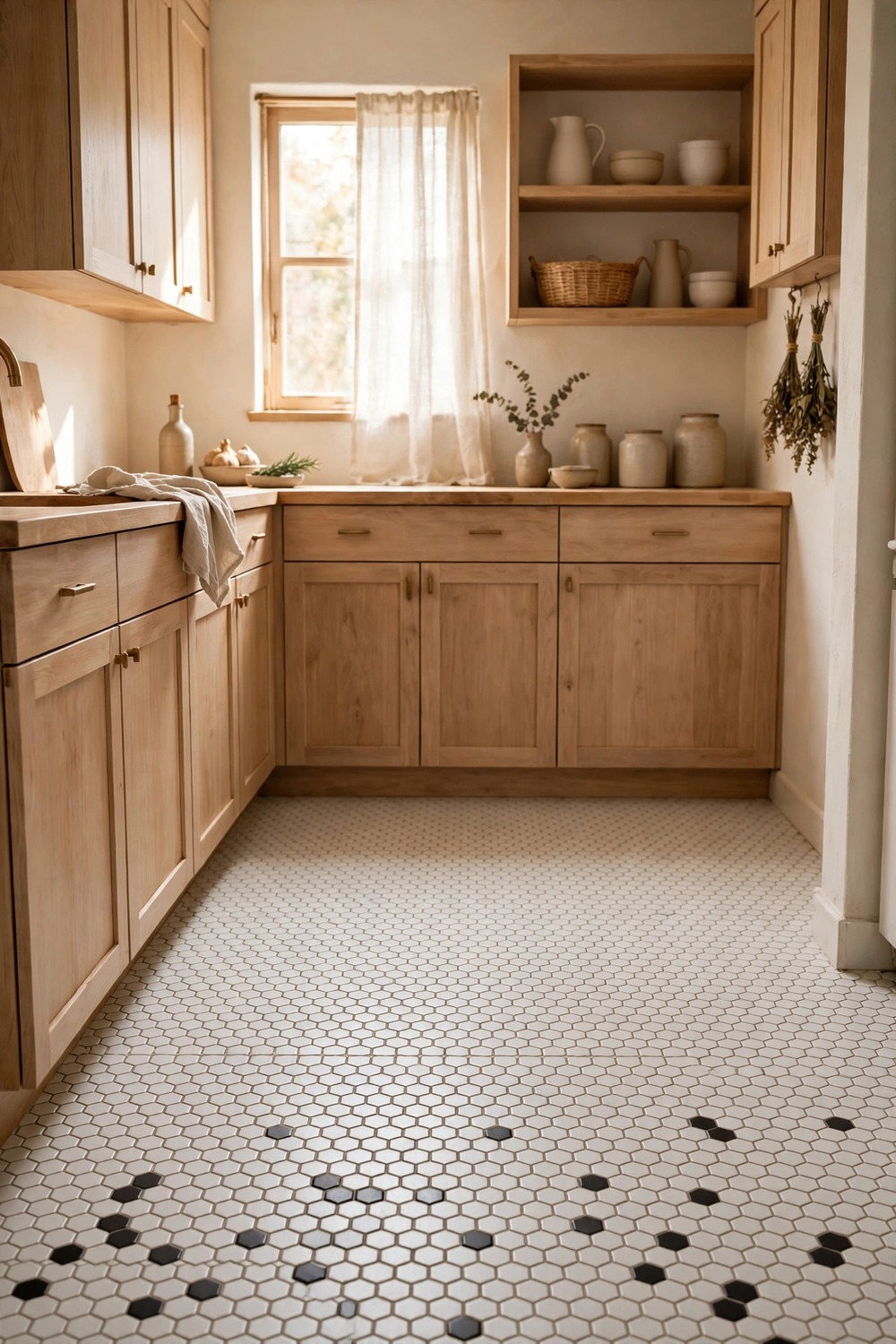
5. Lay Small Hexagon Tile for Classic Detail
Small hexagon tile, often called hex tile, has been in kitchens for generations because it is charming, practical, and endlessly adaptable. The tiny six sided shape creates a gentle texture underfoot that feels detailed without shouting, and all those grout lines typically give you a bit more grip in a room where water and spills happen. Classic white hex with a few dark tiles dotted in for a simple flower or border motif feels timeless, while soft gray, sage, or warm stone tones give the same shape a quieter modern mood. Sheet mounted hex makes installation more manageable than it looks, though careful layout at the edges still matters. Choose a grout color close to the tile if you want a soft, seamless feeling, or a little darker if you want the honeycomb pattern to show. Hex tile suits small kitchens especially well, because the small scale keeps the floor in proportion.
Lean Into Natural Warmth and Honest Texture
Some kitchens do not need more pattern, they need more warmth. Wood, stone, brick, and clay bring natural variation and a lived in feeling that makes a kitchen welcoming the moment you walk in. These five ideas are for anyone who wants the floor to feel grounded and tactile, with materials that usually get better as they settle into family life.
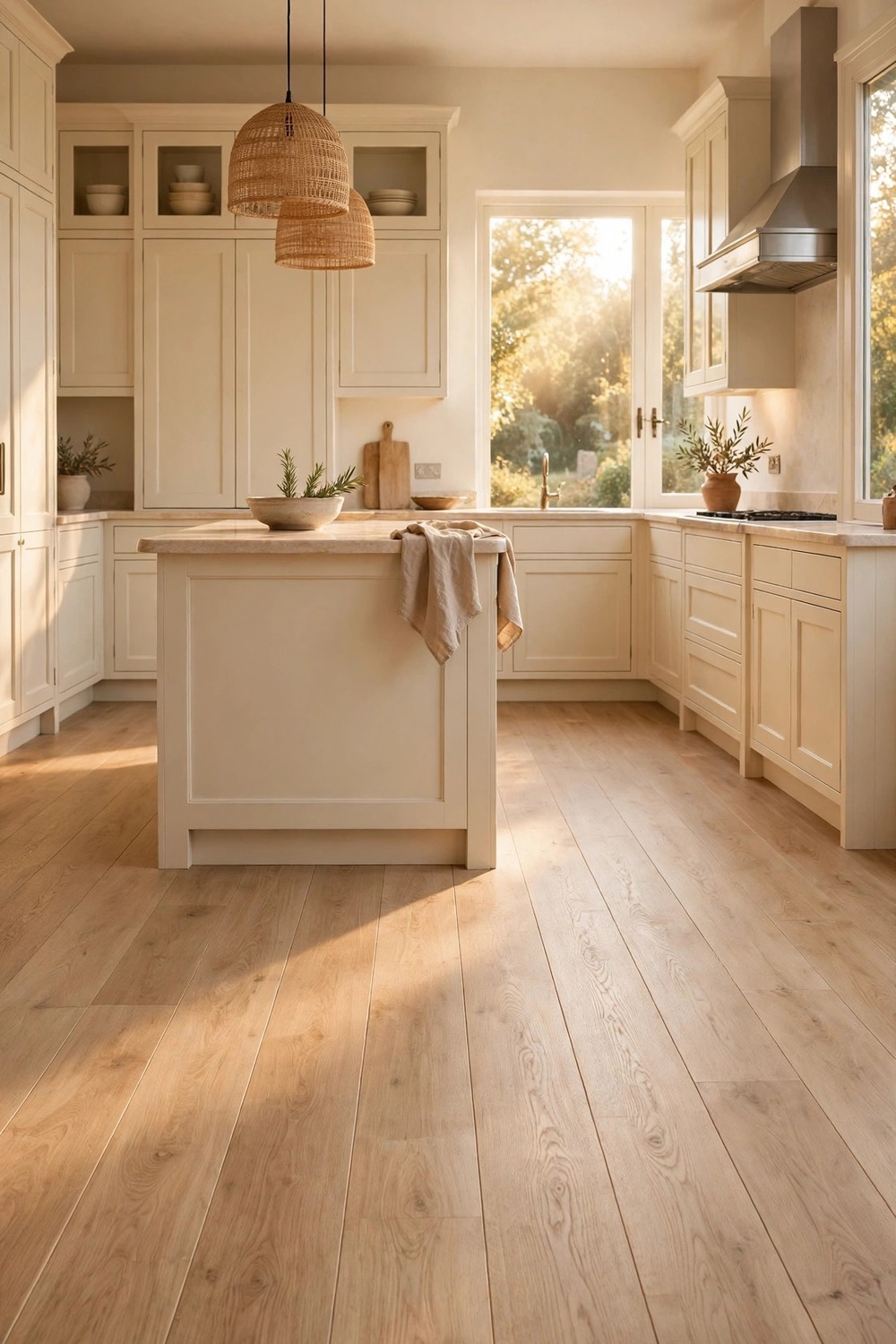
6. Lay Wide Plank Wood for Warmth and Flow
Wide plank wood brings instant warmth to a kitchen and creates a calm flow, especially if the same flooring continues into a dining or living area. Wider boards mean fewer seams, so the floor reads as one generous surface rather than lots of small pieces, and that usually makes a kitchen feel more spacious and relaxed. Light to mid tones are typically the most forgiving in a kitchen, because they show less dust than very dark wood and hide small marks better than a pale washed finish. Real hardwood needs a little respect around water, so wipe spills promptly and use mats at the sink and stove. Engineered wood can be a steadier choice where humidity shifts through the seasons. Keep the grain gentle rather than heavily distressed if you want a timeless look. A simple matte finish feels warm and current, and it lets your cabinets and a woven runner add the texture on top.
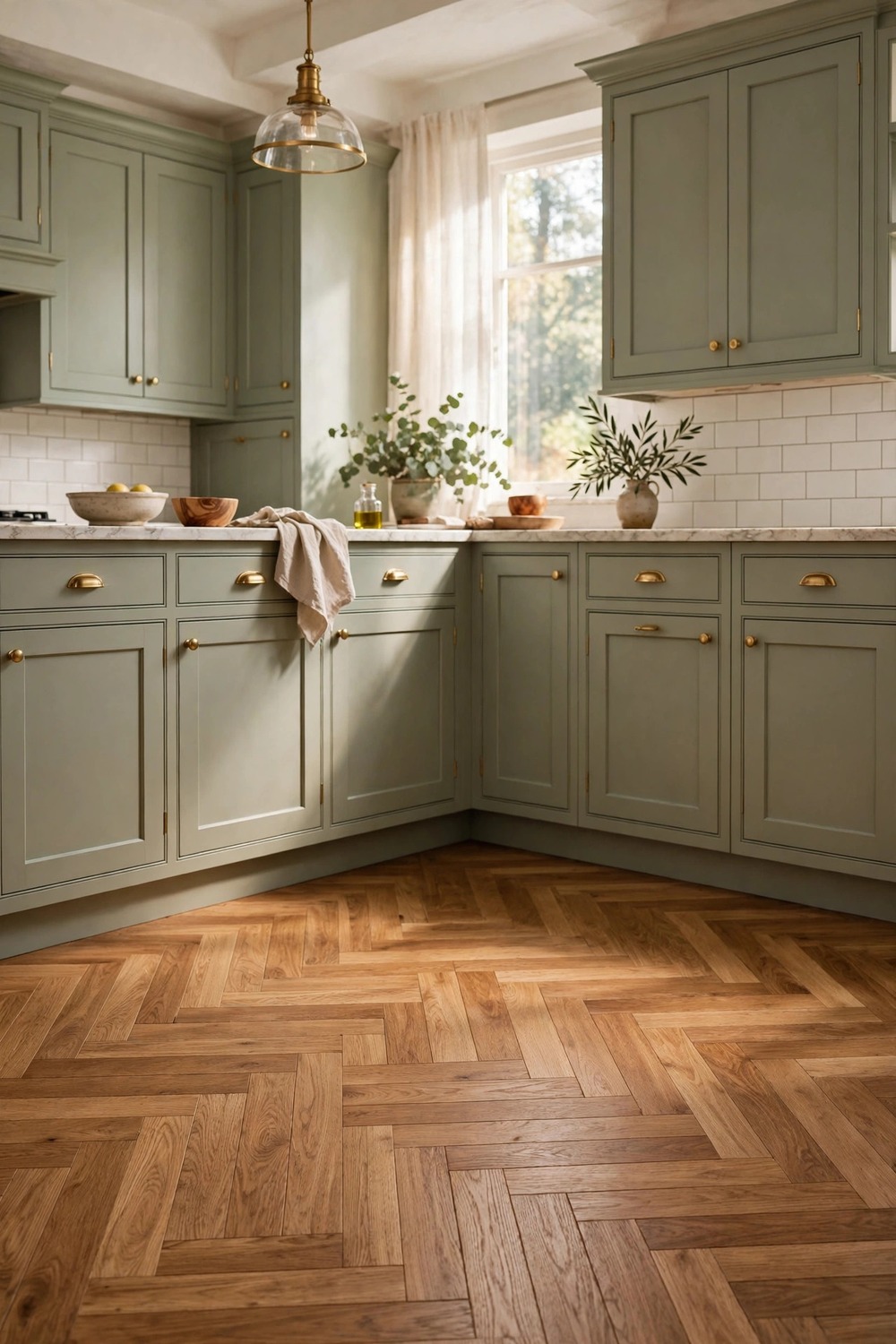
7. Try Herringbone Wood for Elegant Movement
Herringbone takes the warmth of wood and adds a sense of movement that makes even a simple kitchen feel considered and elegant. Those short planks laid in a zigzag draw the eye across the room, which can help a narrow kitchen feel wider and a plain kitchen feel more finished without any extra decor. It works beautifully in warm oak tones beside painted cabinets, and it pairs just as happily with stone counters and simple metal hardware. Herringbone does take more planning and usually costs more to lay than straight planks, because every cut and angle matters, so it is worth using an installer who knows the pattern well. Keep the rest of the palette calm so the floor pattern can shine without competing. A low sheen finish typically looks most timeless here. If a full herringbone floor feels like a big step, you can echo the pattern in a smaller way with a herringbone runner or backsplash later on.
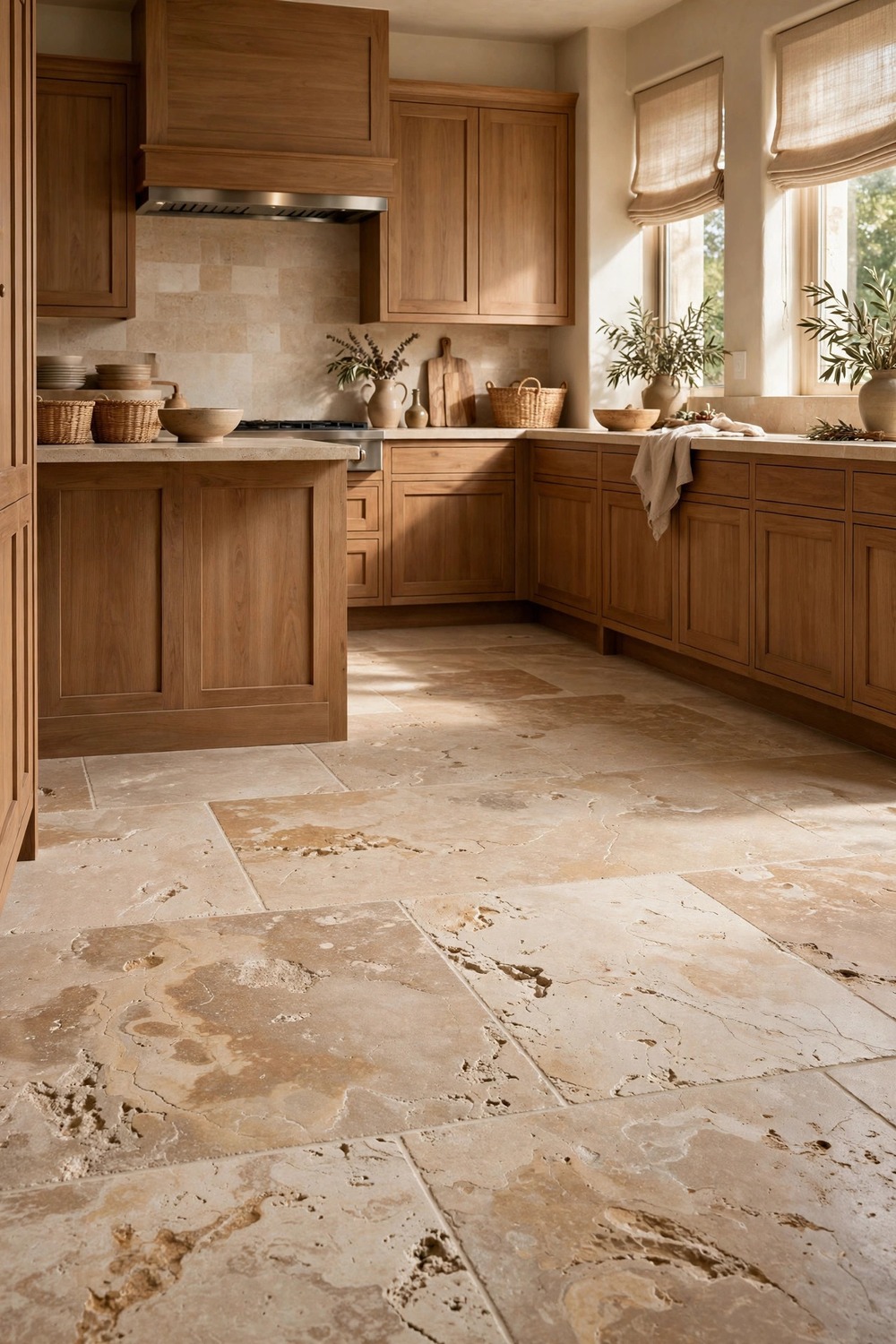
8. Choose Natural Stone for Lasting Luxury
Natural stone gives a kitchen a cool, solid feeling underfoot and a kind of quiet luxury that is hard to fake. Slate, limestone, travertine, and marble all bring their own natural variation, so no two floors look exactly alike and the room gains depth without needing pattern. Stone is typically very durable and can feel wonderfully cool in a warm climate or a sunny kitchen. It does ask for honest care in return. Most natural stone needs sealing from time to time, and softer stones can mark if spills sit for long, so a kitchen that cooks a lot should weigh that upkeep with open eyes. Larger stone tiles with soft, tumbled edges usually feel more relaxed and kitchen friendly than tiny polished pieces. Pair stone with warm wood cabinets or a woven textile nearby so the coolness feels balanced rather than chilly, and choose a honed finish for better grip and a calmer look.
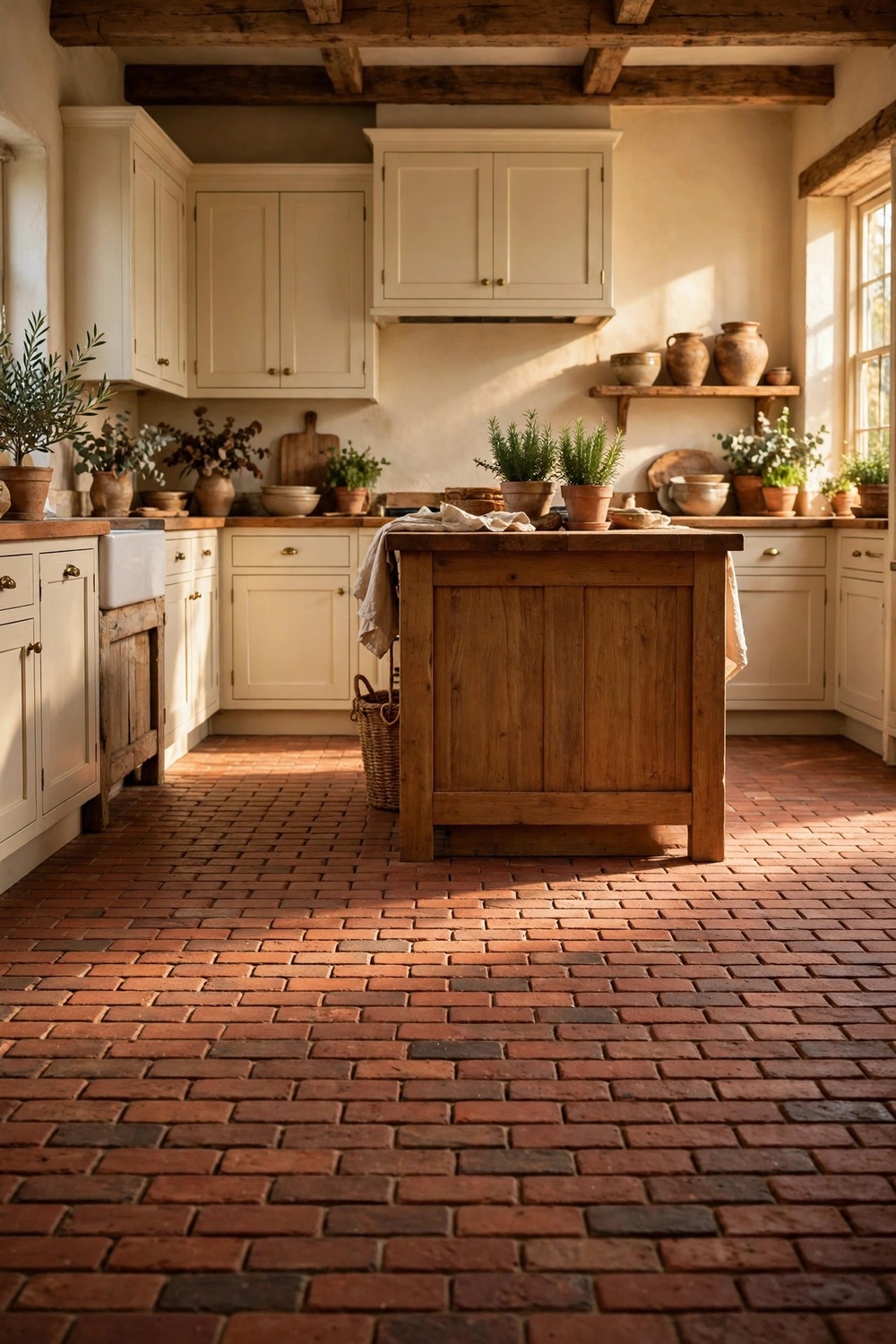
9. Lay Brick Pavers for Rustic Texture
Brick pavers bring a rustic, hardworking charm to a kitchen that loves farmhouse, cottage, or Mediterranean style. That warm red and terracotta variation, plus the slightly uneven texture, makes the floor feel like it has always been there, and it hides everyday dust and crumbs remarkably well between sweeps. Thin brick pavers made for floors are much easier to live with than full bricks, because they keep the height manageable and the surface more even. Sealing is important here, since unsealed brick can absorb spills and oils near the stove, so plan on a good quality sealer and simple upkeep. A herringbone or running bond layout both suit brick, with herringbone feeling a little more refined and running bond feeling more laid back. Because brick is hard underfoot, a cushioned mat at the sink and stove is a kind addition for anyone who cooks for long stretches. The result is a floor with real soul.
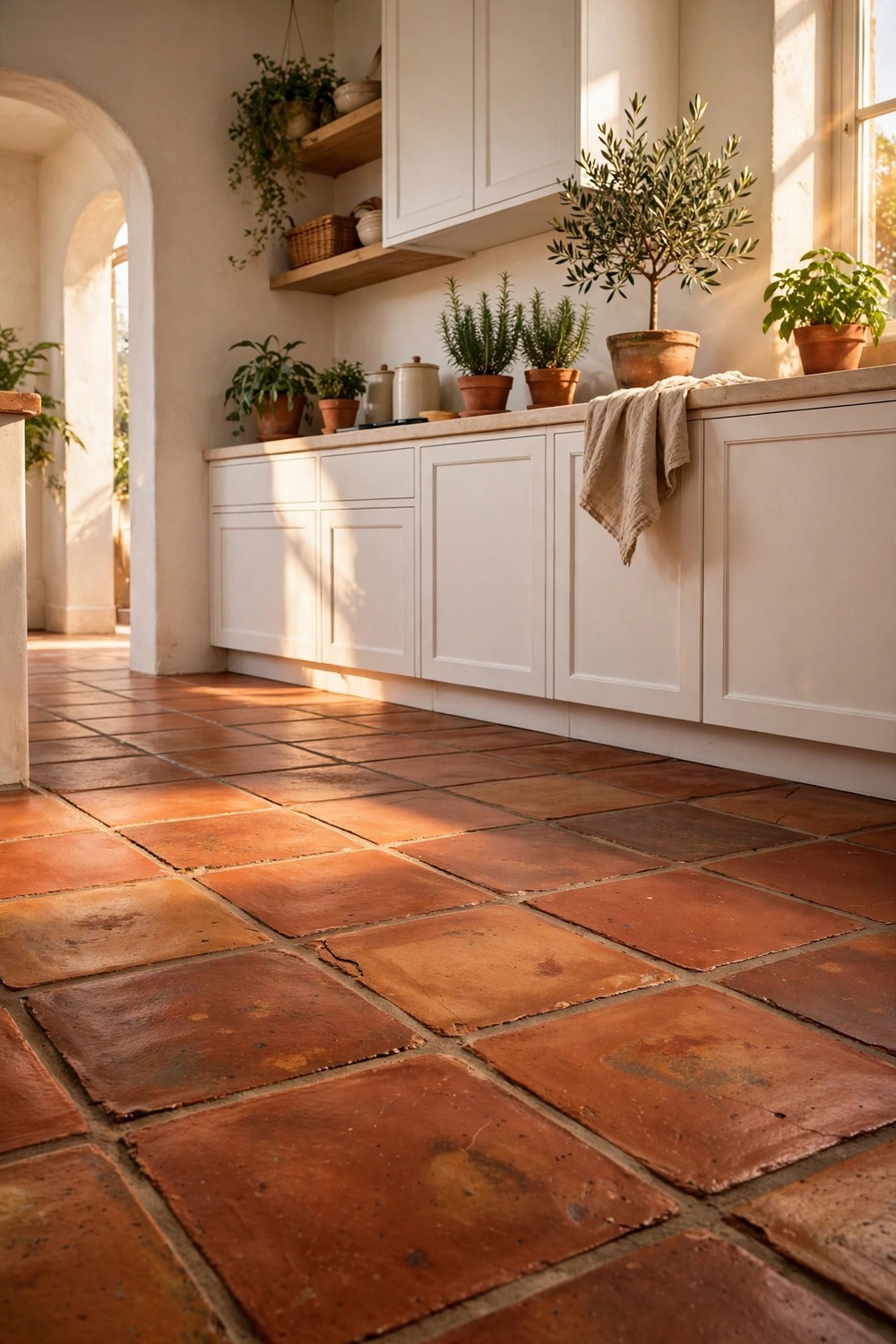
10. Warm Up With Terracotta Tiles
Terracotta tiles warm a kitchen like almost nothing else, with earthy orange, rose, and clay tones that make white or cream cabinets glow. That sun baked color feels especially welcoming in a kitchen that gets cool northern light, and it brings a relaxed Mediterranean spirit without needing themed decor. Real terracotta has soft variation from tile to tile, which is a big part of its charm, while terracotta look porcelain offers similar color with simpler care. Keep in mind that natural terracotta is porous, so sealing and prompt cleanup of oils and acidic spills will help it age gracefully. Square tiles feel classic, while hexagons or longer shapes give the same warm color a fresher layout. Pair terracotta with warm wood, creamy plaster tones, and a little greenery for a kitchen that feels sunny even on a gray morning. A flat woven runner in natural fibers softens the hardness underfoot where you stand most.
Go Smooth With Modern Seamless Surfaces
If you love a calm, uncluttered kitchen, seamless and large scale floors are worth a close look. Fewer grout lines and smooth surfaces make cleaning easier and let your cabinets and light take center stage. These three ideas cover poured, tiled, and tile look options, so you can get the modern feeling at different budgets and levels of commitment.
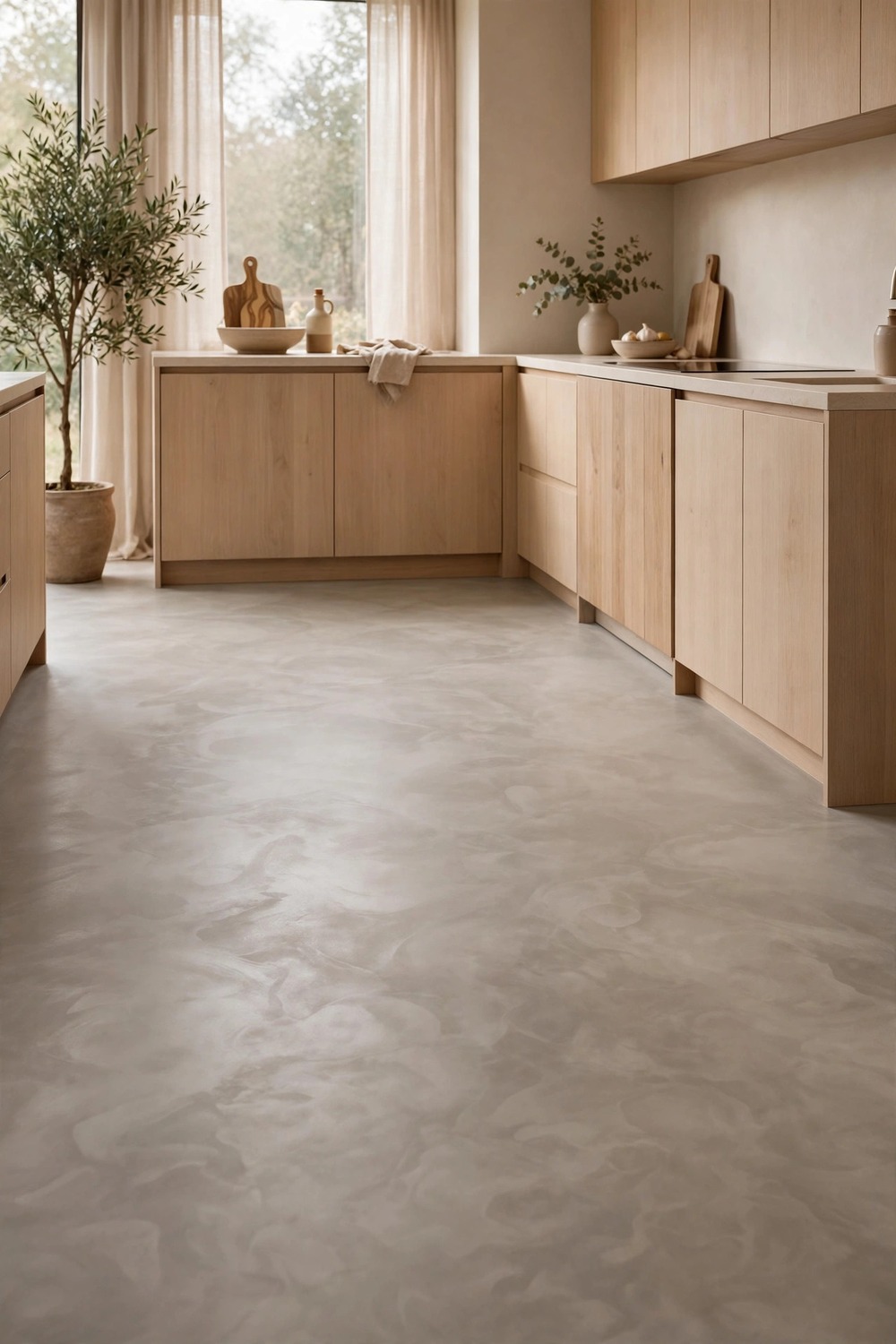
11. Pour Microcement for a Seamless Modern Look
Microcement creates a smooth, seamless kitchen floor with a soft cloudy movement that feels calm, modern, and a little bit luxurious. Because it is applied in thin layers, often over an existing sound floor, it can be a smart renovation choice when you want a big change without a lot of added height at doorways. There are no grout lines to scrub, which many busy cooks count as its biggest everyday gift, and the matte finish hides light dust well. Soft warm gray, pale stone, and gentle beige tones usually suit kitchens best, because very dark microcement can show flour and crumbs more than you might expect. It does need skilled application and proper sealing, especially around the sink and stove, so this is not a casual weekend project. Use felt pads under stools and chairs to protect the surface. Paired with warm wood and simple cabinetry, microcement feels serene rather than stark.
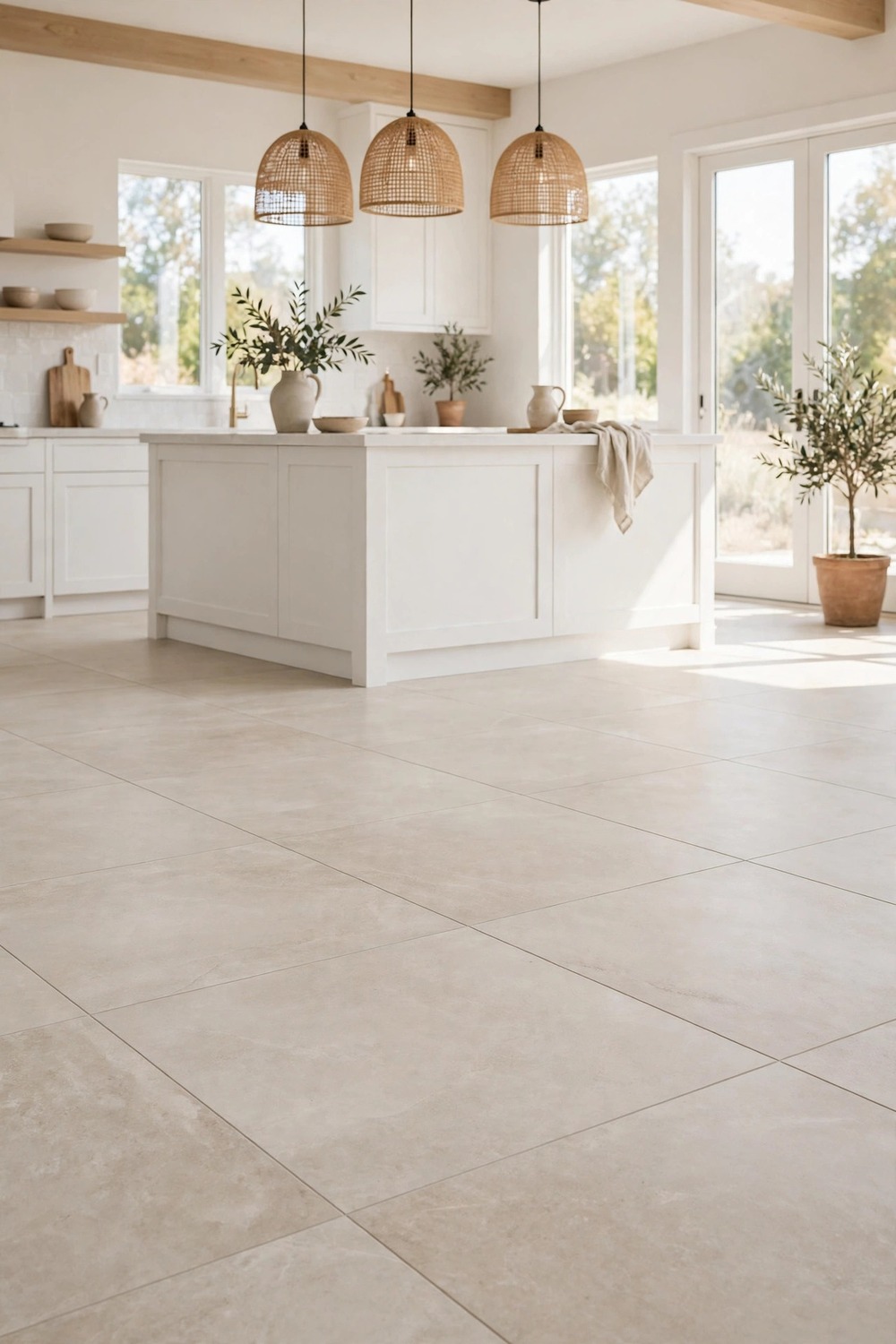
12. Choose Large Format Porcelain for an Open Feel
Large format porcelain tile is a quiet hero for kitchens that need to feel bigger and brighter. Big tiles mean far fewer grout lines, so the floor reads as one open surface and the whole room feels calmer and more spacious, which is especially helpful in a small or narrow kitchen. Porcelain is typically hard wearing, water resistant, and easy to clean, making it a practical fit for a room that sees spills, pets, and heavy foot traffic. Choose a stone look, a soft concrete look, or a gentle plain tone, and keep the grout color close to the tile for the most seamless effect. A matte finish is usually the kindest choice near water. Large tiles do need a flat, well prepared base to avoid lippage, so good installation matters more here than with small tiles. Lay them in a simple grid or a neat offset, let the scale do the work, and enjoy how open the kitchen feels.
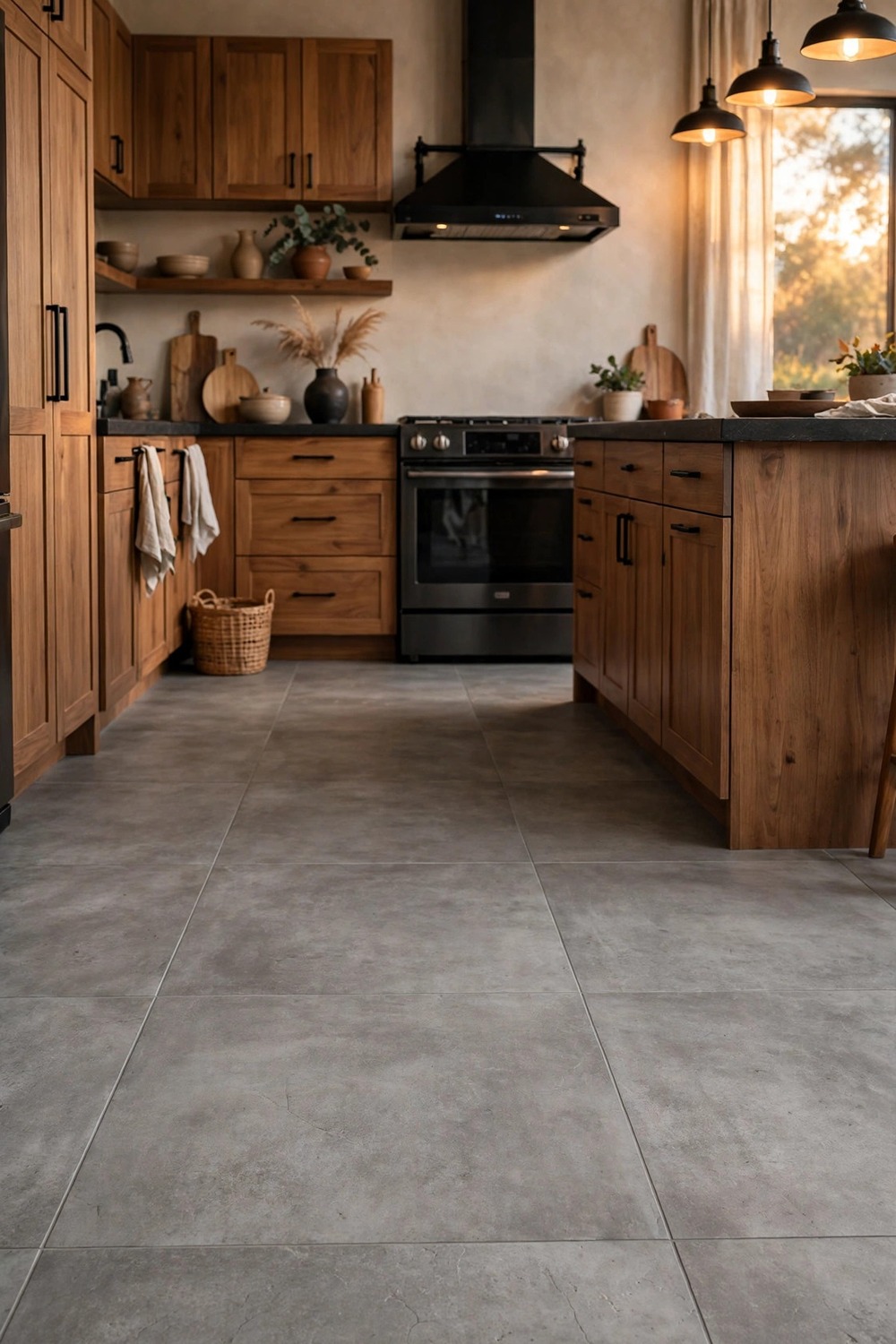
13. Try Concrete Look Tile for Industrial Calm
Concrete look tile gives you the cool, industrial calm of a concrete floor with the practicality and comfort of porcelain. The soft gray surface with gentle variation pairs beautifully with warm wood cabinets, black hardware, and stainless appliances, and it lets colorful rugs, art, and cookware stand out without competition. Unlike real concrete, tile will not need the same sealing routine and it is usually warmer and more forgiving to install in an existing kitchen. Mid tone grays are typically the sweet spot, because very light concrete looks can show every spill and very dark ones can show every crumb and dusting of flour. A large format keeps the industrial feeling clean, while a smaller tile with more grout lines leans a bit more traditional. Keep your grout in a similar gray so the floor feels unified. Add warmth nearby with wood stools, a woven runner, and warm lighting so the calm never turns cold.
Refresh Smart With Practical Revivals
Not every great kitchen floor needs a full tear out or a big budget. Paint, linoleum, vinyl, and cork have all come a long way, and mixing materials can solve real layout problems beautifully. These final five ideas are for practical homes that cook hard, live fully, and still want a floor that feels personal and comfortable every day.
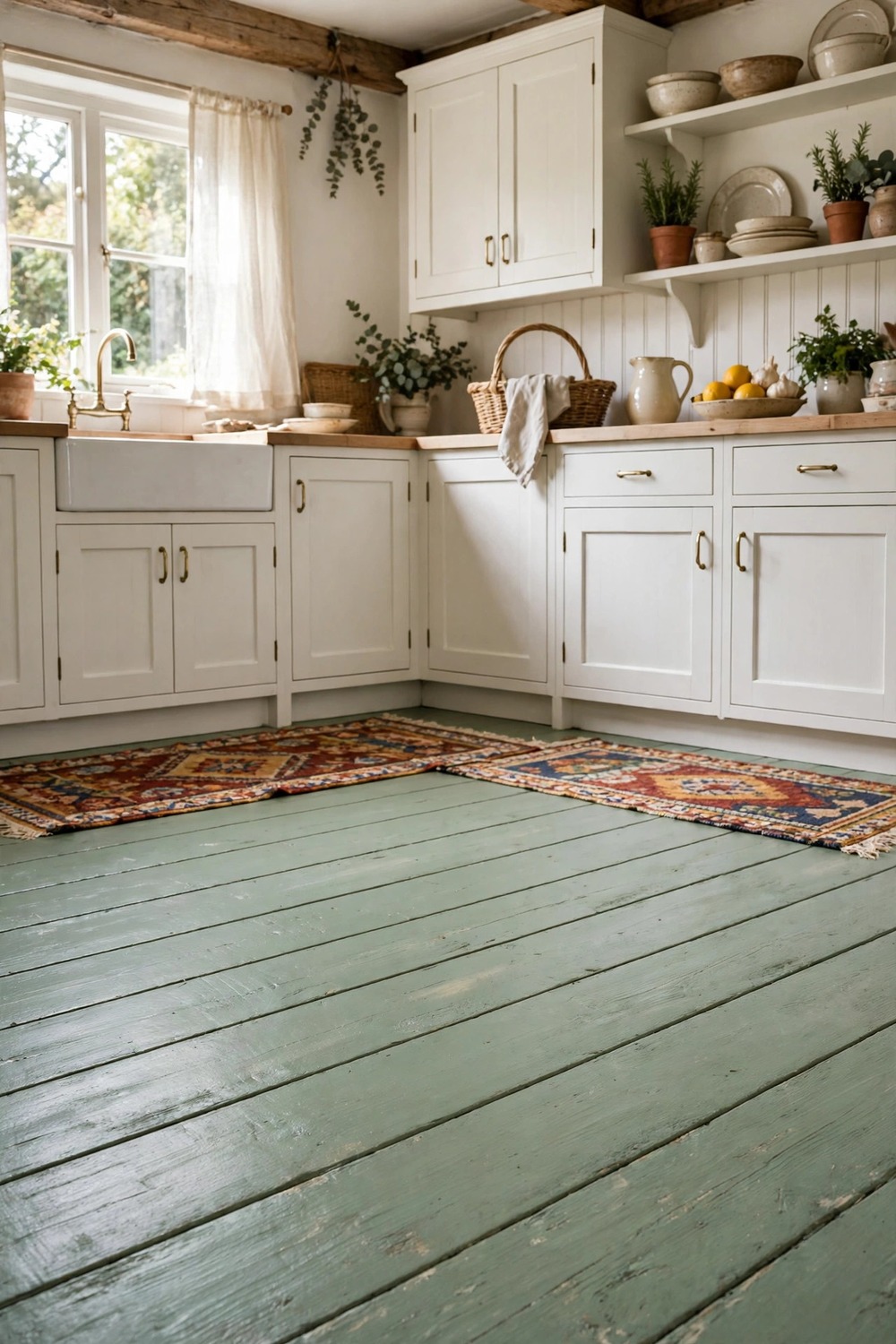
14. Paint Your Floors for a Budget Friendly Refresh
Painting your kitchen floor is one of the most budget friendly ways to get a completely new look, especially if you have worn wood or plain tile that is sound but unloved. A soft sage, warm cream, classic checkerboard painted by hand, or a simple stenciled pattern can transform the room over a long weekend for a fraction of the cost of new flooring. Preparation is everything here. Clean thoroughly, sand or prime as your floor type needs, and use a paint made for floors with a durable topcoat, because a kitchen floor works harder than almost any other surface in the house. Painted floors will typically show wear over time in high traffic paths, and many people find that lived in softening part of the charm rather than a flaw. Keep leftover paint for touch ups. This is also a kind, low commitment way to test a bold color before you invest in a permanent floor in the same family.
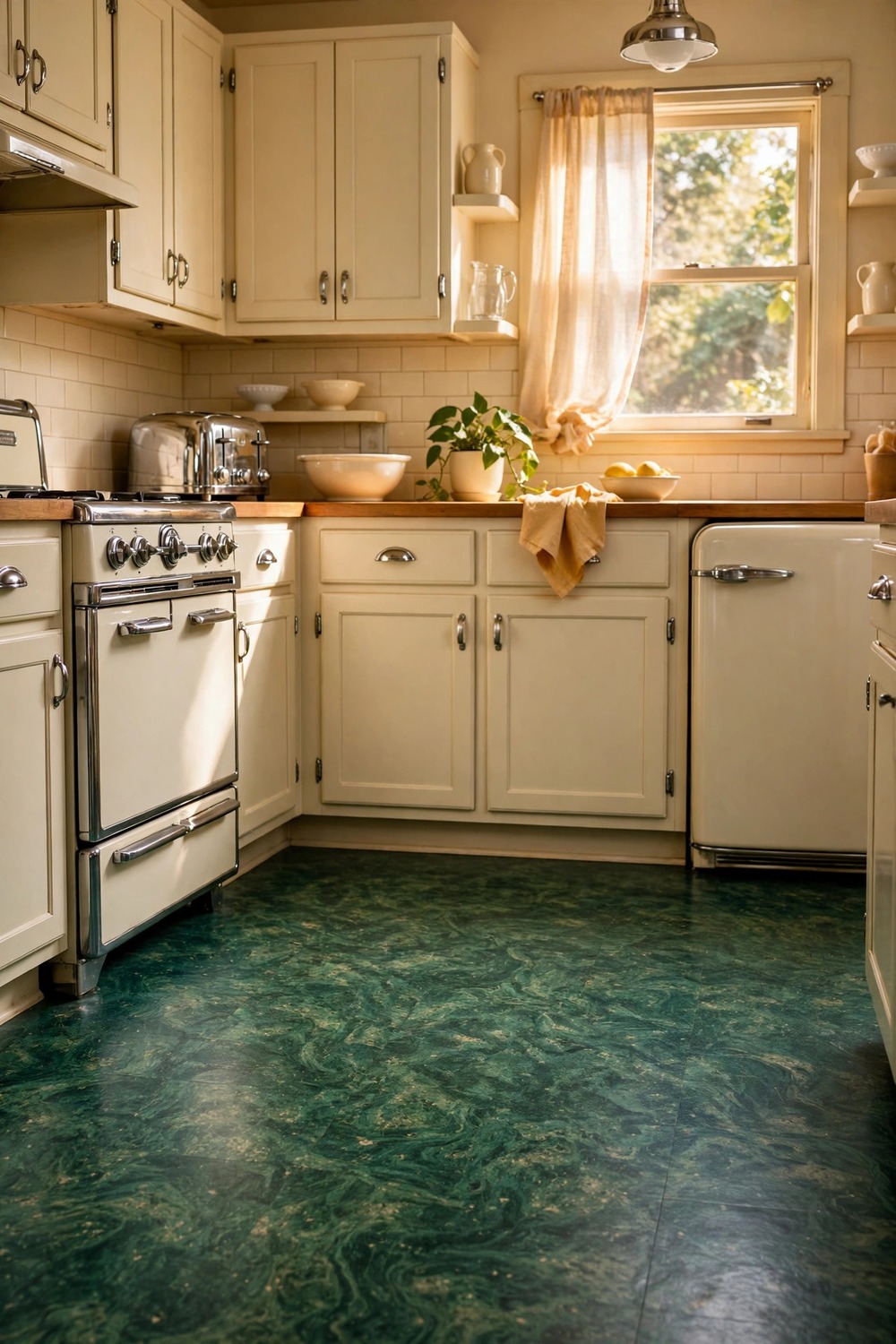
15. Bring Back Linoleum for Retro Color and Ease
Linoleum is having a well earned revival, and modern linoleum is not the dull sheet flooring you might remember. Made largely from natural materials like linseed oil and cork dust, it comes in rich marbled colors, soft neutrals, and cheerful retro tones that suit both vintage and modern kitchens. It feels slightly warm and resilient underfoot, which your knees and back will notice if you cook a lot, and it is typically quiet to walk on too. Linoleum handles everyday kitchen life gracefully with regular sweeping and damp mopping, though standing water should be wiped up rather than left to sit. Sheet linoleum gives a seamless look, while tiles let you create checkerboard or bordered layouts and replace a single damaged piece if needed. Pair a deep green, warm red, or soft cream linoleum with simple cabinets for a kitchen that feels joyful and honest. It is practical flooring with real personality.
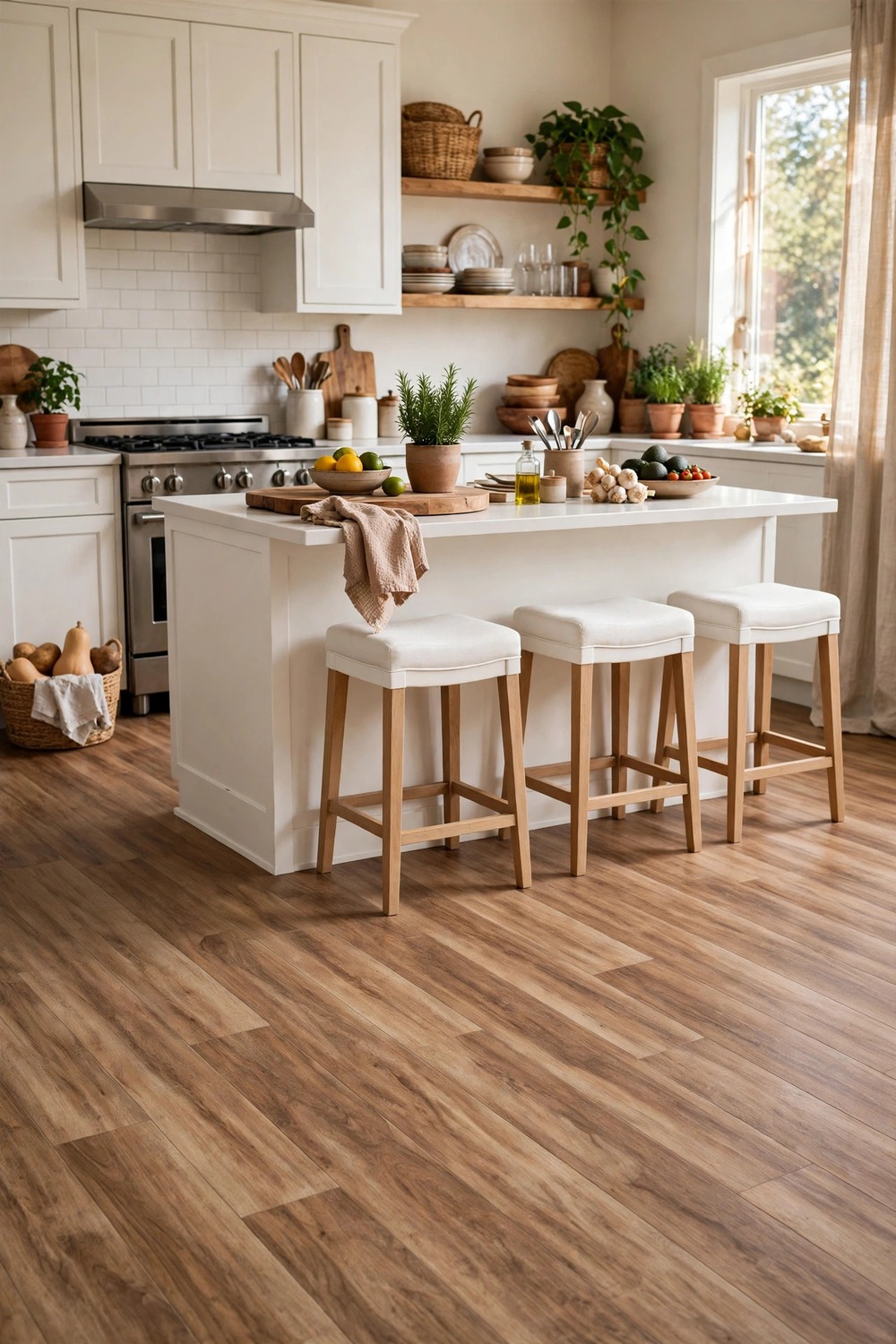
16. Pick Luxury Vinyl Plank for Practical Everyday Living
Luxury vinyl plank, often shortened to LVP, has become a go to kitchen floor for busy households because it balances good looks with genuinely easy living. Modern planks mimic wood grain and color convincingly, feel warmer and softer than tile, and handle spills, muddy paws, and dropped pans with far less worry than real wood usually allows. Most options are water resistant and many are fully waterproof, which brings real peace of mind around dishwashers and sinks. Installation is often simpler and faster than tile or hardwood, and individual planks can typically be replaced if one gets damaged. Choose a mid tone wood look with gentle grain for the most forgiving, timeless result, and avoid very gray tones if you want the kitchen to feel warm. A quality wear layer matters more than the lowest price here, since the kitchen is high traffic. Add a washable runner at the sink and you have a floor built for real life.
17. Choose Cork for Softness and Quiet
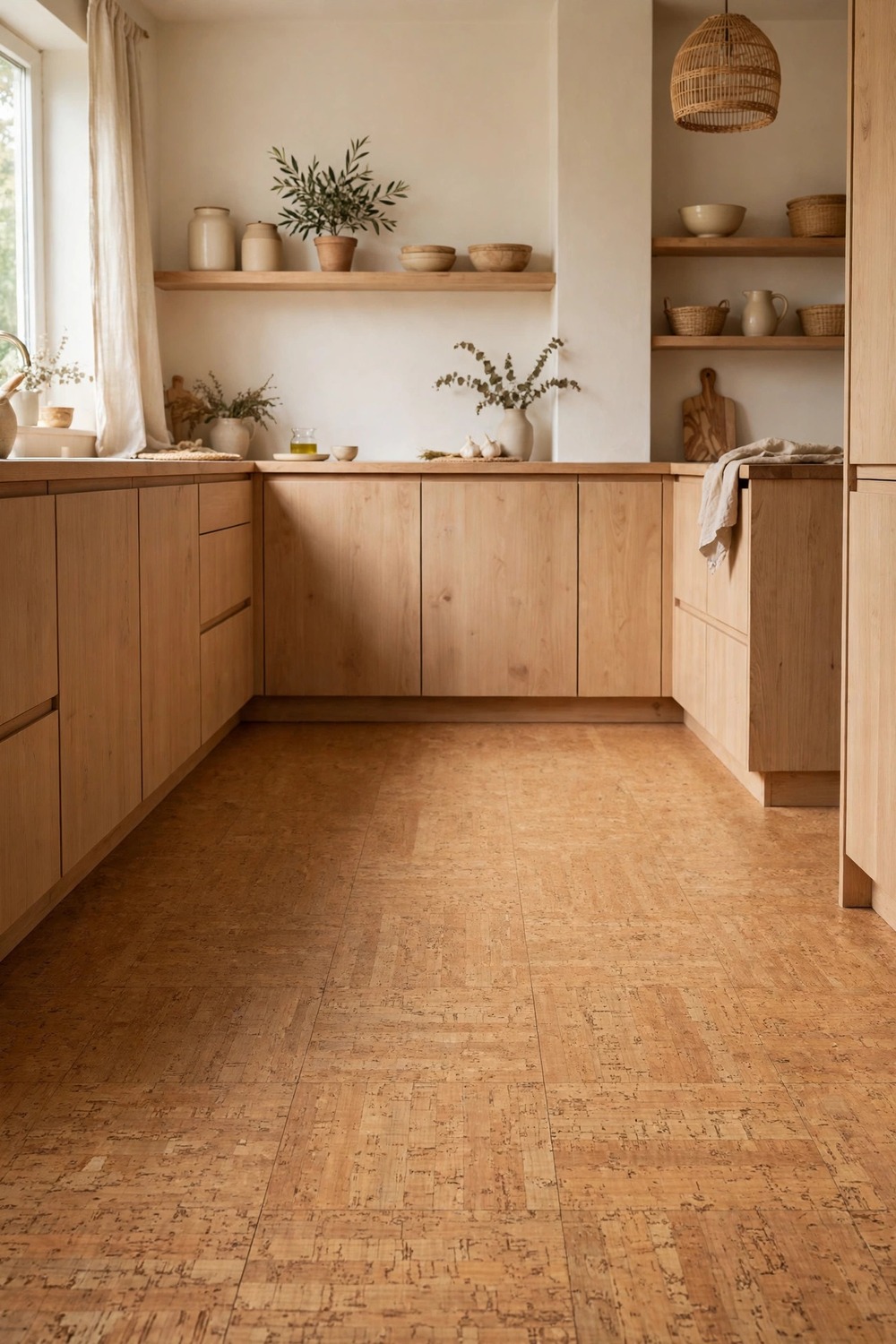
Cork is the kitchen floor for anyone whose feet, knees, or back complain after a long cooking session. Its natural cellular structure gives it a soft, springy feel that is noticeably kinder than tile or stone, and it also quiets the room, softening the clatter of dishes and footsteps. That warm honey tone and gentle natural pattern suit cozy, natural kitchens beautifully, especially beside wood cabinets and cream walls. Cork is typically warm to the touch in winter, which makes those early morning bare feet moments much nicer. It does need sealing and a little care. Sharp chair legs and grit can mark it, so felt pads and regular sweeping help, and standing water should be wiped up promptly. Glue down tiles and floating planks are both available, with tiles often giving a smoother kitchen finish. If comfort is your top priority and your style leans warm and natural, cork deserves a serious look.
18. Mix Two Materials to Define Kitchen Zones
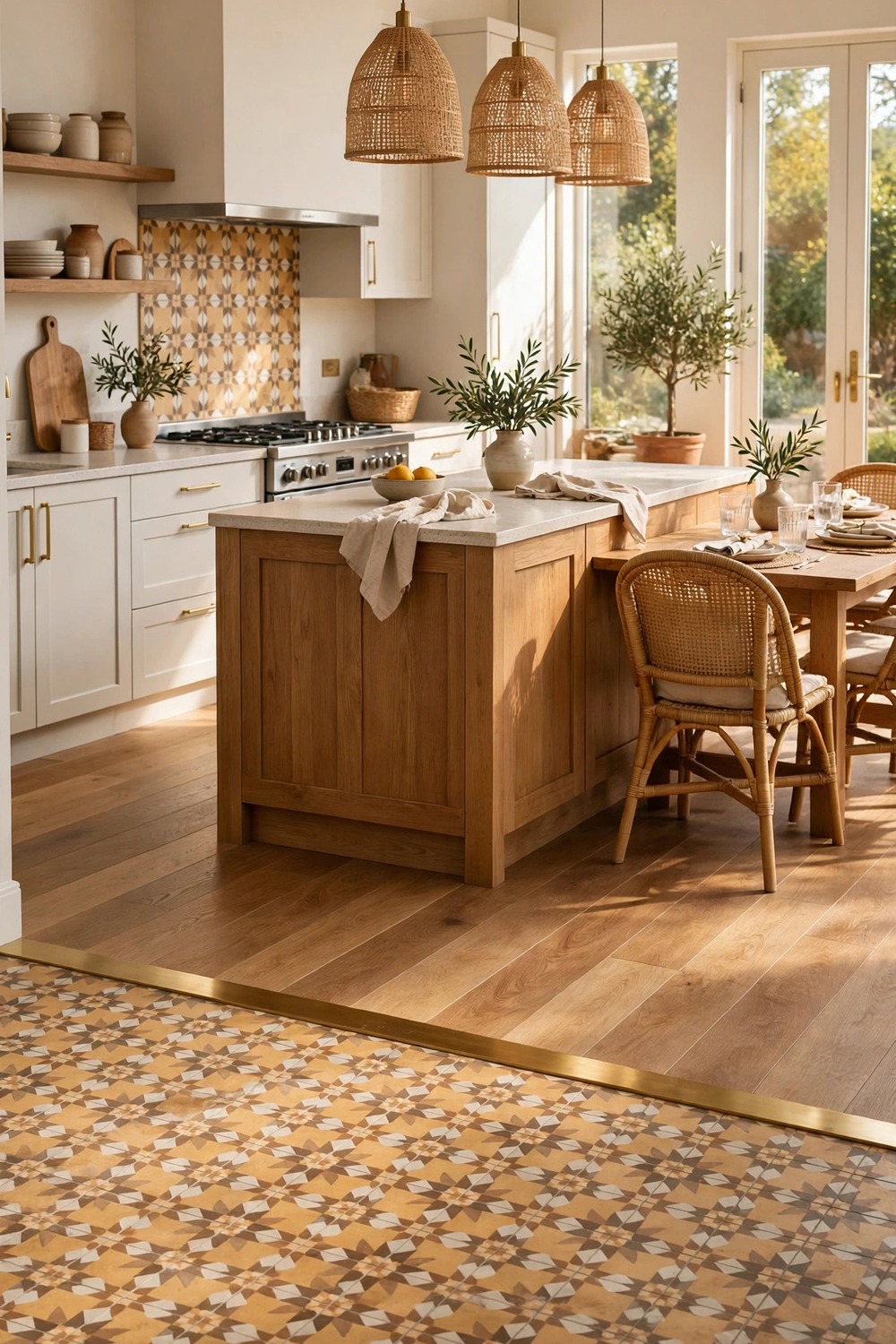
Mixing two flooring materials lets you put the most practical surface where you cook and the warmest surface where you gather, and that simple idea solves a lot of real kitchen problems. You might run durable tile or stone in the cooking and sink zone, then flow into warm wood under the table or island seating, with a neat brass strip or a careful tile to wood transition between them. In an open plan home, that change underfoot quietly tells everyone where the kitchen begins without needing a wall. The key is keeping the two materials in a similar tone family so the mix feels intentional rather than accidental. Plan the transition line to fall somewhere logical, like along the island or a doorway, and think about heights so there is no awkward step. This approach also lets you spend more on a smaller area of special tile while using a simpler material for the rest, which is kind to both the look and the budget.
Pick the Floor That Fits Your Real Kitchen
Your kitchen floor does not need to be the most expensive or the most dramatic one you have ever seen. It just needs to handle your spills, feel good under your feet, and make you a little happier every time you walk in to cook. If you love pattern, let checkerboard, terrazzo, or hex tile carry the room. If you crave calm, lean toward wide planks, large porcelain, or microcement. And if comfort and budget lead the way, painted floors, linoleum, vinyl plank, and cork are all honest, lovely places to land.
So start with one small step this week. Order a few samples, lay them beside your cabinets, and spill a little water and coffee on them to see how they really behave. Live with your favorite for a few days of ordinary cooking and morning light. The floor that still makes you smile after that is usually the right one, and once it is down, your kitchen will finally feel like the warm, working heart of your home that you always meant it to be.

Leave a Reply