
20 White Oak Kitchen Cabinet Ideas That Feel Warm and Modern
Look, we get it. You want a kitchen that feels modern and clean, but you do not want it to feel cold or stark when you walk in with your morning coffee. All white cabinets can look bright in photos and still feel a little flat in real life, especially on gray days or in the evening. If you have ever loved the idea of a light kitchen and then worried it would feel more like a showroom than a home, you are definitely not alone. A lot of kitchens end up chilly by accident, because the safest finishes are usually the coolest ones.
That is exactly why white oak has become such a favorite. It gives you the light, airy look of a modern kitchen with real warmth built right into the grain. The tone usually sits in that soft spot between pale blonde and light honey, so it pairs happily with white walls, warm stone, and both brass and black hardware. In this list you will find flat and shaker fronts, stain shades from whitewashed to honey, two-tone pairings, waterfall islands, open shelving, and the counter and backsplash matches that pull it all together. You do not need every idea here. Two or three done well will typically change the whole feeling of the room.
Start with the front style and finish if you are planning new cabinets, then look at color pairings if you are keeping part of what you have, and save hardware and styling for last. Work in that order and you will usually spot what your kitchen needs most as you go. Take photos of your samples in morning and evening light, live with them on the counter for a few days, and trust the combination that still looks good on an ordinary Tuesday. A warm modern kitchen is rarely built in one big decision. It comes together one calm, well chosen layer at a time.
In This Article
- Choose Flat Slab Fronts for a Clean Modern Line
- Pick Classic Shaker Fronts for Timeless Warmth
- Try Skinny Shaker Frames for a Fresh Update
- Show Off Rift-Sawn Grain for Subtle Texture
- Keep the Finish Natural and Matte for True Oak Warmth
- Warm It Up With a Light Honey Stain
- Go Pale and Airy With a Whitewashed Oak Finish
- Pair White Oak Lowers With Crisp White Uppers
- Ground the Space With a White Oak Island and White Perimeter
- Contrast White Oak With Matte Black Cabinets
- Wrap the Island in a Waterfall Oak Edge
- Add Open Oak Shelving Instead of Upper Cabinets
- Line the Range Hood in Matching White Oak
- Extend Oak Inside Glass-Front Uppers for Display
- Add Integrated Oak Panels for Appliances
- Pair White Oak With Unlacquered Brass Hardware
- Try Long Black Pulls for Modern Contrast
- Match White Oak With Warm White Quartz Counters
- Layer a Soft Limestone Backsplash for Natural Texture
- Style the Counters With Warm Wood and Stone Accents
Fronts, Grain and Finishes That Set the Tone
The cabinet front is what you see most in a kitchen, so it quietly decides whether the room leans sleek or traditional, calm or busy. With white oak, the grain does a lot of the decorating for you, which means simpler fronts often look the richest. These first five ideas cover the front styles, the cut of the wood, and the finish that lets the natural warmth come through.
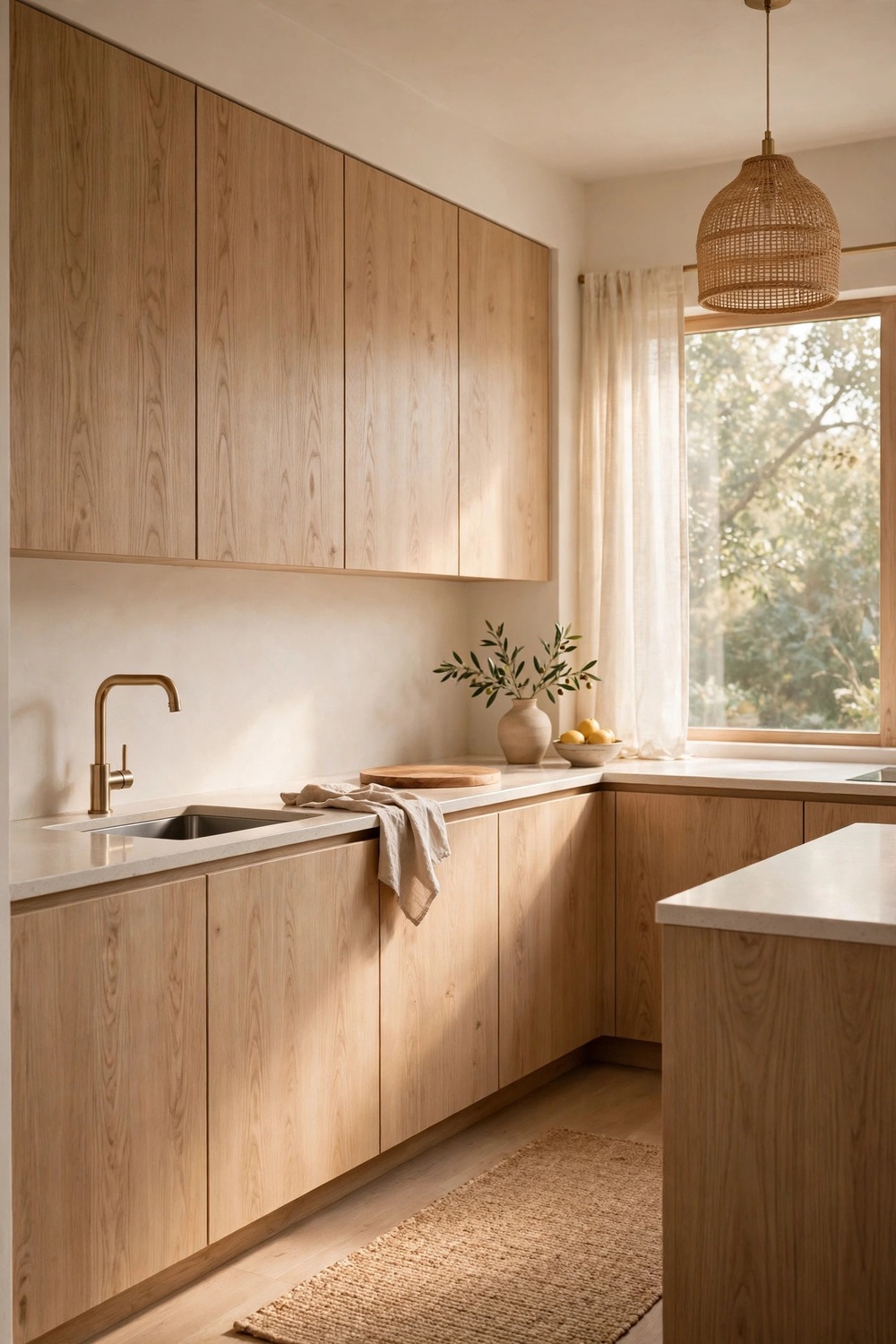
1. Choose Flat Slab Fronts for a Clean Modern Line
Flat slab fronts are usually the clearest way to get that warm modern look, because they let the oak grain run in one calm, unbroken sheet across every door and drawer. There are no frames or panels competing for attention, so the color and the subtle grain movement become the whole design. This style works especially well in smaller kitchens, where fewer lines typically make the room feel larger and quieter. Ask for the grain direction to run the same way across a full run of cabinets if you can, since that consistency is what makes slab fronts look custom rather than plain. Keep the hardware minimal or skip handles on the uppers entirely. Pair the fronts with a simple counter and a quiet backsplash, and let the wood carry the warmth. A practical tip is to order one full size sample door first, because grain on a small swatch never tells the full story.
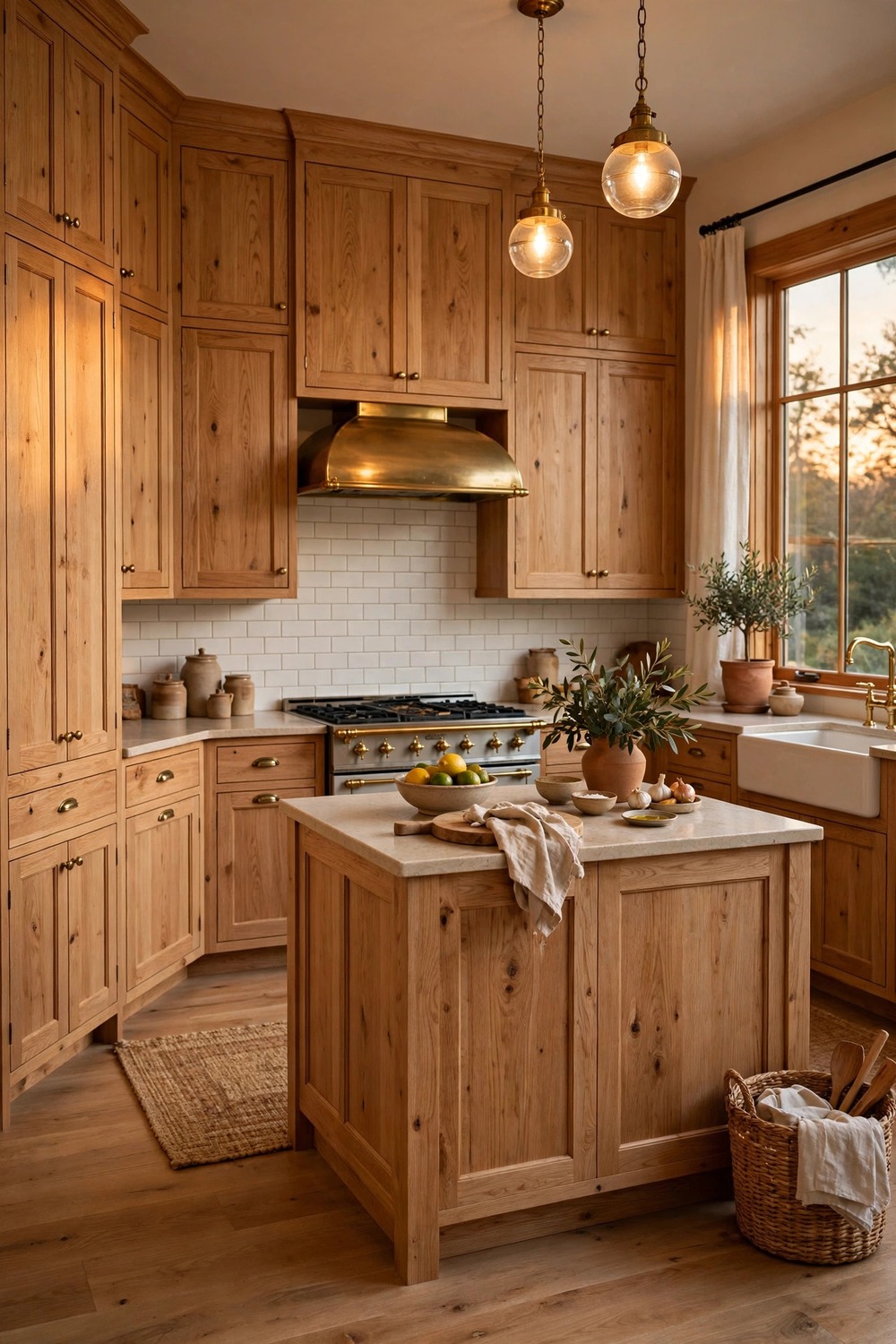
2. Pick Classic Shaker Fronts for Timeless Warmth
Classic shaker fronts in white oak are a lovely middle path if you love modern calm but still want a kitchen that feels familiar and welcoming. The simple recessed panel adds just enough shadow and structure to make the cabinets feel crafted, while the pale oak keeps everything light and current. Shaker tends to suit homes with traditional bones, because it bridges the gap between older trim details and newer finishes without forcing either side. Choose a moderate frame width so the profile reads clean rather than heavy, and keep the stain light so the panel detail stays soft. This front pairs easily with almost any hardware, from small brass knobs to longer black pulls, which gives you flexibility later. If you cook a lot, the flat center panel is also easy to wipe down. Order your sample with the exact finish you plan to use, since oak can read warmer once the panel shadows are in play.
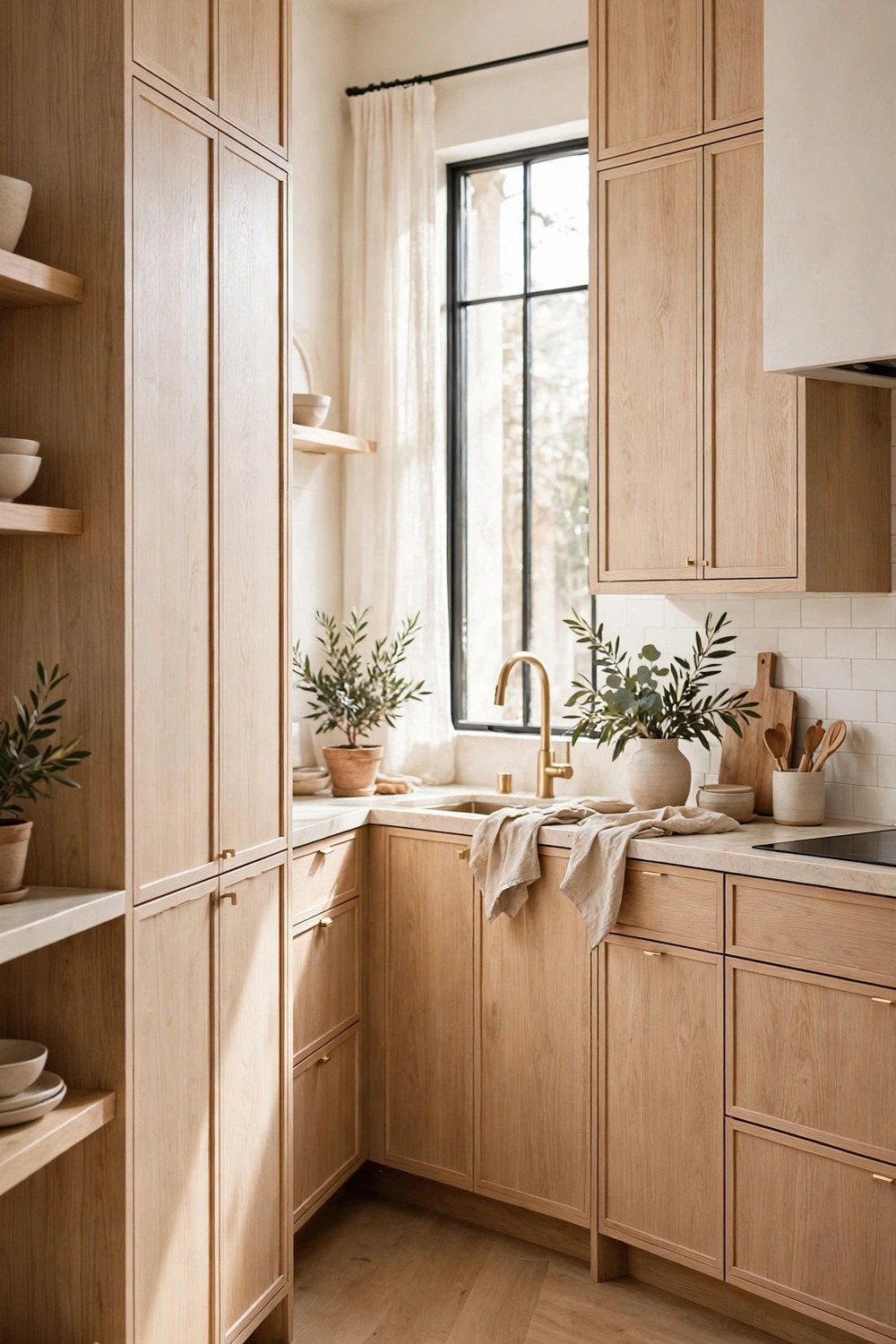
3. Try Skinny Shaker Frames for a Fresh Update
Skinny shaker, sometimes called slim shaker, takes the classic profile and narrows the frame for a lighter, more delicate look that feels very current. The thinner border gives you the crafted detail of shaker without the weight, so the kitchen reads modern first and traditional second. In white oak, that fine frame line looks especially pretty because the grain stays visible across most of the door. This style is a smart pick if your kitchen is on the smaller side, since the slimmer proportions usually feel less bulky than a standard shaker door. It also layers well with simple slab drawers if you want to mix profiles in one room. Keep the hardware slim to match, like a narrow pull or a small round knob. Ask your cabinet maker for a sample door early, because frame width is hard to judge from a photo and a small change makes a real difference in person.
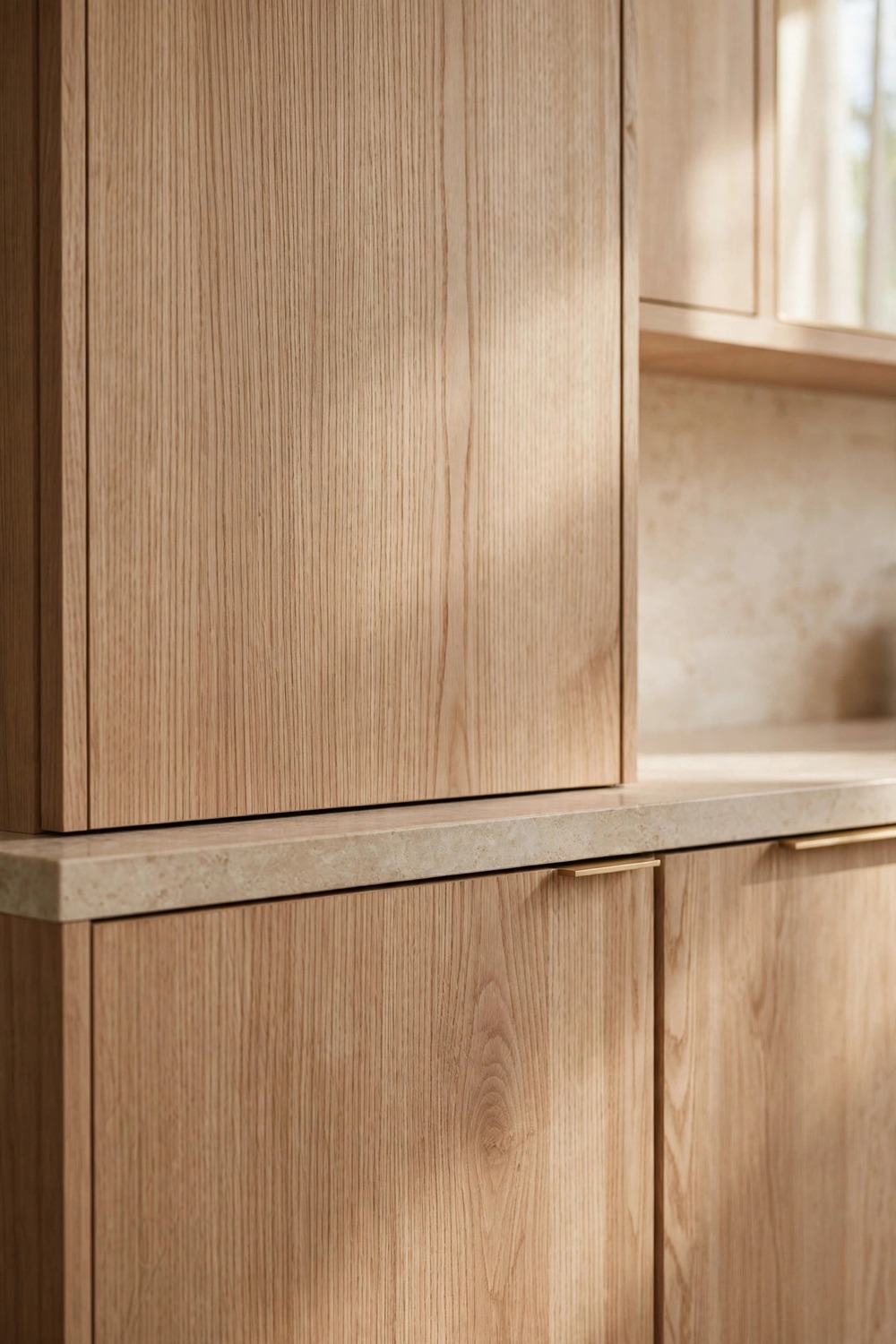
4. Show Off Rift-Sawn Grain for Subtle Texture
Rift-sawn white oak is the quiet detail behind many of the calmest modern kitchens you see, because the way the wood is cut produces a mostly straight, linear grain with very little of the wavy pattern you get from plain sawn boards. That straight grain reads as texture rather than pattern, so a full wall of cabinets still feels restful. It also tends to look consistent from door to door, which helps a large kitchen feel pulled together. Rift-sawn stock typically costs a bit more, so some families use it on the most visible runs and a plainer cut inside pantries or on less seen sides. Keep the finish clear or very light so the fine grain lines stay visible. Pair it with slab or skinny shaker fronts for the full effect. When you review samples, hold them vertically, the way the doors will hang, since grain direction changes how the whole run feels.
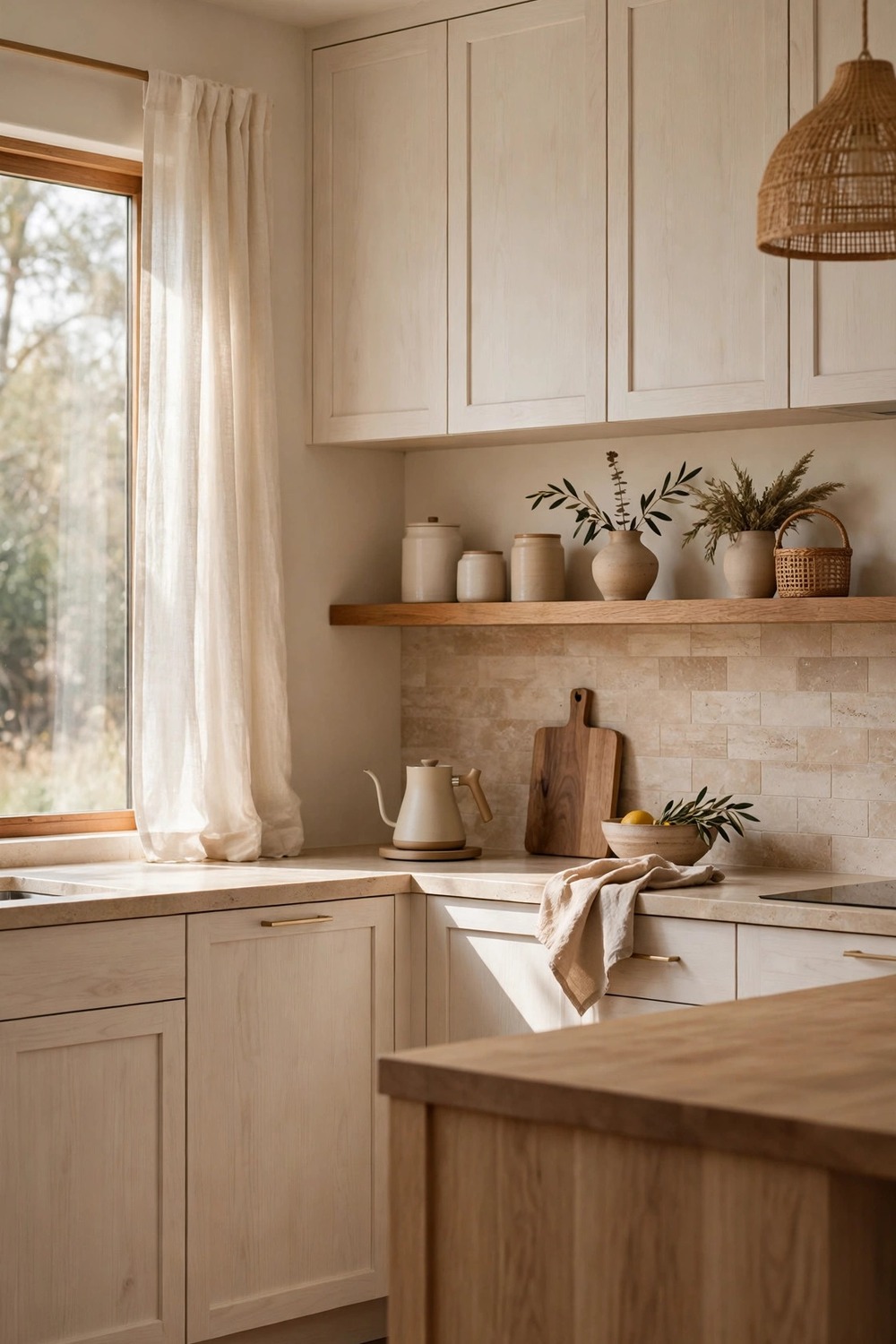
5. Keep the Finish Natural and Matte for True Oak Warmth
A natural matte finish is often the best way to keep white oak looking like real wood instead of furniture store wood, because it leaves the color close to the raw board and avoids the shiny, slightly orange look that older glossy finishes can create. The low sheen feels modern, hides fingerprints and small smudges more gracefully, and lets morning light sit softly on the doors instead of bouncing off them. Ask about water based clear coats or hardwax style finishes, since some oil based products yellow the pale tone over time more than you might expect. Keep in mind that matte finishes can show dark marks around handles in a busy kitchen, so a quick wipe routine helps. Test your finish sample with a drop of water and a greasy fingerprint before you commit to a whole kitchen. If the tone still looks warm and calm after that little test, you have usually found your finish.
Stain Shades and Two-Tone Pairings That Stay Balanced
Once the front style feels right, color is the next big lever. White oak can lean pale and Scandinavian or golden and cozy depending on the stain, and pairing it with white or black cabinets can stretch a budget while adding contrast. These five ideas help you pick a shade and a pairing that stays warm without ever feeling heavy.
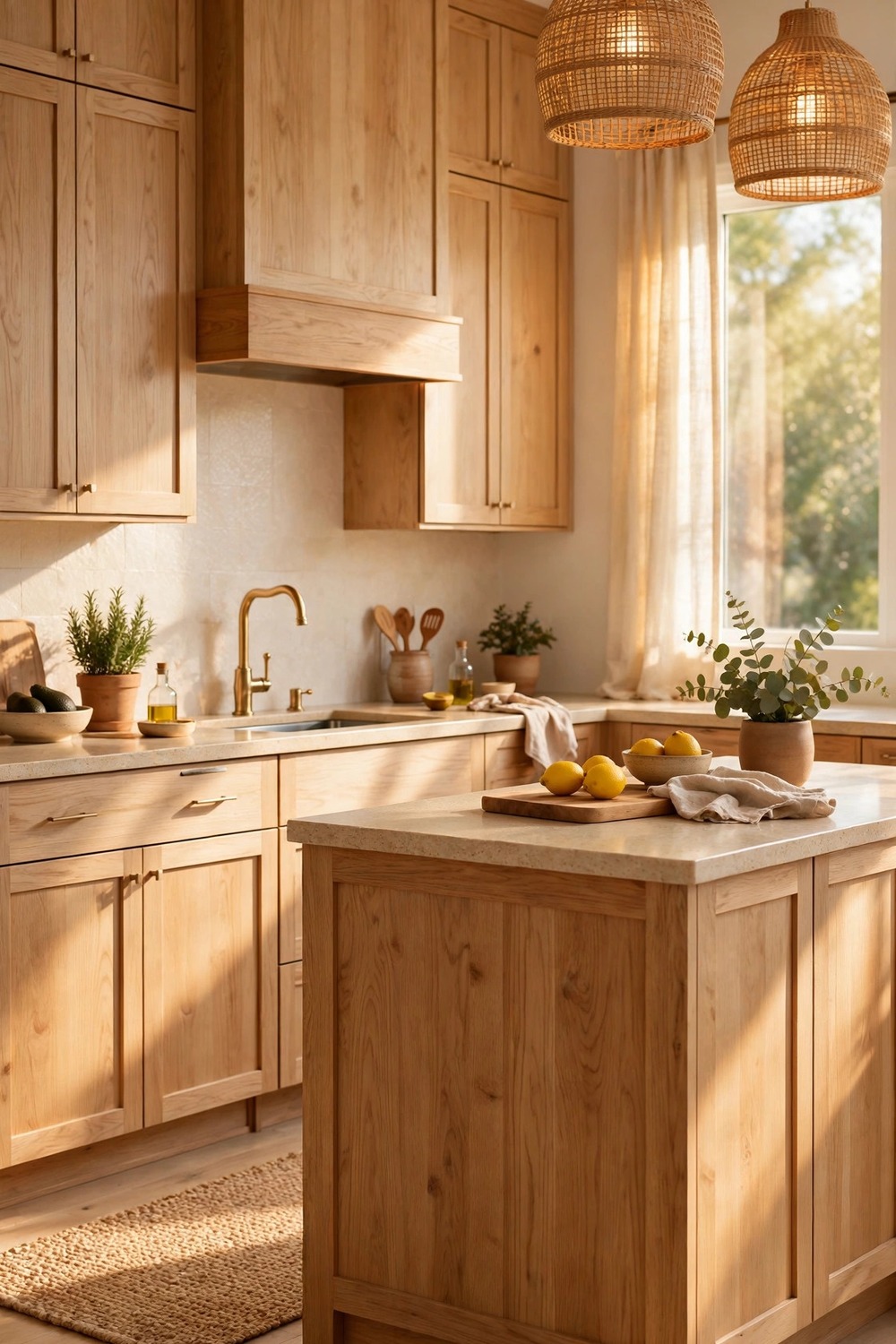
6. Warm It Up With a Light Honey Stain
A light honey stain leans into everything people love about white oak, deepening the pale boards into a soft golden tone that makes a kitchen feel sunny even when the weather is not cooperating. It is a forgiving shade for north facing rooms, where natural light tends to run cool and can make unstained oak look a little gray. Honey also pairs beautifully with creamy whites, warm brass, and natural stone, so the rest of your palette stays easy. The key is to keep it light. A heavy application can tip the wood toward orange, which usually feels dated faster than a gentle wash of warmth. Ask for two or three sample boards at different strengths and check them beside your floor, because oak cabinets above a warm floor can stack up to more gold than you planned. Live with the samples for a few days before you decide. The right honey tone should feel cozy, not loud.
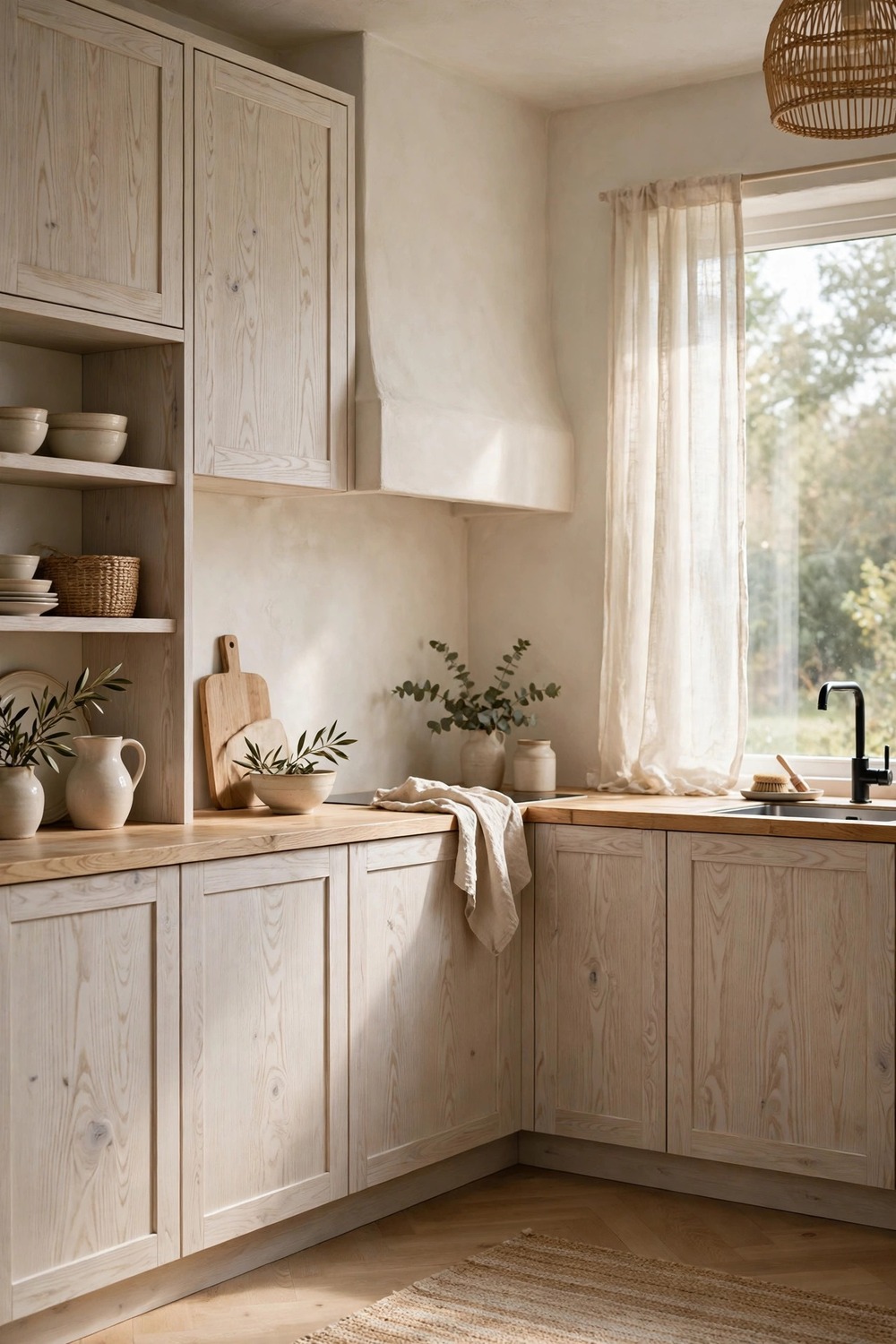
7. Go Pale and Airy With a Whitewashed Oak Finish
A whitewashed finish gives you the lightest, airiest version of white oak, where a soft white pigment settles into the grain and leaves the cabinets looking pale, calm, and almost coastal. It is a lovely choice for small kitchens or rooms with limited windows, because the pale tone bounces light around and keeps wood from ever feeling heavy. The grain still shows through, so you keep the natural texture that painted cabinets cannot offer. Whitewash does need a careful hand, since too much pigment can look chalky and too little can turn patchy across a big run of doors. Ask for a large sample made on the same cut of oak as your cabinets, and view it at different times of day. Pair the finish with warm white walls rather than bright blue white paint, so the room stays soft. Add one warmer element, like brass or a wood stool, to keep the palette grounded.
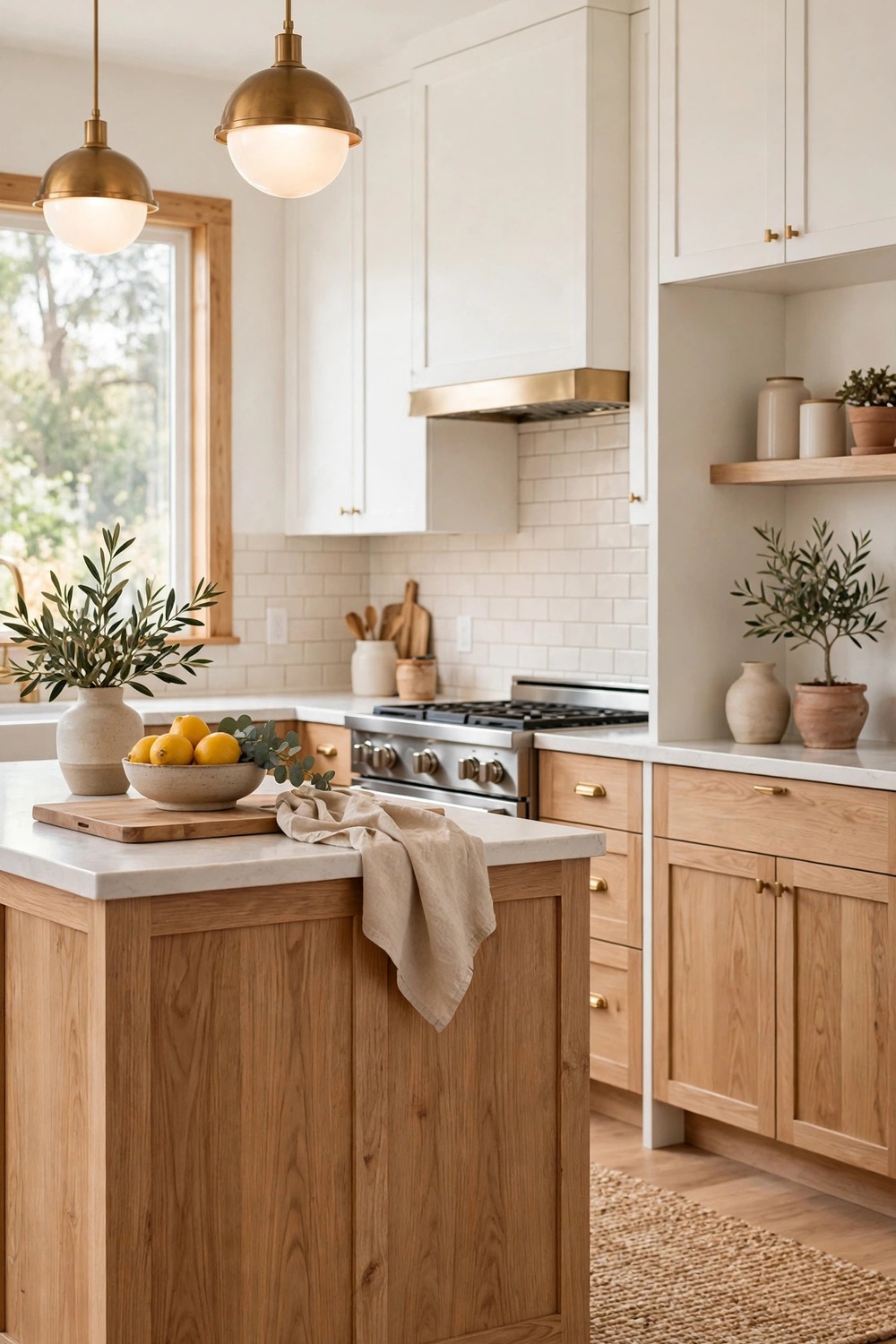
8. Pair White Oak Lowers With Crisp White Uppers
White oak lowers with crisp white uppers is one of the most reliable two-tone combinations, because it puts the warmth where you stand and the brightness where your eye travels. The oak base cabinets ground the room and hide everyday scuffs and crumbs more gracefully than white doors at floor level usually do, while the white uppers keep the top half feeling open and tall. Choose a warm white for the uppers rather than a stark bright white, so the painted doors sit happily beside the wood instead of fighting it. Carry one material across both halves to tie them together, like the same hardware finish or one continuous countertop. This pairing also stretches a budget nicely, since painted uppers typically cost less than a full run of oak. Keep the wall color close to the upper cabinet color if you want the top half to feel seamless and calm.
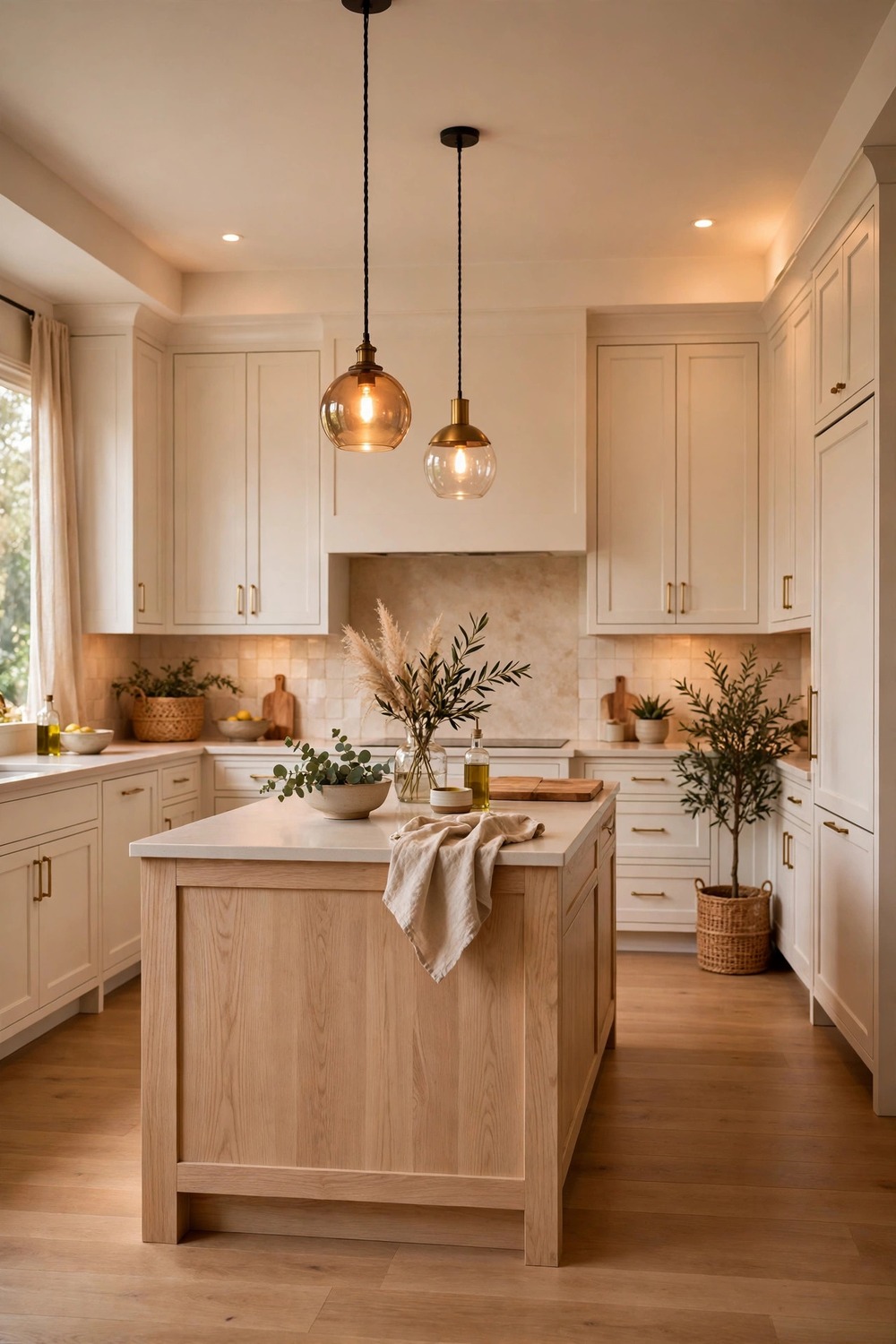
9. Ground the Space With a White Oak Island and White Perimeter
Flipping the usual pairing can work just as well. A white oak island surrounded by warm white perimeter cabinets turns the island into the warm heart of the kitchen, which is exactly where people gather, cook, and set things down all day long. The wood in the center gives you that furniture feeling, while the painted cabinets around the walls keep the room bright and make the overall project more affordable than oak everywhere. This layout is especially kind to open plan spaces, because the island becomes a gentle bridge between the kitchen and the living area. Repeat the oak in one or two small places, like a shelf or a stool, so the island does not feel like a lone decision. Keep the island counter the same as the perimeter counter for a calm, connected look. If your island is large, slab or shaker oak fronts both work well, so choose based on the style of your fronts elsewhere.
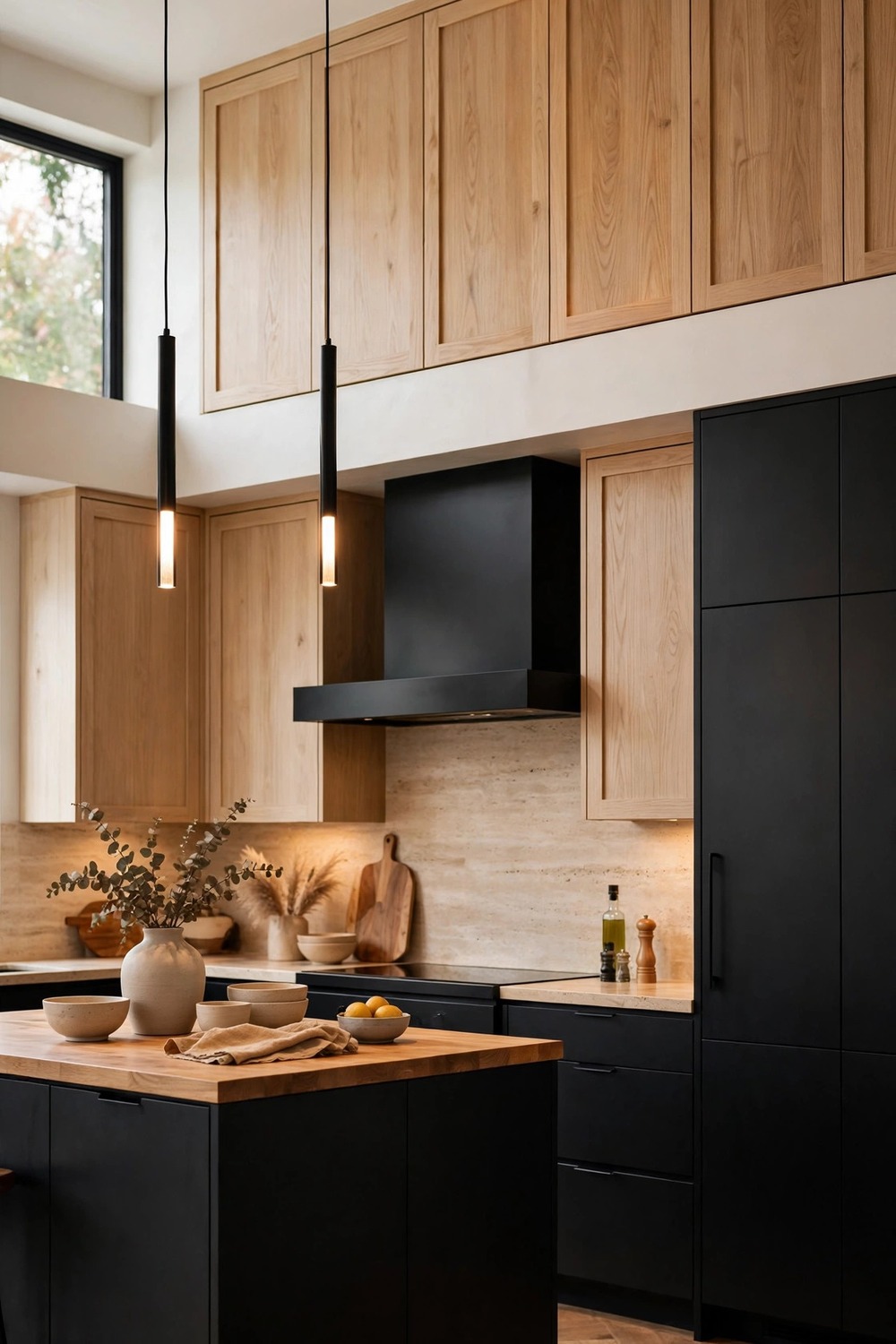
10. Contrast White Oak With Matte Black Cabinets
Matte black cabinets beside white oak create the boldest version of warm modern, because the dark color makes the pale wood look even warmer and richer by contrast. A common balance is black lowers or a black island with oak uppers, or oak throughout with one black run, like a tall pantry wall that reads as a single dramatic piece. Matte finishes keep the black feeling soft and architectural rather than shiny and severe. Make sure your room gets decent light before you commit, since a large amount of black can absorb brightness in a small or windowless kitchen. Warm the pairing up with brass or wood accents, a warm white counter, and soft lighting so the contrast stays inviting instead of stark. Dust and flour show more on black doors, so this pairing suits cooks who wipe down often. Start with samples side by side. When the balance is right, the room feels confident and calm at the same time.
Islands, Shelving and Built-In Details That Stand Out
With the palette settled, the layout details are where a white oak kitchen starts to feel truly custom. A waterfall edge, open shelves instead of a wall of uppers, a wood wrapped hood, and paneled appliances all use oak as an architectural material, not just a cabinet color. These five ideas focus on the features guests tend to notice first.
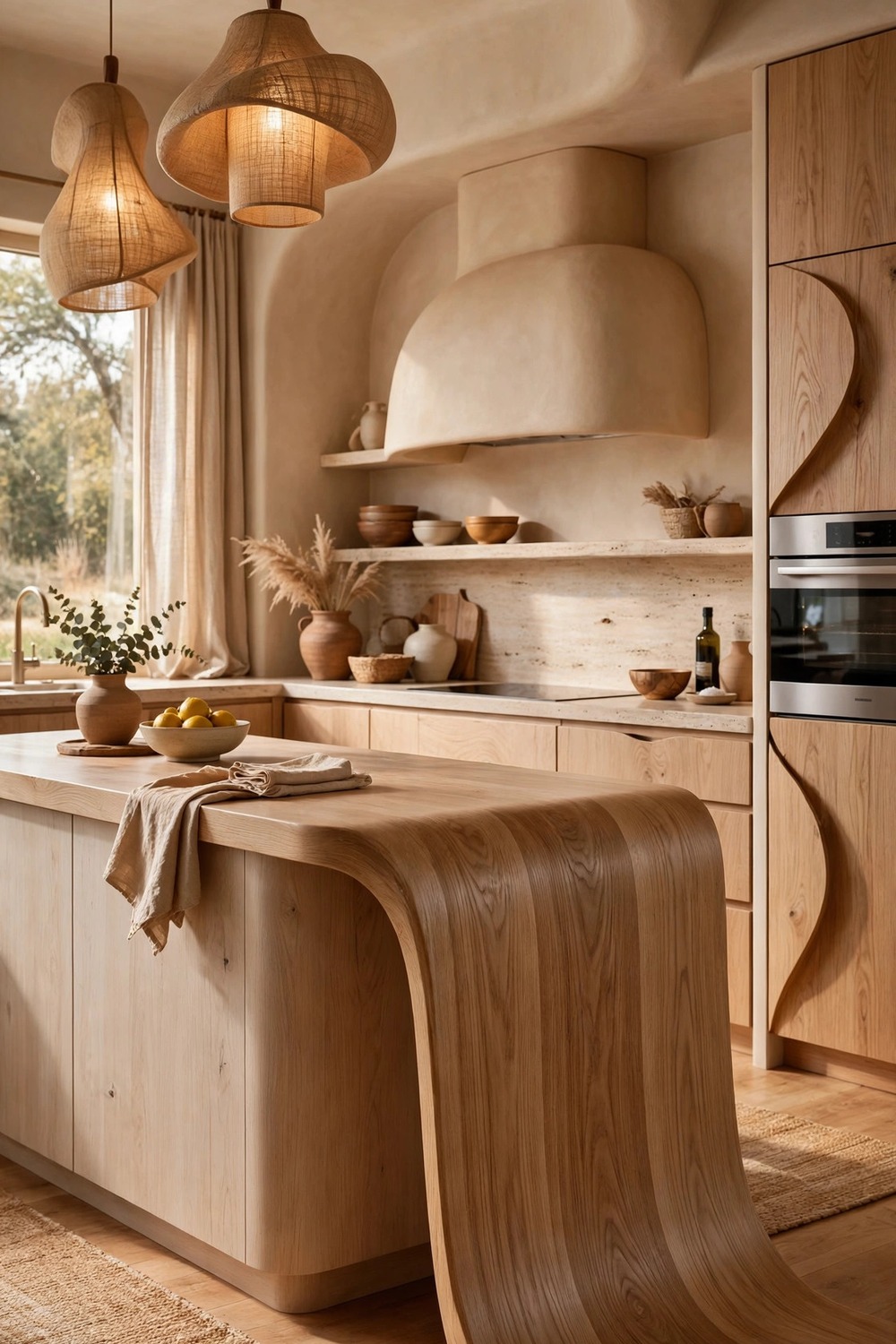
11. Wrap the Island in a Waterfall Oak Edge
A waterfall island in white oak, where the wood runs across the top or down the sides in one continuous flow, gives the kitchen a sculptural centerpiece that still feels warm and natural. Some designs wrap the counter material down the ends, while others carry the oak cabinet panels up and over to meet in a clean, furniture like block. Either way, the continuous surface reads modern and intentional, and it shows off a beautiful run of grain like nothing else. This detail usually works best with slab fronts, since extra trim lines can interrupt the clean fall of the wood. Ask how the corners will be joined, because a mitered corner that keeps the grain flowing around the edge is the detail that sells the whole look. Waterfall ends also protect the island corners from vacuum bumps and chair knocks, which is a quiet practical win in a busy family kitchen.
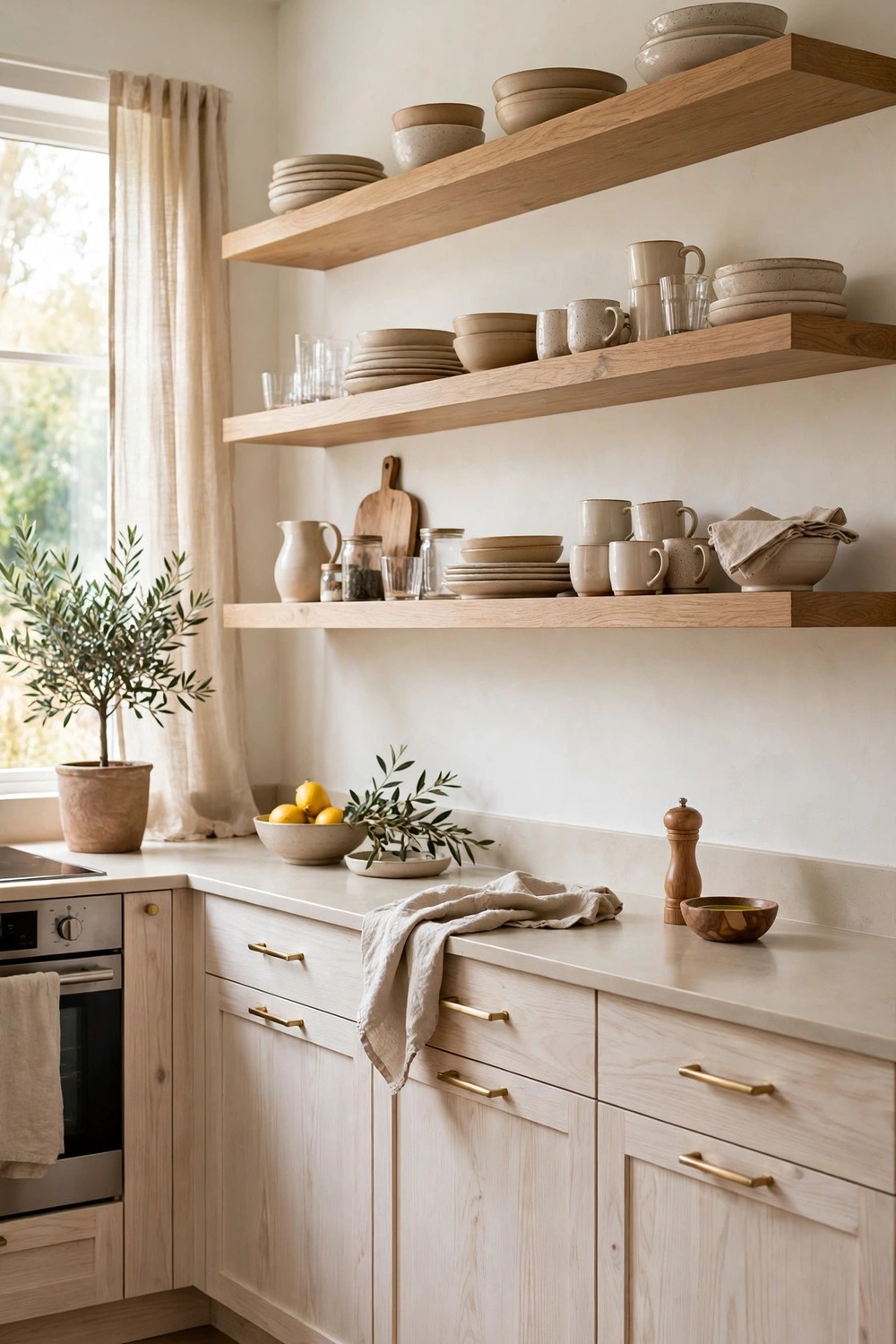
12. Add Open Oak Shelving Instead of Upper Cabinets
Swapping some upper cabinets for open white oak shelves instantly makes a kitchen feel lighter, because your eye travels to the wall instead of stopping at a solid bank of doors. Thick floating shelves in the same oak as your lowers tie the room together and give everyday dishes, glasses, and a few pretty bowls a relaxed, lived in display. This idea suits cooks who use the same core pieces daily, since what lives on open shelves should earn its place and stay fairly tidy. Keep the styling simple, group similar items together, and leave some empty breathing room on each shelf. Plan for a quick dusting routine, because open storage does collect kitchen dust faster than closed cabinets. If a full wall of shelving feels like too much, start with one short run beside the window or above the coffee corner. You can always add a cabinet back later if the lifestyle does not suit you.
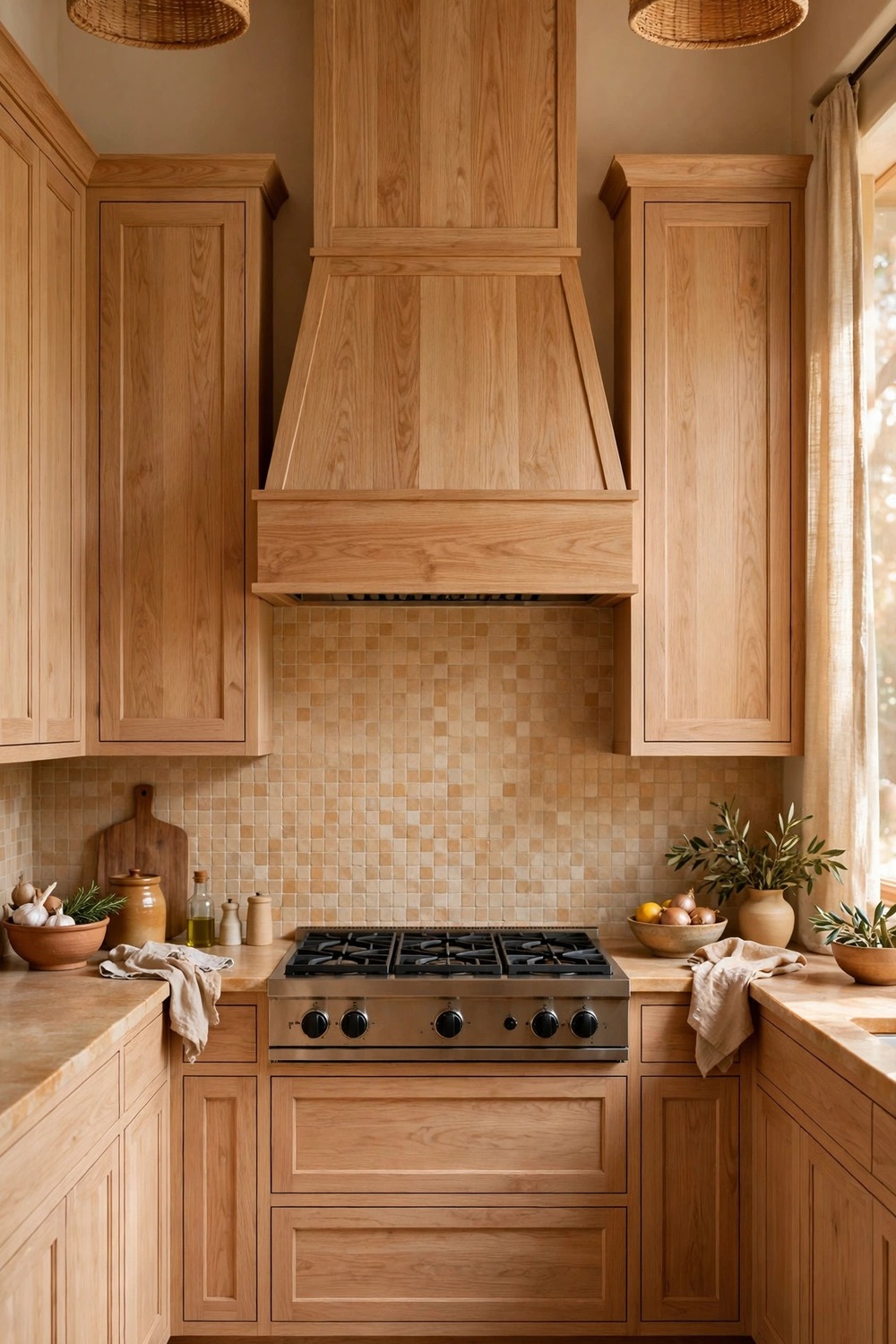
13. Line the Range Hood in Matching White Oak
Wrapping or lining the range hood in matching white oak is a custom detail that makes the cooking zone feel like part of the cabinetry instead of a separate appliance dropped into the room. A simple tapered or boxy hood shape in oak, with the grain running vertically, adds warmth right at eye level and creates a gentle focal point above the range. It pairs especially well with a quiet backsplash, since two busy features in the same spot usually compete. Keep the shape simple and let the wood do the work. Ask about heat and grease clearance with your builder, and plan on a finish that can handle a regular wipe down, because the hood area works hard in a real kitchen. If a full wood hood feels like a big commitment, a wood trim band at the base of a plaster or metal hood gives you a smaller version of the same cohesive effect.
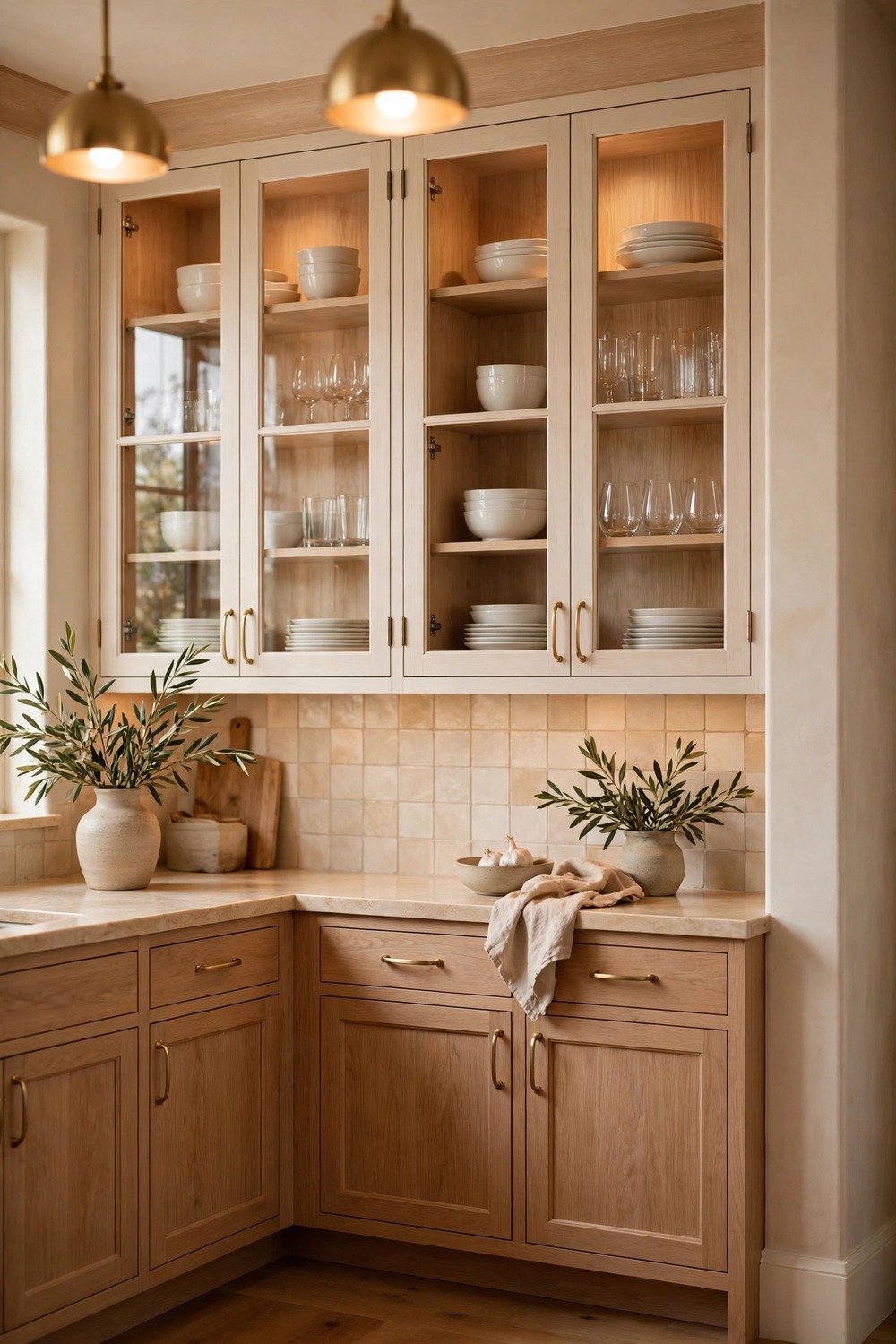
14. Extend Oak Inside Glass-Front Uppers for Display
Glass-front upper cabinets with white oak interiors give you display and storage in one move, because the warm wood backing makes simple white dishes and clear glasses look styled without any effort. The glass keeps dust off your pieces while the oak inside prevents that dark, shadowy cabinet look that plain painted interiors can have. Keep the frames in oak as well for a seamless feel, or paint the frames in your wall color if you want the glass panels to float more quietly. Style the shelves with the pieces you actually use, stacked calmly with a little space between groups, and the cabinet will look good on an ordinary day rather than only after a big tidy. Interior lighting is a lovely extra here if your budget allows, since a soft glow through glass in the evening makes the whole kitchen feel welcoming. Choose simple, clear glass if you want the display to stay honest and relaxed.
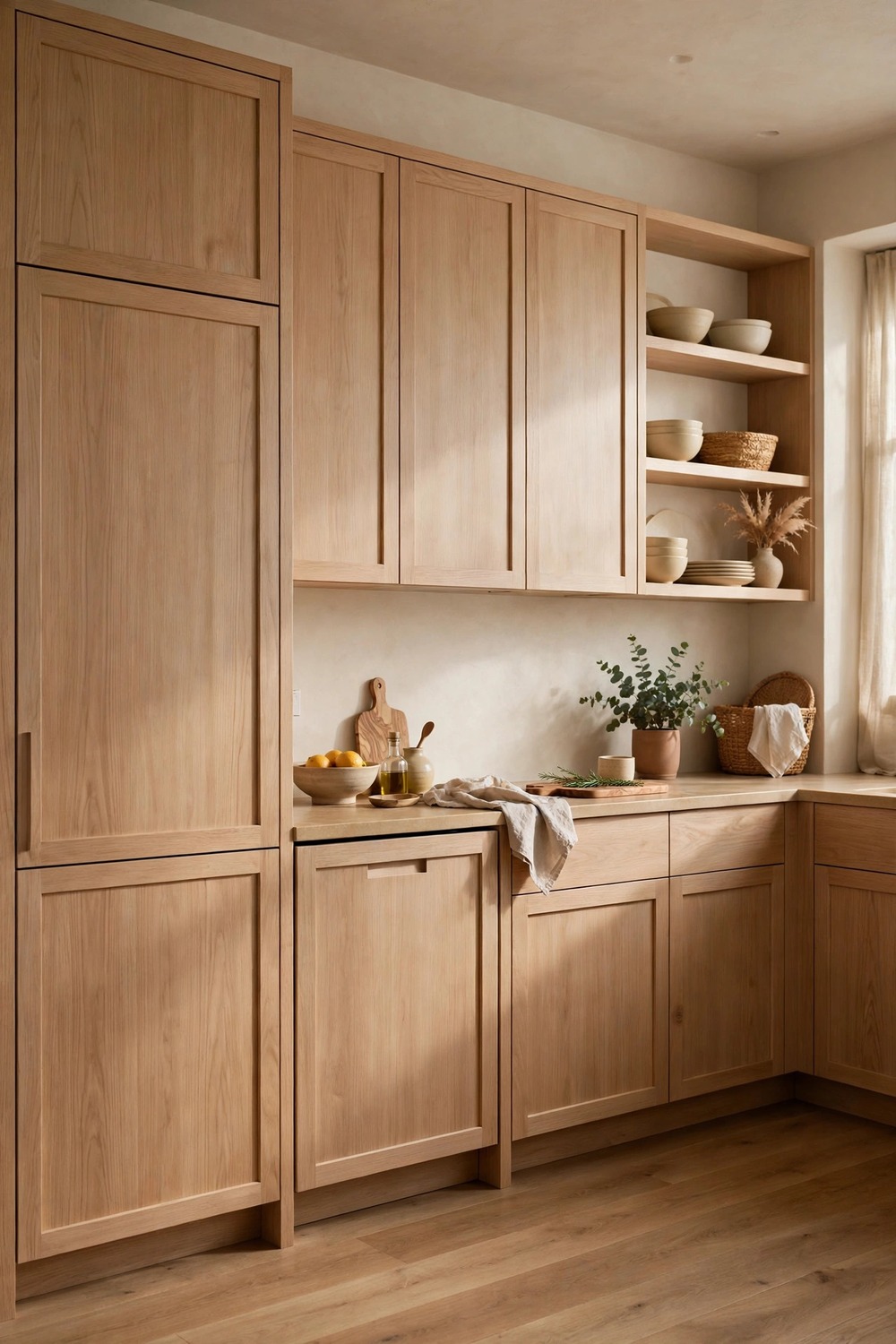
15. Add Integrated Oak Panels for Appliances
Integrated appliance panels in white oak, fitted over the refrigerator and dishwasher, let the kitchen read as a calm wall of warm woodwork instead of a row of stainless boxes. The effect is especially powerful in open plan homes, where the kitchen is always visible from the living space and a quieter look makes the whole room feel more relaxed. Panel ready appliances typically cost a little more and need careful planning early, because cabinet dimensions depend on the exact models you choose. It also helps to decide handle styles at the same time, so the paneled doors match the pulls on your drawers. Not every appliance needs a panel. Many kitchens panel the fridge and dishwasher and leave a quality range as a deliberate focal point. If your budget is tight, panel just the dishwasher first. Even that single change softens the room more than most people expect, and you can add the fridge panels later.
Hardware, Surfaces and Finishing Touches
The last layer is the one you touch and see up close every day. Hardware against oak, the counter and backsplash you pair with it, and the small styling choices on top can either warm the room up or cool it down. These final five ideas help you land the details so the whole kitchen feels finished and personal.
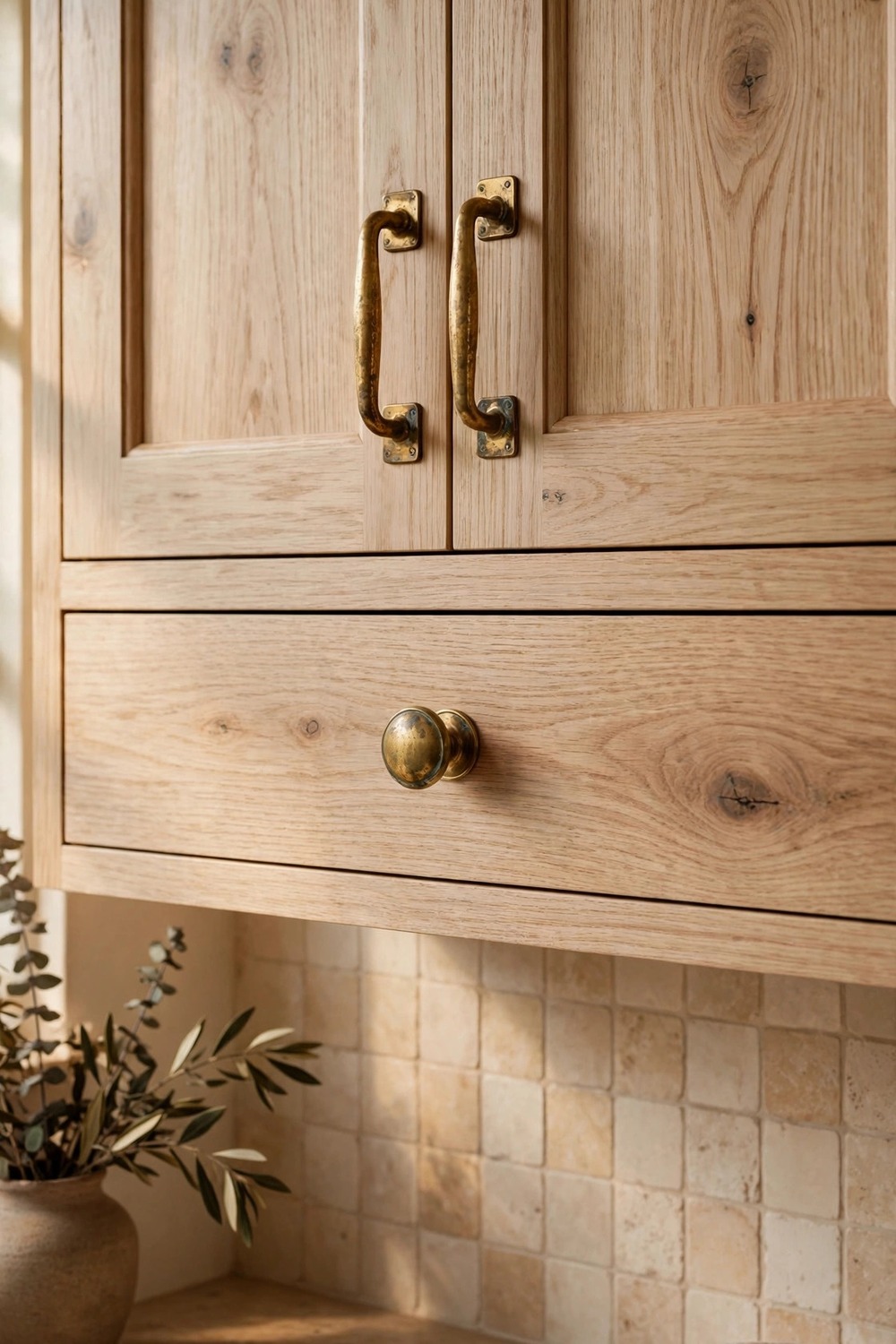
16. Pair White Oak With Unlacquered Brass Hardware
Unlacquered brass is a natural partner for white oak, because both materials are warm, both change gently over time, and together they give a modern kitchen a little soul. The brass starts out bright and slowly deepens into a softer, lived in patina, especially on the pulls you touch every day, which many homeowners find charming rather than flawed. If you prefer a consistent finish, lacquered or brushed brass gives you the same warm color without the gradual change. Keep the shapes simple, like a slim bar pull or a small round knob, so the pairing stays modern. Repeat the brass in one or two other places, like the faucet or a light fixture, so the hardware does not feel like a lone choice. Order one pull and live with it on a drawer for a week if you can. Hardware is a small purchase that you will notice constantly, so it is worth that little test.
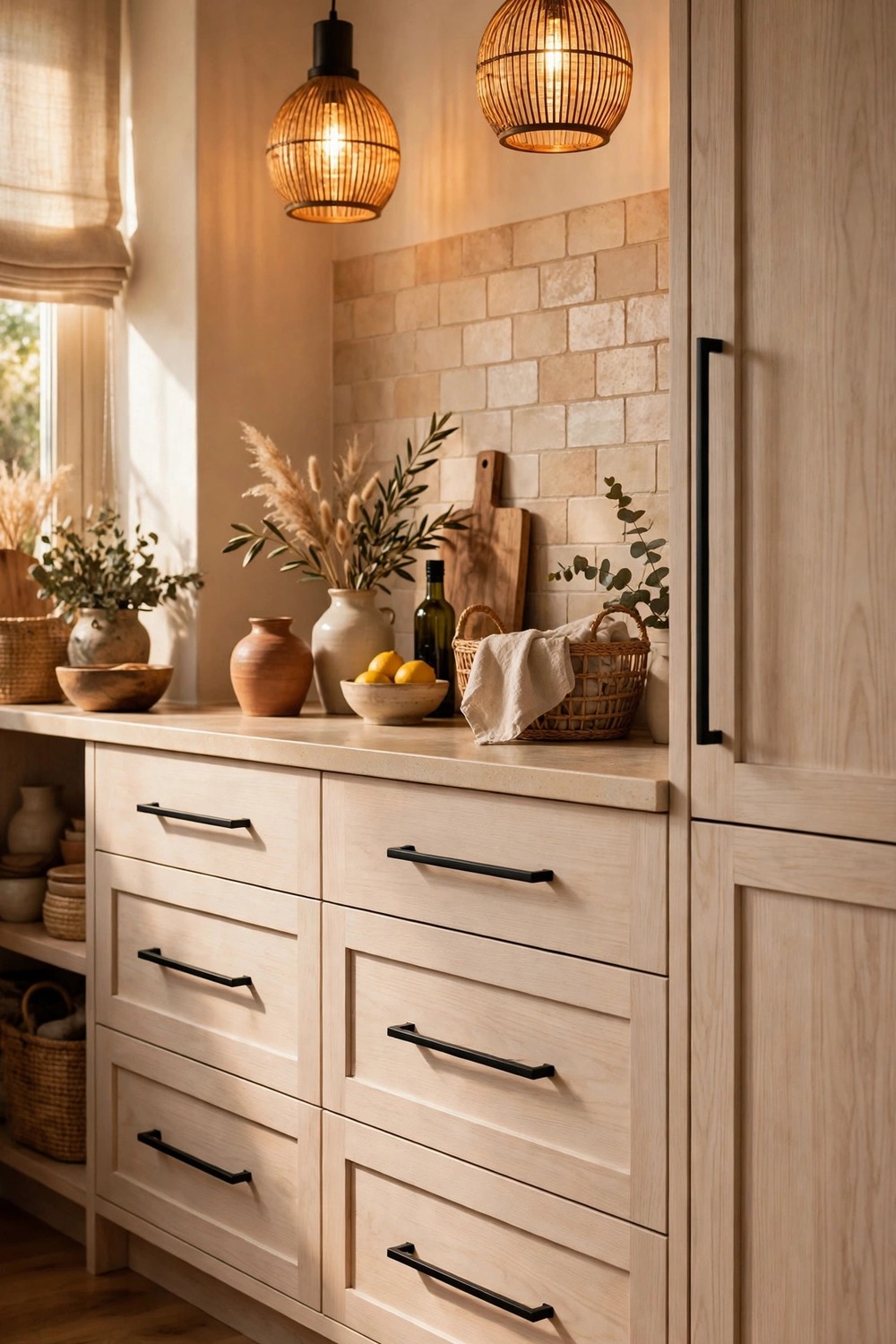
17. Try Long Black Pulls for Modern Contrast
Long matte black pulls give white oak cabinets a crisp modern edge, because the dark line against the pale wood is graphic, clean, and easy to live with. Longer pulls suit wide modern drawers especially well, since the proportions match and you can open a heavy drawer with your whole hand or even a wrist when your hands are messy mid recipe. A common guideline is a pull that spans roughly a third of the drawer width, but treat that as a starting point rather than a rule. Black hardware also connects beautifully if you have used black anywhere else in the room, like a faucet, lighting, or a black cabinet run. Keep the finish matte rather than glossy so it feels soft against the natural grain. If long pulls on every door feel like too much pattern, use pulls on drawers and small black knobs on doors. That mix keeps the contrast while calming the overall rhythm.
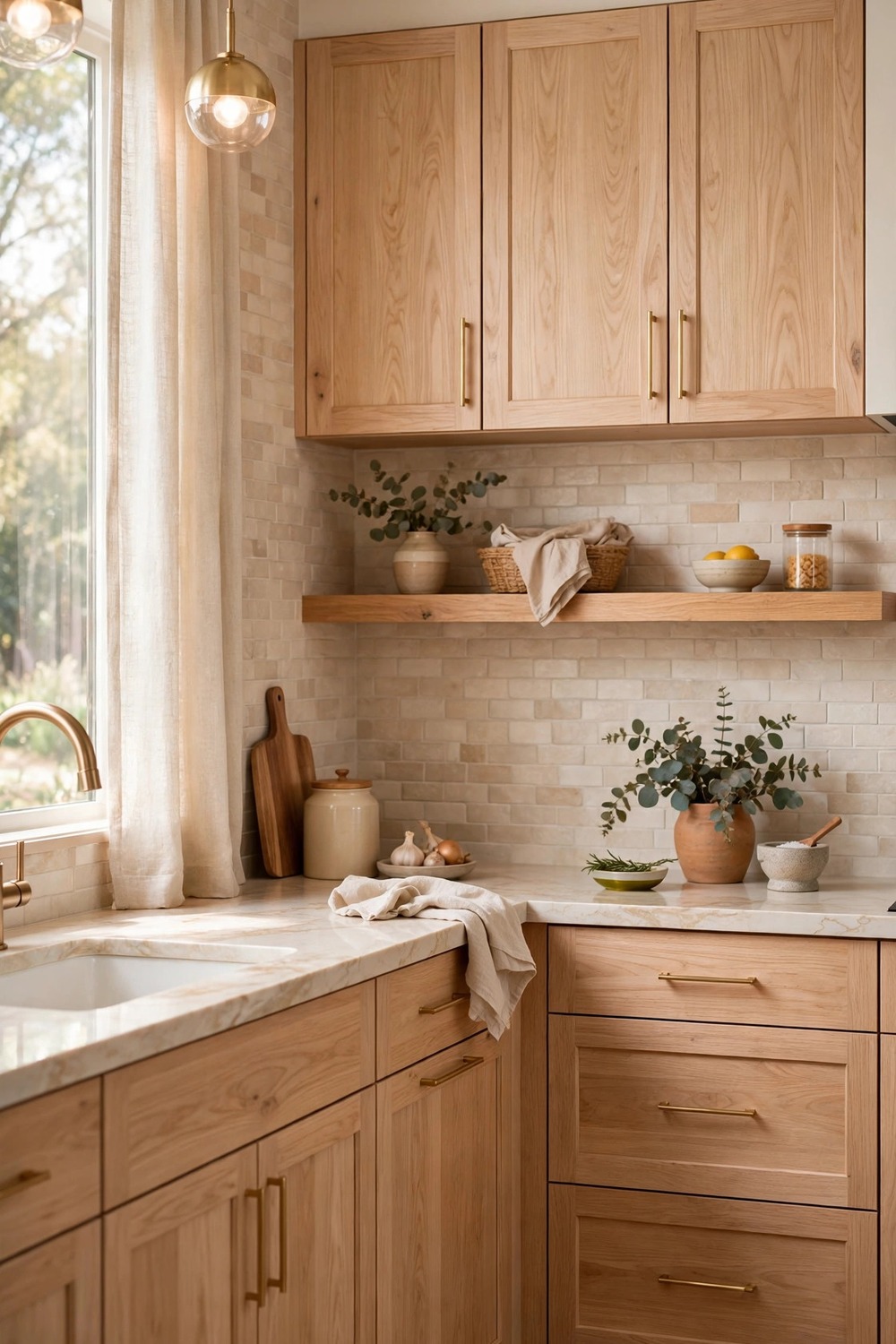
18. Match White Oak With Warm White Quartz Counters
Warm white quartz is one of the easiest countertop partners for white oak, because it keeps the work surface bright and calm while its warm undertone stops the room from feeling blue or clinical. Look for a slab with soft, feathery veining in beige or gentle gold tones rather than strong gray contrast, since quiet veining lets the oak grain stay the main texture in the room. Quartz also brings practical peace of mind to a busy kitchen, as it usually resists stains and needs no sealing, unlike many natural stones. Run the same quartz up as a low backsplash or a full height slab if you love a seamless look, or stop at the counter and choose a tile to add texture. Bring your cabinet sample when you shop for slabs and view them together in daylight. The pairing should feel soft and sunny. If the quartz makes your oak look pink or yellow by comparison, keep looking.
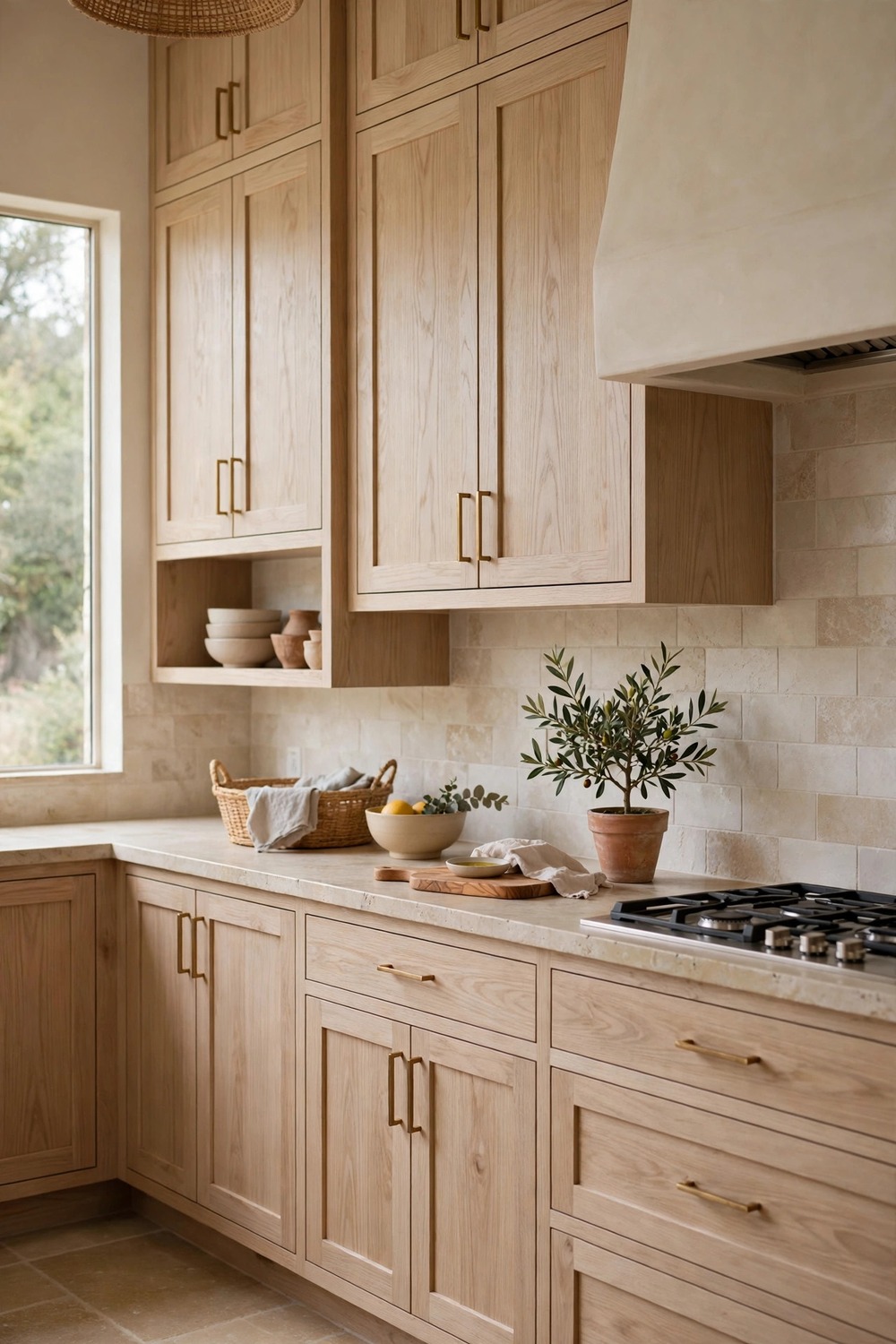
19. Layer a Soft Limestone Backsplash for Natural Texture
A soft limestone or limestone look backsplash adds the natural, slightly uneven texture that white oak kitchens wear so well, because stone and wood share that quiet, organic feeling without matching each other exactly. Pale sandy tiles, whether in a simple stacked layout or a gentle handmade look format, keep the wall calm while giving light something interesting to move across during the day. This pairing suits the warm modern goal perfectly, since the interest comes from texture rather than bold pattern or color. Keep grout close to the tile color so the wall reads as one soft surface instead of a busy grid. Real limestone needs sealing and a bit of care around the range, so some families choose a porcelain lookalike for the hardest working zones and save real stone for a drier area. Either way, bring the tile home and lean it against your cabinets. The right stone will make the oak look richer the moment they sit together.
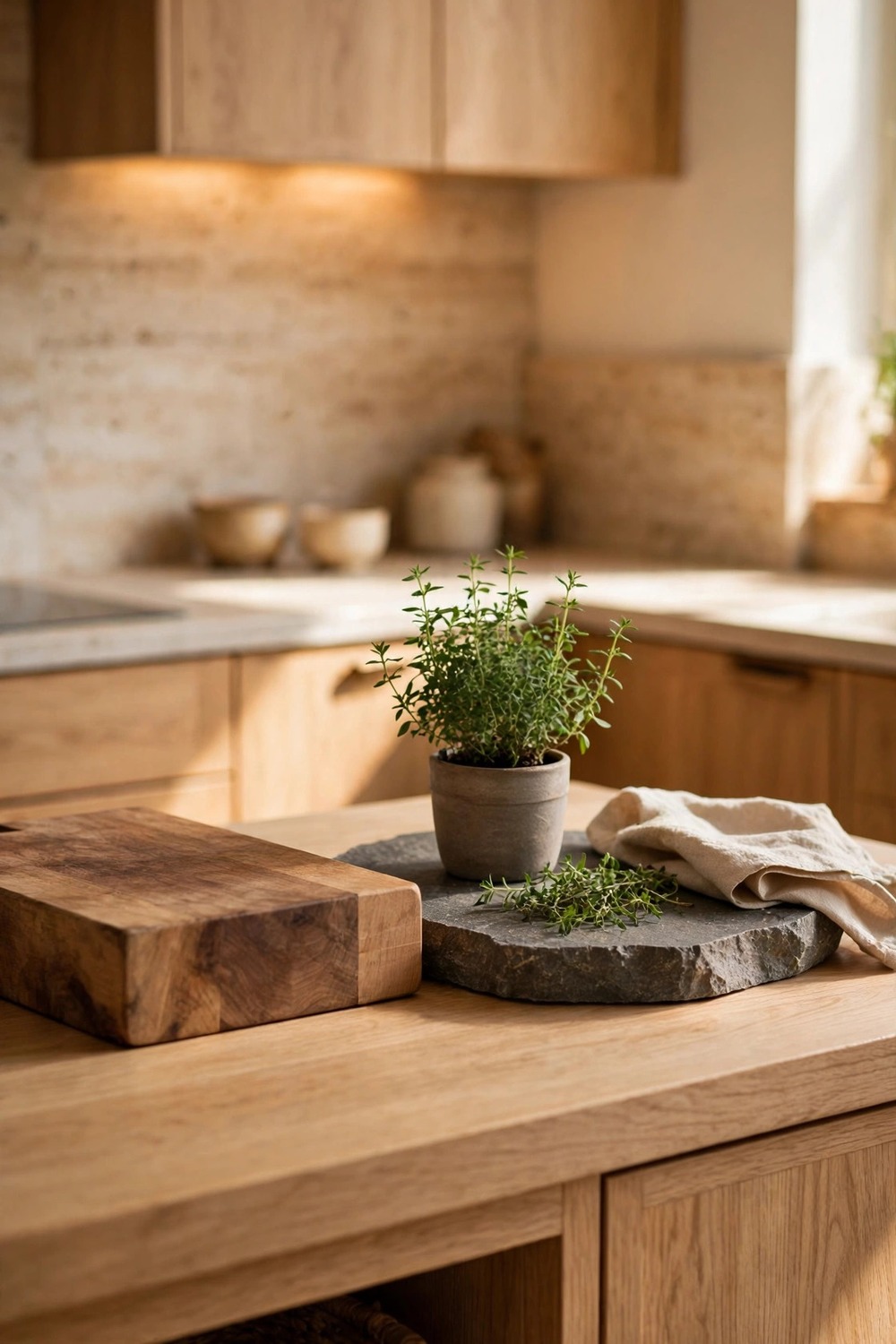
20. Style the Counters With Warm Wood and Stone Accents
Styling is the final step that turns white oak cabinets from a good specification into a kitchen that feels like yours, and it does not need to be complicated. Start with the pieces that work hard, like a thick wood cutting board leaned against the backsplash, a stone tray holding your soap and olive oil near the sink, and a simple crock for utensils beside the range. Those everyday layers echo the oak and stone already in the room, so the counters look warm and intentional instead of bare or cluttered. Add one living touch, like a small herb pot or a branch in a vase, to soften all the straight lines. Keep the groups to two or three spots rather than spreading small items everywhere, since clear work space is part of what makes a modern kitchen feel calm. Rotate one or two pieces with the seasons if you enjoy that rhythm, and let the rest stay familiar.
A Warm Modern Kitchen You Will Love Coming Home To
When you step back, a warm modern kitchen is not really about following every trend at once. It is about a few honest materials, led by white oak, used calmly and consistently so the room feels light in the morning and cozy in the evening. If one part of your kitchen still feels cold, add warmth there with a honey toned finish, brass hardware, or natural stone texture. If a corner feels busy, take one thing away and let the grain do the talking. White oak is a forgiving partner, and small adjustments usually matter more than another big purchase ever could.
So start where you can this season. Order the sample door, live with the stain boards on your counter, and swap in one set of pulls to see how the room responds. Those small, real life tests will tell you more than any photo can, and each one moves you closer to a kitchen that feels both fresh and familiar. Before long, the room will not feel like a project anymore. It will feel like the warm, modern heart of your home, ready for slow breakfasts, busy weeknight dinners, and everyone gathered around the island.

Leave a Reply