
18 DIY Flower Tower Ideas That Stack the Blooms High
If your flower beds are full but your heart still wants more color, it is time to look up. A flower tower lets you grow in a tall, narrow footprint, so you get that lush, overflowing look without giving up your whole patio or path. It is honestly one of the friendliest weekend projects you can try, because you do not need a big budget or fancy tools to get started. You just need a sturdy base, decent soil, and plants that love to spill and climb.
Most towers work for the same simple reason. They lift plants into better light and better air, and they let trailing varieties do what they naturally want to do. Petunias, lobelia, and calibrachoa usually look far happier cascading from a height than they do crowded flat on the ground. You will also find watering and deadheading get easier, because everything is right there at waist or eye level instead of hidden under bigger plants at the back of a border.
In this guide you will find eighteen ideas you can actually build at home, from classic stacked pots to clever upcycled towers made from crates, ladders, and drawers. Some are perfect for a sunny porch, some suit a shady corner, and a few even mix flowers with strawberries and herbs. Pick the style that fits your space and your leftover materials, start with one tower, and do not be surprised if you want a second one by next month.
In This Article
- Classic Stacked Terracotta Pot Tower
- Tiered Wooden Crate Tower
- Upside Down Tomato Cage Tower
- Spiral Metal Plant Stand Tower
- Graduated Pot Tower with a Center Rod
- Chicken Wire and Moss Tower
- Pallet Board Flower Tower
- Hanging Pouch Tower
- Old Ladder Tower with Pots
- Trellis Obelisk Tower
- Repurposed Chair Tower
- Tin Can and Bucket Tower
- Painted Tire Stack Tower
- Old Dresser Drawer Tower
- Balcony Railing Tower
- Strawberry and Herb Tower
- Corner Shelf Tower for Shade Lovers
- Rolling Cart Tower You Can Move
Classic Stacked and Tiered Towers
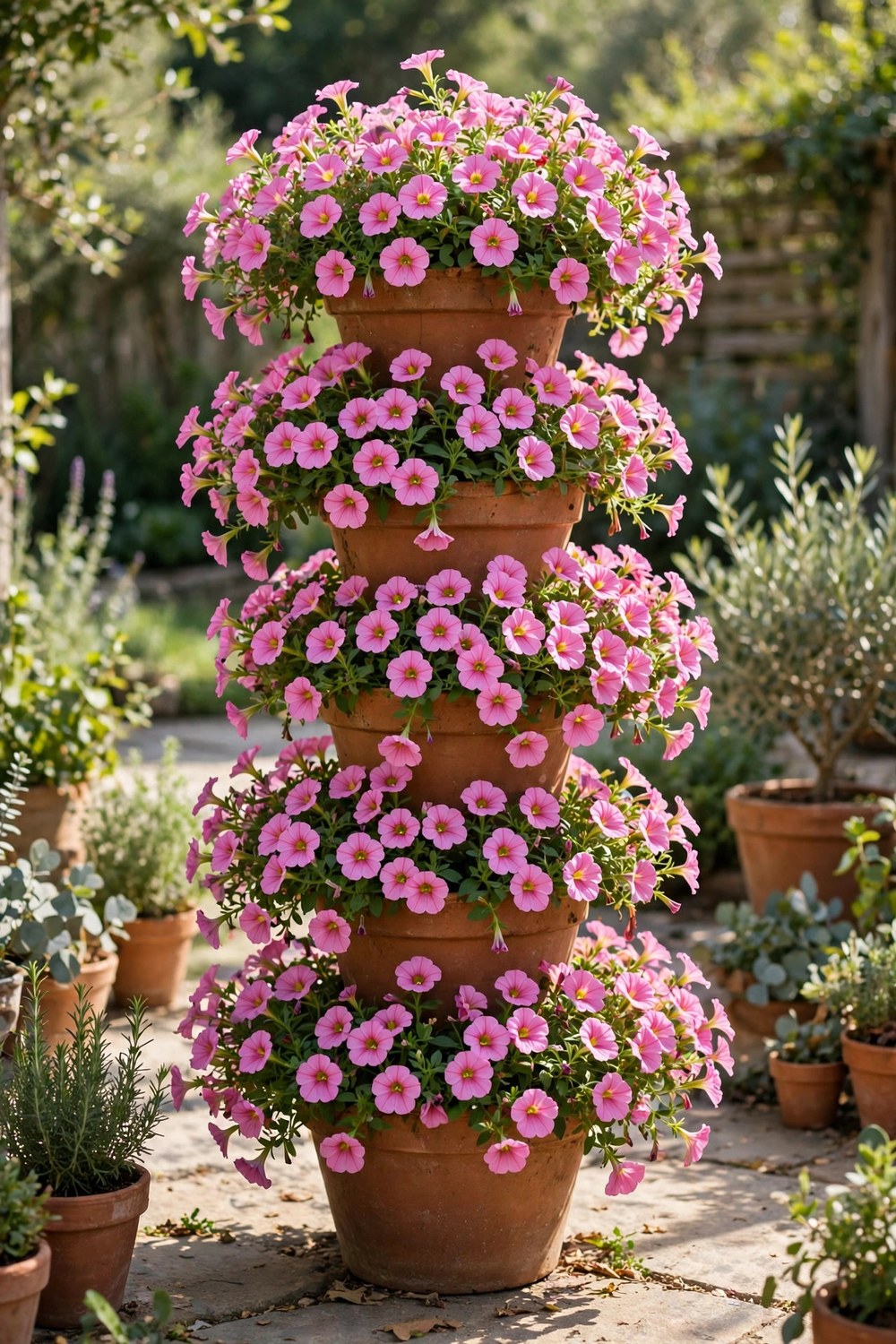
1. Classic Stacked Terracotta Pot Tower
This is usually the tower people try first, and it is easy to see why. You stack terracotta pots from largest at the bottom to smallest at the top, tilting each one slightly or keeping them straight if you prefer a neater look. Fill each pot with potting mix, leaving a little rim so water does not run straight off. Petunias, geraniums, and trailing verbena typically fill in fast and hide the edges of the pots within a few weeks. Place the finished tower where it gets plenty of sun and turn it a quarter turn every few days if one side starts reaching for the light. Because terracotta dries out quickly, you will probably need to water daily in warm weather. A saucer under the base helps protect a deck, and a layer of mulch on each pot slows evaporation without adding much work to your routine.
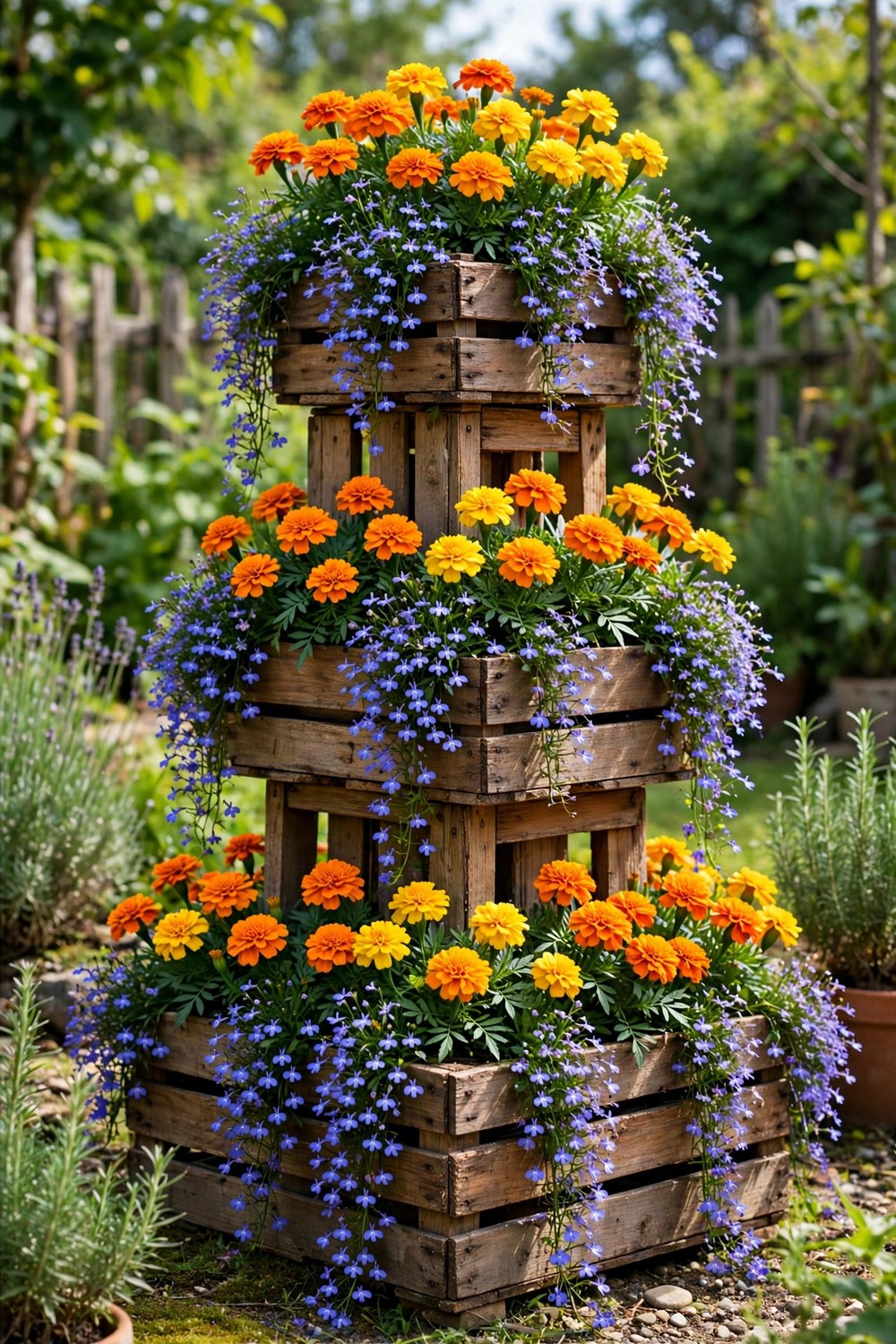
2. Tiered Wooden Crate Tower
Wooden crates give you a tower with real character, and they are forgiving if your stacking is not perfect. Line each crate with landscape fabric or an old burlap sack so soil stays in while extra water can drain away. Stack two or three crates, offsetting each one a little so every level gets its own planting pocket and its own share of sunlight. Marigolds, lobelia, and dusty miller make a cheerful mix, and herbs tuck in nicely along the edges too. Screw the crates together or strap them at the back if your tower will sit in a windy spot, because a top heavy tower can wobble. Outdoor wood will weather to a soft gray over time, which many people love, but a coat of exterior sealer usually slows that change. Check the bottom crate now and then, since it stays dampest and may need replacing sooner than the upper ones.
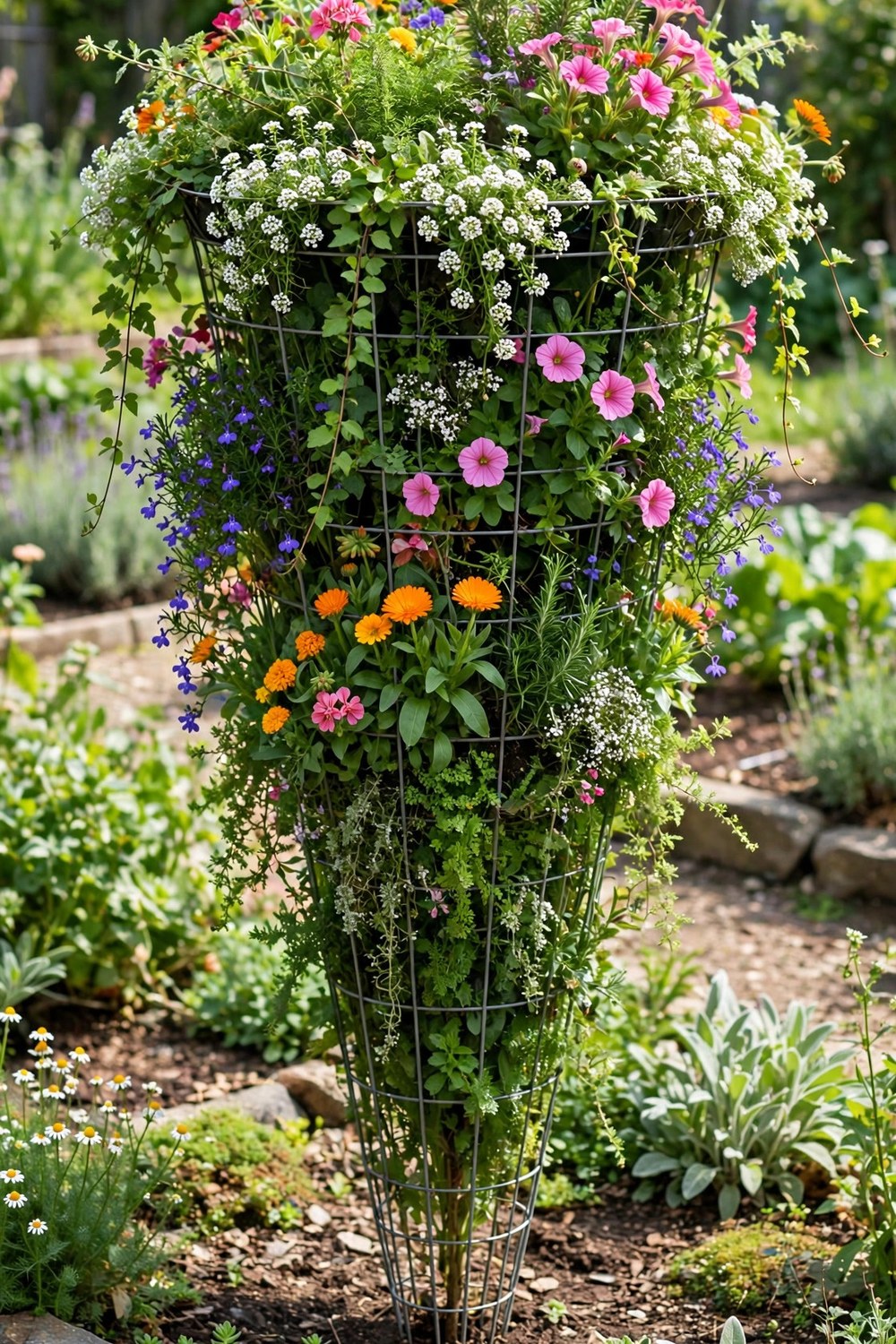
3. Upside Down Tomato Cage Tower
If you have a spare tomato cage in the shed, you already own most of this project. Turn the cage so the wide end sits on the ground or in a large pot, then line the inside with moss or coconut fiber so you can push soil into the center. Poke small holes in the lining and tuck seedlings through from the outside, spacing them around and up the cage so the whole frame fills in. Sweet potato vine, nasturtiums, and small petunias typically grow together into a soft, rounded column of color. Water slowly from the top so moisture works its way down instead of running straight through one side. This tower is light, so push the base well into a bed or weigh the pot down with a few stones. By midsummer you often cannot see the cage at all, just a cheerful tower of leaves and blooms standing in the border.
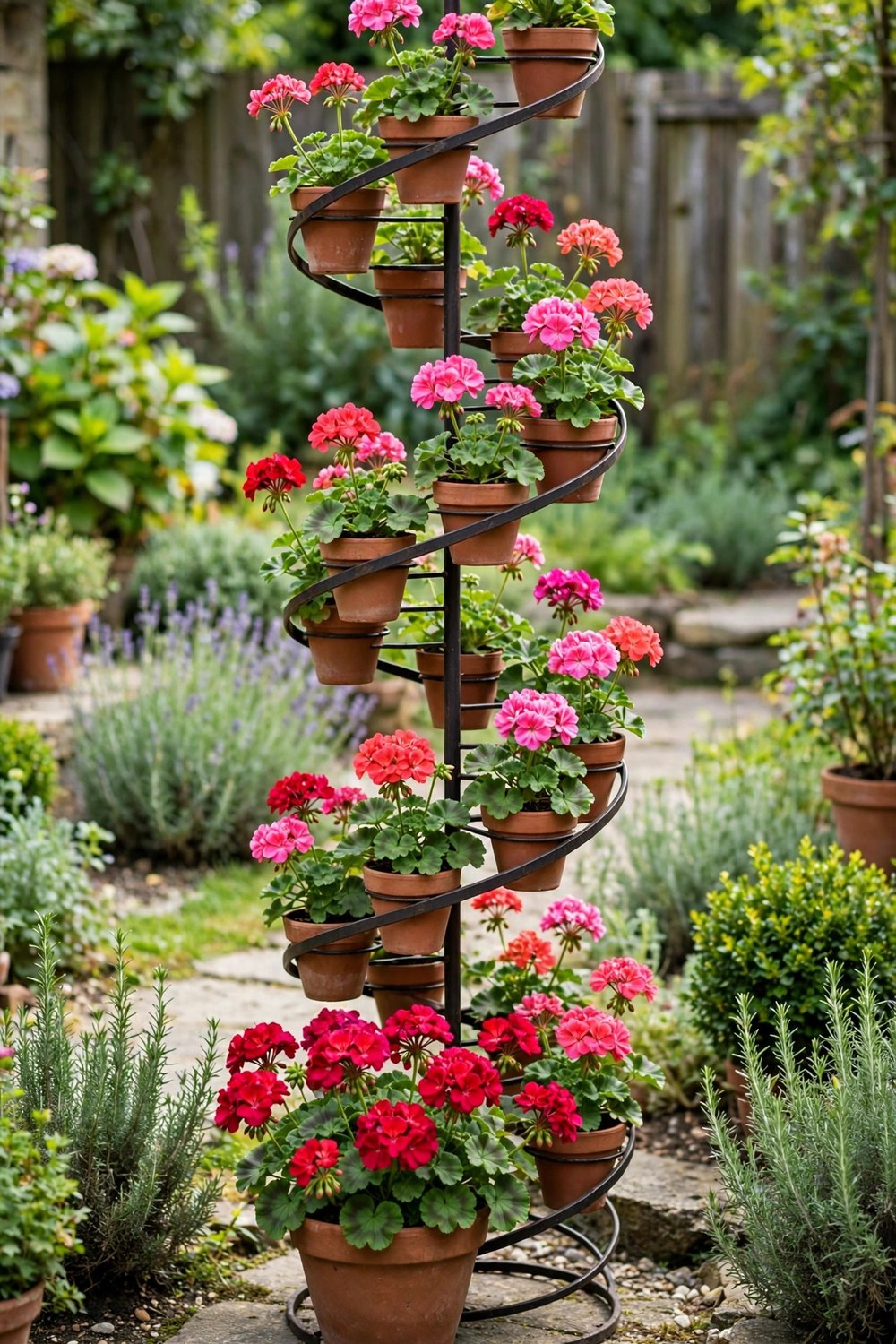
4. Spiral Metal Plant Stand Tower
A spiral plant stand does the stacking for you, which makes this a lovely option if building is not your thing. Choose a sturdy metal stand with wide rings or shelves, and set a pot on each level using sizes that sit securely without rocking. Geraniums on the sunnier levels and trailing ivy or bacopa on the lower ones usually create a nice contrast of upright and cascading shapes. Because every pot stays separate, you can lift one out to replace a tired plant or give it a deeper soak in a bucket. That flexibility is handy if you like changing colors with the seasons. Place the stand on level ground and consider anchoring it if your garden is exposed, since tall metal stands can catch the wind. Wipe the frame down at the end of the season and touch up any chipped paint, and it should serve you well for years without much fuss.
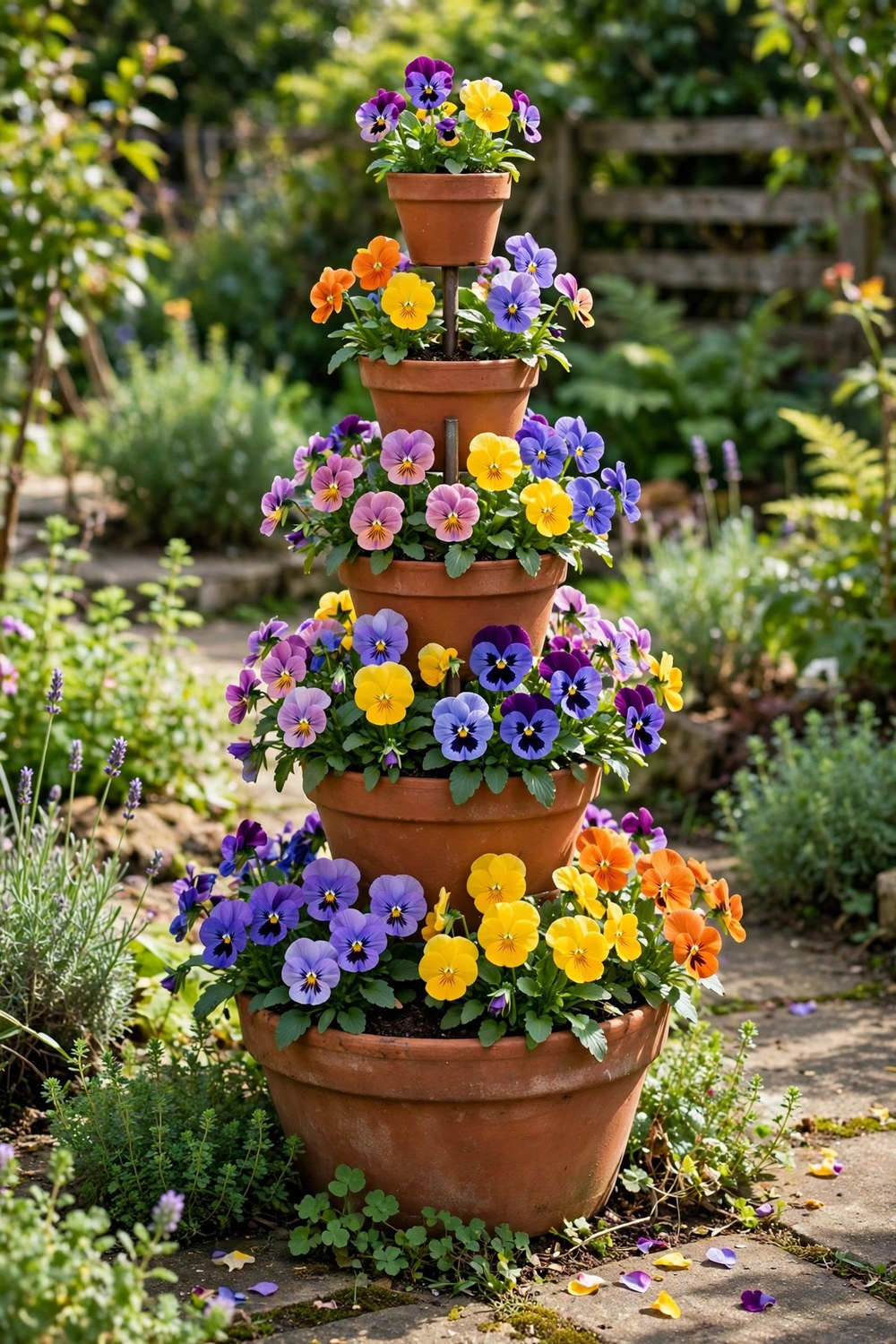
5. Graduated Pot Tower with a Center Rod
For a tower that feels tidy and deliberate, thread graduated pots onto a central metal rod. You will need pots with drainage holes in the center of the base, a strong rod, and a heavy bottom pot or base to keep everything stable. Slide each smaller pot down the rod, rest it on the soil of the pot below, and fill as you go so the levels stay firm. Pansies and violas work beautifully in spring, while mums carry the same structure into fall with almost no changes. Keep the rod a little taller than you think you need, because a small finial or solar light on top finishes the look nicely. Water each level individually at first until you learn how quickly the top pots dry compared with the bottom one. Typically the top needs attention most often, so many gardeners plant the toughest, most drought tolerant flowers up there.
Frames, Walls and Hanging Towers
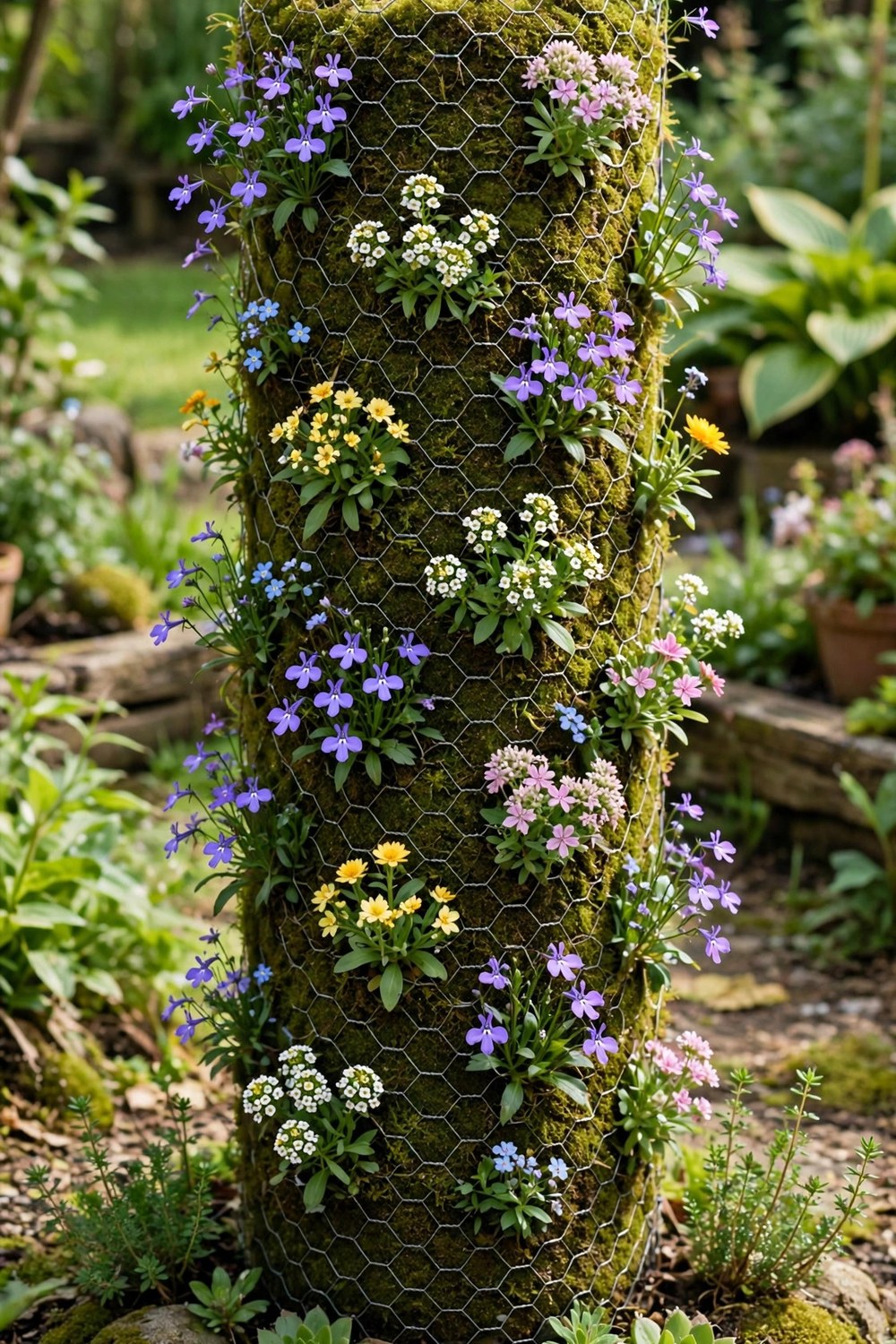
6. Chicken Wire and Moss Tower
This tower looks impressive but it is mostly patience and simple materials. Form chicken wire into a tall cylinder, secure the seam with wire ties, and line the inside with damp moss pressed firmly against the mesh. Fill the center with potting mix a little at a time, firming it gently so the tower holds its shape. Then push small plants through the mesh into the mix, working from the bottom up and mixing foliage with flowers so gaps fill quickly. Impatiens, small ferns, and trailing lobelia typically root in well through the sides. Keep the moss moist during the first couple of weeks while roots settle, usually with a gentle spray in the morning. Set the tower in a large pot or directly on soil for stability. Once it fills in, it reads as a living column, and neighbors will almost always ask how you made it.
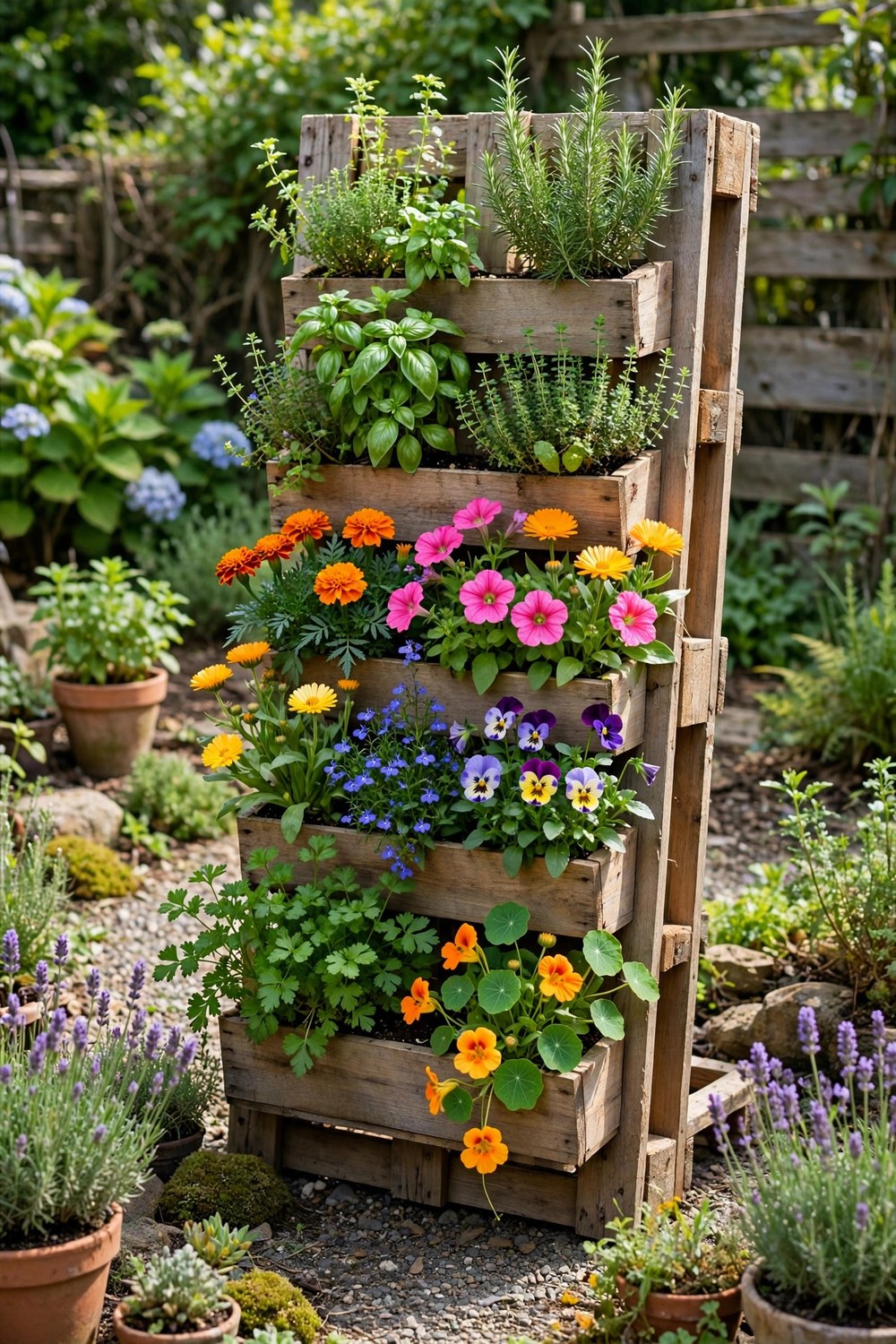
7. Pallet Board Flower Tower
An upright pallet is a ready made tower for a fence line or a bare wall. Stand it securely, staple landscape fabric across the back and bottom of each slat pocket, and fill those pockets with potting mix. You can plant directly into the spaces between slats, choosing compact annuals and herbs that do not mind snug roots. Lay the pallet flat for a week or so after planting if you can, because that gives roots time to grip before gravity starts pulling soil down. Then stand it up, lean it at a slight angle, and fix it to a wall or posts so it cannot tip forward. Watering takes a little care, since the top pockets dry first and the bottom ones collect runoff. A slow trickle from the top, repeated twice, usually does a better job than one heavy pour that washes mix out of the lower pockets.
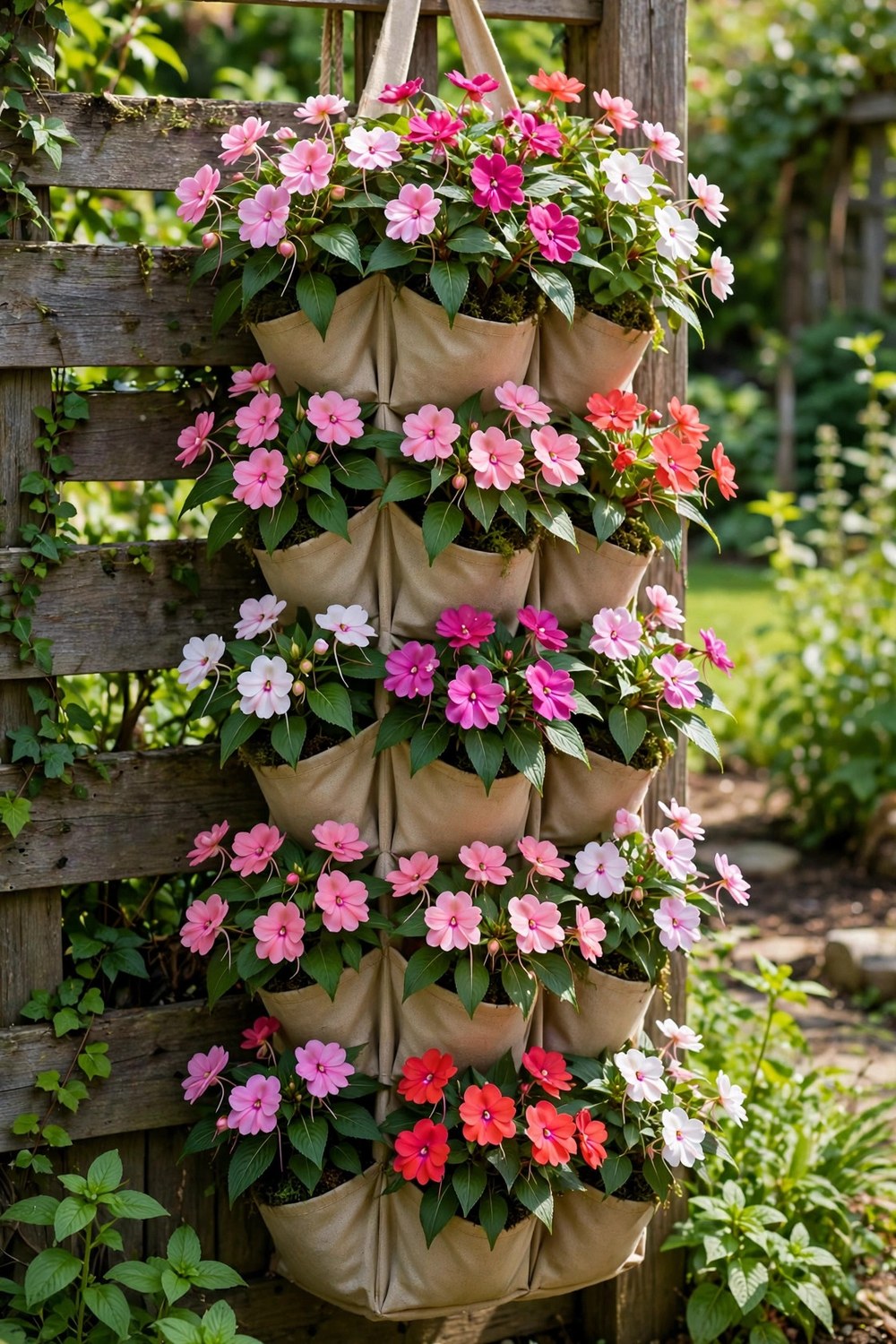
8. Hanging Pouch Tower
Fabric planting pouches turn a fence or balcony rail into a vertical flower tower with almost no building at all. Hang a multi pocket planter from strong hooks, fill each pocket with lightweight potting mix, and add one small plant per pocket. Impatiens and begonias are happy in pouches on a partly shaded fence, while petunias and calibrachoa suit a sunnier spot. Do not overfill the pockets, because roots need room and overpacked soil tends to spill when you water. Pouches dry out faster than pots on the ground, so check them often in hot spells and water until you see moisture at the bottom pockets. Rotating the planter is not practical once it is hung, so choose plants with similar light needs from the start. At the end of the season you can empty, rinse, and fold the planter away, which is a real bonus if your storage space is tight.
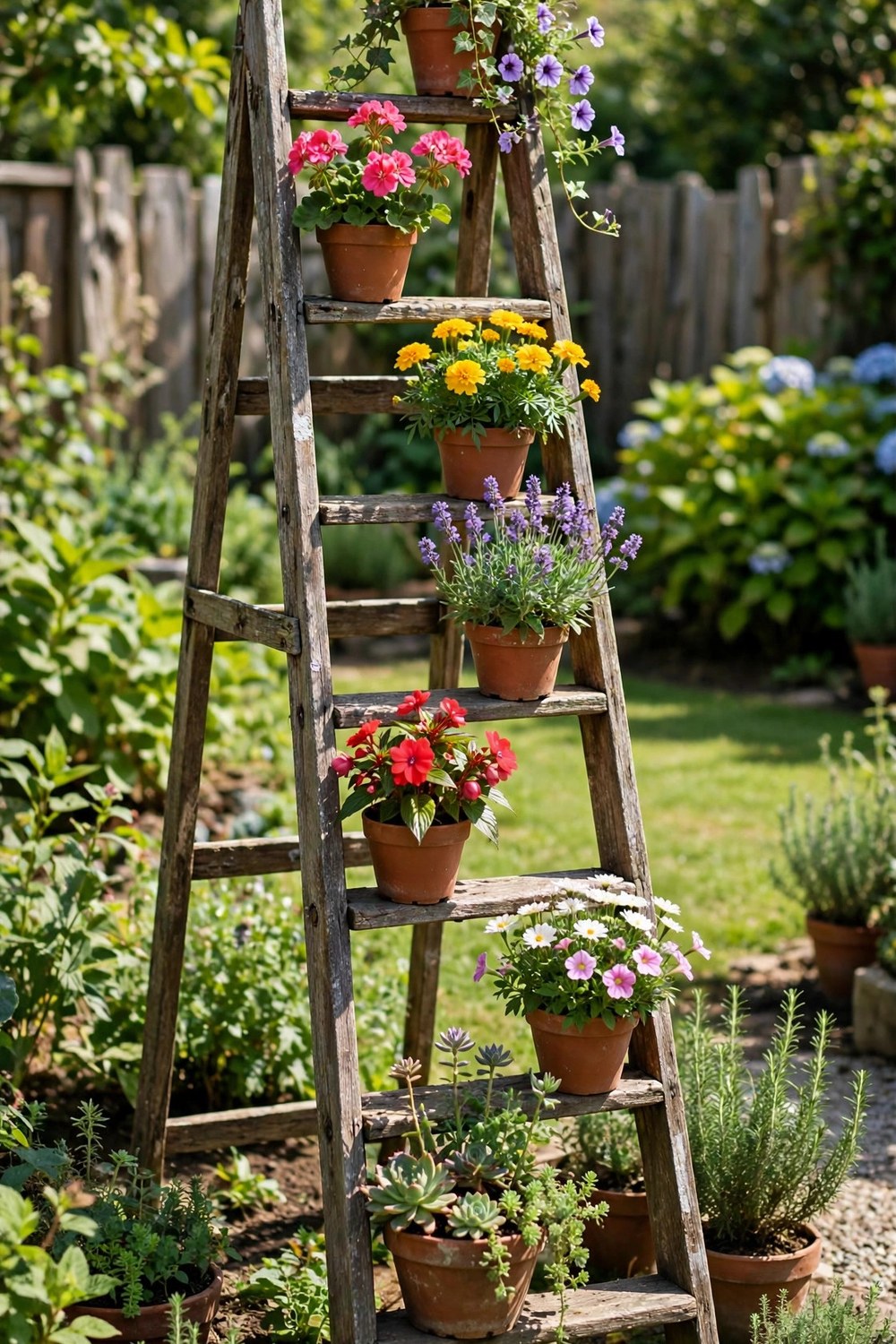
9. Old Ladder Tower with Pots
An old wooden ladder makes a tower with instant charm, and you do not have to alter it much at all. Open it fully, check that the hinges lock, and set a pot or a small wooden box on each step. You can also lay a plank across two steps to hold smaller pots in a row. Mix heights and leaf shapes as you go, putting the fullest trailing plants on the middle steps where they can spill without hiding the pots below. Secure pots with wire or reusable ties if your yard is windy or if pets brush past often. A ladder tower is easy to rearrange, so it is perfect if you like moving plants around to chase the sun or refresh a display for guests. Keep it under cover in harsh winter weather if the wood is already worn, and it will usually last several more seasons as a garden feature.
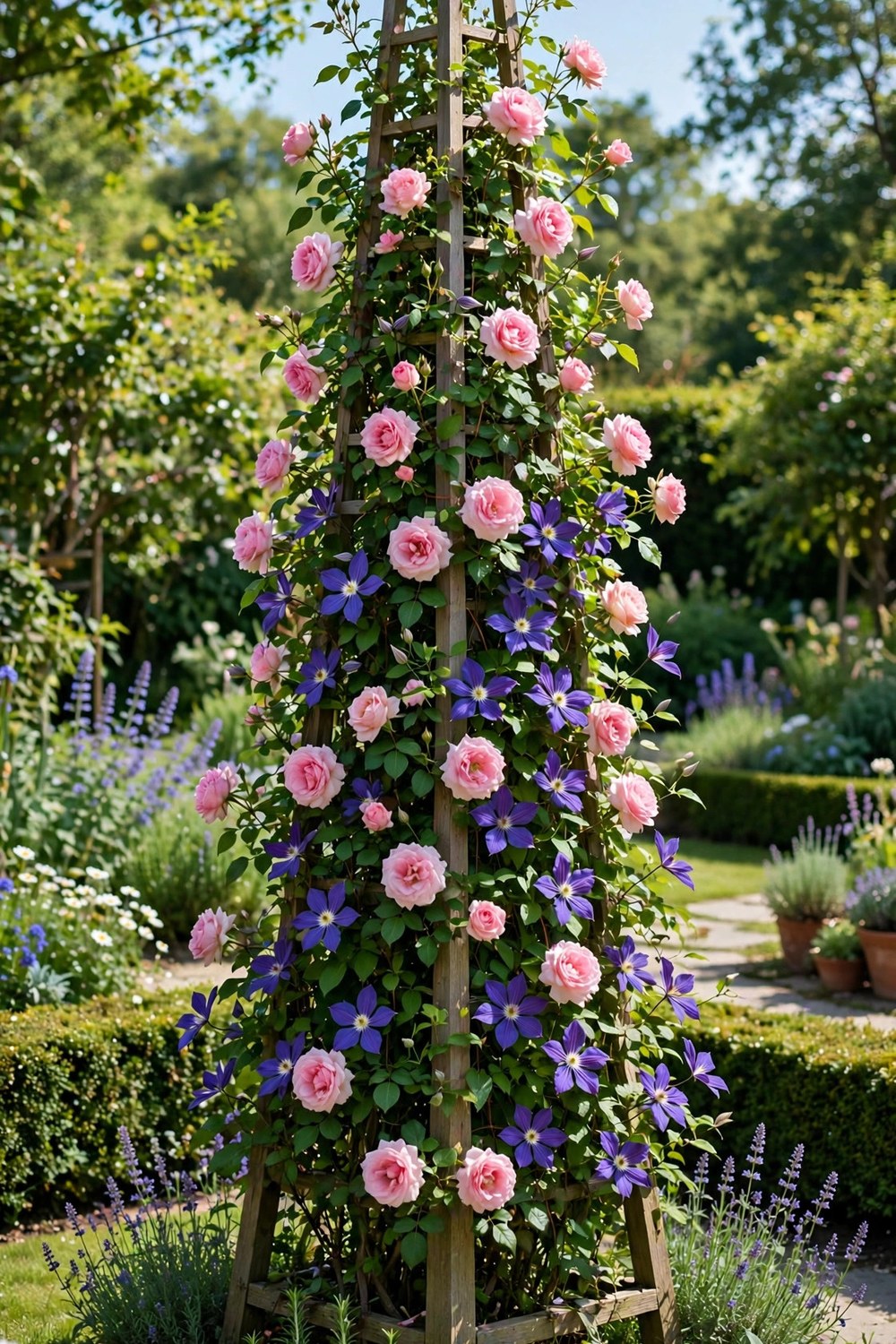
10. Trellis Obelisk Tower
An obelisk gives climbing plants a graceful frame and gives your garden height that lasts all year. Set the obelisk firmly in a bed or a very large container, pushing the legs deep so it does not lean as plants get heavy. Plant a clematis, a climbing rose, or sweet peas at the base and gently tie the young stems to the frame as they grow. You can underplant the base with low annuals to shade the roots, which clematis especially tends to appreciate. Training takes a few minutes each week in spring, but it is pleasant work and it keeps growth even on all sides. Choose varieties that suit your light, and do not crowd too many climbers onto one frame, because air flow helps keep foliage healthy. Even in winter the bare obelisk adds structure, so this is one tower that earns its place in every season.
Upcycled and Budget Friendly Towers
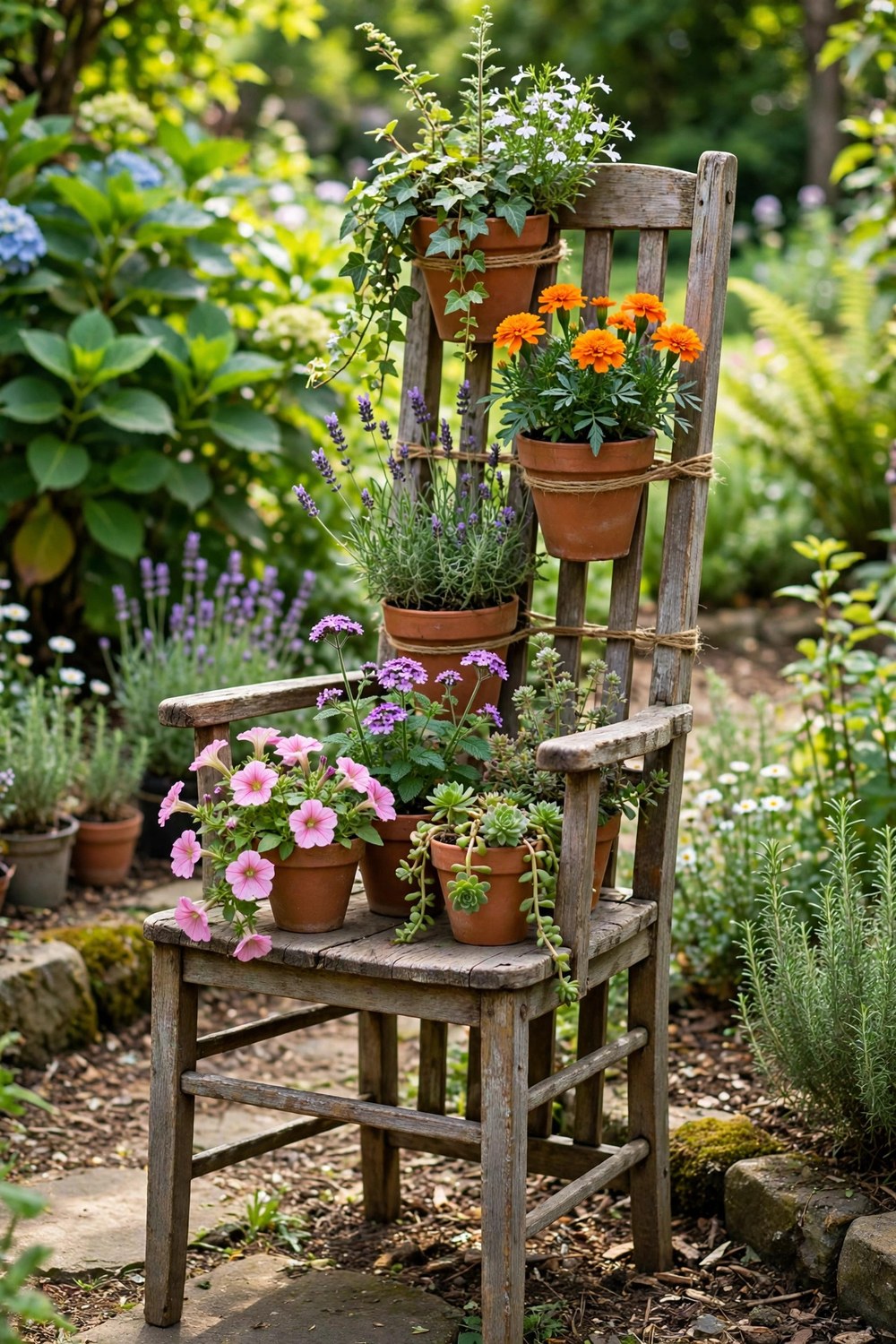
11. Repurposed Chair Tower
A worn dining chair you no longer need indoors can become a sweet little flower tower outdoors. Remove the seat pad if there is one, or cut a hole in a damaged seat so a pot can sit down into the frame and stay stable. Add a second small pot or a hanging basket from the top rail of the chair back, and you have two or three levels without any stacking at all. Paint can transform a tired chair, and soft sage, cream, or dusty blue usually sit comfortably among garden greens. Trailing plants soften the straight lines of the chair, while one upright geranium or lavender adds height at the center. Place the chair where you can see it from a window or a seating area, because it works as much as a focal point as it does as a planter. Sand rough edges first so it is safe to handle.
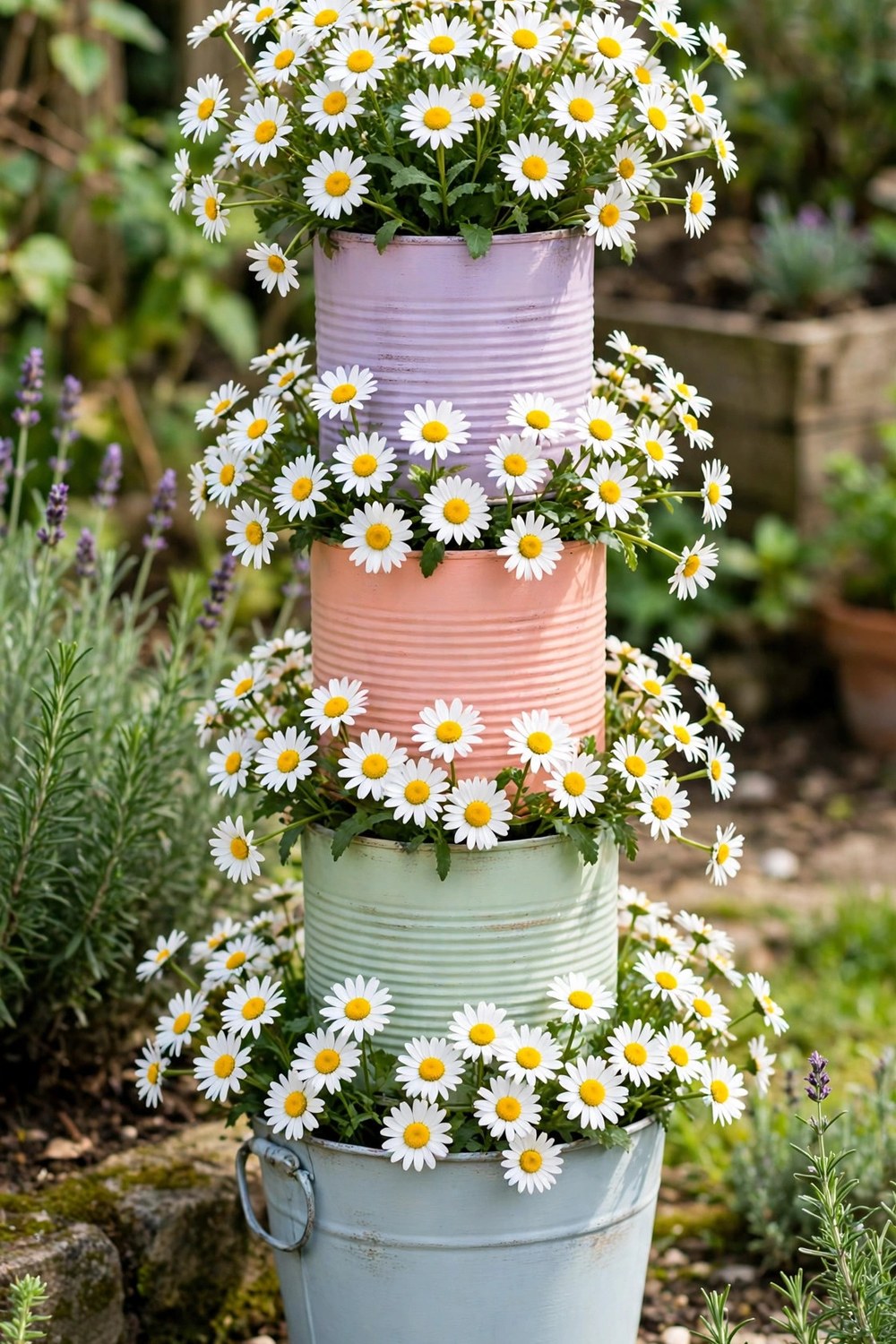
12. Tin Can and Bucket Tower
If you want a tower for very little money, save sturdy cans and small buckets and stack them with intention. Drill drainage holes in every base, give the metal a good wash, and paint the outsides if you like a coordinated look. Bolt or wire the containers to a central post fixed in a heavy pot, staggering them around the post so each one catches light and rain. Daisies, marigolds, and herbs are forgiving choices for smaller containers, though they will need regular watering because the soil volume is small. Smooth any sharp rims with sandpaper or fold them over with pliers, especially if children help with planting. This tower has a playful, handmade feel that suits a casual garden or an allotment. Typically the whole project costs little more than soil and plants if you already have containers waiting in a recycling bin.
13. Painted Tire Stack Tower
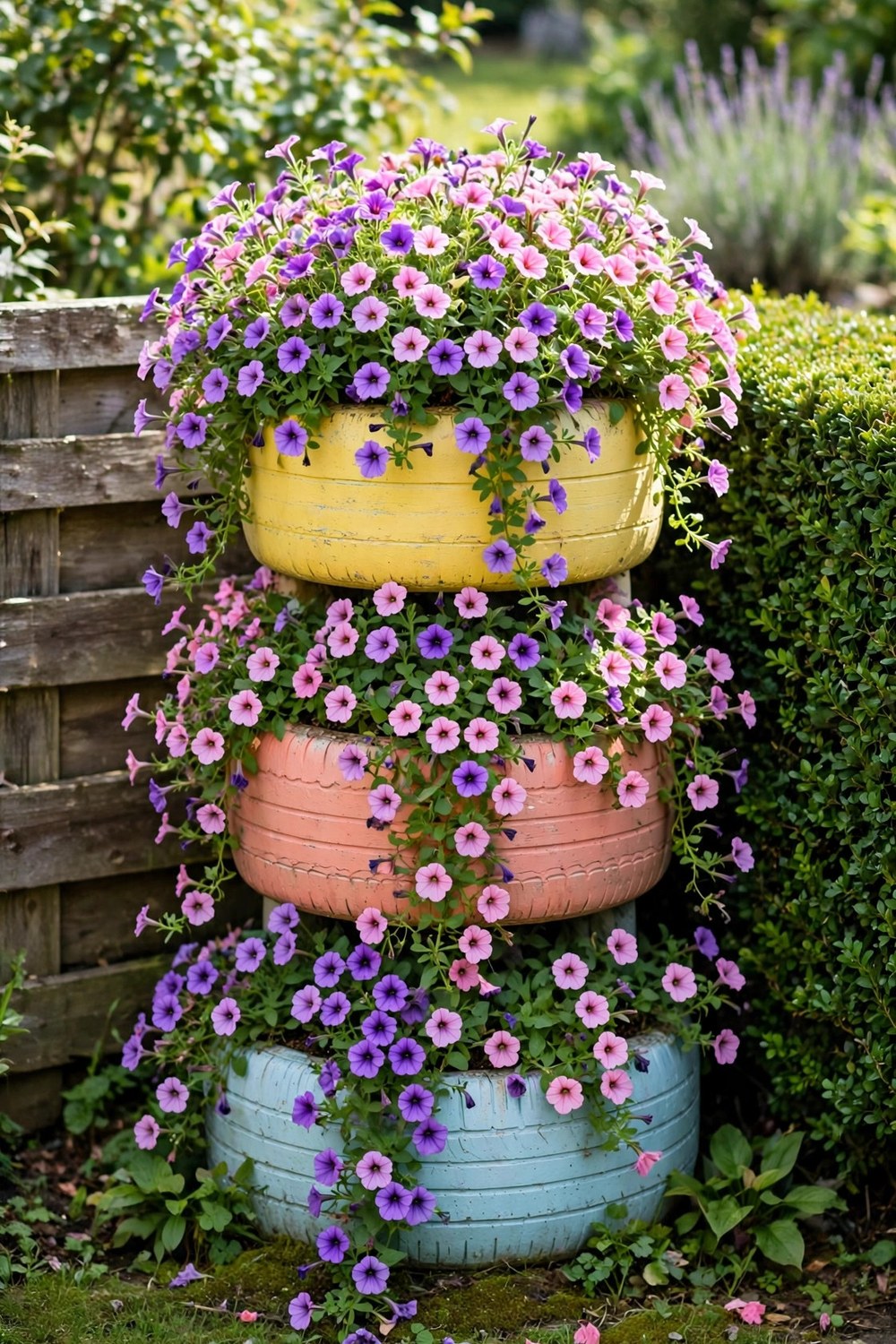
Old tires are heavy, durable, and surprisingly good at holding soil in a neat stack. Clean them well, paint them in a color you enjoy, and stack two or three on level ground. Fill the center with soil, and plant both in the top opening and in the curved pockets around each tire where soil settles. Cascading petunias and trailing nasturtiums usually soften the round shapes and spill prettily over the edges. Because tires hold heat, this tower suits sun loving plants, but it also means you should check moisture often during a hot spell. Place it where it will stay for a while, since a filled tire stack is awkward to move. Many gardeners use it to brighten a dull corner near a driveway or shed. If you prefer a softer look, paint in muted tones and mix in plenty of green trailing foliage to balance the bold shapes.
14. Old Dresser Drawer Tower
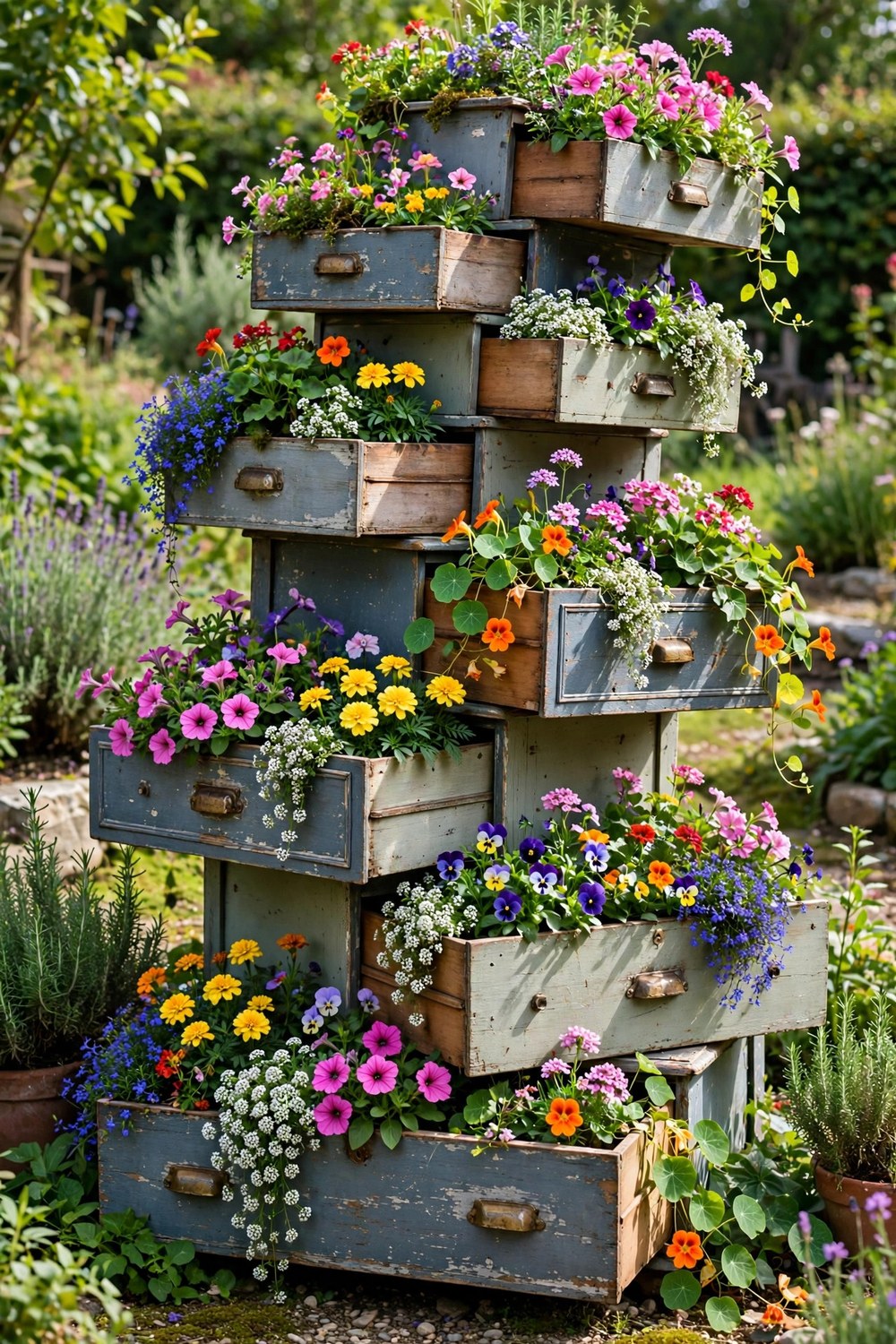
Drawers from a broken dresser already look like shallow planters, so stacking them into a tower feels natural. Drill drainage holes in each drawer base, line them if the wood is thin, and stack them at slight angles so each drawer front steps out and creates a planting ledge. Secure the stack to a wall or screw the drawers together at the back, because an angled tower needs that hidden support. Mixed annuals suit drawers well, since their roots do not need great depth, and a few trailing plants over each drawer front pull the whole piece together. Keep the soil level a little below the rim so watering does not wash it over the front. This is a good tower for a porch or patio where you want a cottage feel without buying new planters. Expect the wood to age outdoors, and enjoy that weathered look as part of its charm.
Small Space and Edible Towers
15. Balcony Railing Tower
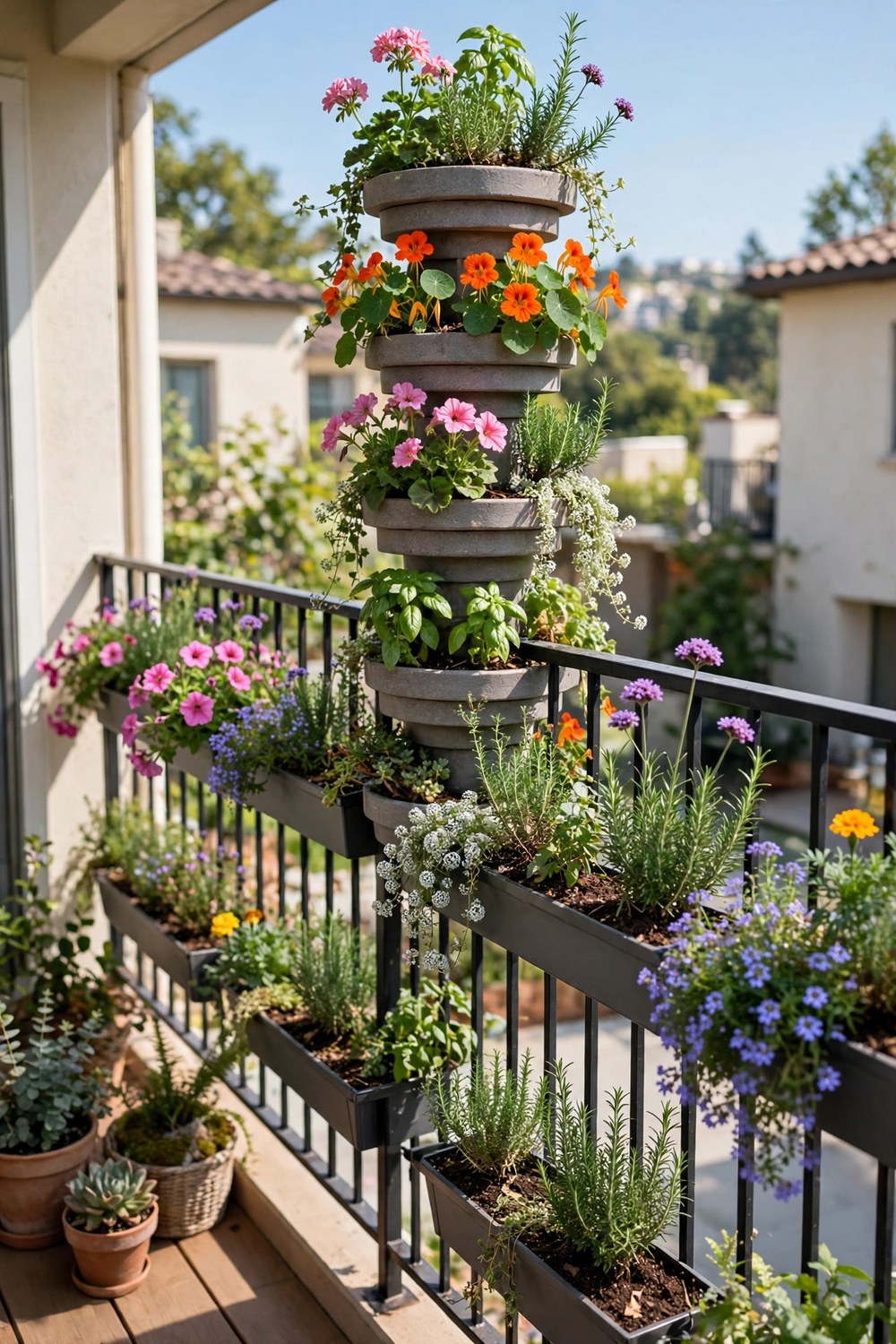
On a small balcony, the railing is often your tallest and sunniest growing space. Use secure railing planters on two levels if your railing design allows it, or pair one railing planter with a tall slim stand just inside it. Always follow the weight guidance for your railing and choose lightweight mix so you are not overloading the structure. Compact petunias, trailing lobelia, and herbs give you color and scent without large, heavy pots. Water carefully so drips do not annoy neighbors below, and consider a tray or self watering planter if that is a concern. Balconies can be windy, so lower, bushier plants typically cope better than tall, delicate ones at the highest level. Even a short run of railing planters creates that tower feeling when the trailing plants connect the levels into one flowing ribbon of flowers above your seating area.
16. Strawberry and Herb Tower
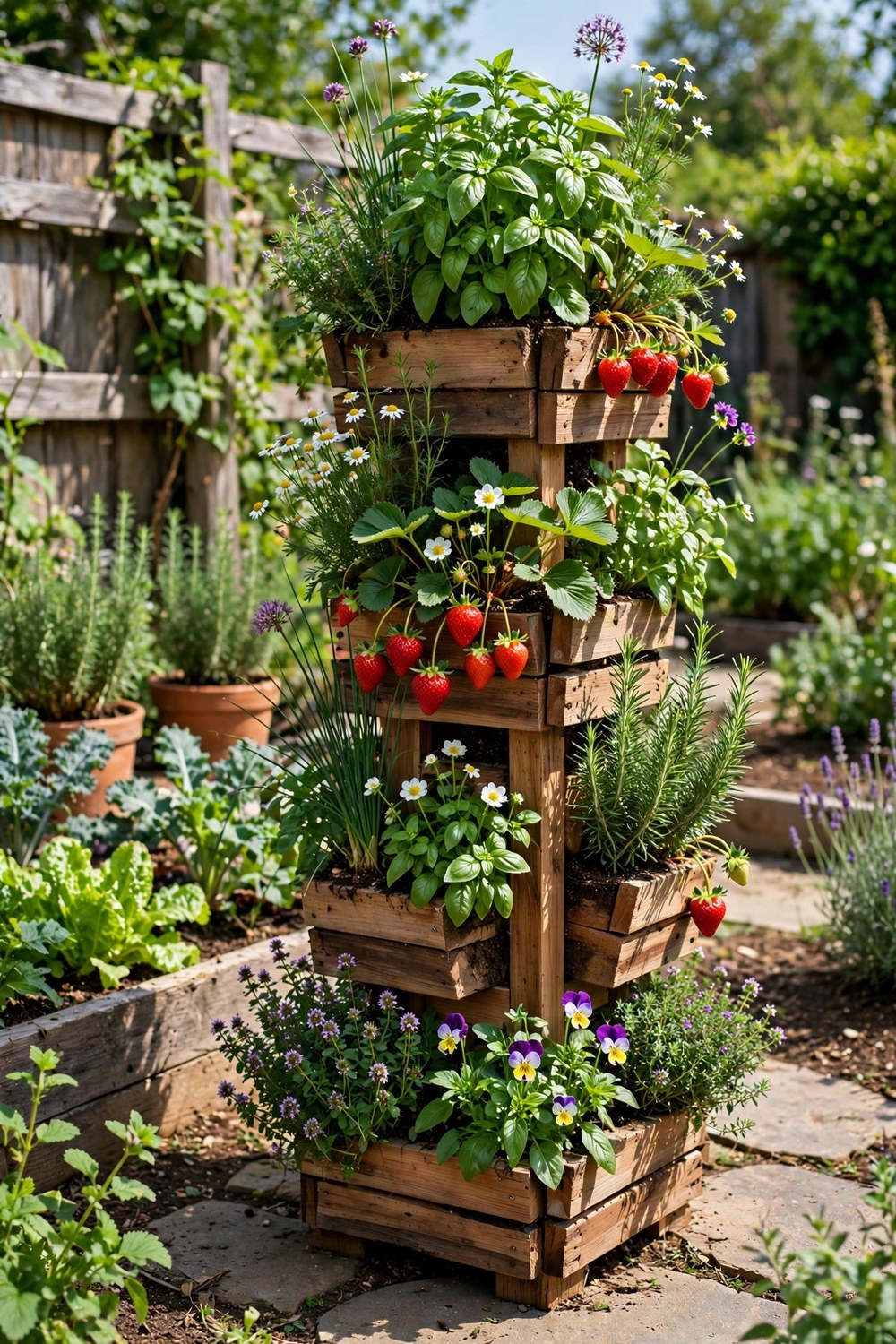
A flower tower does not have to be only ornamental. Stacked planters with pockets around the sides are perfect for strawberries, whose small white flowers are pretty in spring and whose fruit hangs cleanly away from the soil. Fill the remaining pockets with herbs like thyme, chives, and parsley, and add a few edible flowers such as nasturtiums if you enjoy them in salads. Place this tower in your sunniest spot, because fruit and herbs both need strong light to flavor well. Water consistently while fruit is forming, usually a little each morning in warm weather, and feed with a balanced liquid feed according to the label. Pick fruit promptly so plants keep producing and so birds do not beat you to every ripe berry. It is a joyful tower for children to check each day, and it proves a small footprint can still give you a harvest.
17. Corner Shelf Tower for Shade Lovers
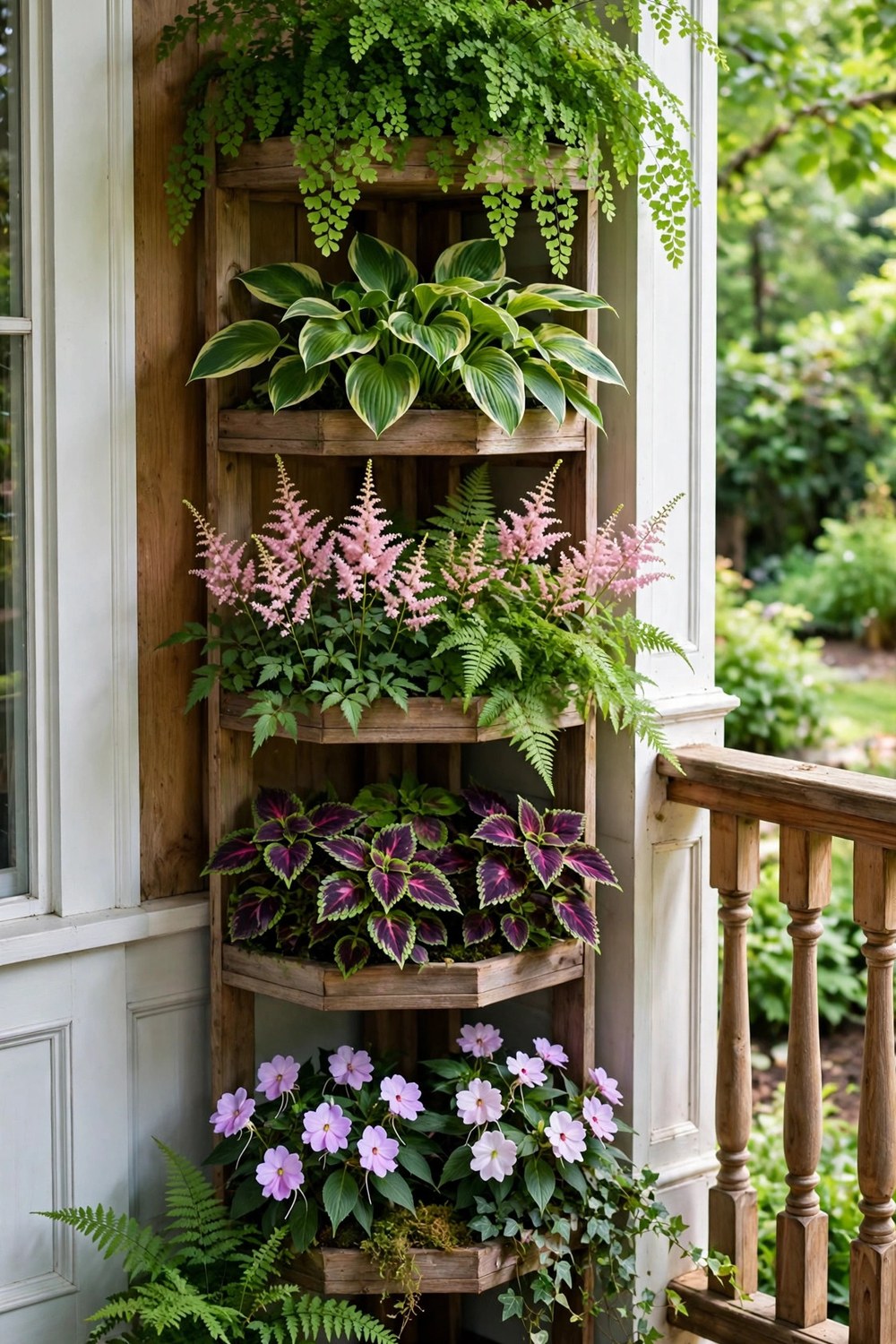
Every garden has that awkward corner that never gets enough sun for petunias, and a corner shelf tower is made for it. Choose a triangular or quarter round shelving unit that fits snugly into the space, and fill it with shade lovers like ferns, hostas in pots, impatiens, and begonias. Vary the leaf sizes as you arrange them, placing broad leaves low and finer, airier ferns higher up so the tower feels balanced. Shade towers usually need less watering than sunny ones, but pots on shelves can still dry at the edges, so check with a finger rather than guessing. A pale colored shelf or light pots can brighten a dark corner noticeably. This tower is also a kind place for houseplants spending the summer outdoors, since the sheltered corner protects them from harsh midday light while they enjoy fresh air and gentle rain on their leaves.
18. Rolling Cart Tower You Can Move
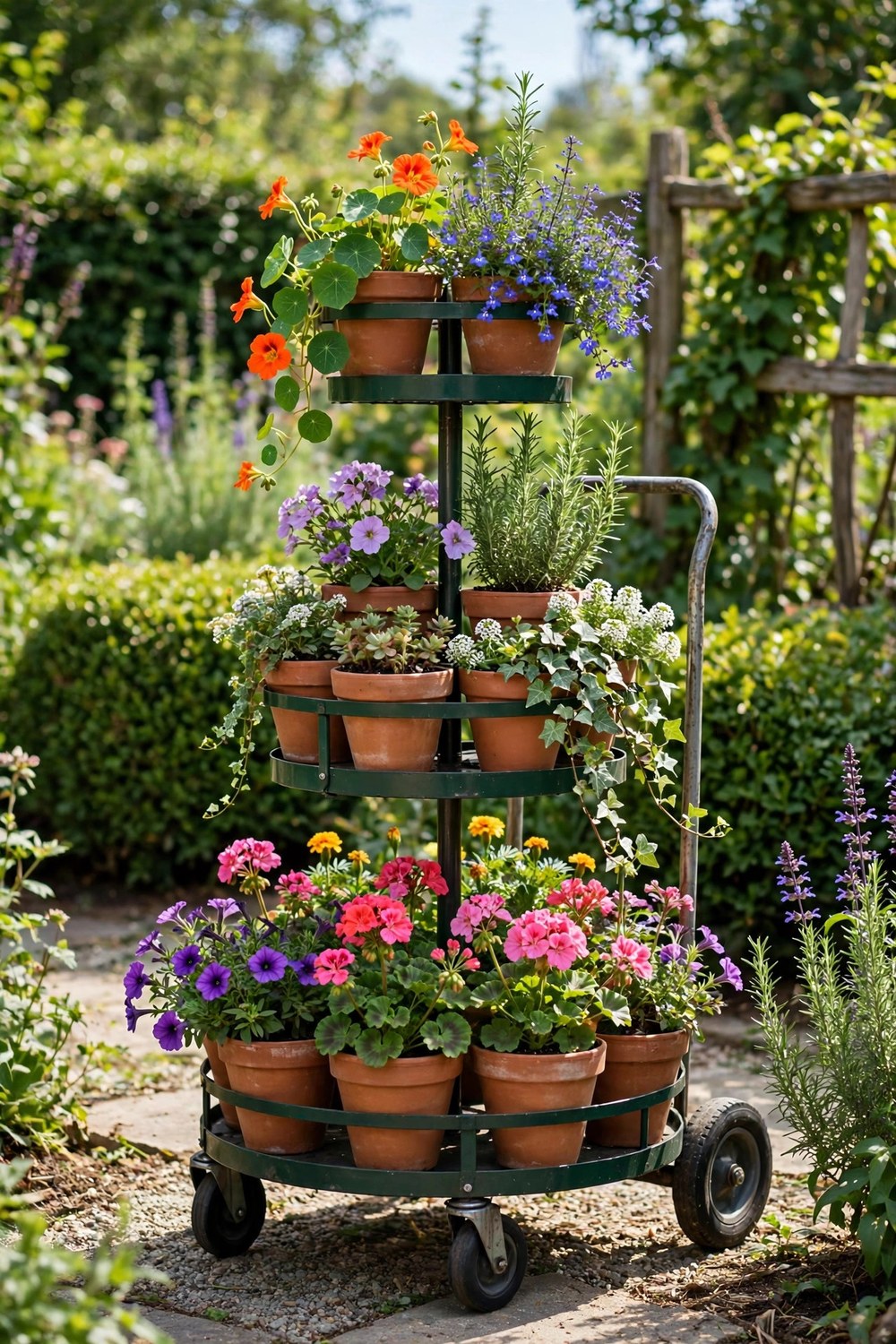
A rolling cart might be the most practical tower of all, because you can move your flowers wherever they are needed. Choose a sturdy metal utility cart with locking wheels and shelves that have a raised edge, then arrange pots securely on each tier. Put the heaviest pot on the bottom shelf to keep the cart stable, and leave a little space around each plant for air and growth. Roll the tower into sun for tender plants, into shade during a heat wave, or close to your table when you want color for an outdoor meal. It is also easy to wheel into shelter before a storm or a frosty night, which can save you a lot of frantic pot carrying. Wipe the wheels and check the locks now and then, especially if the cart lives outdoors. Typically a cart you already own for another job makes this a no build project you can finish in an afternoon.
How to Keep Your Flower Tower Looking Its Best
Whatever style you choose, a few simple habits will keep your tower looking good from spring into fall. Water from the top slowly and then check the lower levels, because gravity does not always share moisture evenly. Feed flowering plants lightly and regularly during the main growing season, following the product label, and pinch off faded blooms when you pass so energy goes into new flowers. Turn freestanding towers if you can, check supports after windy weather, and replace any plant that fails early rather than leaving a gap that makes the whole tower look tired.
Start small if this is your first tower, learn how it drinks and grows in your own space, and then build on that success. You do not need to make all eighteen ideas, and honestly one well loved tower that you water and enjoy every day beats three neglected ones. Take a photo when it first fills in, because that lush midsummer moment is the reward for every bit of stacking, planting, and watering you did in spring. Happy building, and enjoy watching those blooms climb higher week by week.





Leave a Reply