
The kitchen window is the hardest-working view in the house — you stand in front of it while you wash up, cook, and wait for the kettle — so it deserves better than a bare sill and a tired blind. A row of herbs and plants turns that window into a small living garden: fresh basil within snipping distance of the stove, something green softening the light, and a sill that looks styled instead of forgotten. The light is already there, which makes the kitchen window the easiest place in the house to keep plants happy. These ten ideas range from a classic terracotta line-up to hanging rails and tiered stands, and most of them double as ingredients. Save your favorites, measure your sill before you shop for pots, and let the window start growing.
In This Article
- 1. Line the Windowsill with Classic Terracotta Herb Pots
- 2. Gather Herbs in a Long Wooden Window Box
- 3. Hang Small Pots from a Rail Across the Window
- 4. Grow Herbs in Glass Jars for a Light, Airy Look
- 5. Pair Herbs with One Trailing Plant for Softness
- 6. Set One Statement Plant on the Sill
- 7. Add a Tiered Stand to Fit More Green in Less Space
- 8. Match the Pots in Cream Ceramics for a Calm Line
- 9. Keep a Small Vase of Fresh Flowers Beside the Herbs
- 10. Rotate the Sill with the Seasons
1. Line the Windowsill with Classic Terracotta Herb Pots
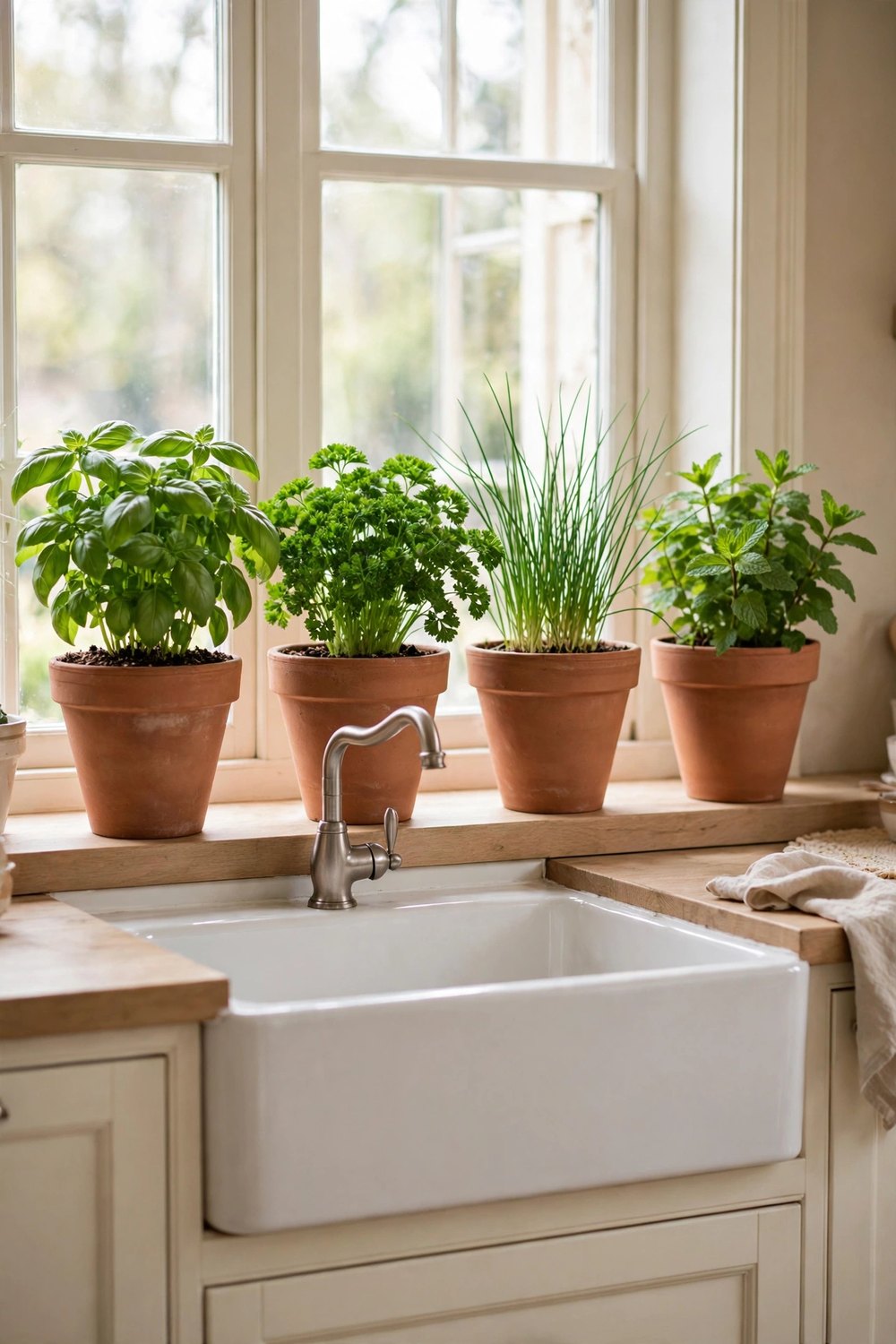
The timeless kitchen-window look is a simple row of terracotta pots — basil, parsley, chives, and mint standing in a line where the light is best. Terracotta suits herbs beautifully: the clay breathes, the warm clay color flatters cream kitchens and light wood, and small pots are cheap enough that the whole row costs less than a takeaway. Keep one herb per pot, group in odd numbers, and let the pots vary just slightly in height so the line feels grown rather than installed. A narrow tray or a strip of cork under the row protects the sill from watering day.
2. Gather Herbs in a Long Wooden Window Box
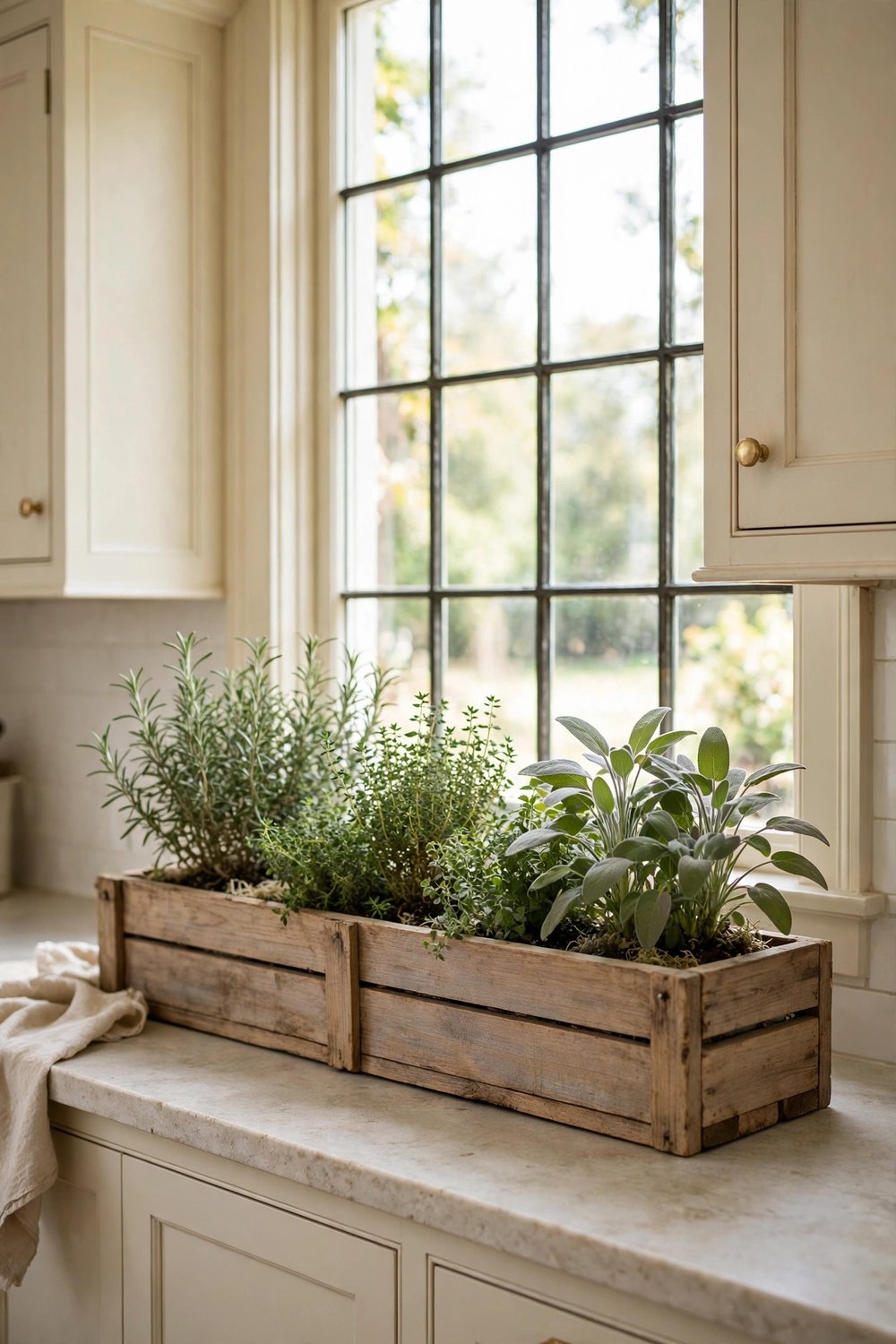
If individual pots feel fussy, one long wooden window box corrals the whole herb garden into a single calm gesture. Line the box, fill it with three or four herbs that share the same watering habits — rosemary, thyme, and sage are happy dry-ish neighbors — and set it on the sill or mount it just below the window. The wood warms the glass and steel around the sink, and the box reads as one styled piece instead of a collection of clutter. It also lifts in one piece when you need the sill clear for a deep clean.
3. Hang Small Pots from a Rail Across the Window
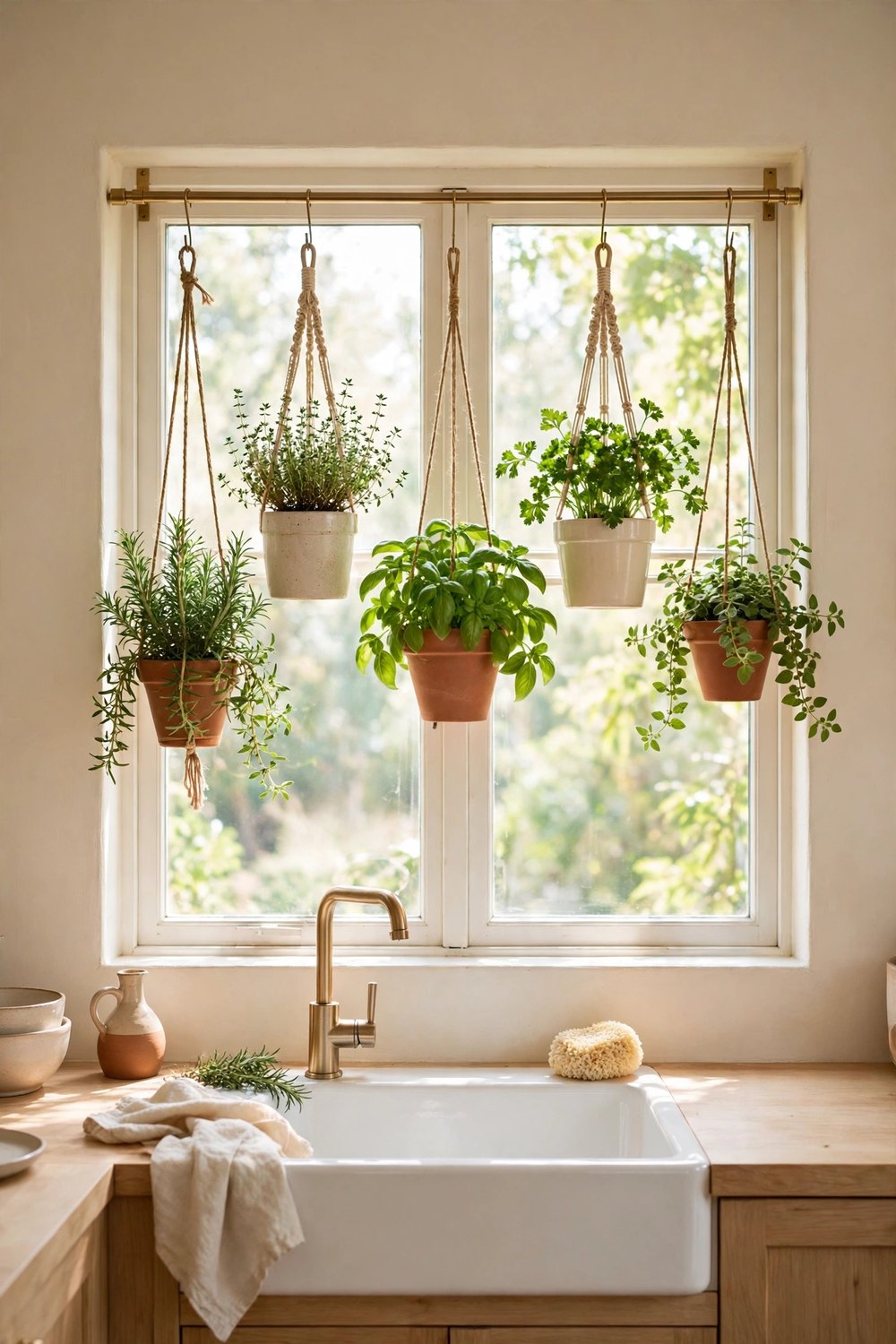
When the sill itself is narrow or already spoken for, go up: a slim rail fitted across the window frame holds small pots on hooks at staggered heights, like a living curtain. The herbs get the best light in the room, the counter below stays completely clear, and the green filters the daylight in the prettiest way. Choose lightweight pots in terracotta, zinc, or cream ceramic, and keep the heaviest herbs on the lowest hooks. Snipping dinner’s rosemary from a pot hanging at eye level feels like cooking in a garden.
4. Grow Herbs in Glass Jars for a Light, Airy Look
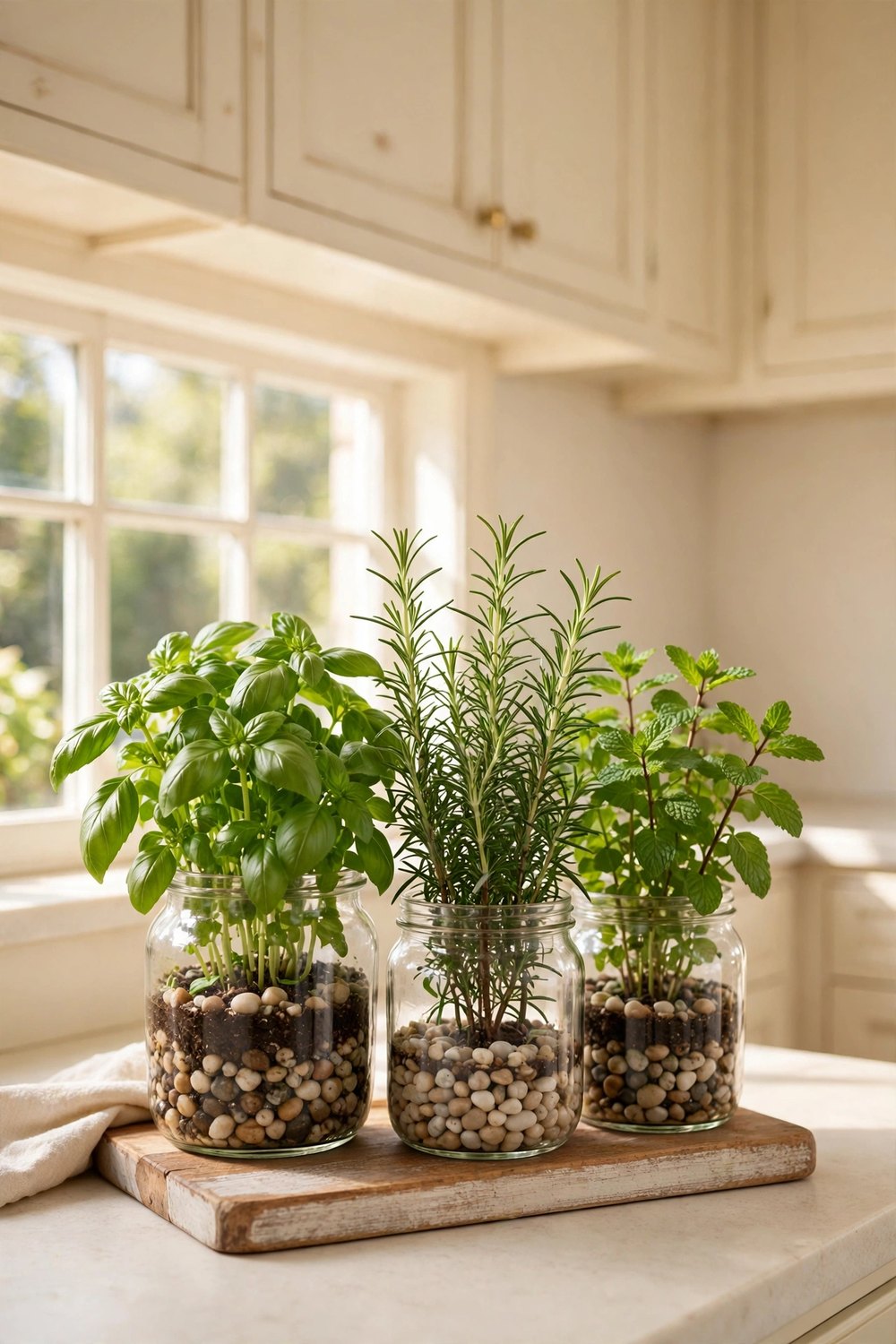
For a brighter, more modern window, grow herbs in clear glass — jam jars, small vases, or simple drinking glasses with a layer of pebbles at the bottom. The glass lets light reach the roots, shows off the pretty tangle below the soil line, and keeps the whole sill feeling light and airy instead of heavy with pots. Mint and basil root happily from cuttings in water alone, which makes this the cheapest start on the list. Group jars of slightly different heights on a small wooden board so the arrangement feels gathered, not scattered.
5. Pair Herbs with One Trailing Plant for Softness
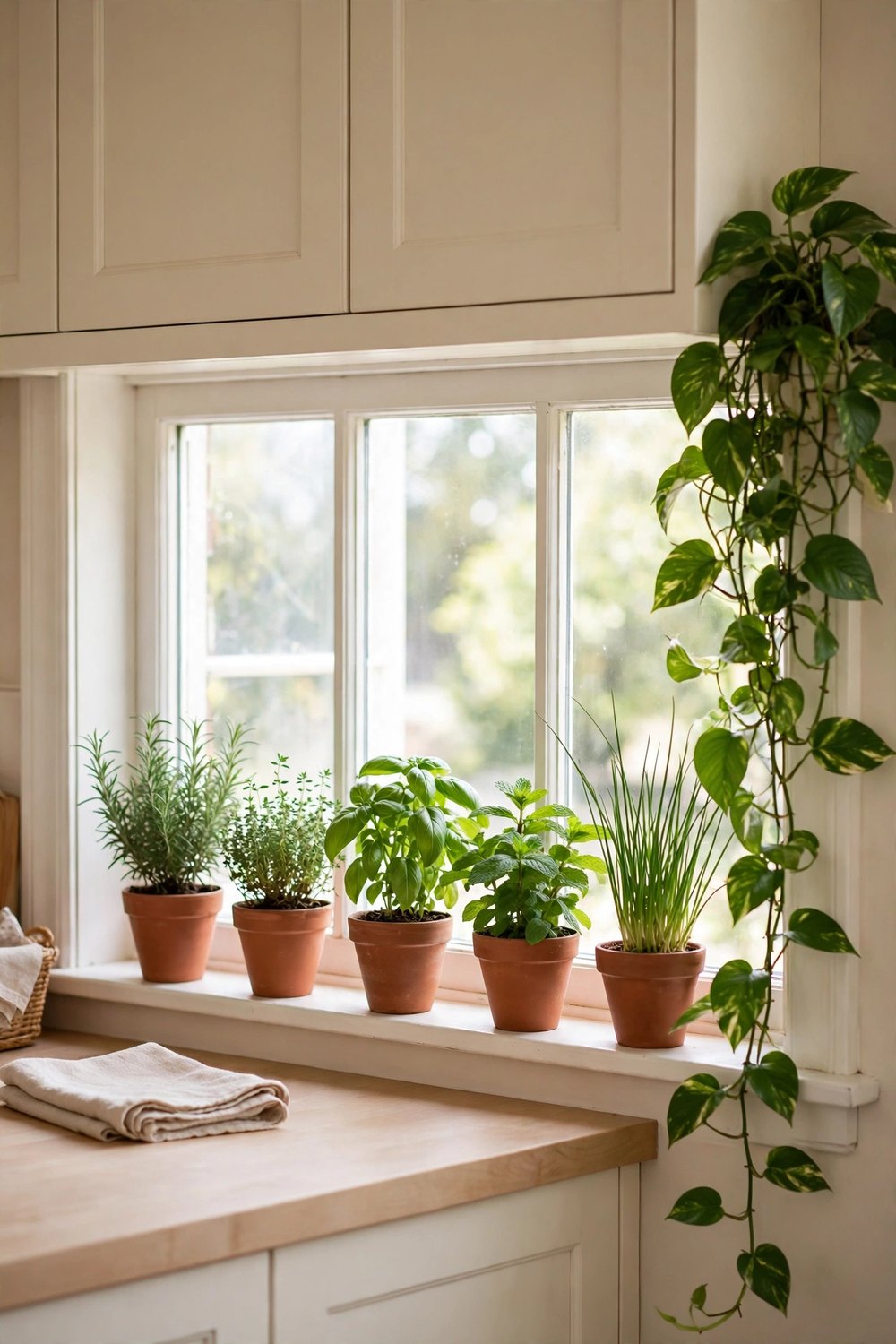
All-herb sills can look a little upright and serious; one trailing plant loosens the whole picture. A pothos, a string of pearls, or a small ivy set at one end of the row sends soft green lines wandering down the window frame and across the sill, softening the hard edges of the sink and taps below. The contrast is the charm — tidy herbs for cooking, one romantic trailer purely for beauty. Give the trailer the brightest end of the window and it will reward you with new leaves all season.
6. Set One Statement Plant on the Sill
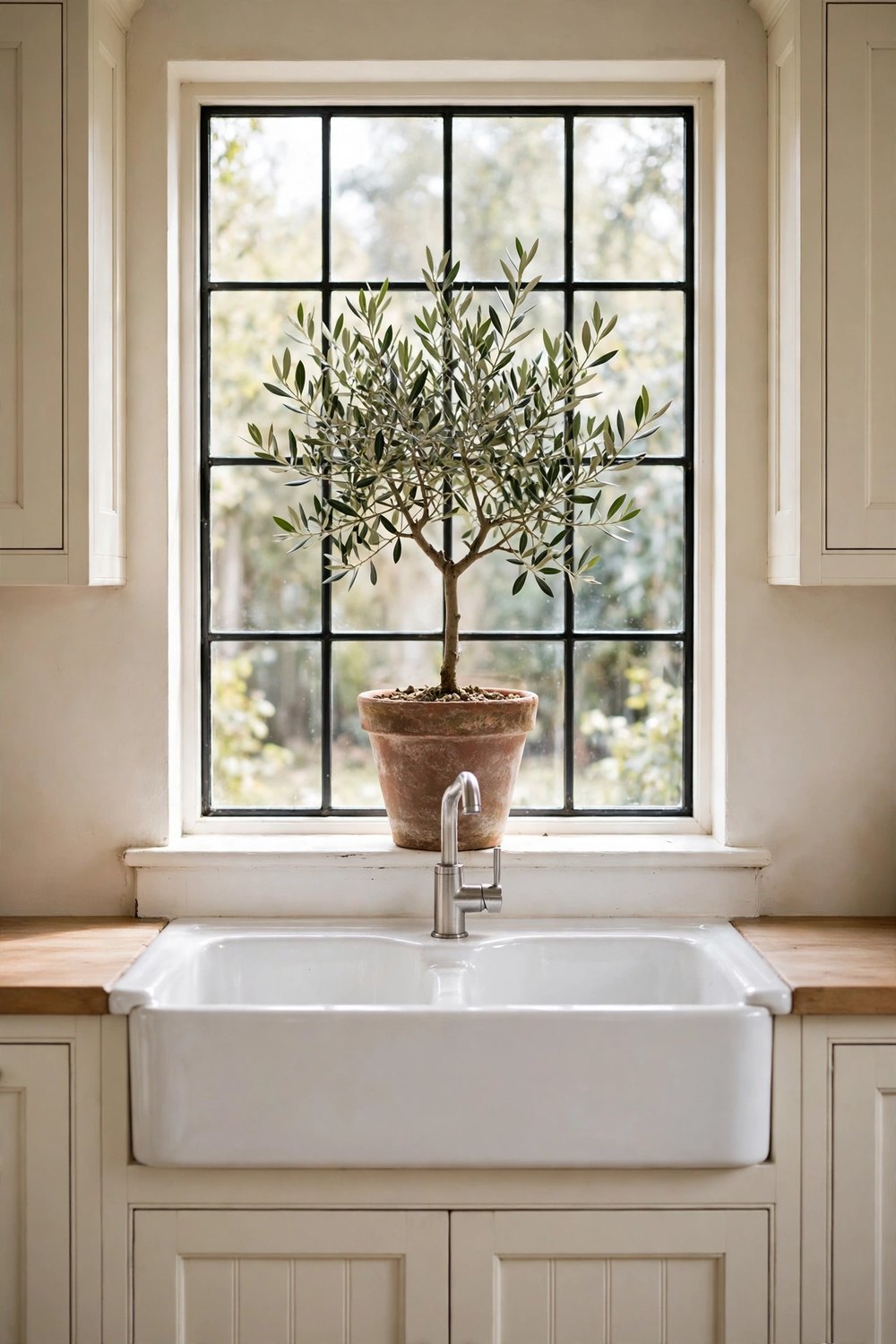
Sometimes the boldest move is restraint: one beautiful plant, given the whole window to itself. A small olive tree, a rosemary trained into a little standard, or a lush fern in a handsome pot turns the sink view into a framed picture, and a single plant is far easier to keep alive than a crowd. Choose a pot with real presence — aged terracotta, a woven basket, or a simple stone planter — because with one plant, the pot does half the decorating. This is the look for small windows and for anyone whose herb garden keeps quietly expiring.
7. Add a Tiered Stand to Fit More Green in Less Space
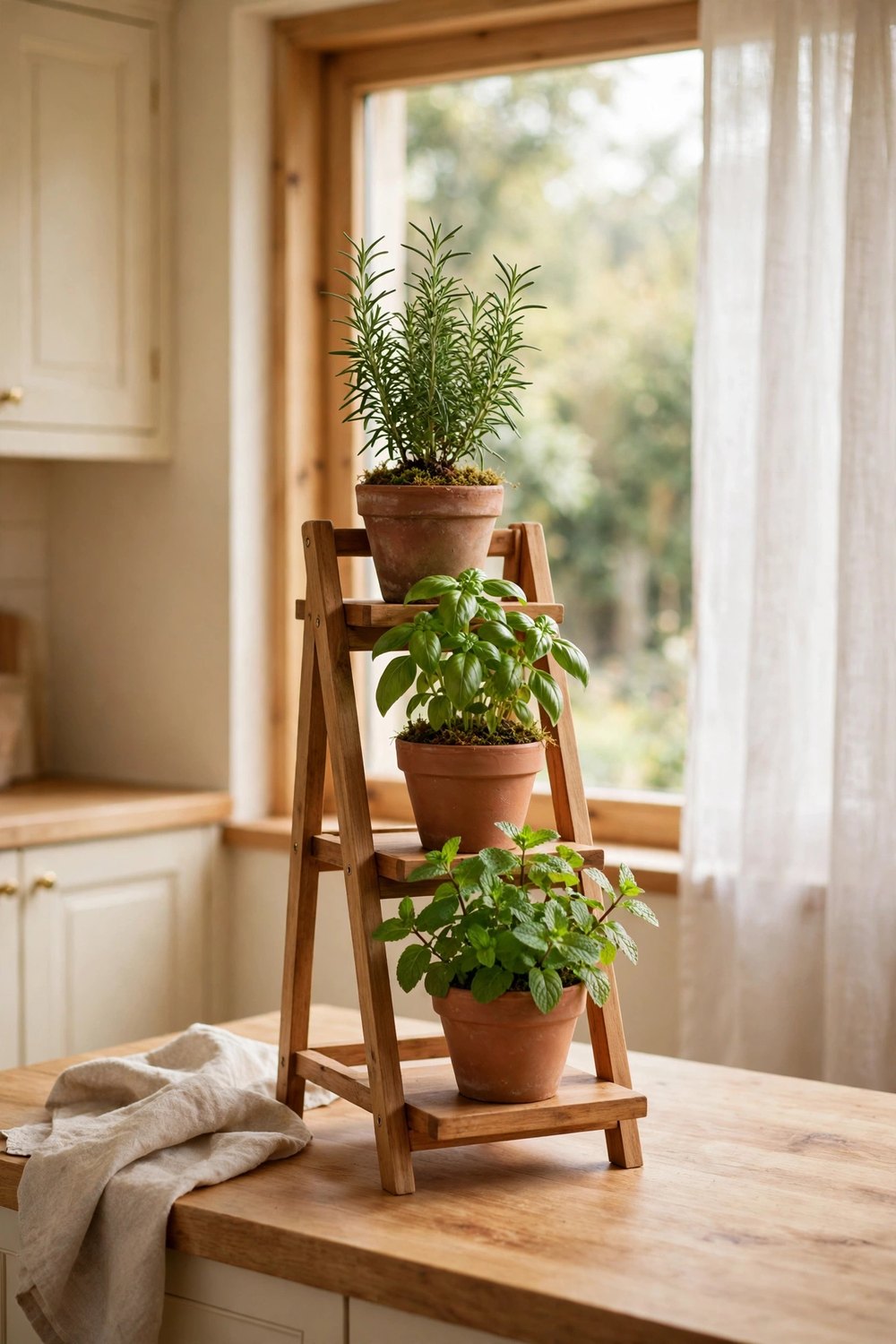
A small tiered stand — two or three slim shelves stepping up the window — triples your growing space without widening it. Herbs that need the most light go on top, shade-tolerant greens sit lower, and the steps create the layered, garden-like depth that a flat row cannot. Wooden and matte-black metal stands both suit warm kitchens; match the stand to your boards and rails so it reads as part of the kitchen’s styling. It is the answer for serious cooks whose herb ambitions have outgrown one row of pots.
8. Match the Pots in Cream Ceramics for a Calm Line
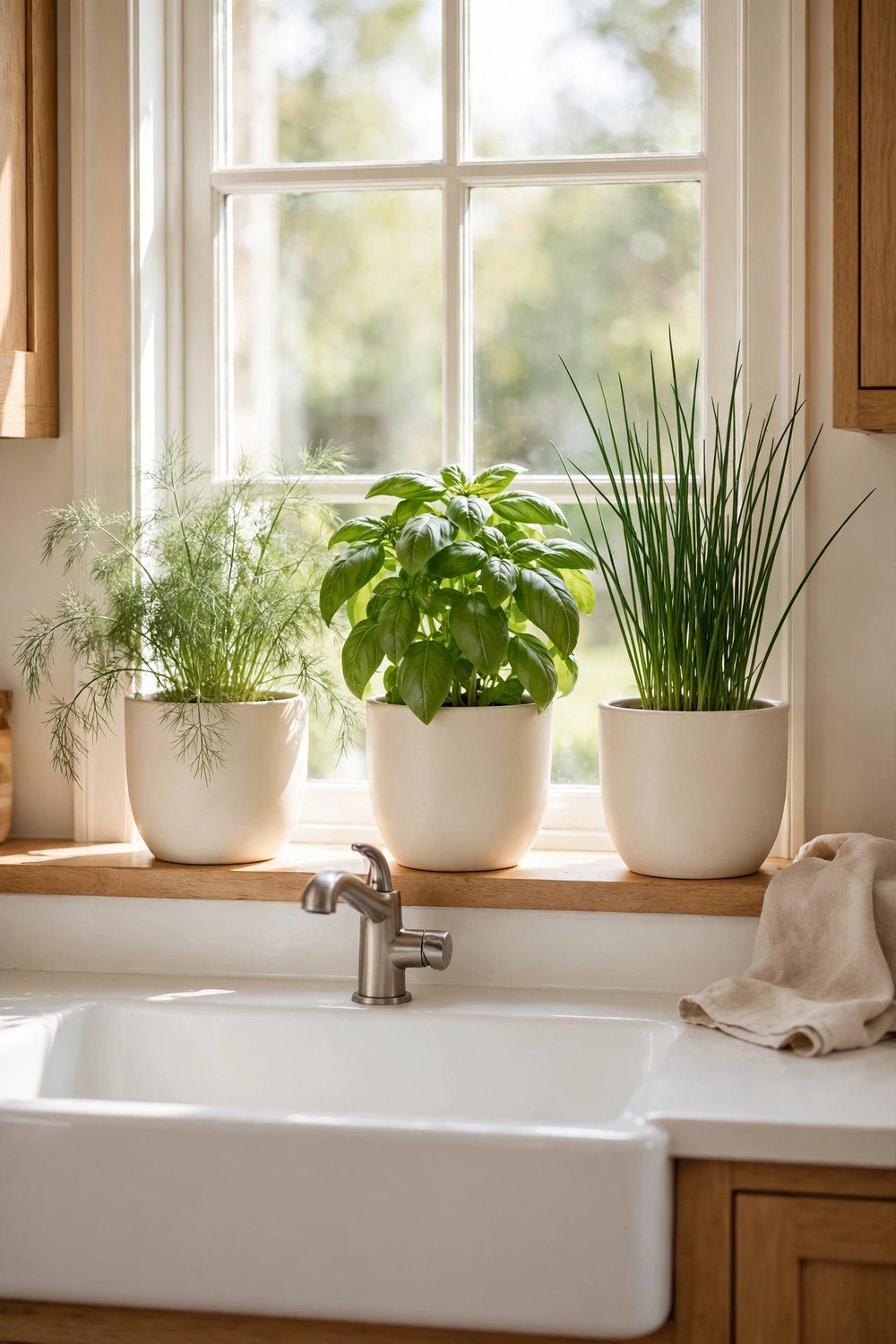
If your window feels busy, unify it: the same herb collection looks instantly calmer when every pot matches. Cream or soft white ceramic pots in one simple shape turn a random gathering into a deliberate line, and the pale color bounces window light around the sink area. Keep the herbs themselves varied — feathery dill beside bold basil beside upright chives — so the green does the talking while the pots stay quiet. This is the easiest way to make a working herb garden look like it belongs in a styled kitchen photograph.
9. Keep a Small Vase of Fresh Flowers Beside the Herbs
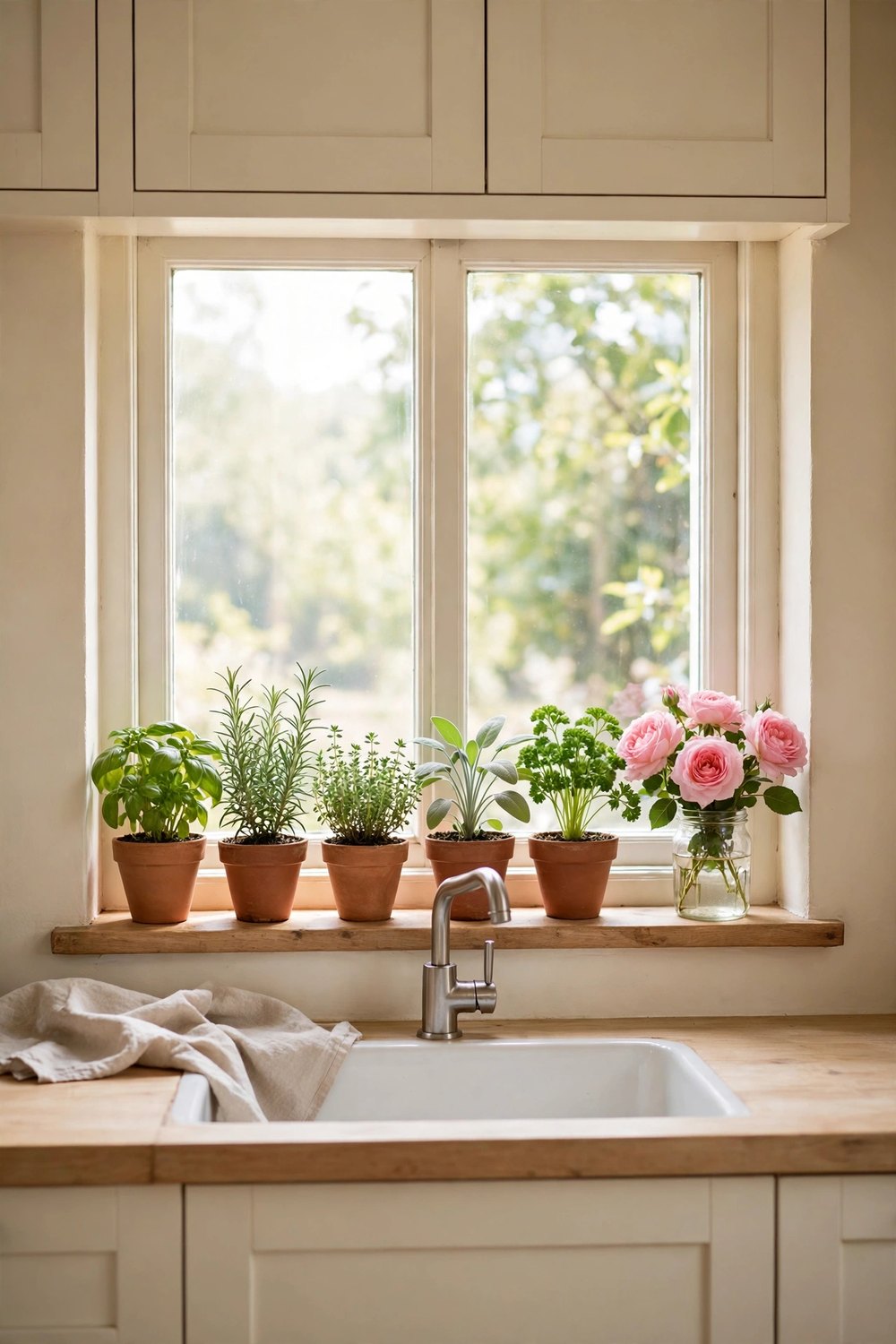
Herbs are the everyday green, but a small vase of fresh flowers is the window’s weekly treat. A jam jar of whatever is blooming — garden roses, grocery tulips, a few stems of something wild from a walk — set at one end of the herb row adds color and makes washing up a genuinely pleasant place to stand. Keep the vase small and the arrangement loose; this is a kitchen, not a florist’s window. When the flowers fade, the herbs carry the sill until the next bunch arrives, so the window never sits bare.
10. Rotate the Sill with the Seasons
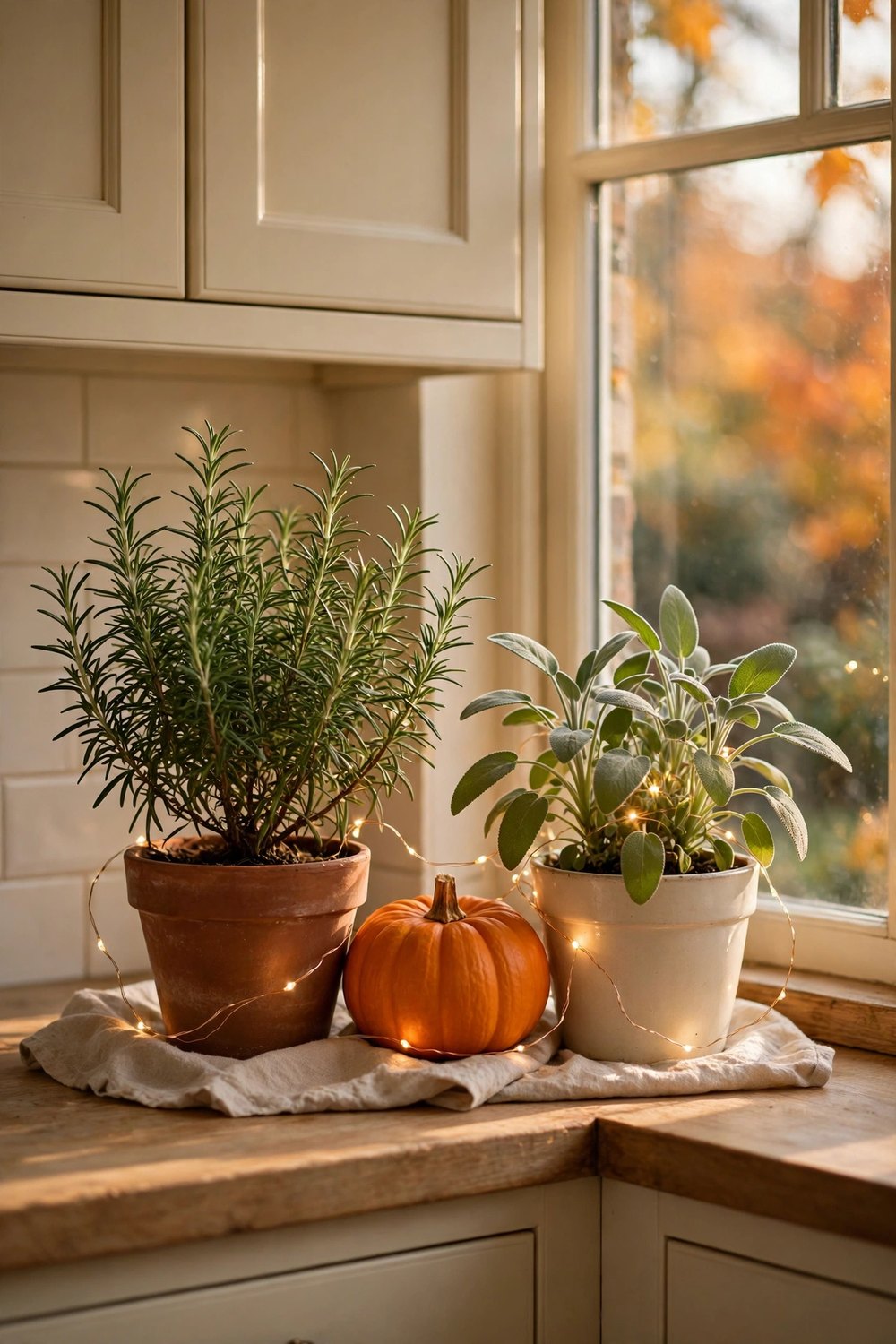
The happiest kitchen windows change a little as the year turns, and a small seasonal rotation keeps the sill feeling alive rather than set-and-forgotten. Spring asks for fresh herbs and a vase of daffodils; summer is basil’s glory and a trailing plant at its fullest; autumn suits rosemary, sage, and a small pumpkin tucked between the pots; winter wants hardy herbs, a little evergreen sprig, and maybe warm fairy lights wound through the row. You are not redecorating — just letting the window keep time with the garden outside it. One small swap per season is all it takes.
A kitchen window dressed with herbs and plants works three jobs at once: it feeds your cooking, softens your light, and gives the room’s hardest-working view a reason to make you smile. Start with three pots of the herbs you actually cook with, let them settle in, and add the trailer, the stand, or the statement plant as your confidence grows. Save this list to your kitchen board on Pinterest so it is handy before your next trip to the garden center, and follow DecorNesti for a new cozy, practical list every week.




Leave a Reply