
The front door is the first hello your home gives, and a wreath is the easiest way to change that hello with the seasons. You do not need a different door, a fresh coat of paint, or a whole porch makeover — just one good wreath base, a few swappable layers, and the habit of changing it as the year turns. These twelve ideas carry your door from the first tulips of spring through high summer, harvest, Christmas, and the quiet weeks of winter, each one in the warm cream, green, and natural palette that suits a calm home. Save your favorites to Pinterest, measure your door, and let the wreath do the welcoming all year long.
In This Article
- 1. Welcome Spring with a Cream and Blush Tulip Wreath
- 2. Soften Early Summer with a Dried Lavender Wreath
- 3. Brighten High Summer with a Lemon and Greenery Wreath
- 4. Add a Cheerful Sunflower Wreath for Late Summer
- 5. Keep One Boxwood Wreath in Reserve for Any Season
- 6. Layer Autumn Leaves and Berries into a Full Fall Wreath
- 7. Build a Harvest Wreath with Wheat and Mini Pumpkins
- 8. Go Classic at Christmas with Pine, Berries and a Red Velvet Bow
- 9. Carry Winter with a Frosted Pinecone Wreath
- 10. Dry Orange Slices and Cinnamon for a Rustic Cold-Weather Wreath
- 11. Ease Toward Spring with a Pussy Willow Wreath
- 12. Hang a White Blossom Grapevine Wreath for the First Warm Days
1. Welcome Spring with a Cream and Blush Tulip Wreath
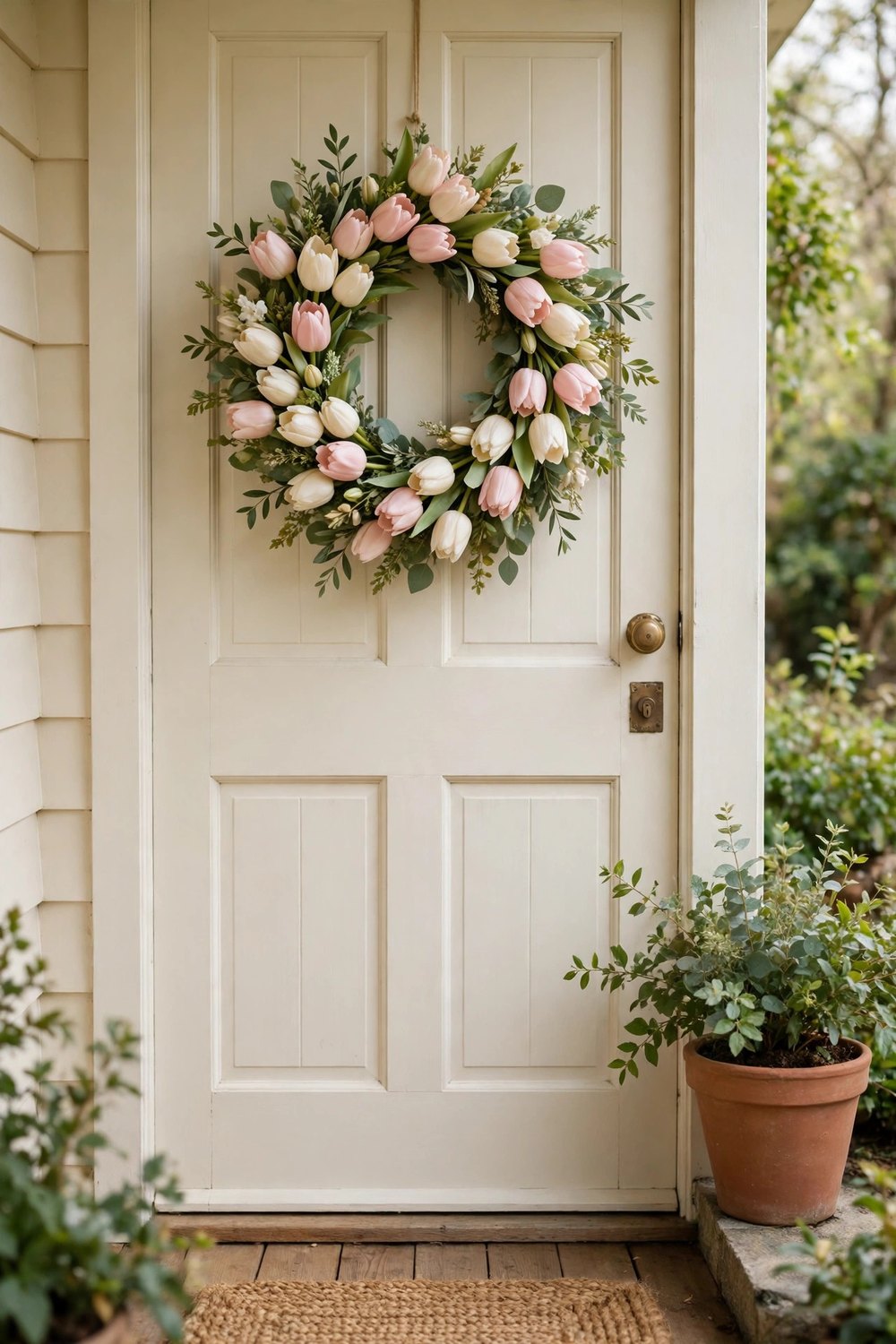
Nothing says the season has turned like tulips on the door. Tuck good faux tulips — cream, blush, and the palest apricot — into a grapevine or greenery base so the blooms sit in loose, uneven clusters rather than a perfect ring, and let a few leaves spill naturally between them. Faux is the honest choice here, because real tulips wilt within days, and the best modern silk stems fool everyone at door distance. Hang it the week the first real tulips open in the garden and the whole street feels like spring has officially started.
2. Soften Early Summer with a Dried Lavender Wreath
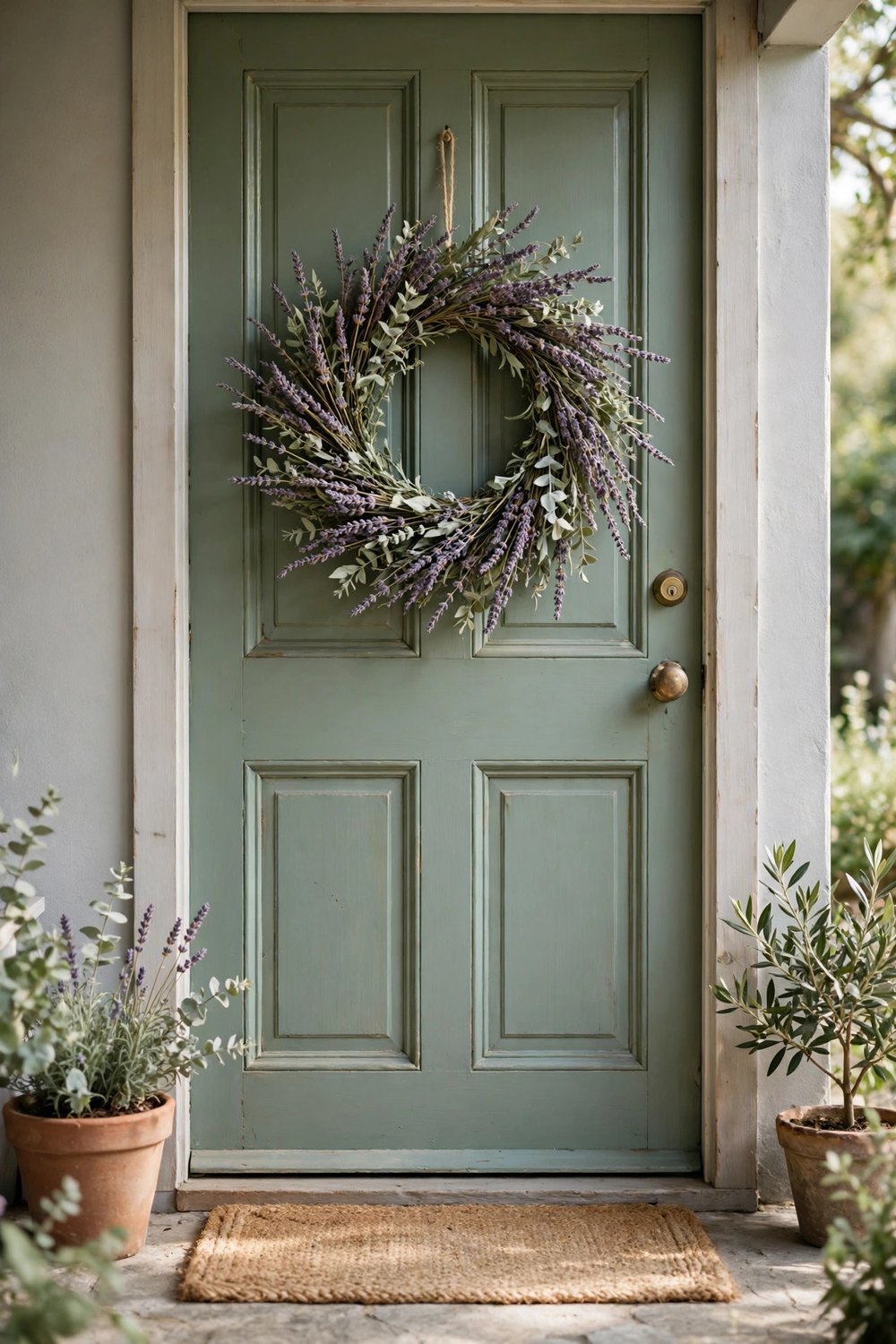
As spring warms into summer, swap the bright blooms for something calmer. A wreath of dried lavender — its dusty purple softened by pale green foliage or a base of dried grasses — hangs beautifully, costs very little if you bundle and dry your own stems, and greets guests with a faint, lovely scent every time the door opens. Keep it out of heavy rain under a porch roof and it will hold its shape and color for more than one season. It suits cream, sage, and natural wood doors especially well.
3. Brighten High Summer with a Lemon and Greenery Wreath
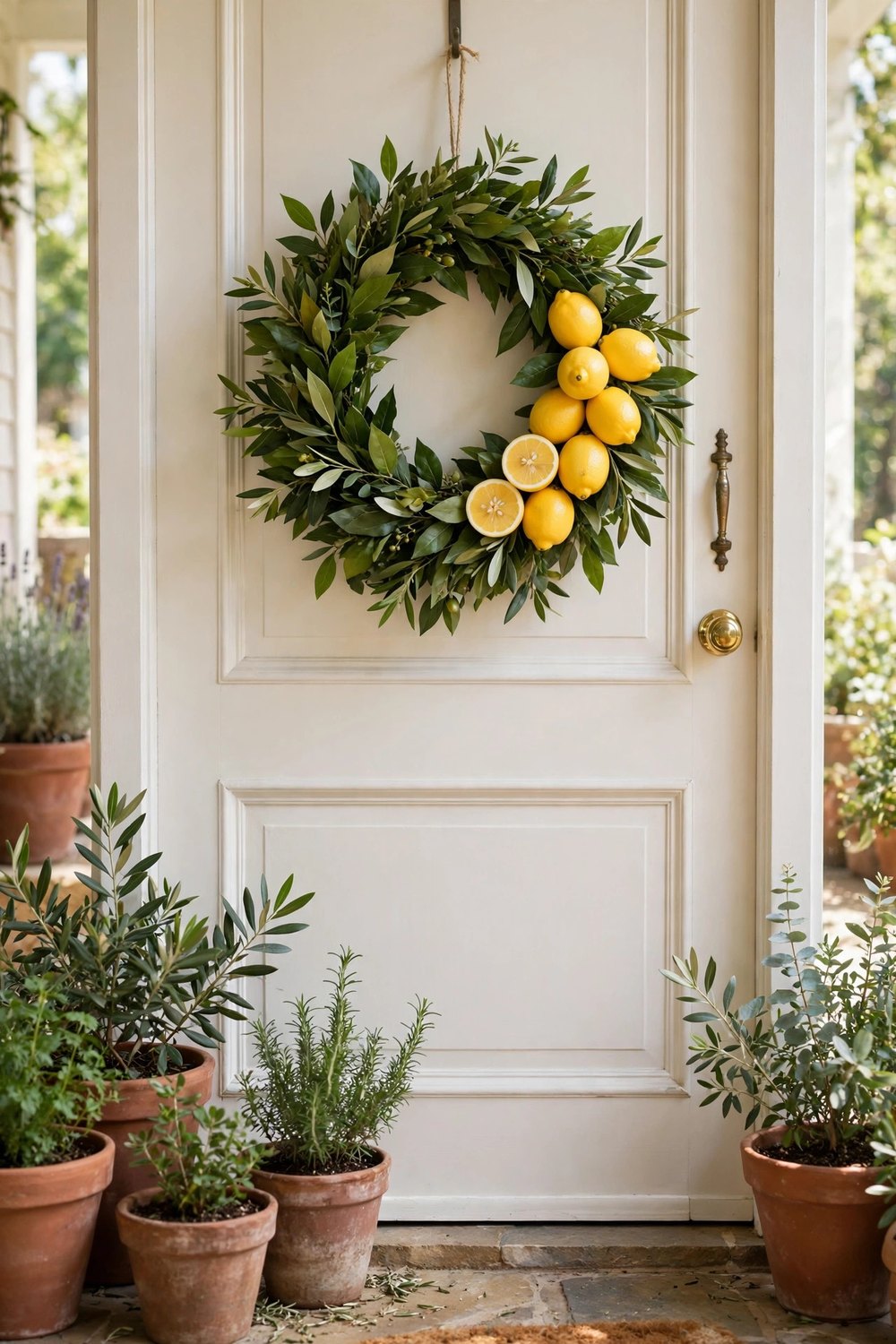
For the brightest weeks of the year, a wreath of glossy green leaves dotted with lemons is pure sunshine on the door. Use faux lemon stems and halved decorative lemons wired into a full greenery base, clustered more thickly at one lower side so the arrangement feels gathered rather than uniform. The yellow against deep green is cheerful without being loud, and it pairs beautifully with summer’s striped cushions and terracotta pots on the porch. This is the wreath neighbors will ask about.
4. Add a Cheerful Sunflower Wreath for Late Summer
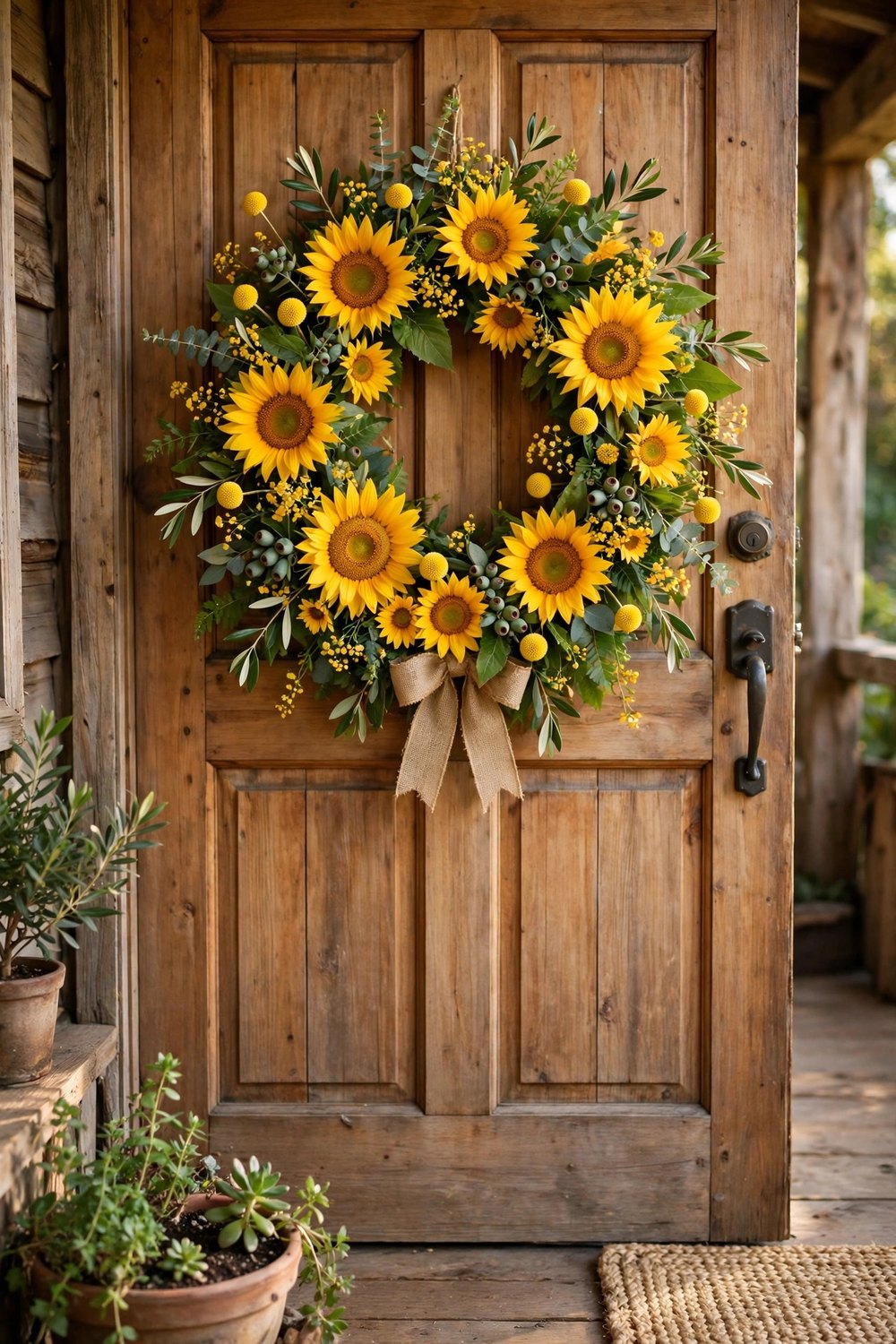
Late summer belongs to sunflowers, and a wreath of them carries the door happily through August and into the first cool evenings. Mix full sunflower heads with smaller golden blooms and plenty of green so the yellow never overwhelms, and finish with a simple burlap or gingham bow at the bottom if your porch leans rustic. Sunflowers read as harvest’s opening act, so this wreath bridges the gap between summer brightness and autumn warmth without a single leaf of orange. Keep the arrangement slightly wild — sunflowers were never meant to look tidy.
5. Keep One Boxwood Wreath in Reserve for Any Season
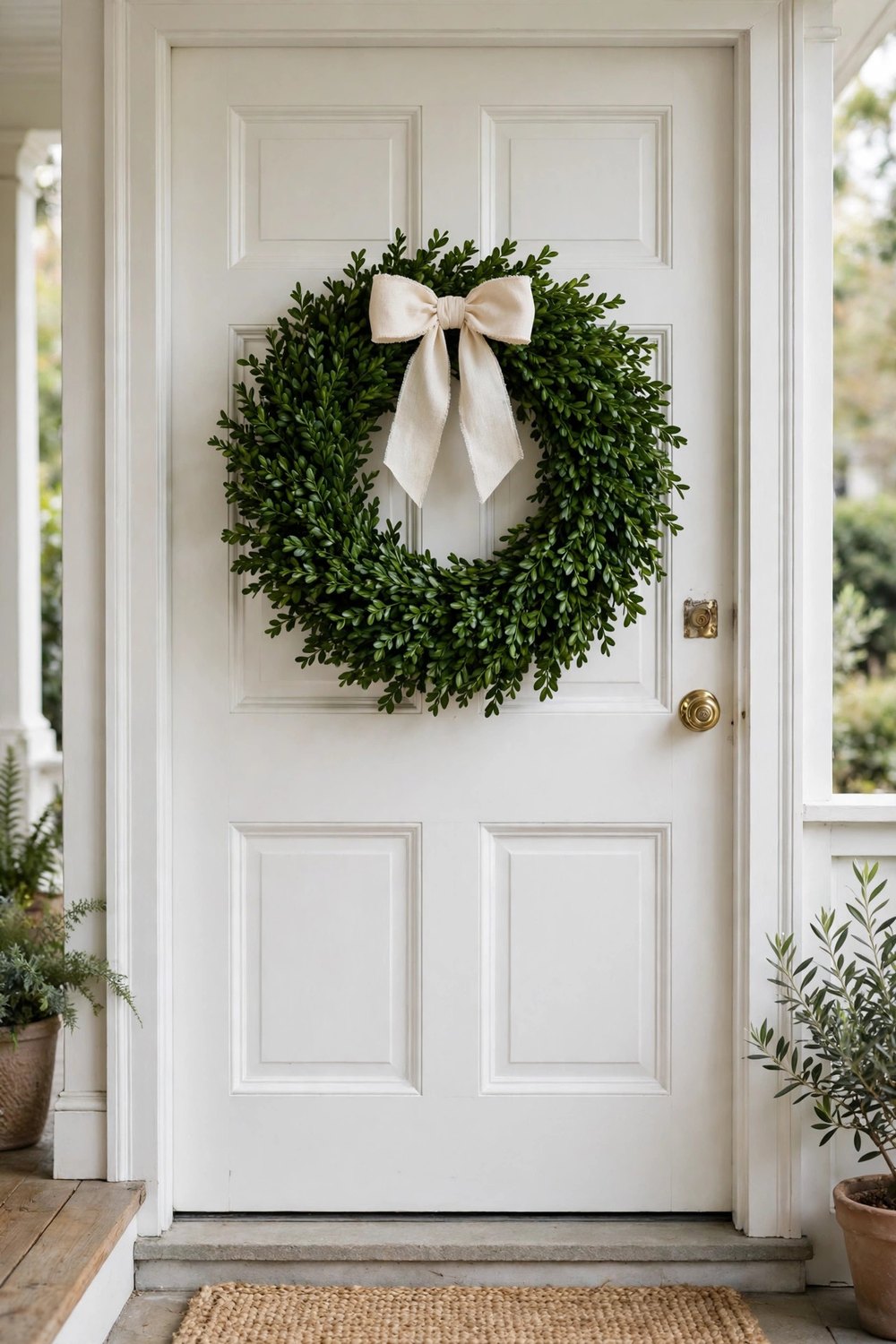
Every door wardrobe needs one classic that never fails, and a full boxwood wreath is it. The small, deep-green leaves look fresh in every month, suit every door color, and ask for nothing but a simple linen or velvet ribbon that you can swap with the seasons — cream in spring, deep red in December, plain twine in between. Preserved or good faux boxwood keeps its color for years stored flat in a wreath box. When a wreath change surprises you — guests coming, a season turned early — the boxwood is the one you reach for.
6. Layer Autumn Leaves and Berries into a Full Fall Wreath
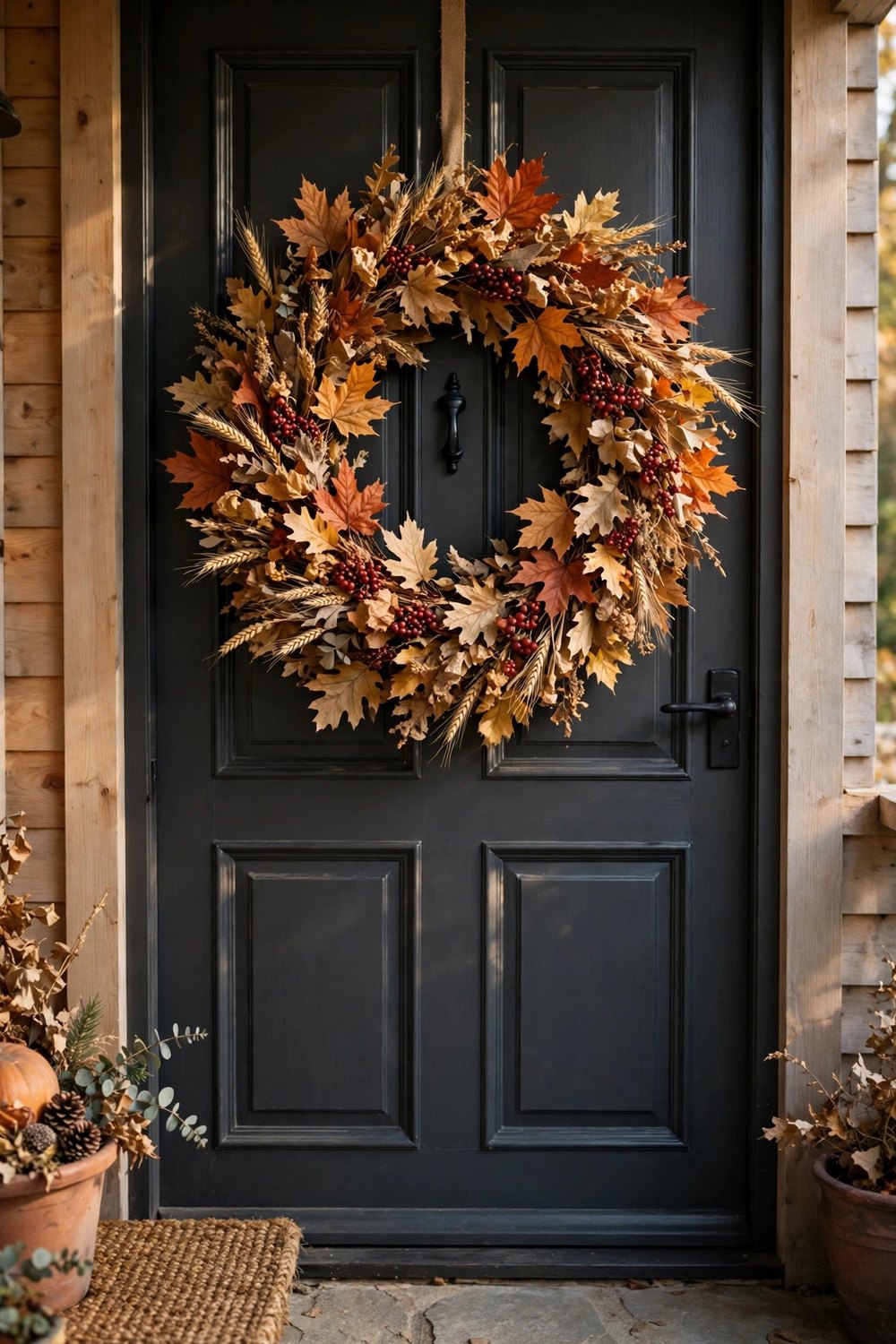
Autumn is the wreath season, and the classic fall wreath layers it all: maple and oak leaves in rust, amber, and faded gold, clusters of deep red berries, and a few dried wheat stems or mini pinecones tucked through for texture. Build it full and a little uneven, keeping the colors muted and dusty rather than bright, so it reads as gathered foliage instead of party decor. A plaid or velvet bow in rust or burgundy finishes it. Against a cream or dark door, this is the single most welcoming sight of the year.
7. Build a Harvest Wreath with Wheat and Mini Pumpkins
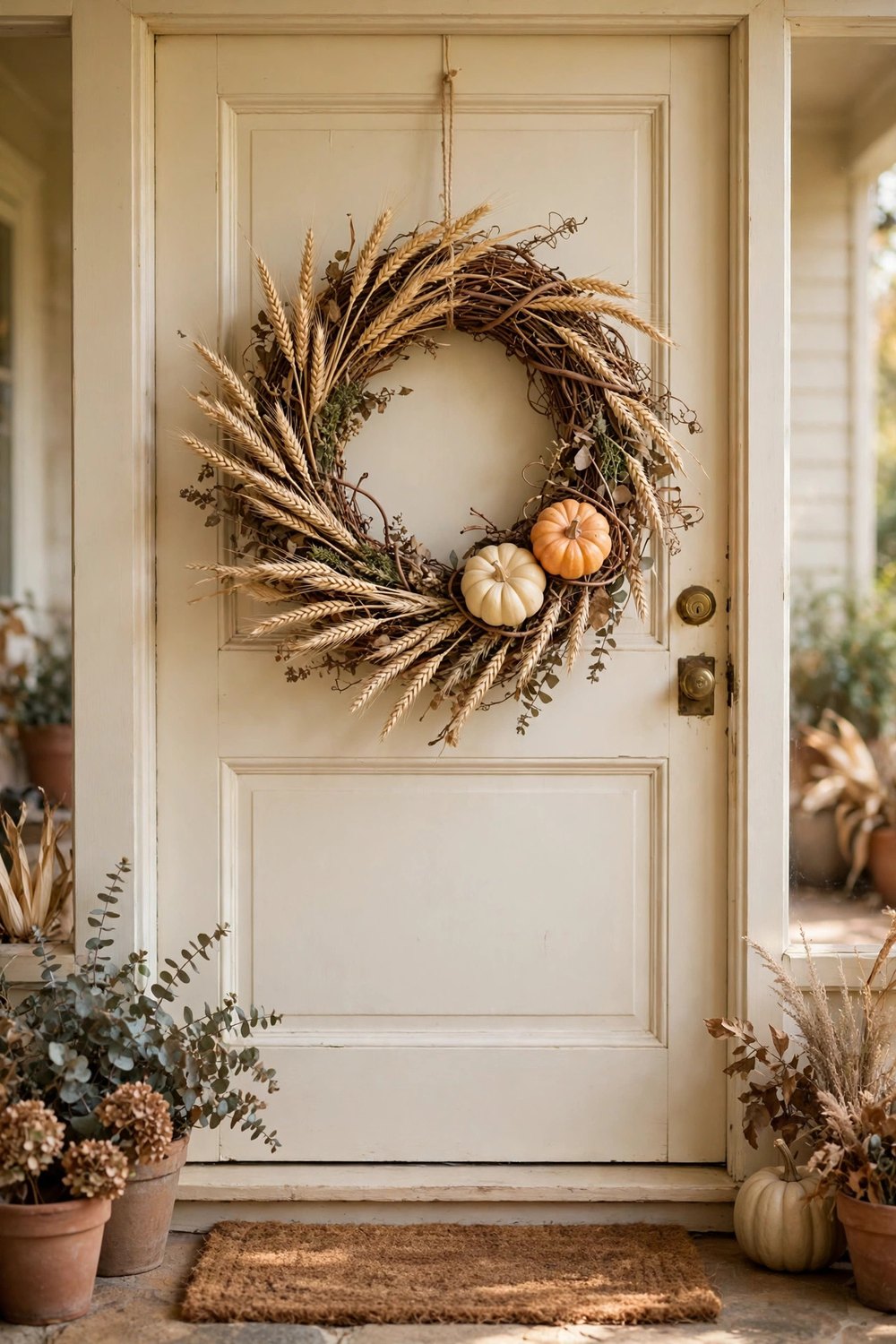
For the weeks around Thanksgiving, let the wreath celebrate the harvest itself. Start with a base of dried wheat, oat stems, or natural grapevine, then wire in two or three mini pumpkins — real ones for the holiday week, or small faux ones in cream and pale orange to reuse every year — along with a few dried corn husks or seed heads. Keep the palette pale gold, cream, and soft rust so it feels abundant without shouting. It hangs beautifully from harvest dinners straight through to the first Christmas greens.
8. Go Classic at Christmas with Pine, Berries and a Red Velvet Bow
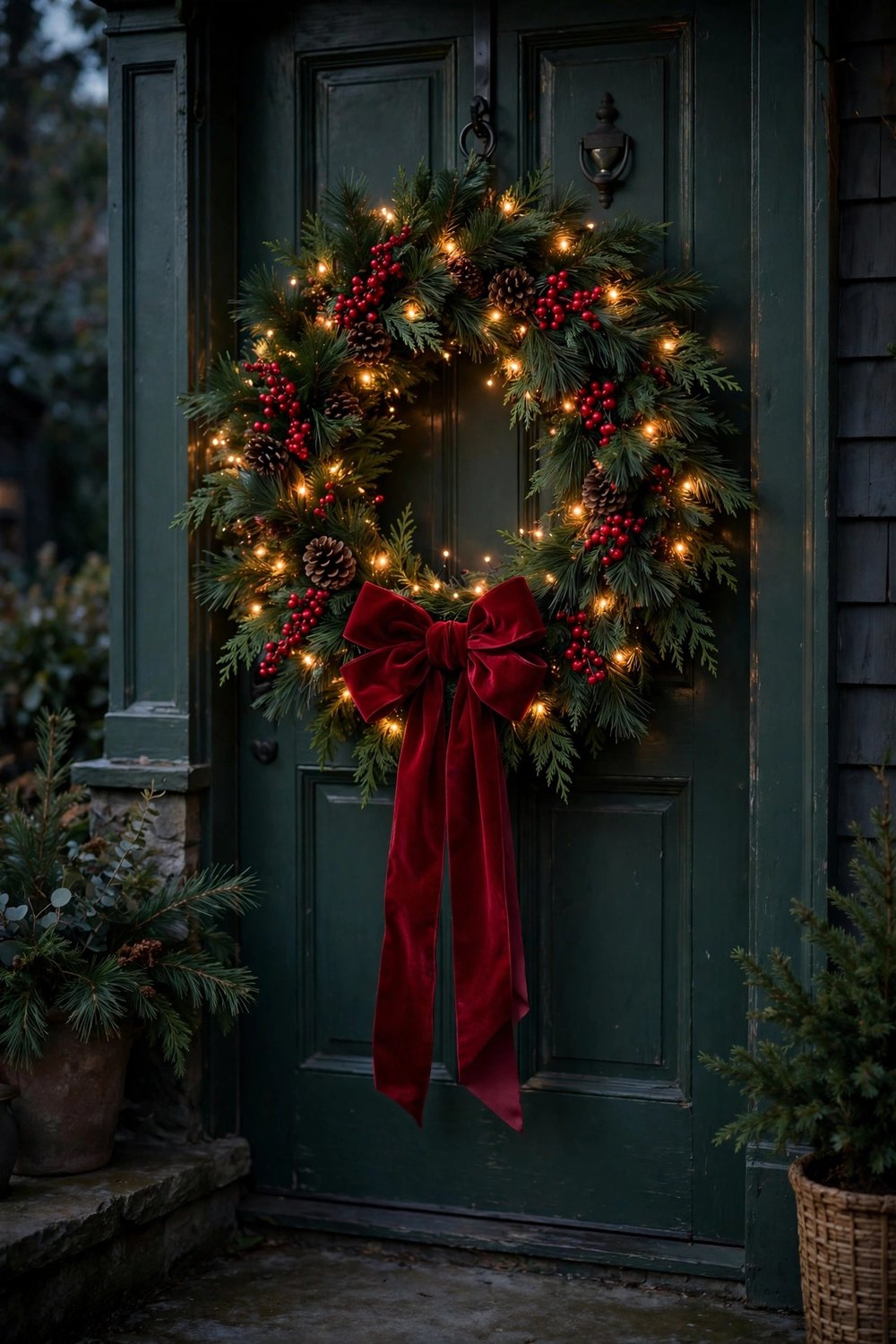
Christmas asks for the most traditional wreath of all: deep green pine and cedar, bright clusters of red berries, a few pinecones, and one generous bow in deep red velvet with long tails. Fresh greenery smells wonderful and lasts the season on a cool door; good faux lets you build it once and hang it for a decade. A strand of warm battery fairy lights woven through takes it from lovely to magical at dusk, and a timer means it greets you glowing every evening without a thought. Some classics never need improving.
9. Carry Winter with a Frosted Pinecone Wreath
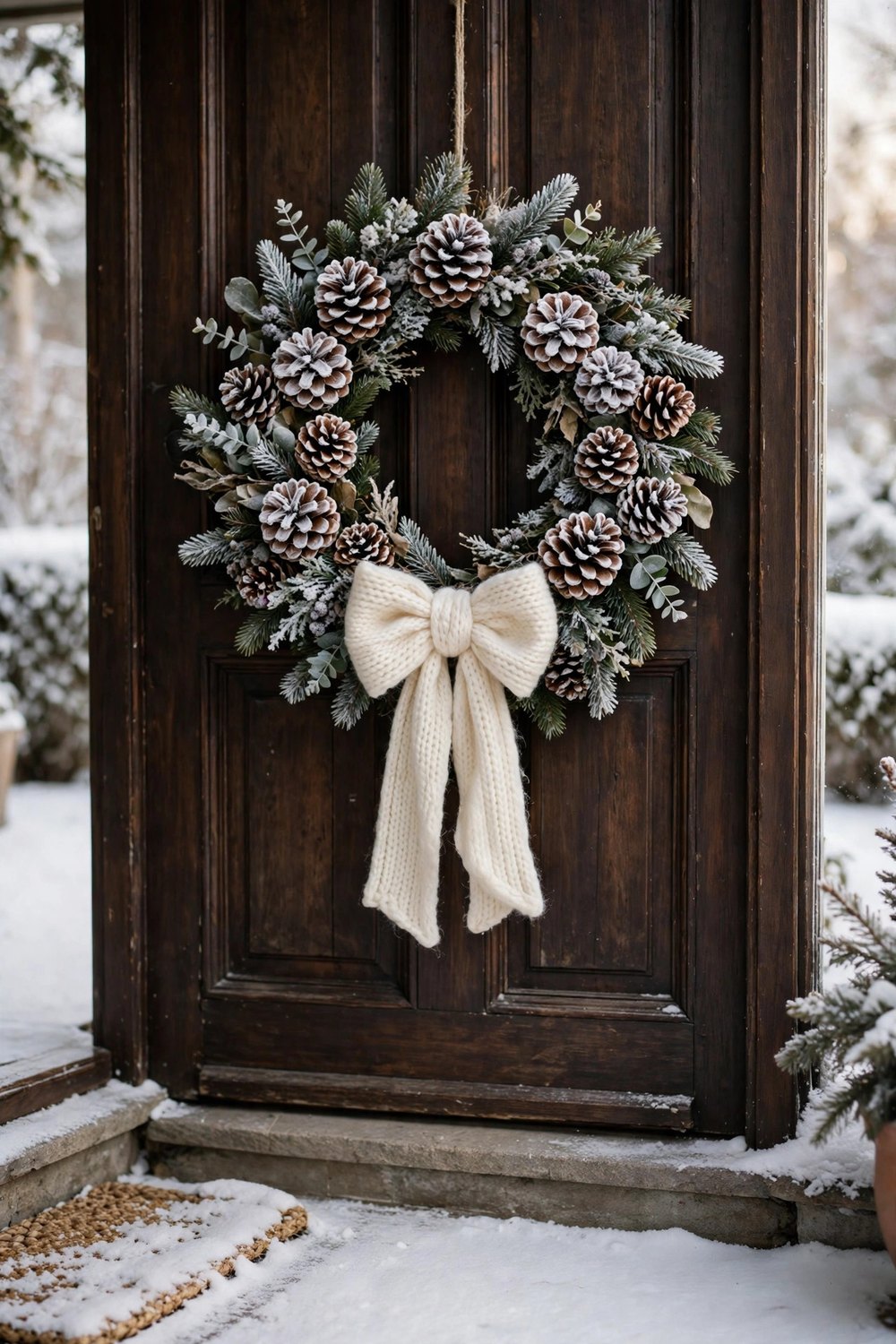
When Christmas comes down, the door does not have to go bare. A winter wreath of pinecones — natural, or tipped with white for a frosted, just-snowed look — layered over dark greenery or standing alone on a grapevine base carries the door gracefully through January. Add a cream or grey wool bow instead of red and the whole mood shifts from festive to serene. Pinecone wreaths are nearly indestructible, store easily, and suit stone, wood, and dark-painted doors beautifully through the coldest weeks.
10. Dry Orange Slices and Cinnamon for a Rustic Cold-Weather Wreath
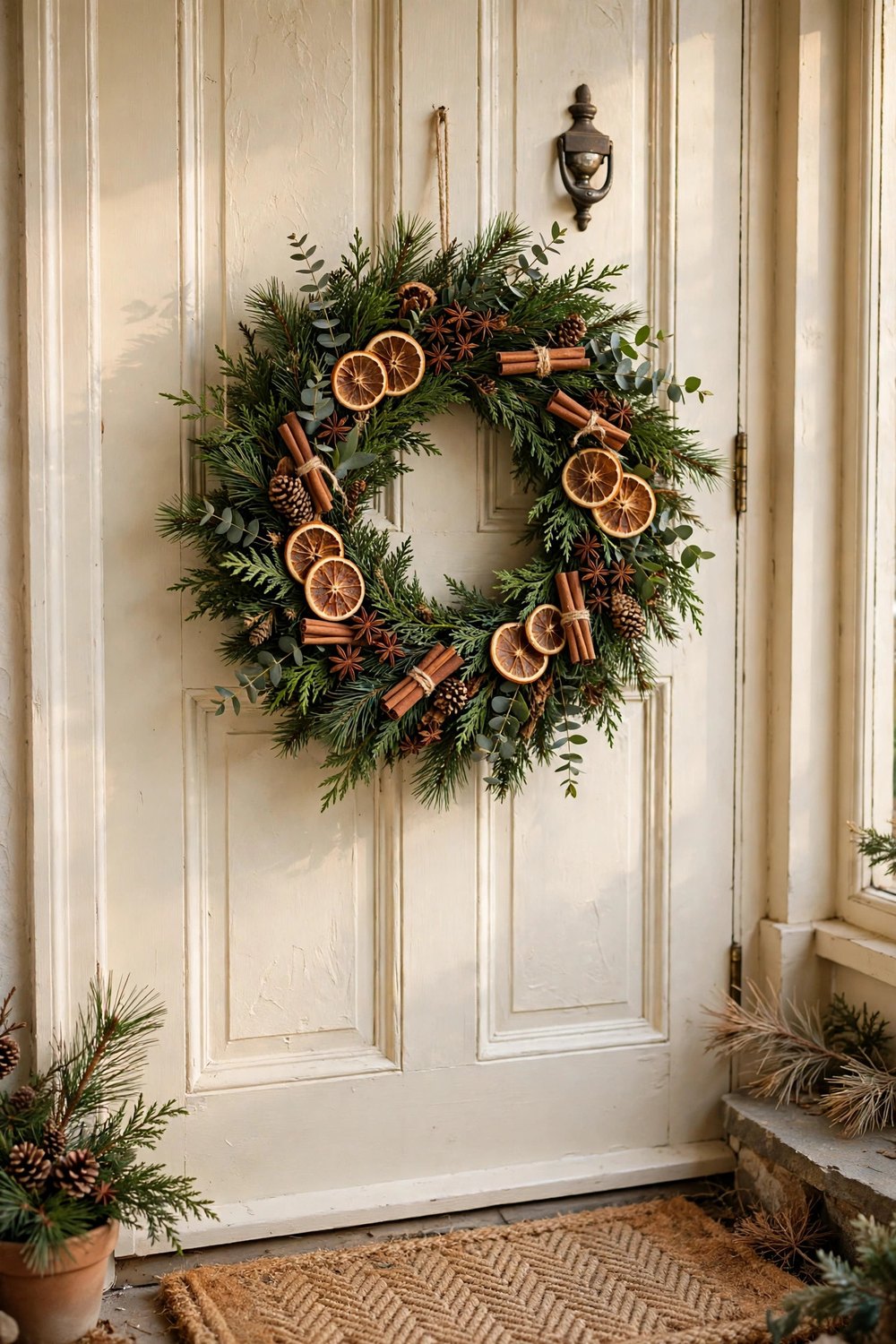
Dried orange slices glow like small stained-glass windows against winter greenery, and paired with cinnamon sticks, star anise, and a few walnuts on a pine or eucalyptus base they make a wreath that looks beautiful and smells quietly wonderful each time the door opens. Dry the slices slowly in a low oven, wire them in clusters, and keep the arrangement warm and rustic rather than polished. It bridges Christmas and deep winter happily, especially if your holiday palette leaned natural to begin with.
11. Ease Toward Spring with a Pussy Willow Wreath
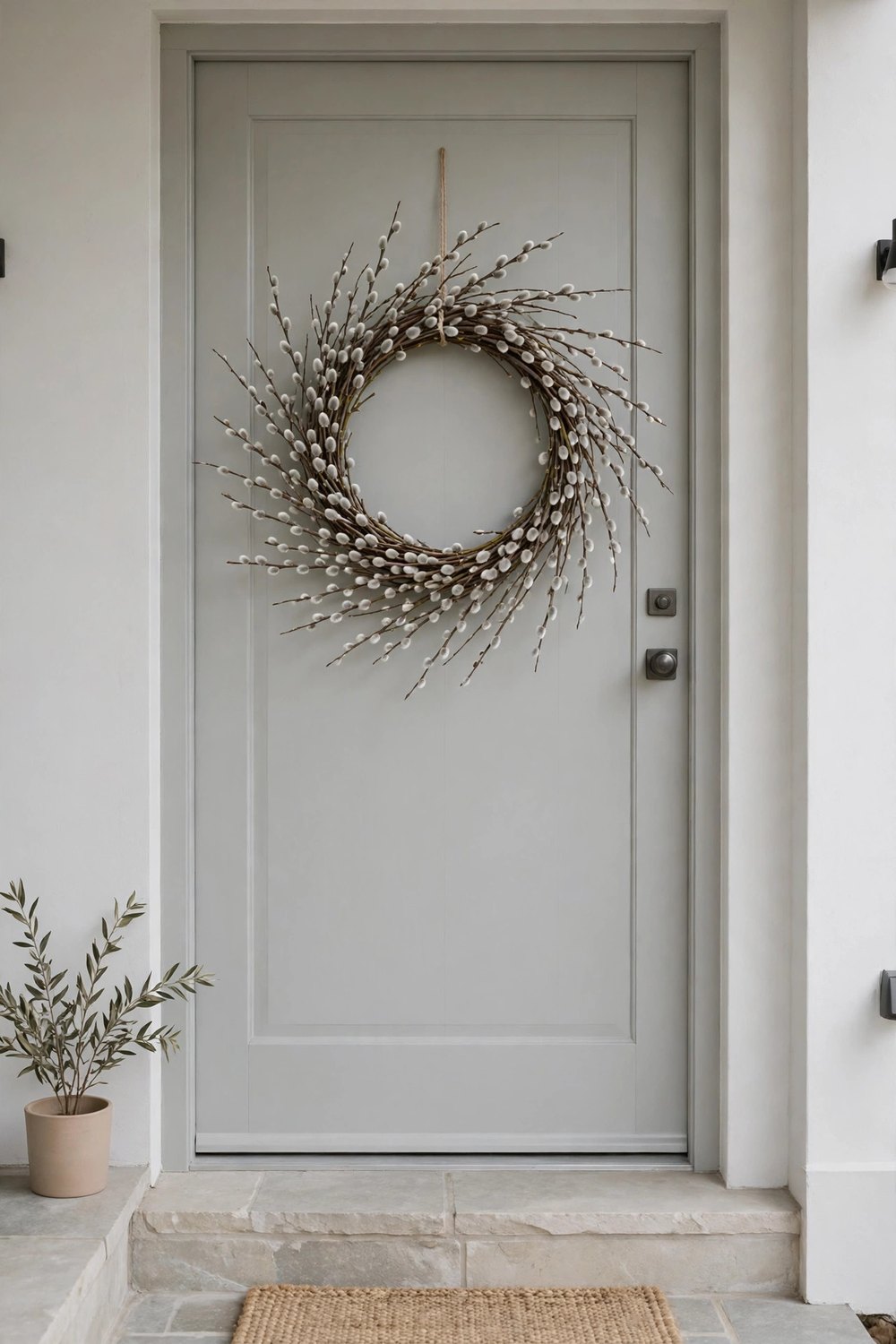
In the last quiet weeks of winter, a pussy willow wreath is the gentlest possible promise of spring. The soft silver catkins on their bare, arching stems need no leaves, no blooms, and no bow — just a simple grapevine or willow base and the stems bent into a full, airy circle. It looks sculptural and calm against any door, pairs with the palest winter light, and then carries straight into early spring without looking out of season for a single day. A small cluster of white berries or a sprig of faux blossom can join it as March arrives.
12. Hang a White Blossom Grapevine Wreath for the First Warm Days
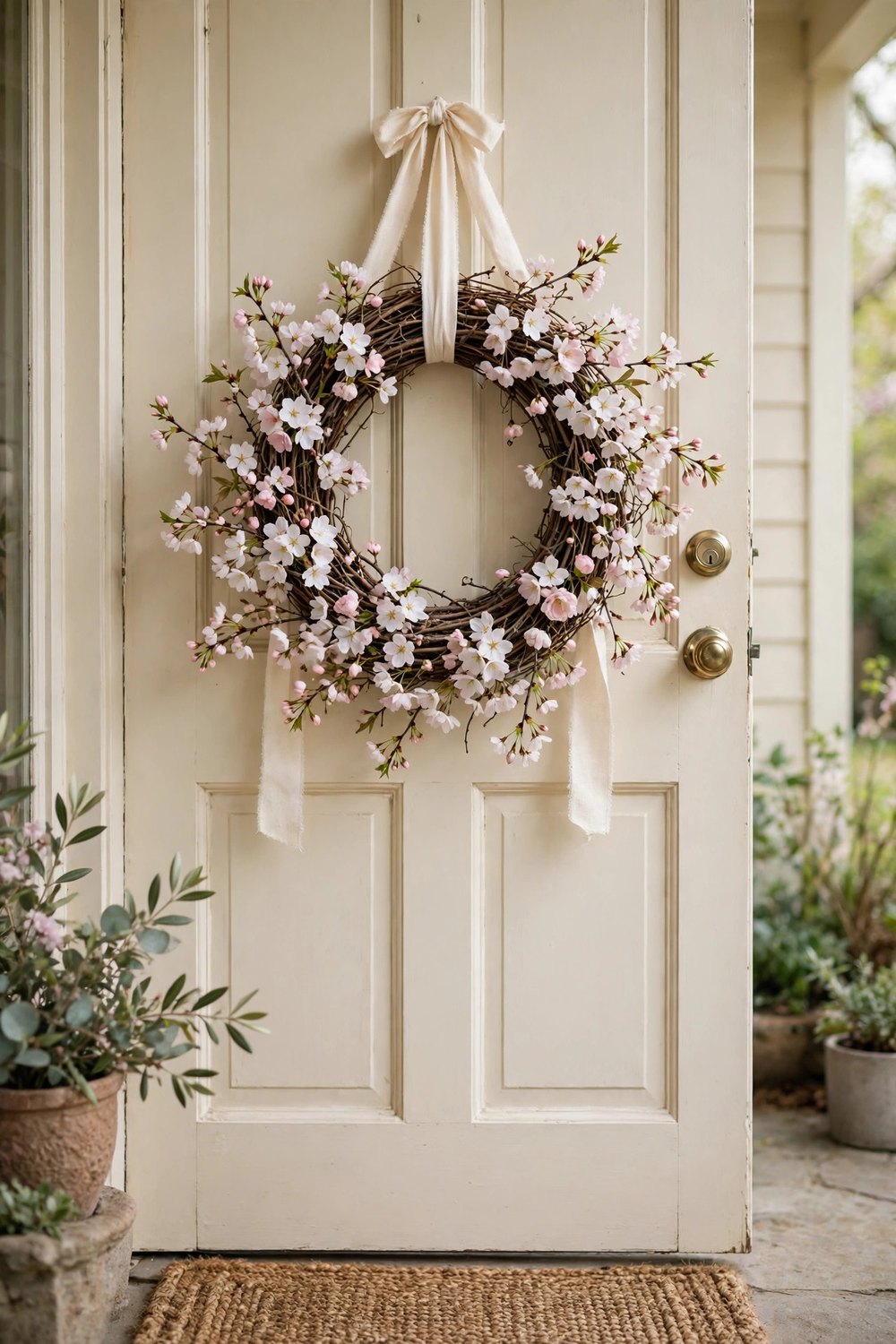
When the first warm days arrive, before the tulips even open, white blossom announces the new season. Cherry-blossom or apple-blossom stems — faux is perfectly fine, since real blossom lasts days — wired loosely around a natural grapevine wreath give the door a soft, cloud-like halo in cream and white with the faintest blush at the centers. Leave plenty of the twiggy base showing so it feels light and just-gathered rather than dense. Hang it with a cream ribbon, store the tulip wreath’s number, and the door has officially turned the year.
A year of front-door wreaths is not twelve purchases — it is a rhythm: tulips and blossom for spring, lavender, lemons, and sunflowers through summer, leaves and wheat for the harvest, pine and velvet at Christmas, and pinecones, oranges, and willow to carry the quiet winter. Start with the boxwood classic and one seasonal favorite, store each wreath flat and labeled as it comes down, and let the collection grow one season at a time. Save this list to your seasonal board on Pinterest so it is ready before the next season turns — and follow DecorNesti for a new cozy home list every season.






Leave a Reply