
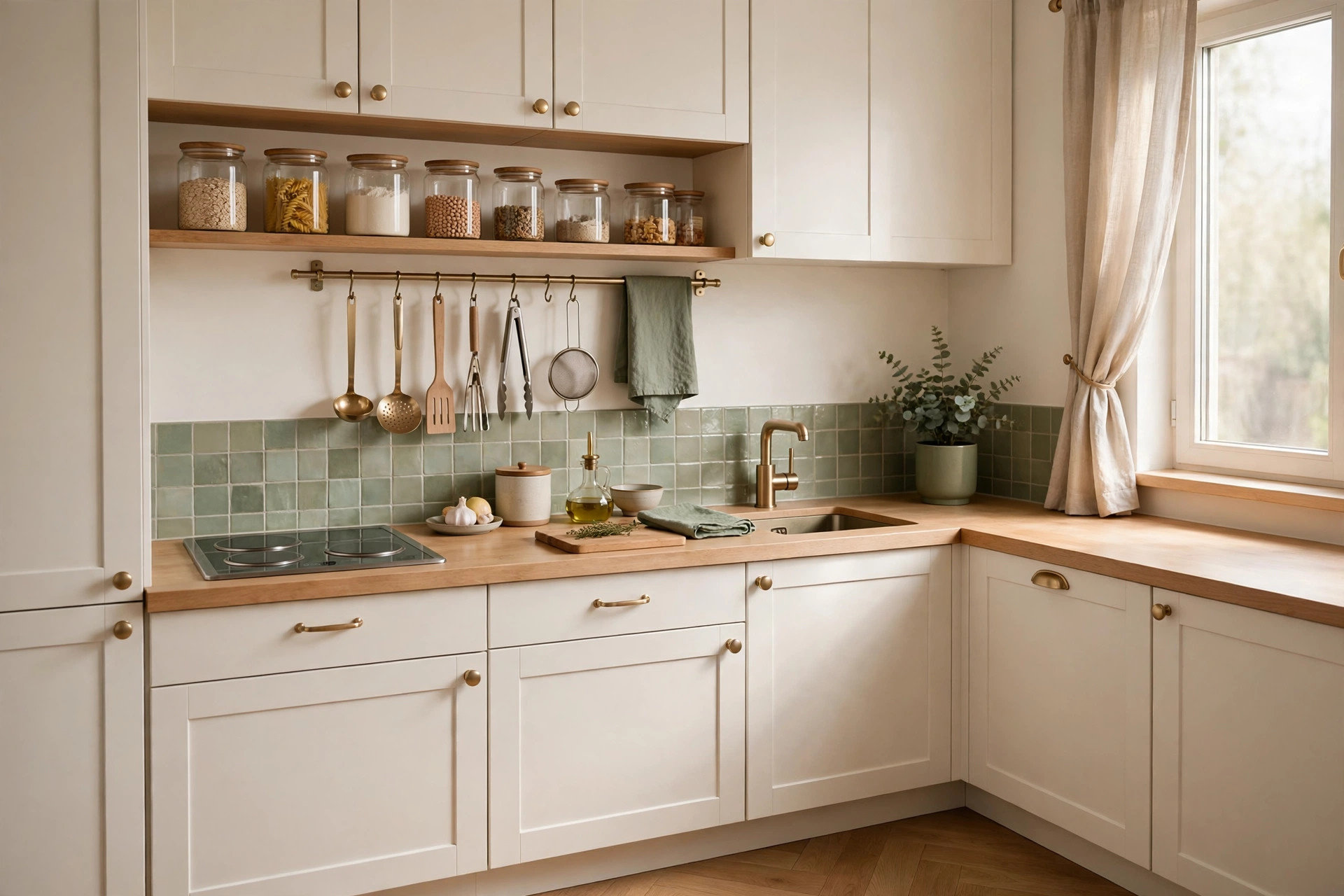
If your kitchen is small, you already know the daily shuffle. The cutting board balances on the stove, the mixing bowl lives in the oven, and somehow there is never a free inch of counter when you actually need one. It is not that you have too much stuff, it is that the room is not pulling its weight.
Here is the thing, though. A small kitchen usually does not need more space, it just needs the space it has to work a little harder. The right layout tweaks, storage in the spots you are currently walking past, and a few honest swaps can make the same room feel twice as capable.
Below are 18 small kitchen ideas that earn their keep, grouped by the problem they solve. Start with whichever corner of your kitchen annoys you the most, and let the rest follow whenever you are ready.
Layouts That Waste Nothing
In a small kitchen, layout is everything. When the bones of the room make sense, cooking flows instead of bottlenecking, and even a tiny footprint can handle a weeknight dinner for a crowd.
Keep your work triangle tight. The sink, stove and fridge work best when they sit close enough that cooking takes a few steps, not laps around the room. In a small kitchen that triangle usually shrinks naturally, so lean into it and keep your main tools inside that little loop. Fewer steps typically means less mess spread across every surface, too.
Let one wall do the heavy lifting. A single run of cabinets along one wall keeps everything in one efficient line and leaves the rest of the room open for a small table or cart. It works especially well in narrow spaces where a U shape would feel cramped. You give up a little counter, but you gain breathing room, and most people find that trade worth it.
Add a slim rolling island or cart. A narrow cart on casters gives you extra prep space and a shelf or two of storage, then rolls out of the way when you need the floor back. Park it against a wall as a coffee station on quiet days and pull it into the middle when a big recipe lands. It is usually the hardest working piece in the whole room.
Use the corners instead of fighting them. Corner cabinets are where pots go to be forgotten, so give that dead space a job with a lazy Susan, a swing out shelf or deep corner drawers. Suddenly the awkward spot becomes your best storage for bulky pans and small appliances. Anything you can reach without kneeling and digging is a win.
Protect one clear prep zone. Pick the stretch of counter beside the stove and defend it like it matters, because it does. Move the mail, the fruit bowl and the decorative bits somewhere else so this one area always stays ready for chopping and plating. A small kitchen feels calm the moment at least one surface is reliably clear.
Storage on Every Surface
When the cabinets are full, the walls, doors and gaps you have been ignoring are usually hiding a whole second kitchen worth of storage.
Walls and rails
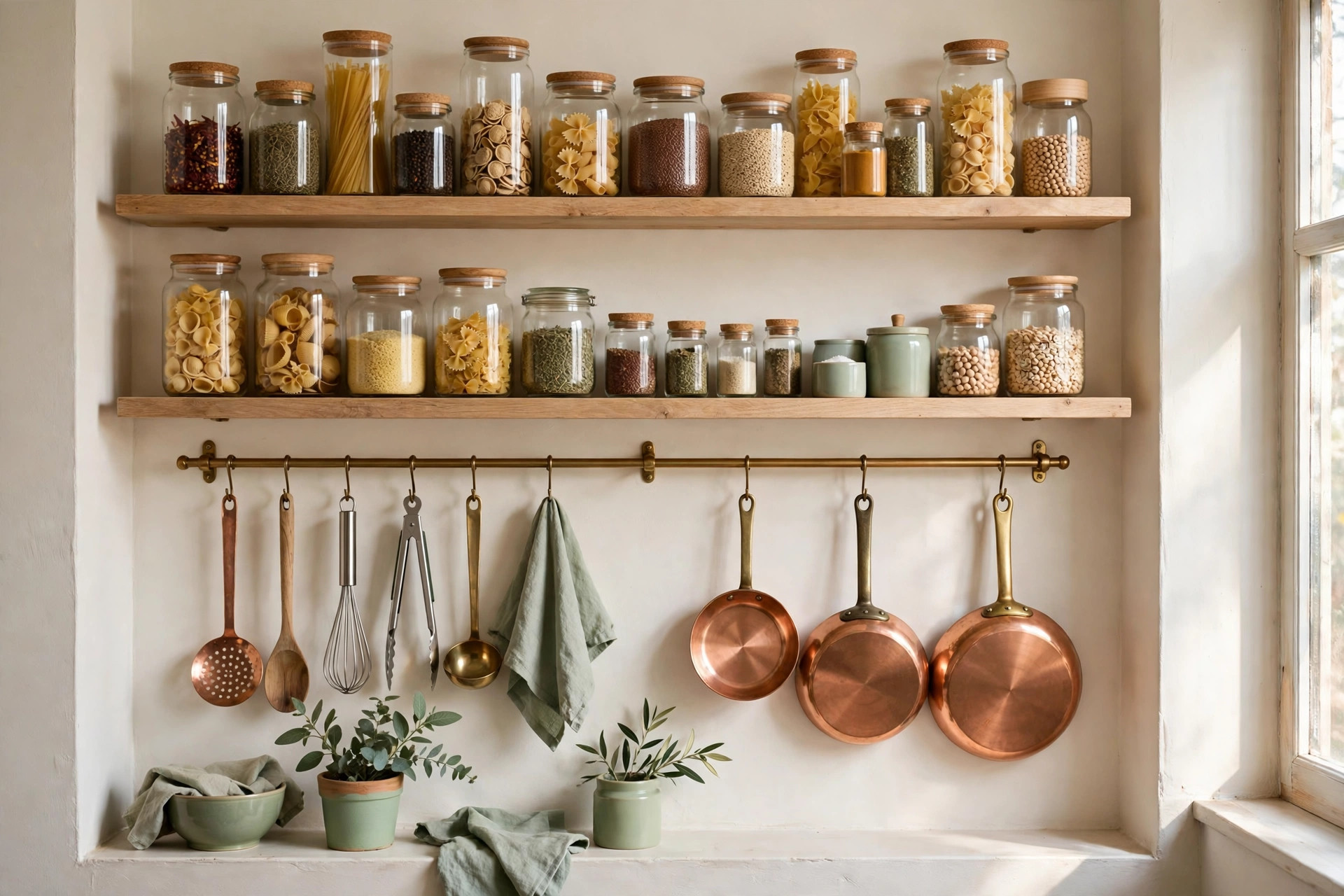
Hang a rail for utensils and pans. A simple rail under the cabinets or along a spare wall gets spatulas, ladles and your everyday pans out of the drawers and into plain sight. It frees up a surprising amount of cabinet space and keeps your most used tools an arm’s reach away. Brass or warm wood hooks keep it looking styled rather than cluttered.
Add open shelves where cabinets would feel heavy. One or two floating shelves hold the jars, bowls and glasses you reach for daily, and they make a small room feel lighter than a wall of cabinet doors. Keep the contents simple and grouped by type so it reads as calm, not chaotic. Everyday items dust themselves through use, which is a nice bonus.
Put a magnetic strip up for knives. A knife strip on the wall or the side of a cabinet clears out the bulky knife block and the scary loose drawer situation in one move. Knives stay visible, dry and easy to grab while you cook. It also frees an entire drawer for the things that actually belong in drawers.
Inside cabinets
Stack your shelves with risers. Most cabinets waste the tall space above your plates and mugs, so a simple shelf riser doubles the usable layers inside. Cups can live over bowls, and spices stop hiding behind each other. It is one of the cheapest fixes on this list and it usually takes about five minutes per cabinet.
Hang organizers inside cabinet doors. The inside of a door is prime real estate for lids, wraps, measuring cups and cleaning supplies. A slim rack or a few hooks turns that flat forgotten surface into storage you will use every single day. Just check the clearance so the door still closes happily with your shelves stocked.
Light and Color That Open It Up
A small kitchen with the right light and a soft palette feels bigger than a larger kitchen that is dark and busy. These are the cheapest extra inches you will ever gain.
Paint the cabinets a warm, light color. Warm white or pale greige cabinets bounce light around and make the whole room feel airier without a single wall coming down. If a full repaint feels like too much, even painting just the upper cabinets lightens the look. Pair them with light wood or stone counters and the room instantly breathes.
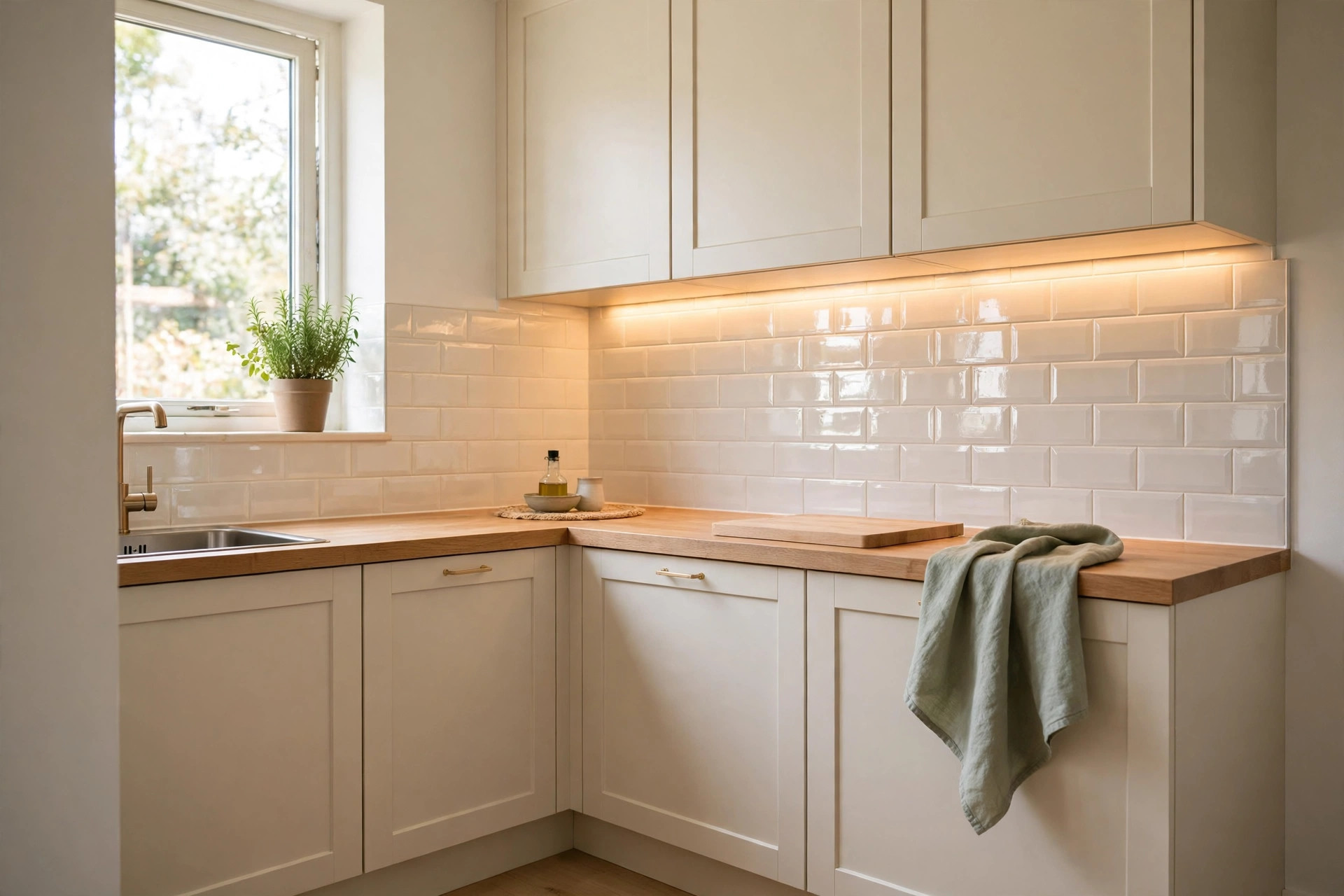
Add under cabinet lighting. A strip of warm light under the uppers brightens your prep surface, removes the shadows your body casts from the ceiling light, and makes evening cooking feel cozy instead of dim. Most stick on or plug in options need no electrician at all. It is typically the single change people wish they had made years earlier.
Pick a backsplash that reflects a little light. A glossy tile, a pale stone or a simple light ceramic backsplash catches daylight and throws it back into the room. It does not need to be shiny or dramatic, just light enough to lift the wall between your counters and cabinets. Bonus, smooth surfaces wipe clean faster after a spaghetti night.
Keep window coverings light and high. A simple blind or sheer curtain mounted close to the ceiling lets in as much daylight as possible and makes the window feel taller. Heavy drapes tend to swallow light and wall space you cannot spare. If privacy is a worry, a frosted film on the lower pane usually solves it without blocking the sun.
Small Appliances, Smart Choices
Appliances eat small kitchens alive when they are oversized or homeless. Choosing compact, hardworking versions and giving each one a parking spot keeps your counters for cooking.
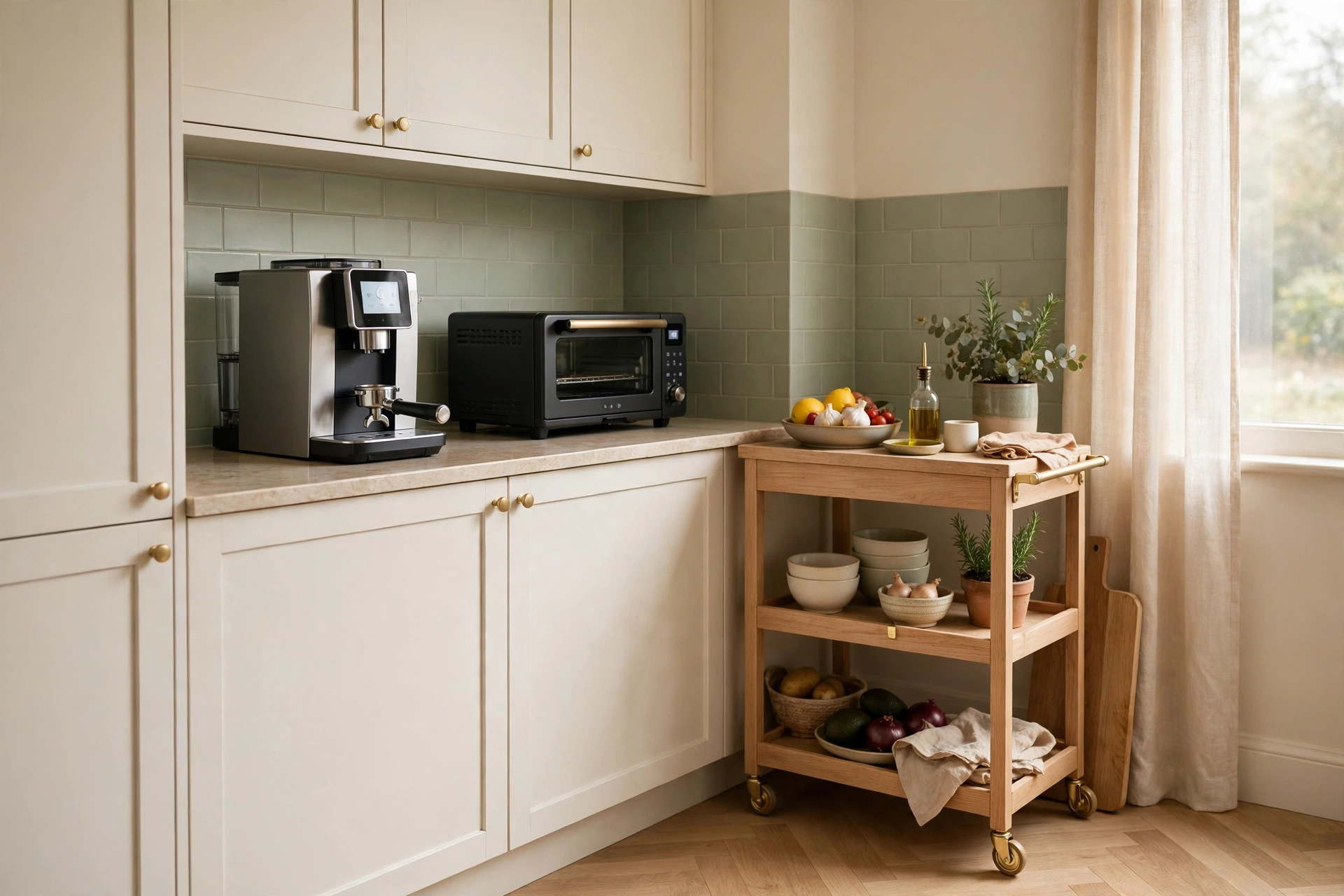
Choose compact versions of the big basics. Slim dishwashers, narrower fridges and two burner cooktops exist for exactly your situation, and they usually handle daily life just fine. The inches you save often become a drawer bank or a pull out pantry, which you will use far more. Measure twice, because in a small kitchen a single inch can decide whether a door opens fully.
Pick appliances that do two jobs. A toaster oven that also air fries, or a multi cooker that replaces the slow cooker, the rice cooker and the steamer, can free an entire shelf. Fewer machines means fewer cords, fewer lids and fewer things to clean. Be honest about what you actually cook, and let the gadgets you never touch go first.
Give every appliance a parking spot. Counters stay clear when the blender, kettle and coffee maker each have a designated home, whether that is an appliance garage, a deep drawer or one end of the counter. The rule is simple, if it does not have a spot, it does not stay out. Putting things back takes seconds when the home is obvious.
Store the rarely used ones somewhere else. The waffle maker, the fondue set and the giant roasting pan do not need prime kitchen real estate. A hallway closet, a high shelf or a labeled bin in another room keeps them accessible without crowding your daily tools. Most people find they reach for these a few times a year at most, and the freed space pays off every day.
A small kitchen that works hard is not about cramming more in. It is about giving every inch a job and every tool a home, so cooking feels calm instead of cramped. Pick two or three ideas from this list, live with them for a week, and you will usually find the little room starts helping you instead of fighting you.


Leave a Reply