
18 Spilled Flower Pot Ideas That Look Like Magic
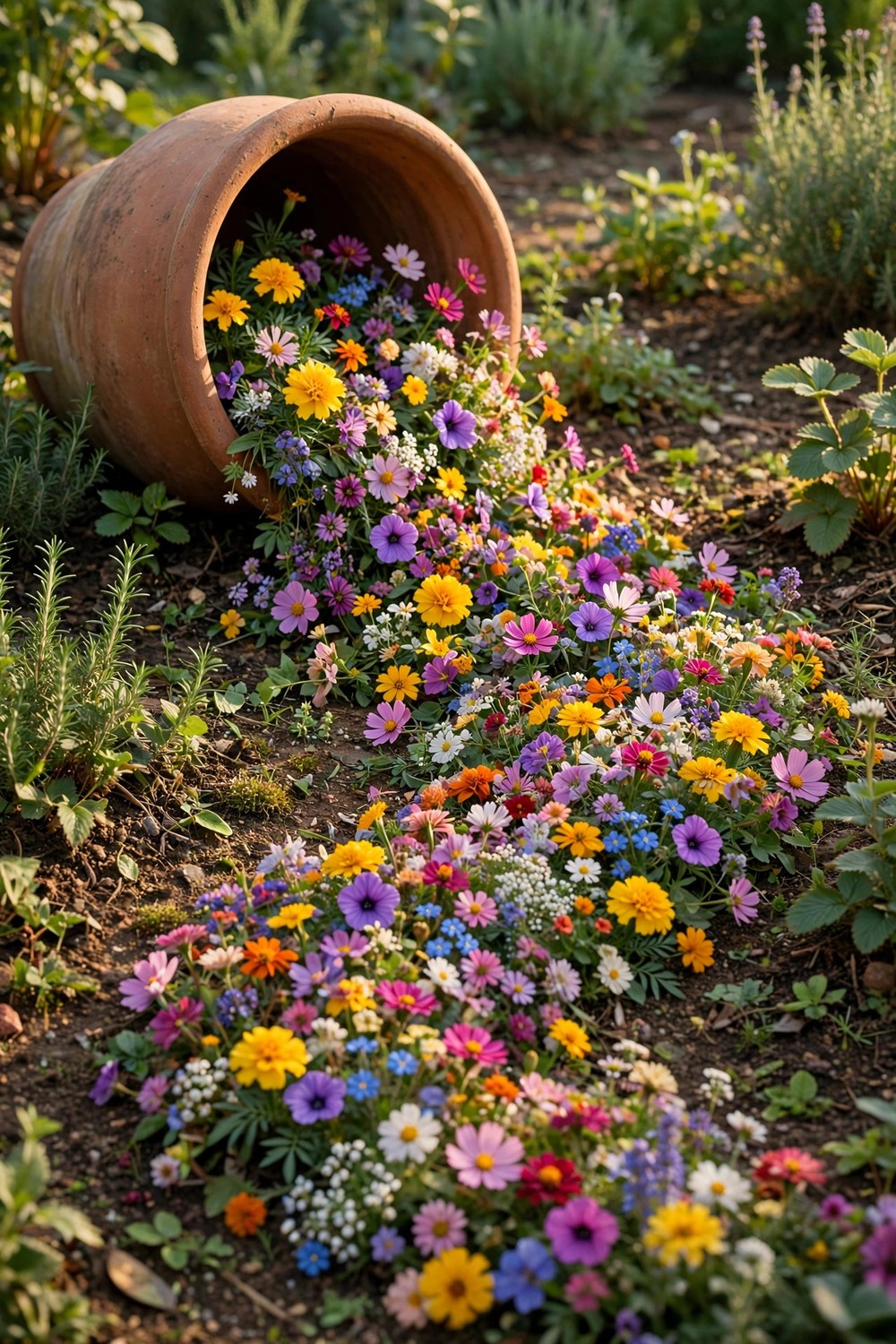
Some garden tricks stop people mid step, and the spilled flower pot is the champion of them all. A pot tipped on its side, half sunk in the soil, with a river of flowers pouring out of it, looks like a happy accident frozen in time, as if the garden itself knocked the pot over and decided to keep the mess.
The magic is mostly arrangement. The pot hides its own secret, which is that the flowers are simply planted in a curving bed shaped like a spill, narrow at the pot’s mouth and widening as it flows away. Once you see that, you can pour flowers out of almost anything, in almost any color story you like.
Here are 18 spilled flower pot ideas, from classic terracotta spills and color themed rivers to cascading planters, teapots, and wheelbarrows. Pick a sheltered spot where the flow can run, and let the flowers do the showing off.
Contents
- 1. Classic Terracotta Pot Spill
- 2. Blue and White Flower River
- 3. Rainbow Spill
- 4. White and Silver Moonlight Spill
- 5. Trailing Petunia Cascade
- 6. Creeping Phlox Waterfall
- 7. Succulent Spill
- 8. Herb Spill by the Kitchen Door
- 9. Spilled Milk Can
- 10. Tipped Teapot Spill
- 11. Overturned Wheelbarrow Spill
- 12. Broken Pot Fairy Spill
- 13. Double Pot Spill
- 14. Spill Down a Slope
- 15. Spilled Pebble Stream
- 16. Marigold Sunshine Spill
- 17. Lavender Spill
- 18. Seasonal Spill
Classic Spills and Color Stories
Start with the shape, then choose a color story. A spill planted in one confident color, or a simple two color ribbon, reads as deliberate art. A little of everything reads as a flower bed that fell over, which is charming too, but less magical.
1. Classic Terracotta Pot Spill
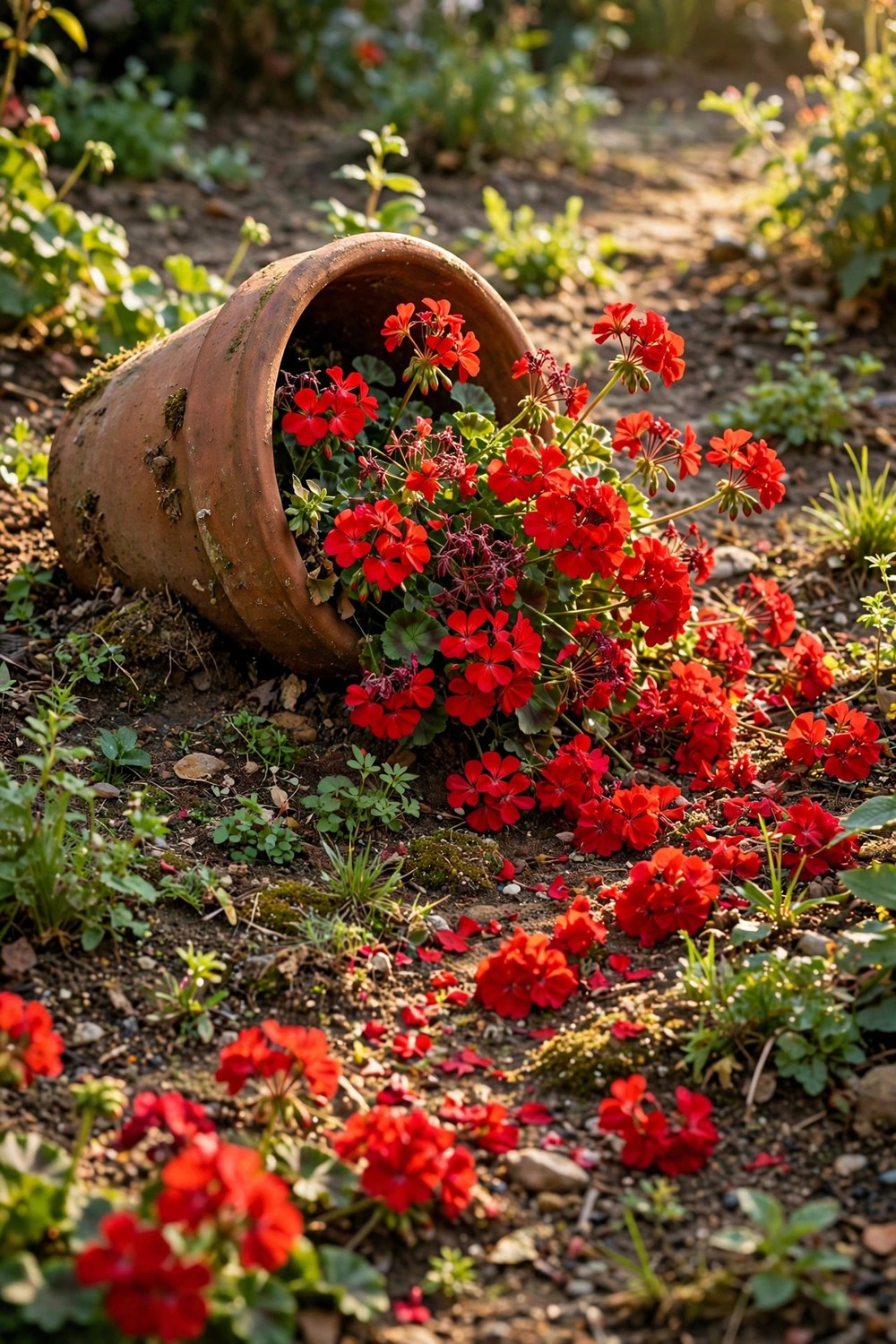
Tip a big terracotta pot and pour out one bold color. The original and still the best. Half bury a large terracotta pot at a gentle angle, fill the mouth with soil, and plant a river of one flower, red geraniums, purple petunias, or golden marigolds, widening as it flows. Terracotta suits every garden, and a single color is what makes the spill read as a spill rather than a clump. When in doubt, this is the one to build first.
2. Blue and White Flower River
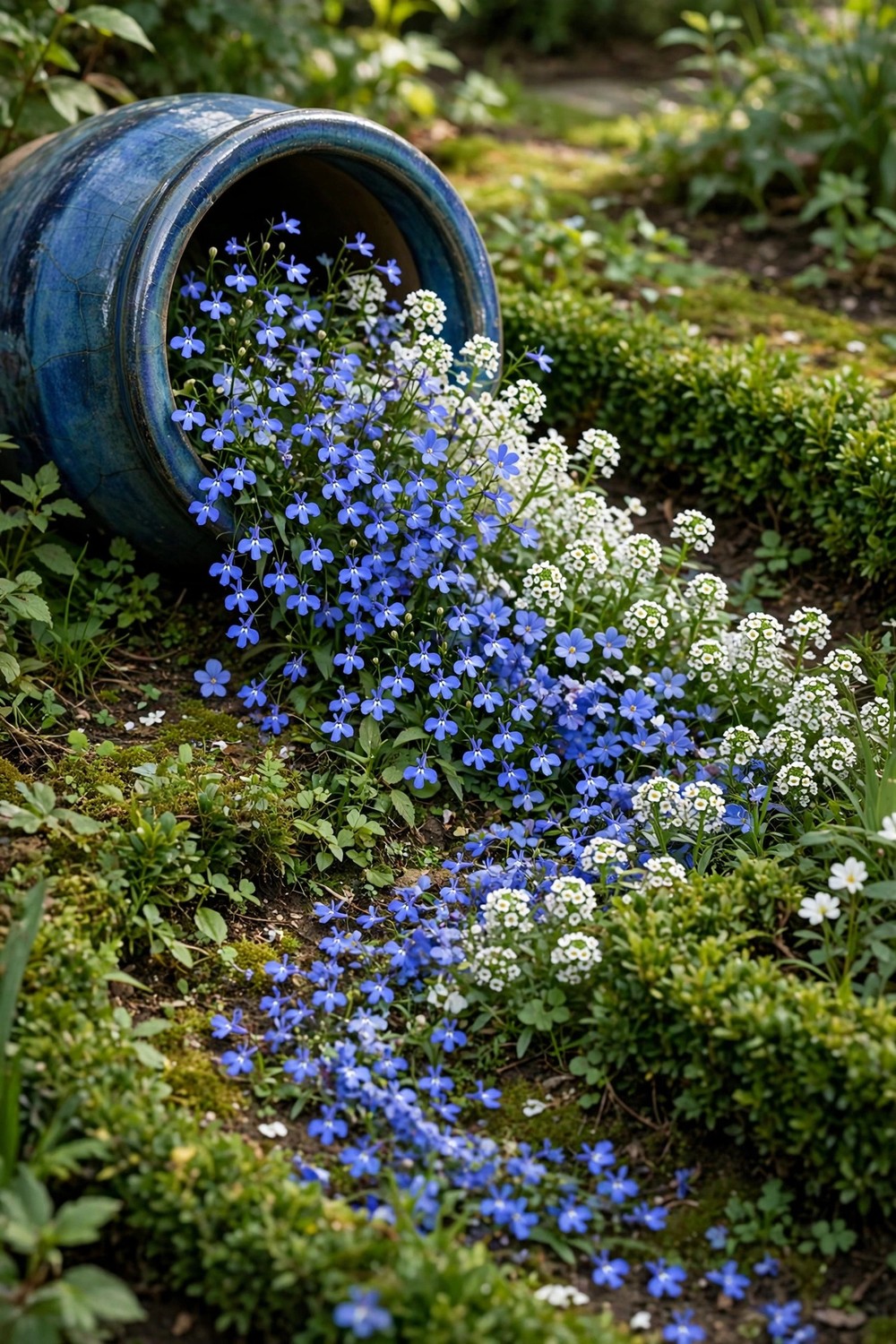
Pour a river of blue lobelia and white alyssum. Blue and white is the color story that makes visitors say the word stream before they catch themselves. Lobelia gives the watery blue, alyssum gives the foam, and together they pour beautifully from a blue glazed or weathered white pot. This pairing loves a partly shaded corner, where the blues look deeper and the whole spill glows against green.
3. Rainbow Spill
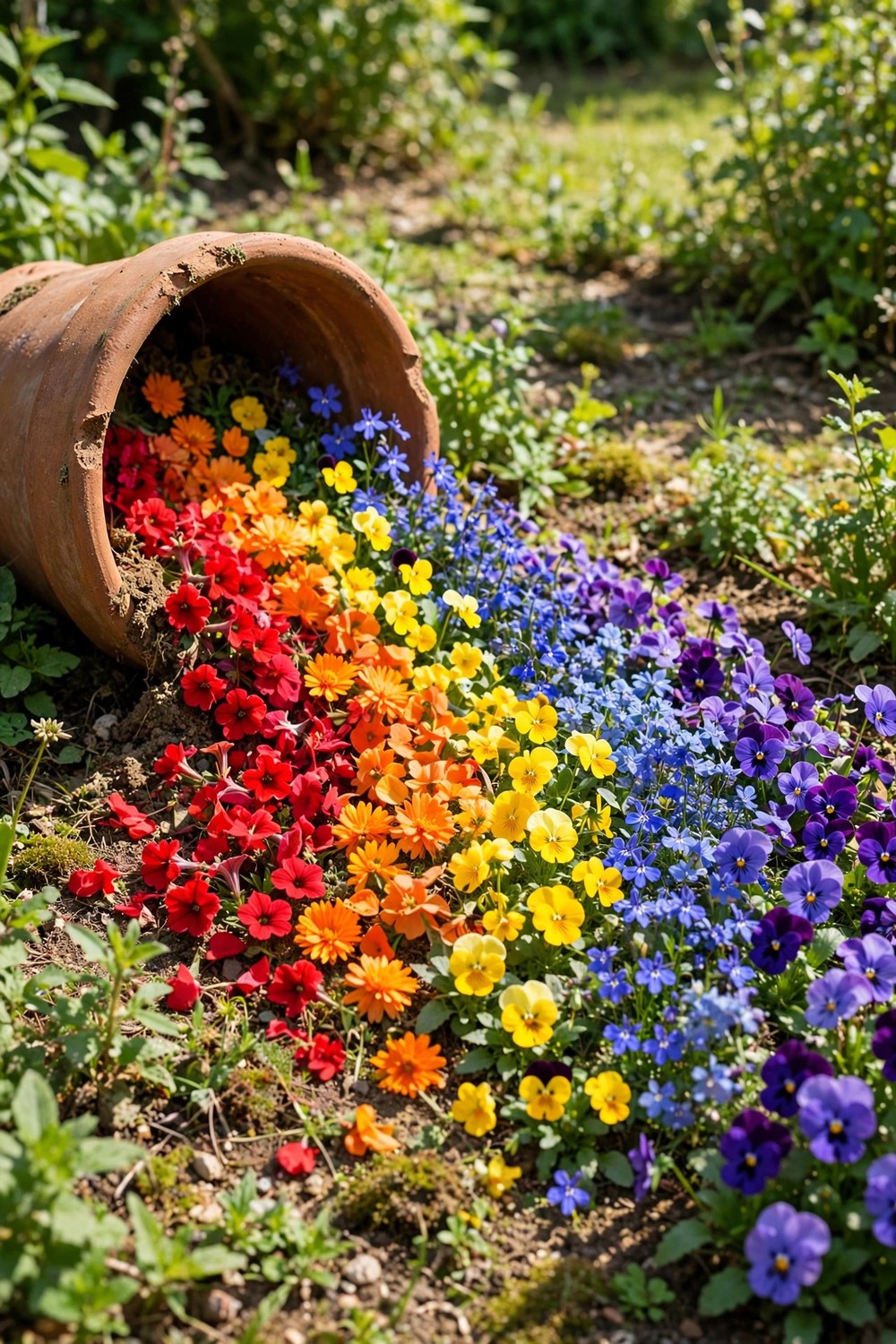
Plant the spill in bands of color, like a rainbow. Instead of mixing colors, lay them in loose bands across the flow, red at the mouth, then orange, yellow, green foliage, blue, and violet at the far edge. Petunias, marigolds, and lobelia in sequence make it easy. It is the most playful spill on this list, a favorite with children, and a guaranteed photograph every single time.
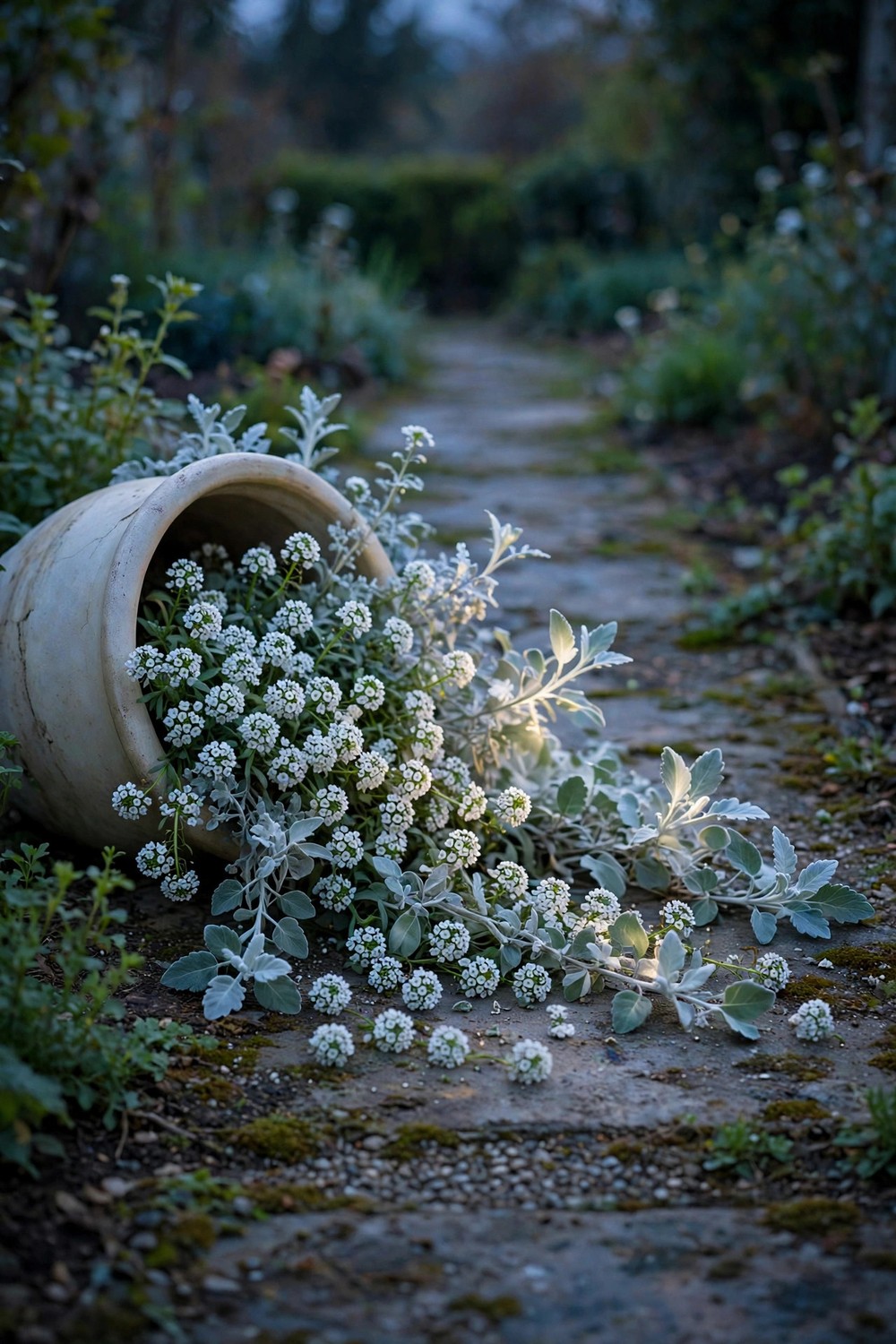
4. White and Silver Moonlight Spill
Spill white flowers and silver foliage for the evening. White petunias, white alyssum, and dusty miller’s silver leaves pour out of a pale pot like moonlight pooling on the ground. Place it where you walk or sit at dusk, along a path or beside a bench, because white plantings come alive after sunset when every other color has gone to sleep. It is the most elegant spill here, and the quietest kind of magic.
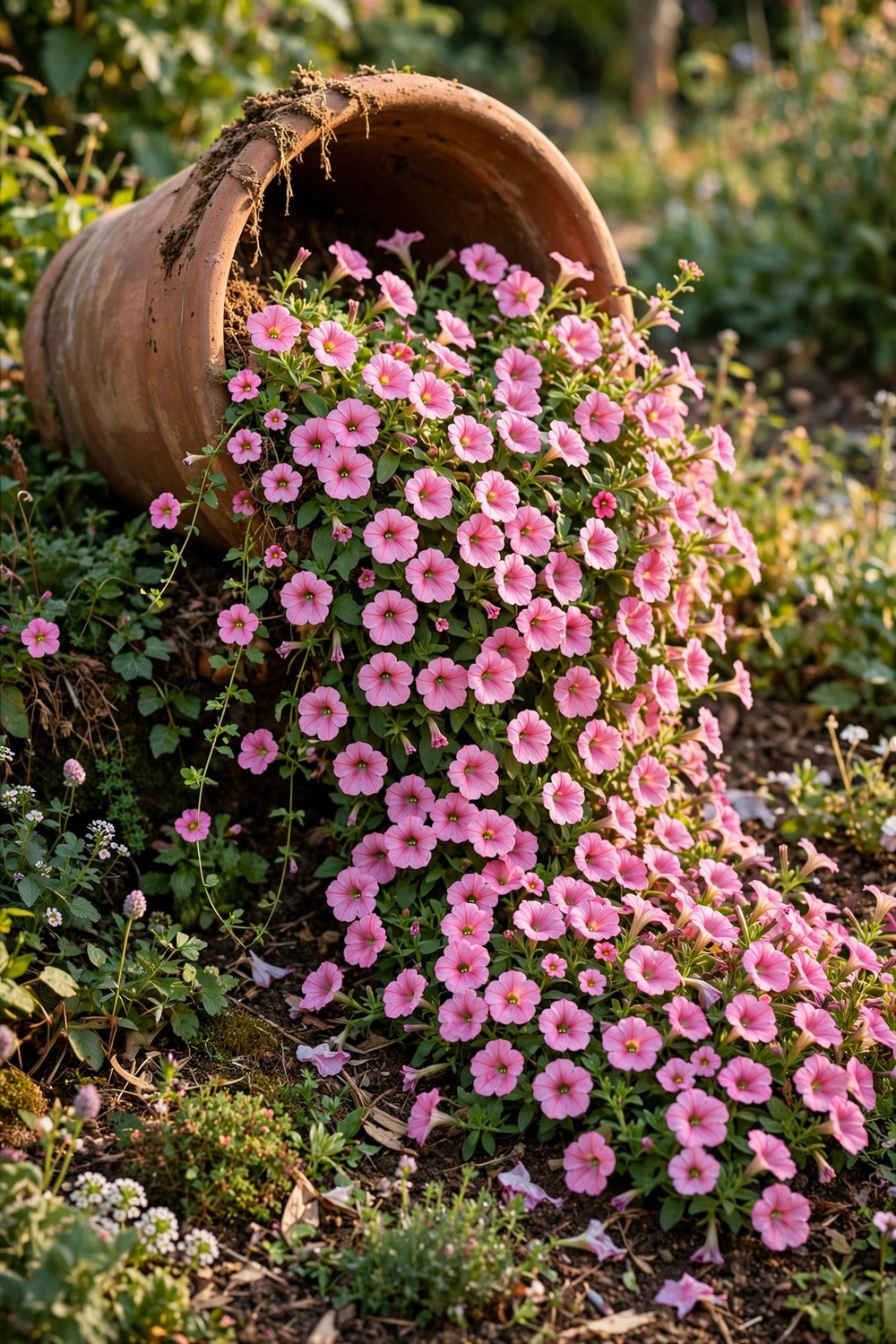
5. Trailing Petunia Cascade
Let trailing petunias do the pouring. Wave type petunias are born for this job. Plant them in the pot and along the first part of the spill, and they will knit themselves into one continuous, tumbling sheet of color that widens exactly like a real spill. Feed them a little more than other annuals, because a plant flowering that hard gets hungry, and the cascade will run from late spring to frost.
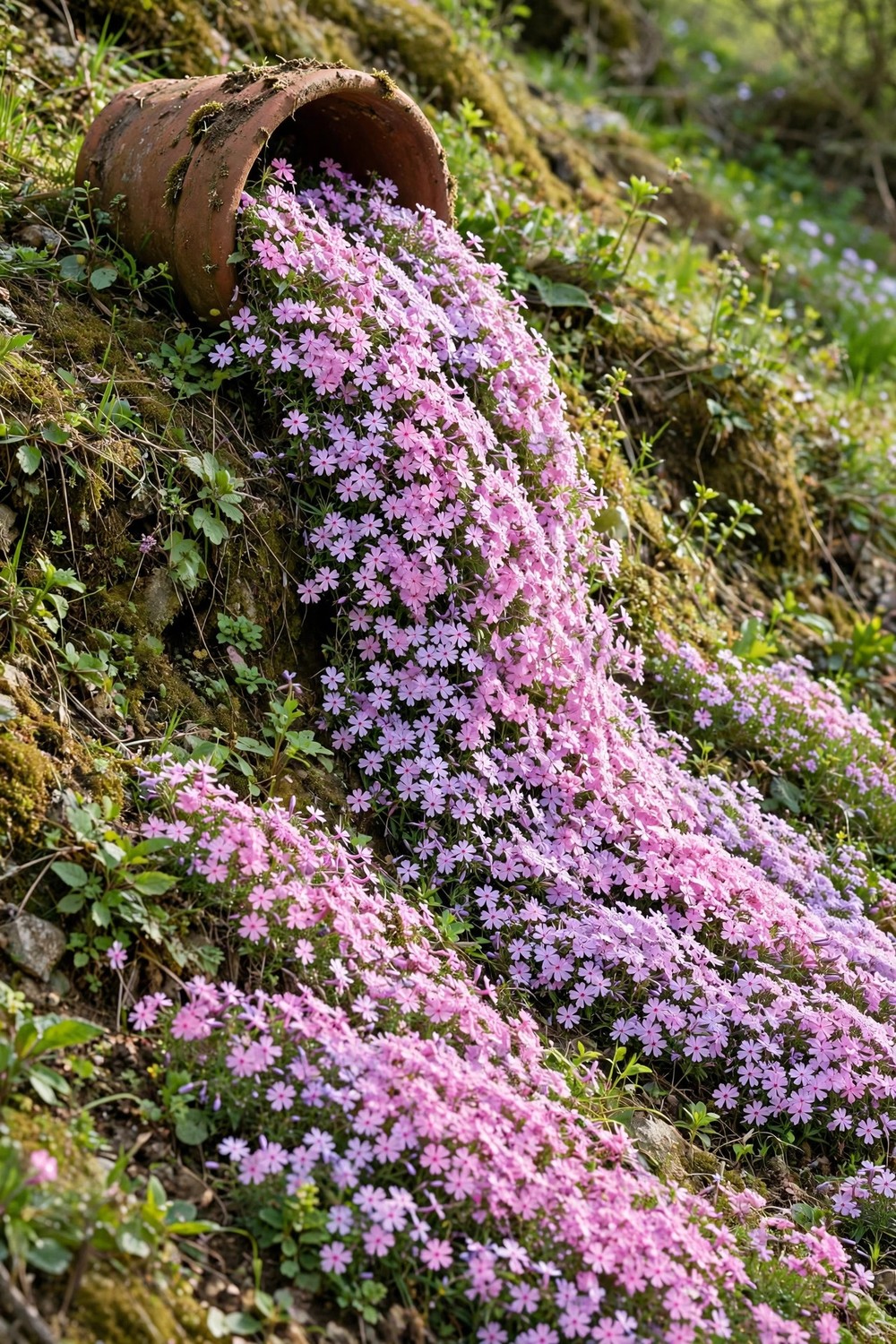
6. Creeping Phlox Waterfall
Make the spill permanent with creeping phlox. Annual spills are glorious but temporary. A spill planted with creeping phlox comes back every spring as a waterfall of pink, lavender, or white, and the rest of the year it stays a neat green mat holding the shape. It takes a season to fill in, so plant closely, then enjoy the one spill in the neighborhood that reappears like magic every April.
Unexpected Containers and Spill Tricks
Once the shape makes sense, the pot becomes the joke, and jokes are where garden personality lives. Almost anything that once held soil, water, or tea can hold a spill.
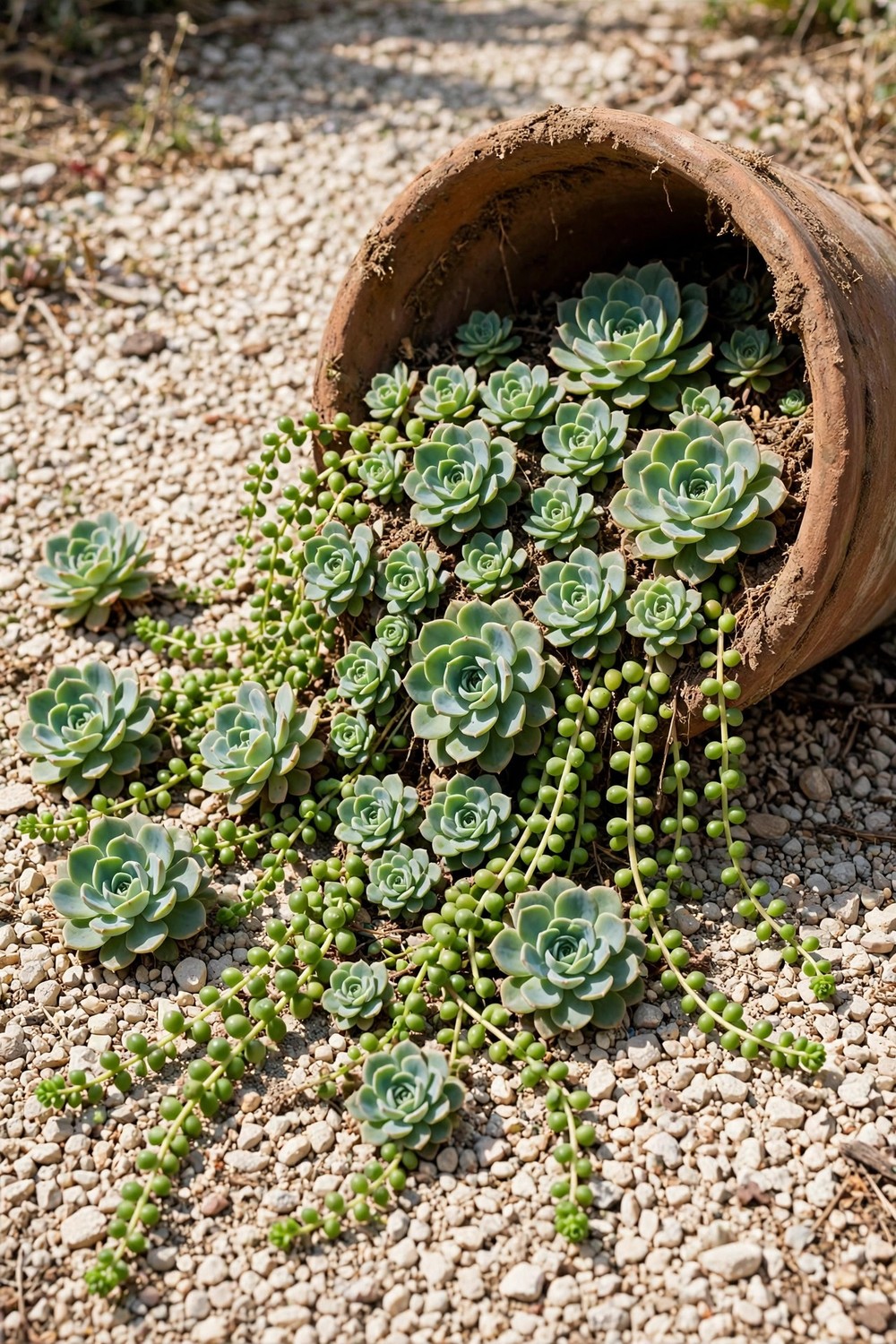
7. Succulent Spill
Pour rosettes instead of flowers. A spill of hens and chicks, echeveria, and trailing sedum looks like a handful of green jewels poured onto gravel. It asks for almost no water, never needs deadheading, and suits hot, dry, sunny spots where petunias would sulk. Set the pot among pale gravel so the rosettes read clearly, and the spill will hold its shape all season with barely a glance from you.
8. Herb Spill by the Kitchen Door
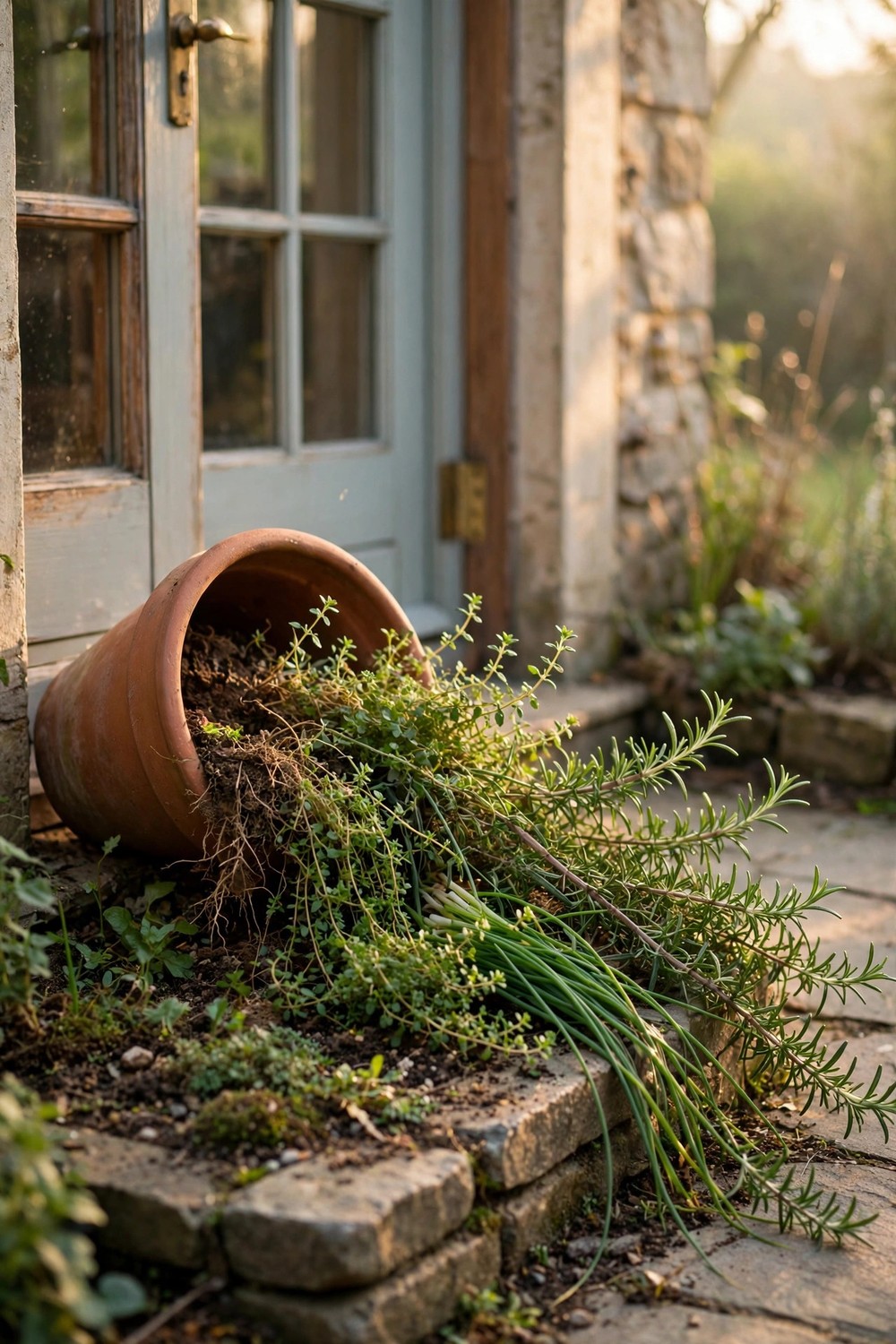
Spill herbs where you will actually pick them. Creeping thyme, trailing rosemary, oregano, and chives pour happily from a pot, and a spill beside the kitchen door or the grill is as useful as it is pretty. The low herbs flow, the chives stand up in the middle like a fountain, and every trip for a handful of thyme brushes the leaves and releases the scent. Practical magic is the best kind.
9. Spilled Milk Can
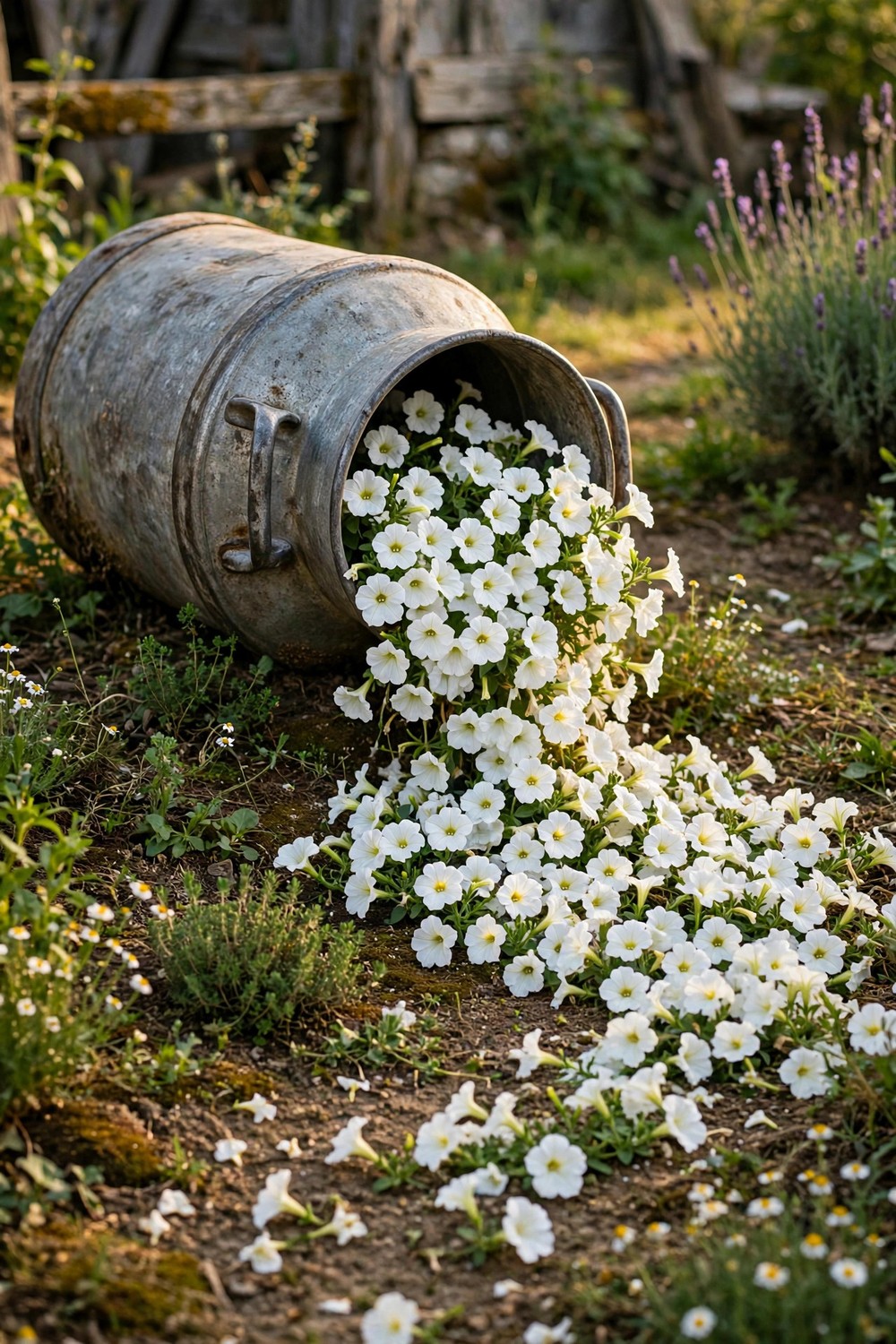
Tip an old milk can and spill white flowers. A vintage milk can on its side, pouring white petunias or alyssum, makes the oldest joke in the garden, spilled milk, and it lands every time. The height of the can gives the spill a lovely raised start, and the metal suits farmhouse and country gardens perfectly. Rust is not a flaw here, it is the whole aesthetic.
10. Tipped Teapot Spill
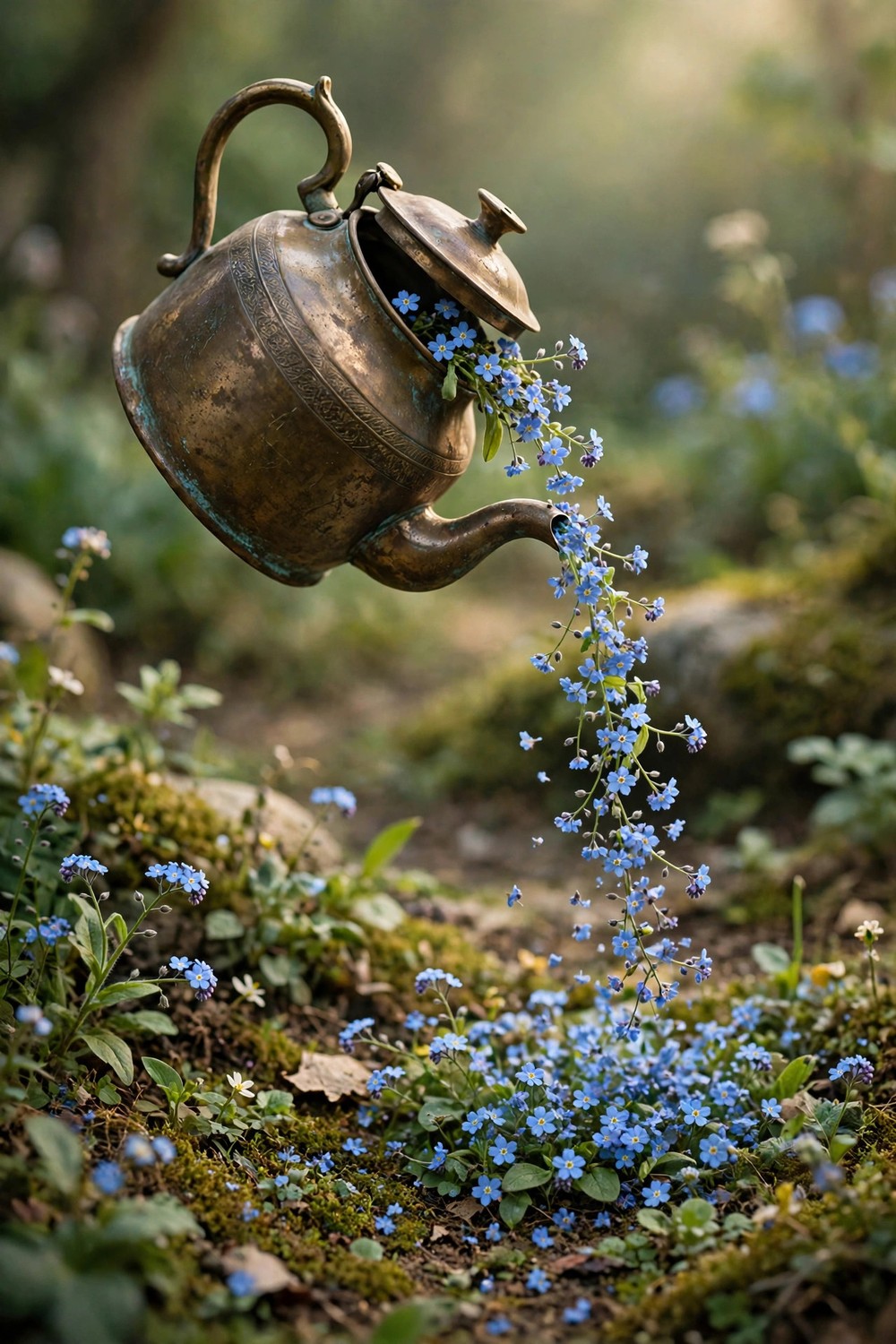
Pour a teapot into a flowerbed. A big old teapot, kettle, or watering can tipped at pouring angle, with a narrow stream of small blue or white flowers flowing from the spout, is pure storybook. Keep the stream slim and precise, because the charm is in the pouring gesture. This one works at small scale, on a patio table edge or in a fairy garden corner, as happily as in a full border.
11. Overturned Wheelbarrow Spill
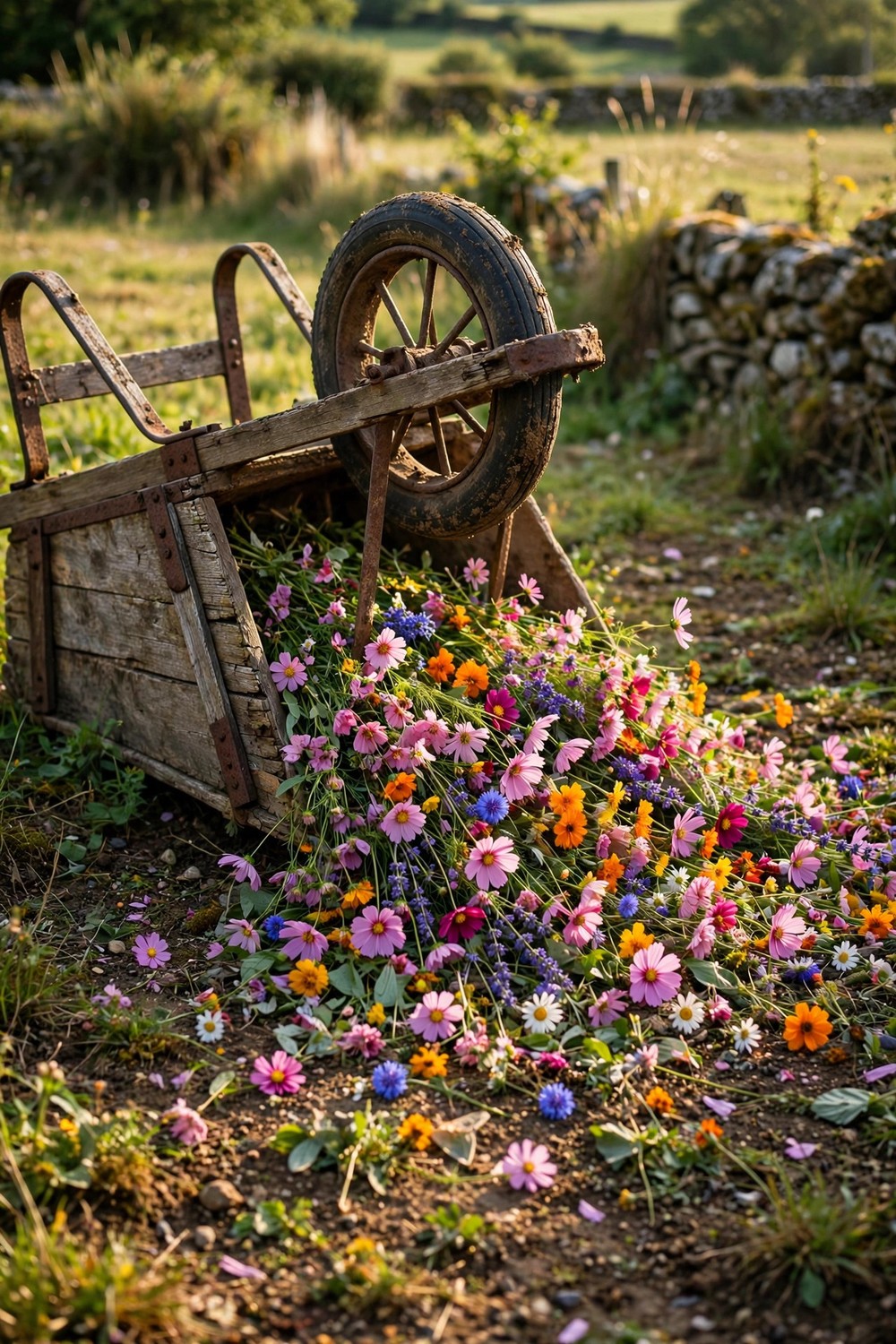
Overturn a wheelbarrow for the biggest spill of all. When a wheelbarrow retires, park it tipped in a border and let it pour on a grand scale, a whole barrowload of flowers flooding out in a wide fan. The scale lets you mix three or four flowers in drifts and still keep the spill shape. It is a statement piece, best given room in a country garden or at the end of a long bed.
12. Broken Pot Fairy Spill
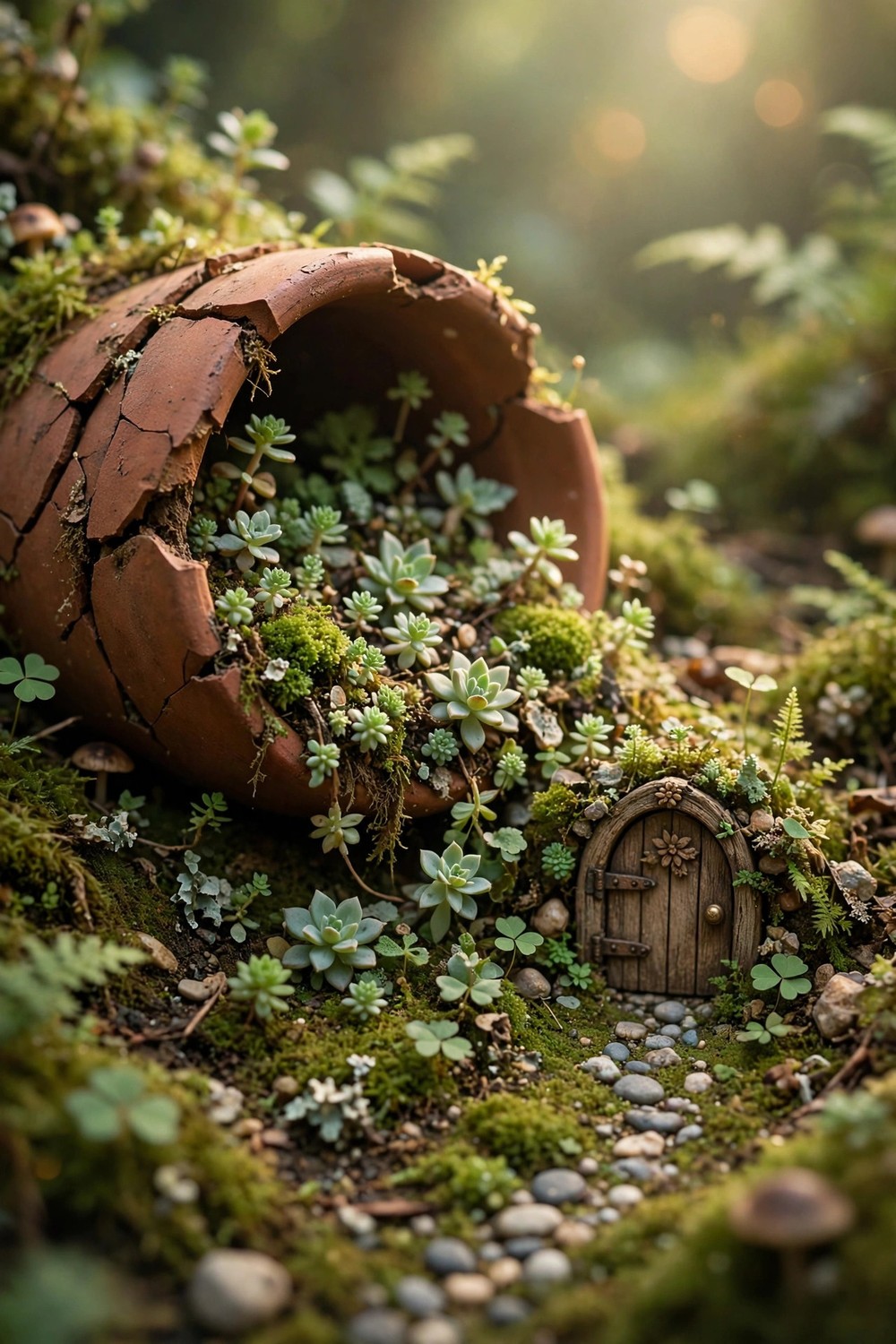
Turn a broken pot into a fairy garden spill. A cracked pot is not rubbish, it is a stage. Lay it on its side, spill tiny succulents and moss from the crack, and add a miniature door, a pebble path, or a tiny bench in the flow. Children will check it daily for fairies, and honestly, so will most adults. It is the smallest spill on this list and possibly the most loved.
Shaping and Placing the Perfect Spill
Two spills can use the same pot and flowers and land completely differently. The differences are shape, slope, and what the spill pretends to be when flowers are out of season.
13. Double Pot Spill
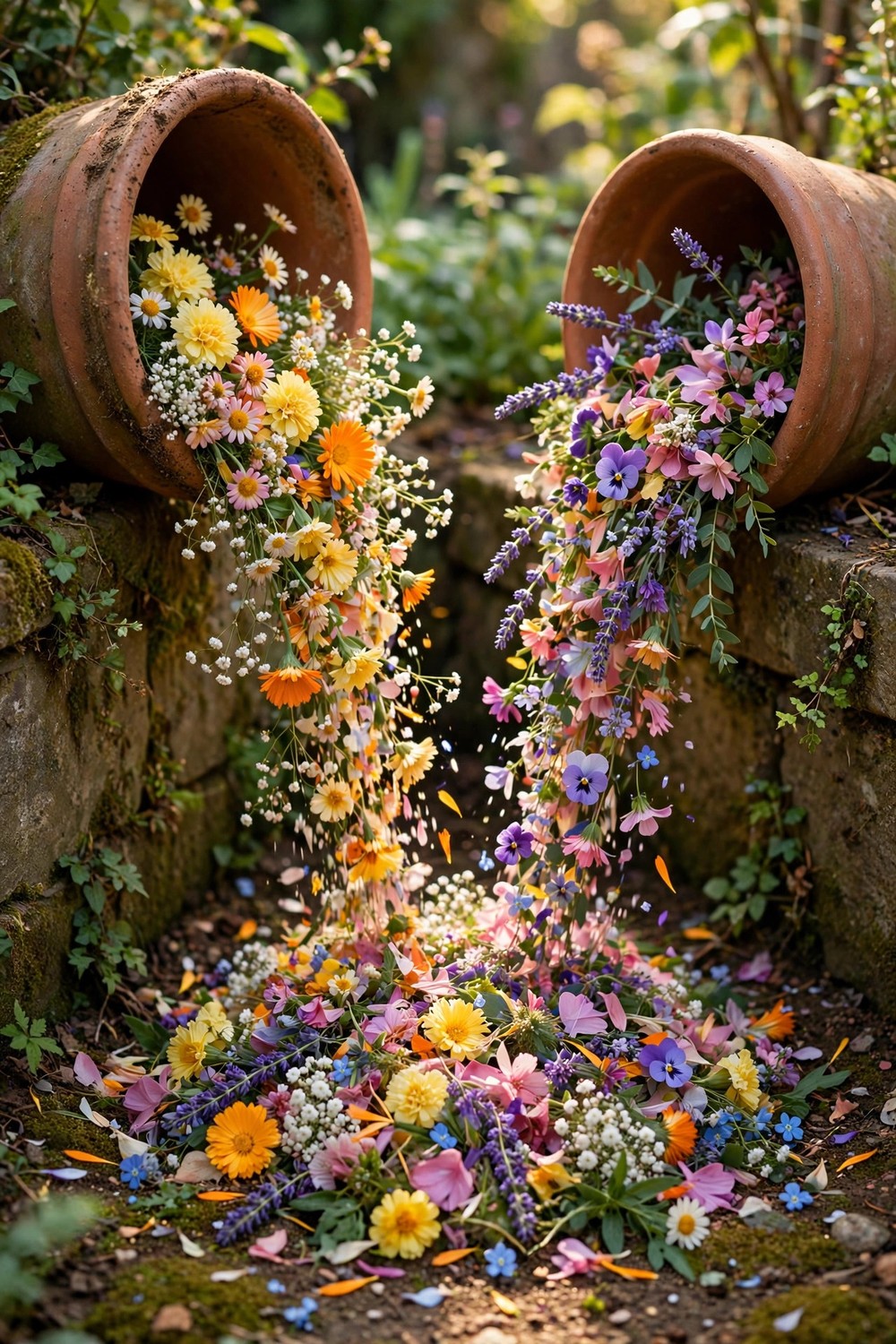
Pour two pots into one shared pool. Two pots tipped toward each other, spilling into a single widening pool of flowers, looks like a happy collision. Keep the two flows in the same flower or in two harmonizing colors, and let them merge rather than cross. It doubles the impact without doubling the planting area, and it fills an awkward wide corner that one pot alone never could.
14. Spill Down a Slope
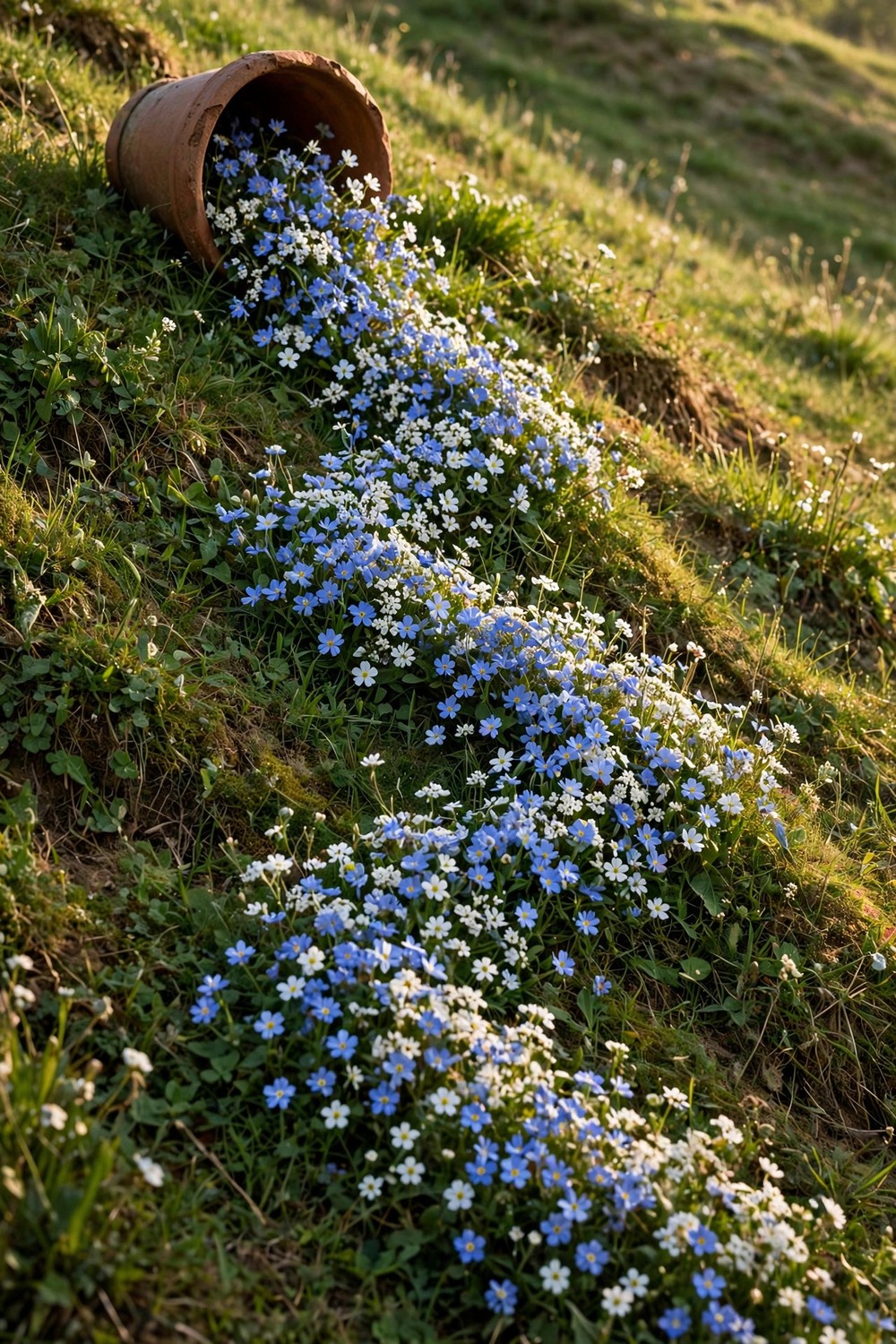
Use a slope to make the spill flow downhill. A spilled pot at the top of even a gentle slope, with its flowers running down, borrows gravity’s credibility. The flow reads instantly as liquid, especially planted in blue or white. If your garden has a bank, a raised bed edge, or a retaining wall step, that is your stage, and the spill will look twice as natural for half the effort.
15. Spilled Pebble Stream
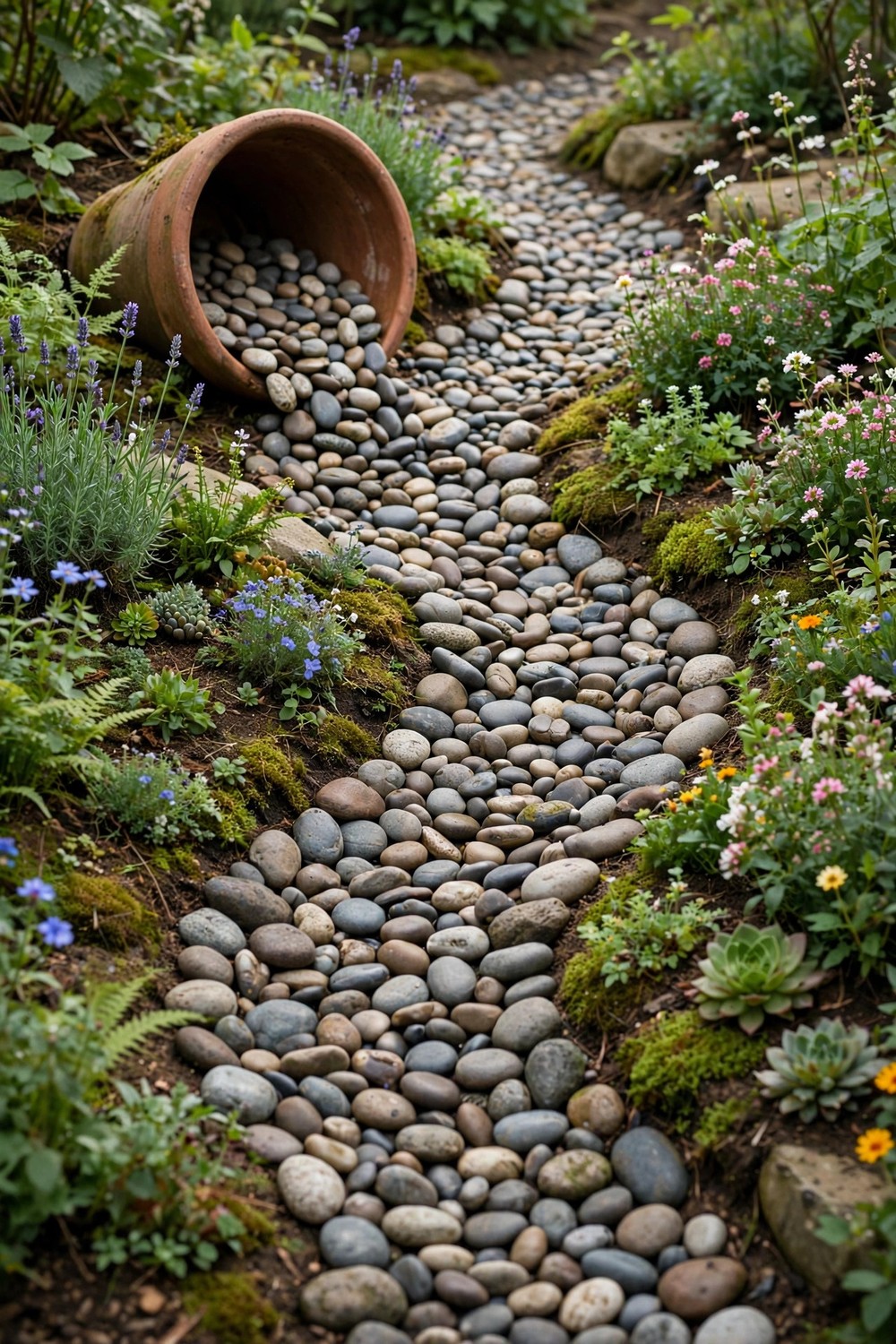
Spill pebbles for a stream that never dries up. Not every spill needs flowers. A tipped pot pouring smooth river pebbles, winding away between plantings like a dry stream, works in deep shade, in drought, and in winter, when flower spills are only a memory. Mix pebble sizes and add a few larger stones as banks, and the stream will look carved by water that just left.
16. Marigold Sunshine Spill
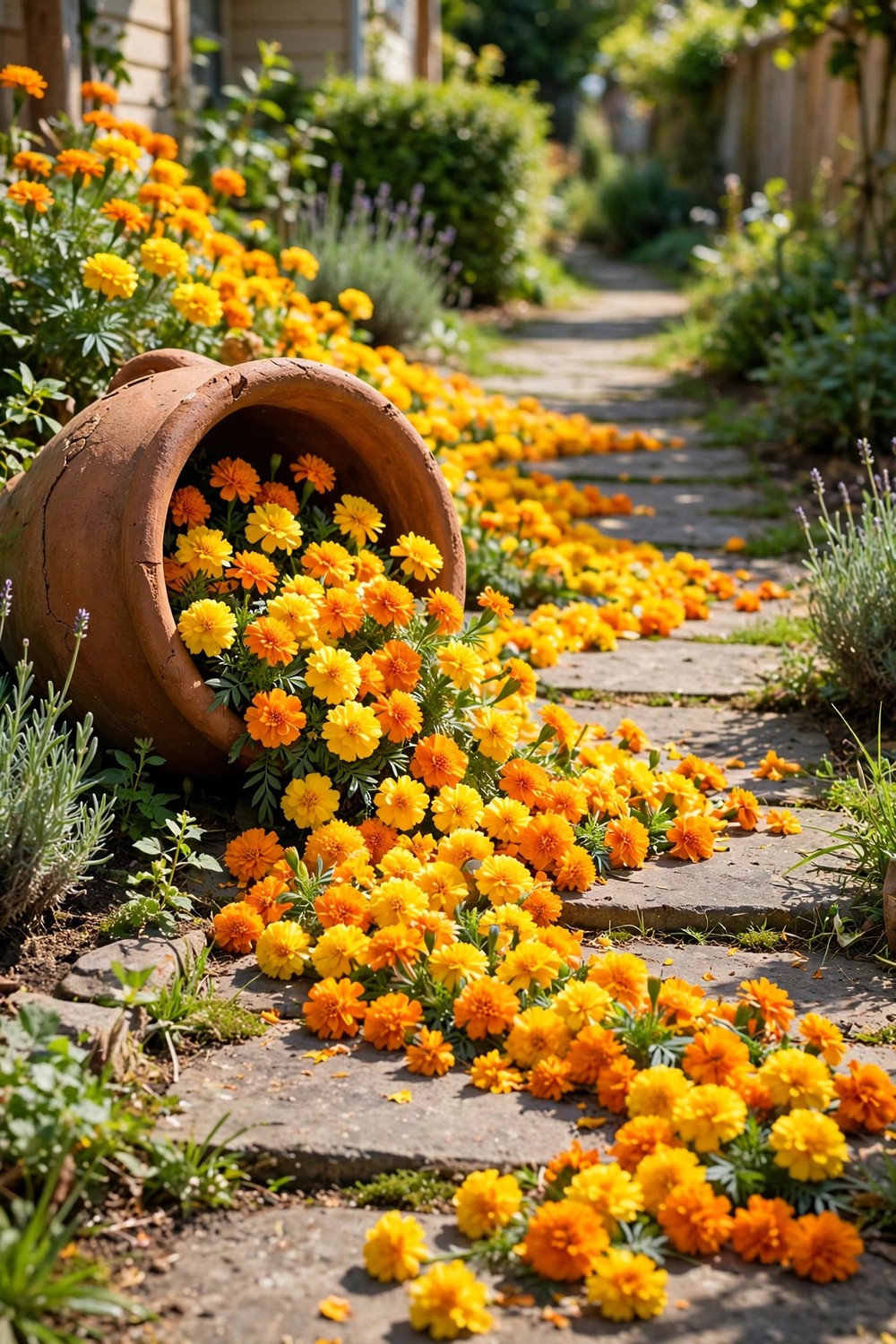
Pour pure sunshine with marigolds. Marigolds in yellow, gold, and orange make a spill that looks like sunlight itself tipped over. They are tough, bloom relentlessly, shrug off heat, and their scent keeps some pests at a polite distance from neighboring plants. A marigold spill by a front path is the friendliest welcome on this list, glowing from the street on the dullest day.
17. Lavender Spill
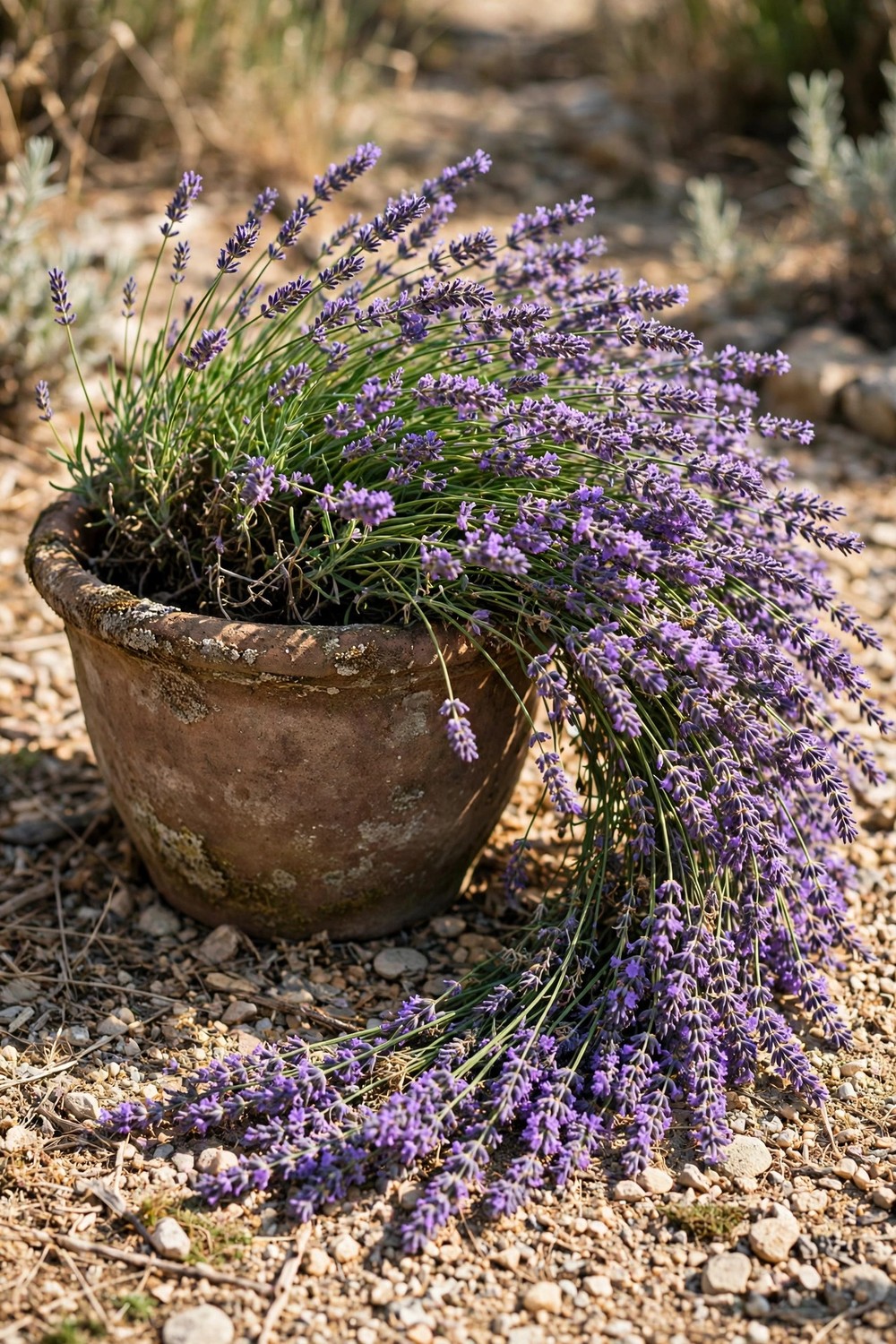
Let lavender spill for scent as well as color. Low lavender varieties planted in a curving drift from a weathered pot give you the spill shape plus fragrance every time you brush past. Lavender will not cascade like a petunia, so plant the drift densely to keep the river unbroken, and site it in your sunniest, driest spot with gravel at its feet. The bees will find it before you finish planting.
18. Seasonal Spill
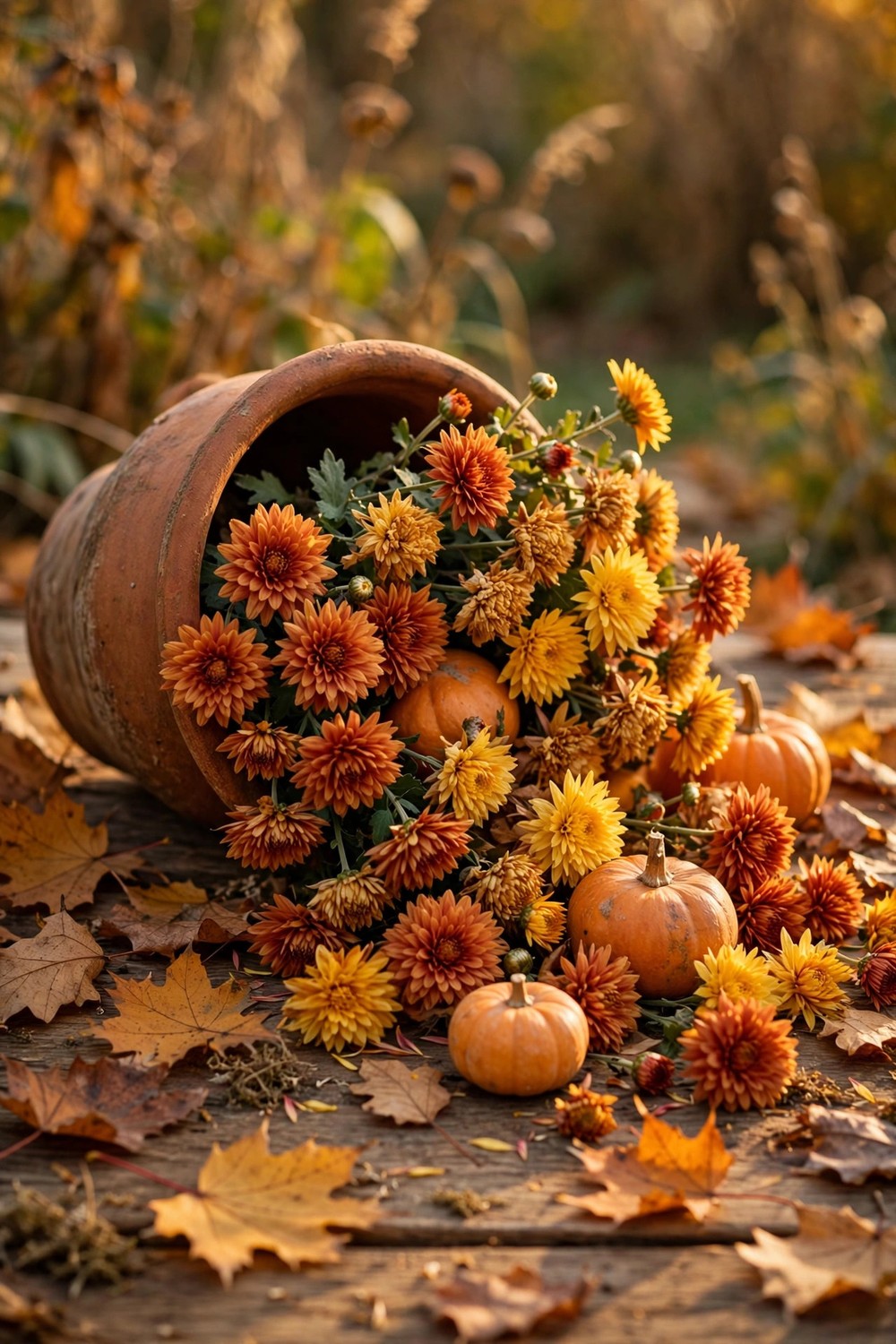
Replant the same spill with the seasons. The cleverest spill of all changes its wardrobe. Pansies and bulbs in spring, petunias in summer, mums and ornamental cabbage in fall, and in winter a spill of evergreen cuttings, pinecones, and red berries from the same tipped pot. The pot and the shape become a permanent piece of garden furniture, and only the pour changes, which makes it a small seasonal ritual to look forward to.
Building a Spill That Actually Reads as a Spill
Three details make the illusion work. First, bury the pot a third of the way into the soil and mound earth inside its mouth, so the flowers emerge from the pot itself rather than appearing beside it. Second, shape the bed before you plant, narrow at the mouth, widening and curving gently like liquid settling, and edge it cleanly so the river has banks. Third, plant densely at the mouth and slightly looser at the far end, exactly the way a real spill thins out as it spreads.
Keep the soil in the spill a little richer and more water retentive than the surrounding bed, because a shallow river of annuals dries out faster than a deep border. A layer of mulch tucked between the plants hides the soil, holds the moisture, and makes the flowers look even more abundant. Then stand back at the path and squint. If it reads as a pour, you have built the magic, and it will stop people mid step all summer.






Leave a Reply