
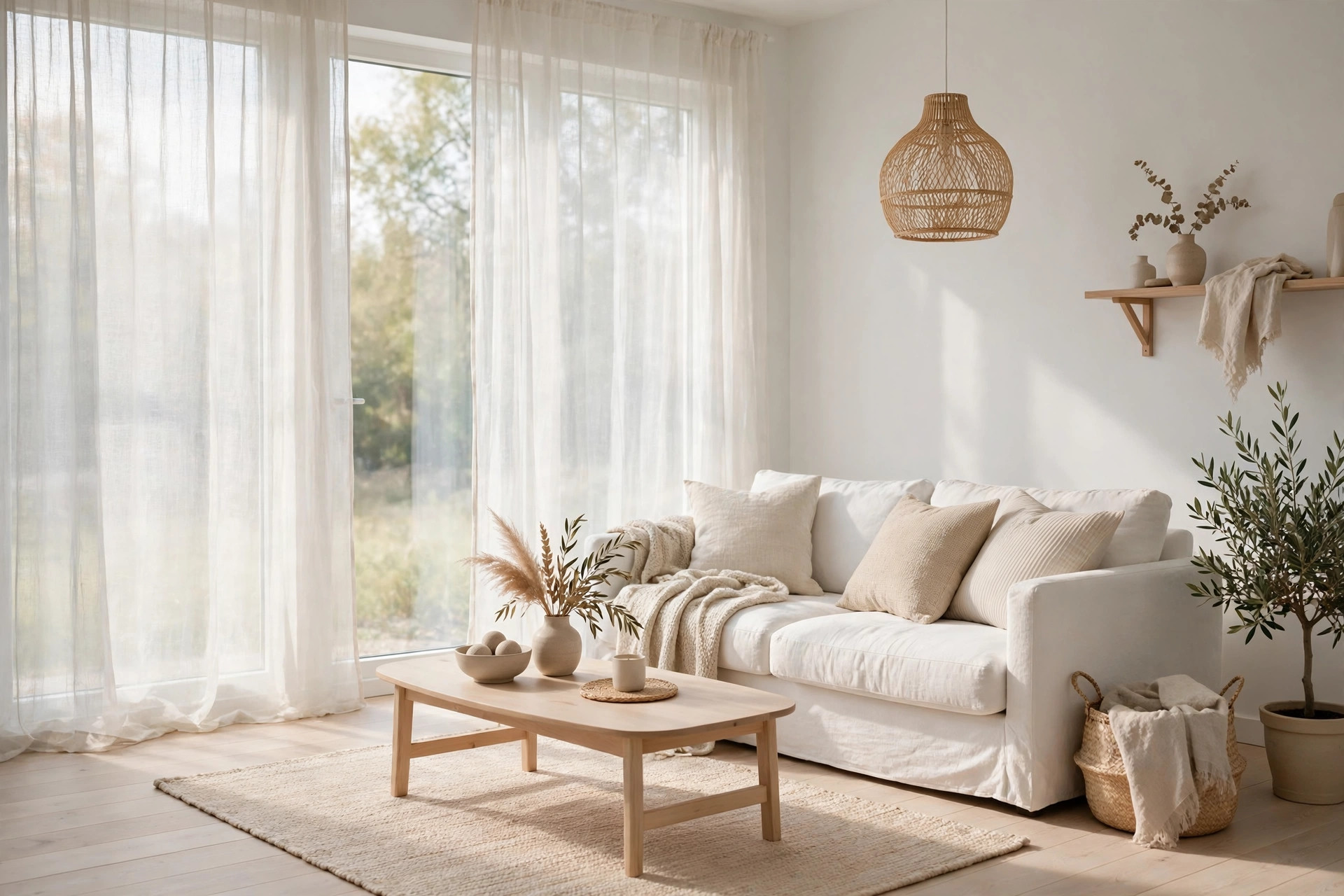
If your living room feels heavy or a little dark, Scandinavian style is usually the kindest fix. It is light, simple and calm, and it does not ask you to start again from scratch. These scandinavian living room ideas are all about pale colors, simple wood and soft texture that make a room feel airy even on a gray morning.
What makes this look so friendly is how little it actually needs. A white or cream sofa, a pale wood table and a few natural textiles can do most of the work. Most rooms already have pieces that fit, they just get lost under clutter and darker layers.
Below are 19 scandinavian living room ideas that cover the light palette, simple wood, texture, hygge corners and windows, plus simple ways to get the look on a small budget. Pick one section to start with and add more only if the room still asks for it.
The Light Palette
The whole feel starts with color, and in a Scandi room that color is usually very quiet. Think warm whites, soft creams and pale grays that catch the daylight and bounce it around the room.
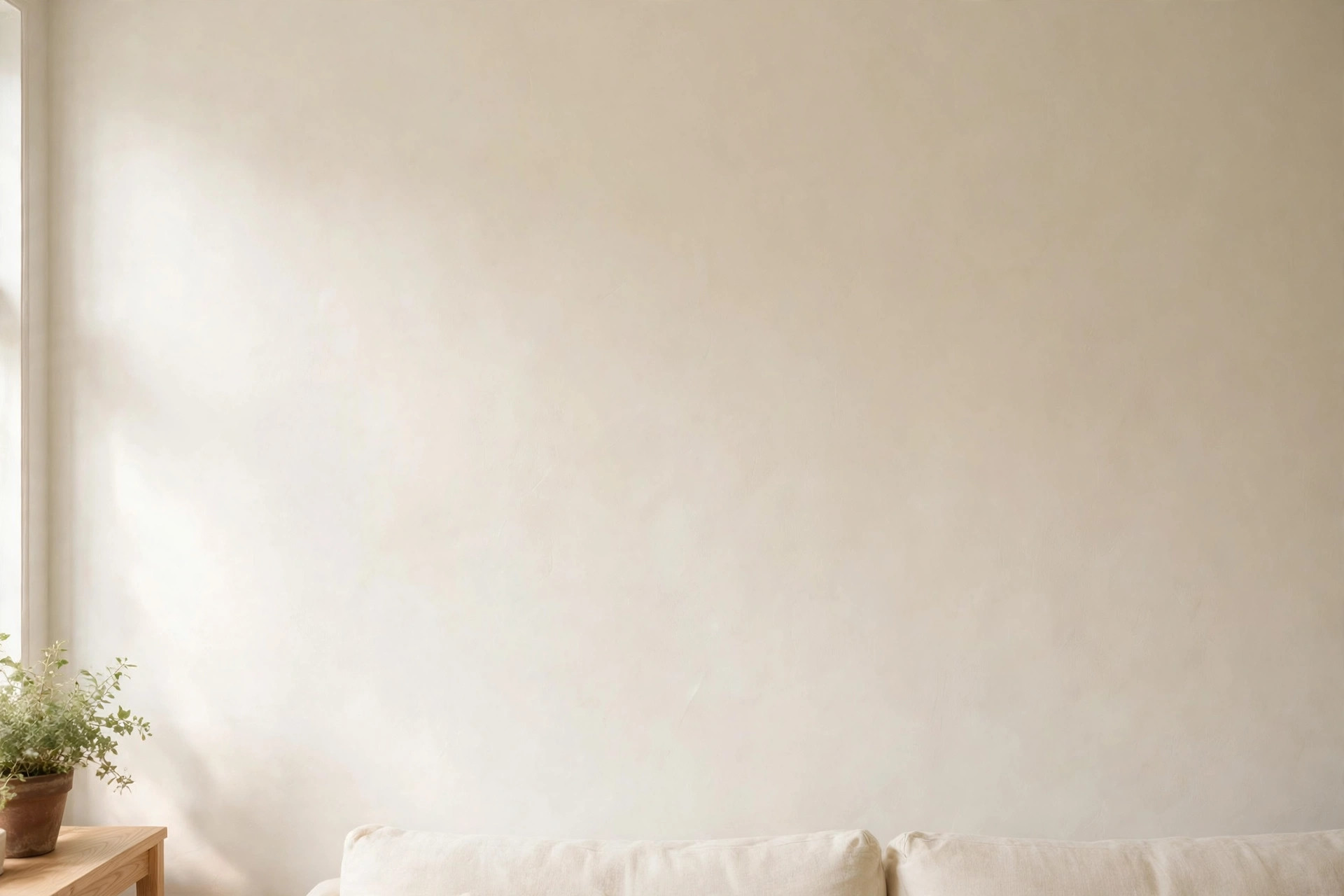
Start with warm white walls that make the light feel softer. A warm white usually suits this style better than a bright, blue toned white, because it keeps the room cozy rather than chilly. It also gives pale wood and cream textiles something gentle to sit against. If your room gets little sun, this warmer base typically helps a lot.
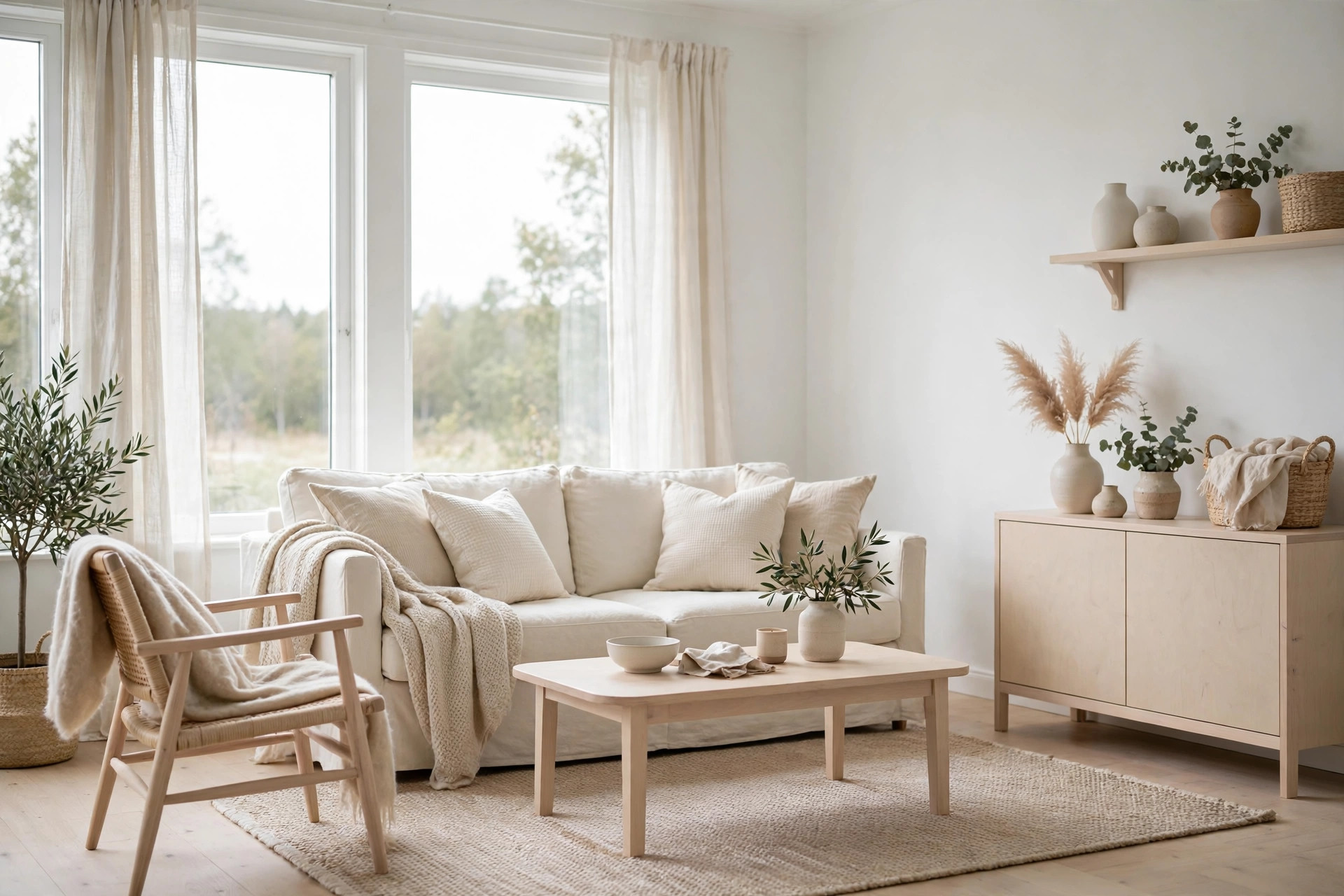
Choose a pale sofa as the calm center of the room. A white, cream or very light gray sofa keeps the seating area feeling open, and it lets cushions and throws do the changing by season. Washable covers help here, because pale fabric does not have to feel precious. A simple shape with clean lines usually works better than anything fussy.
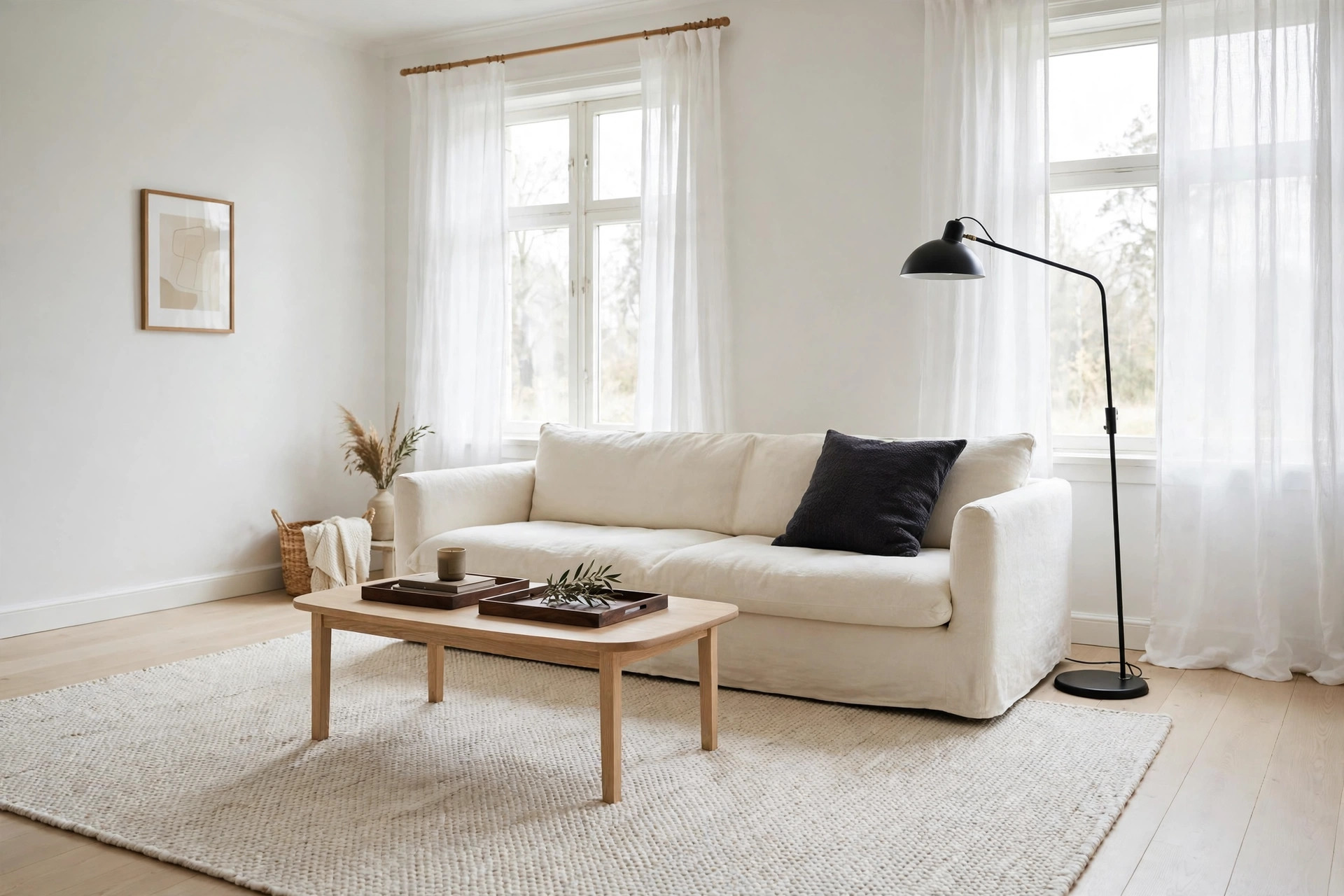
Keep your biggest pieces light and let smaller ones add depth. If the sofa, rug and curtains stay pale, you can add a deeper cushion, a darker wood tray or a black lamp without losing the airy feel. That small contrast helps, because an all white room can feel flat. Balance is usually the goal, not matching everything.
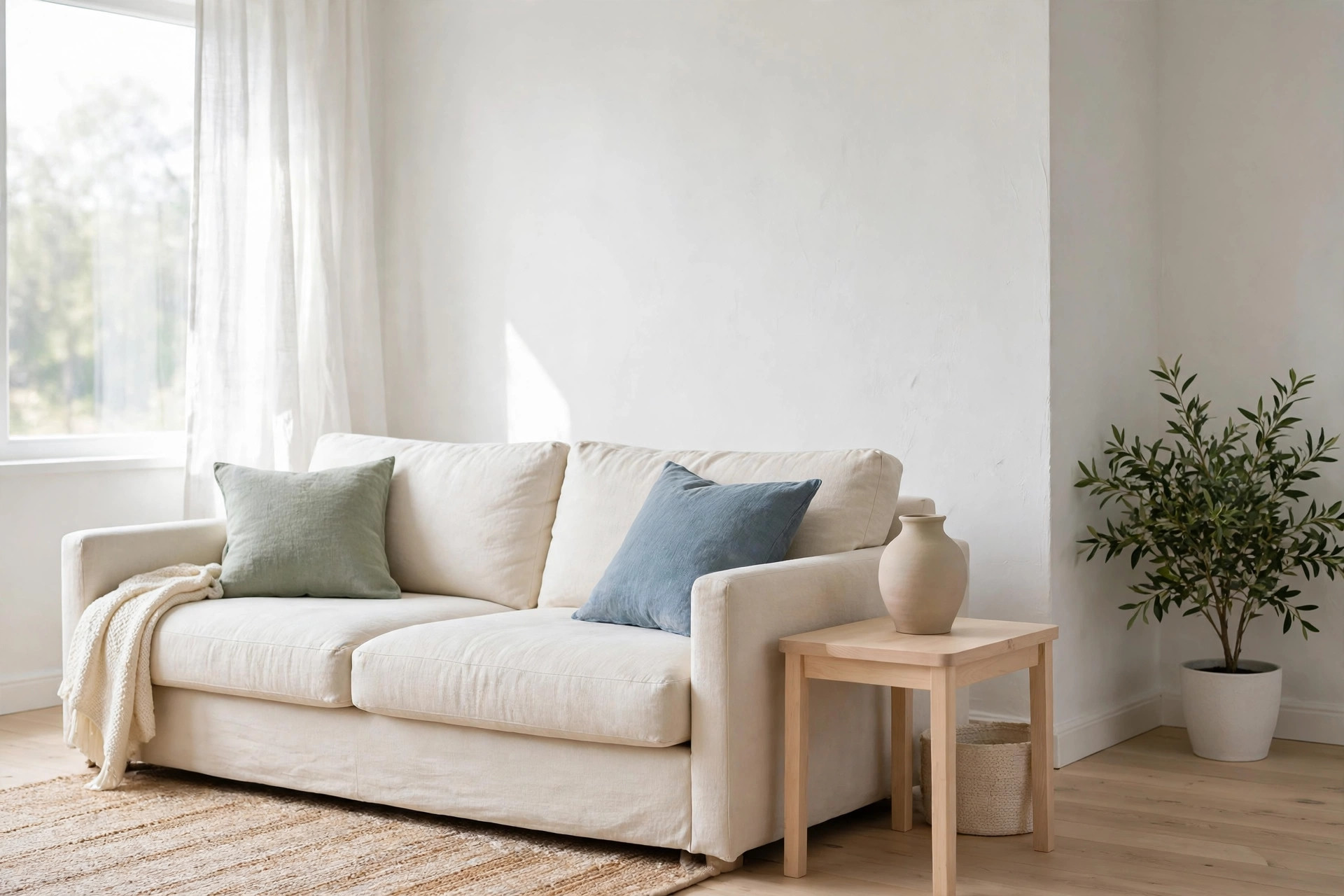
Add muted color in tiny, quiet doses. Soft sage, dusty blue or a pale clay cushion can warm up a white room without closing it in. Keep those colors washed out rather than bright, and repeat one tone in two places so it feels planned. Plants count here too, because their green is often the freshest color the room needs.
Simple Wood Furniture
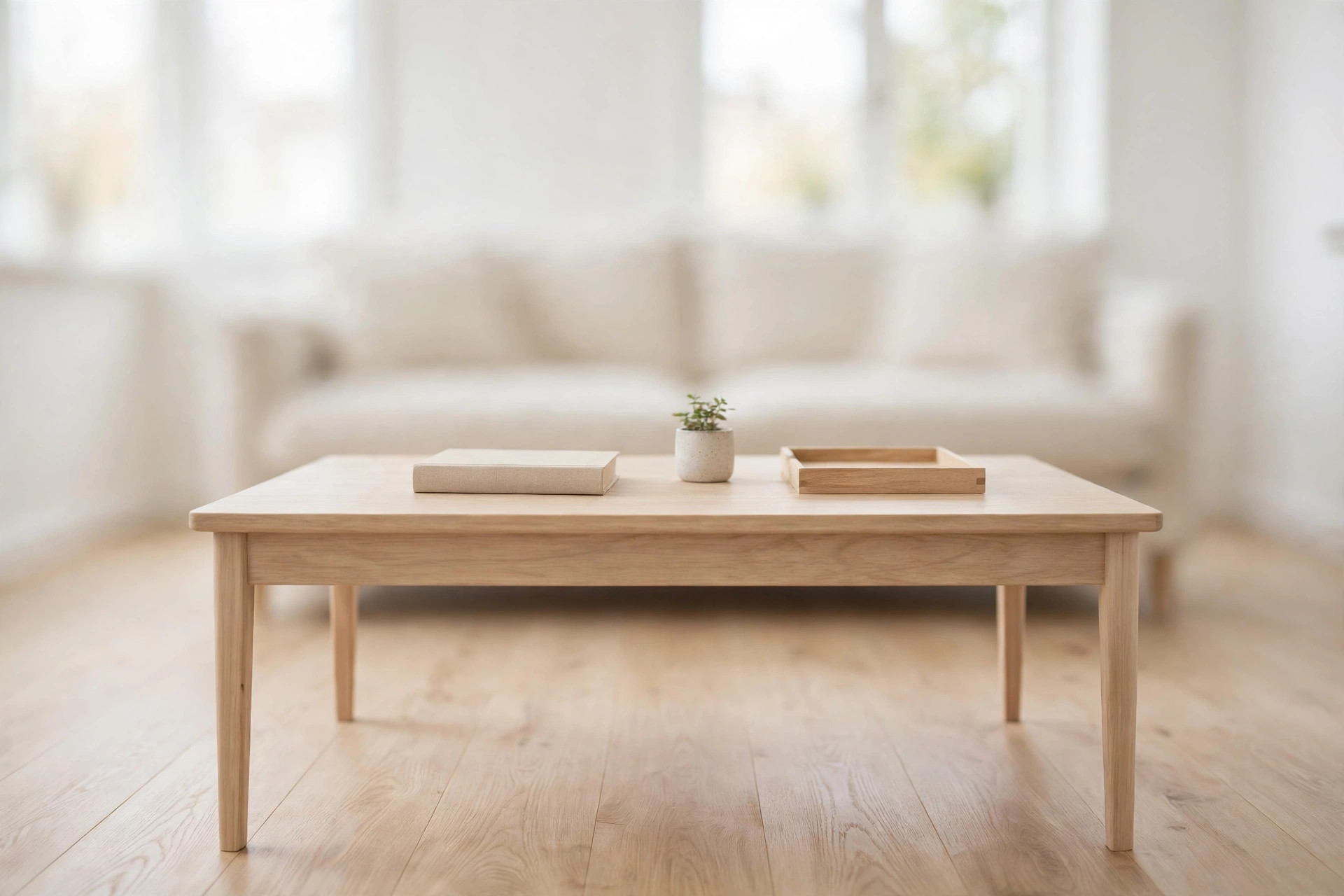
Pick a pale wood coffee table with simple, clean lines. A light oak or birch style table keeps the middle of the room open, especially when the legs are slim and you can see the floor beneath it. That visible floor usually makes a small room feel bigger. Keep the top mostly clear, with just a book, a plant or a simple tray.
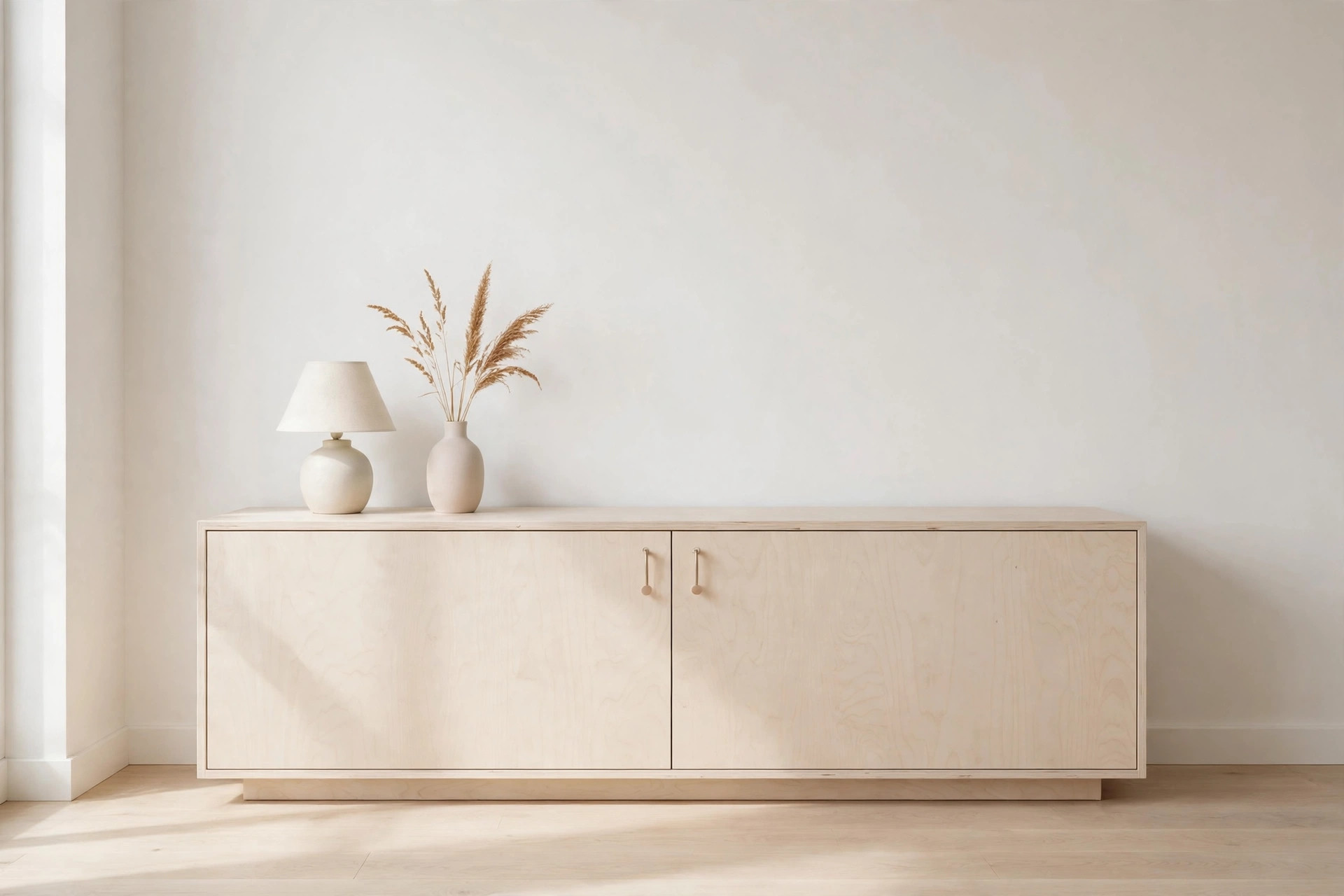
Use a low sideboard or bench to keep storage calm and hidden. Scandinavian rooms tend to hide clutter behind simple doors rather than displaying it all on shelves. A low, pale wood sideboard gives you that storage and a clean surface for a lamp or a vase too. Choose plain fronts and small handles, because the quiet look is the point here.
One Vintage Piece
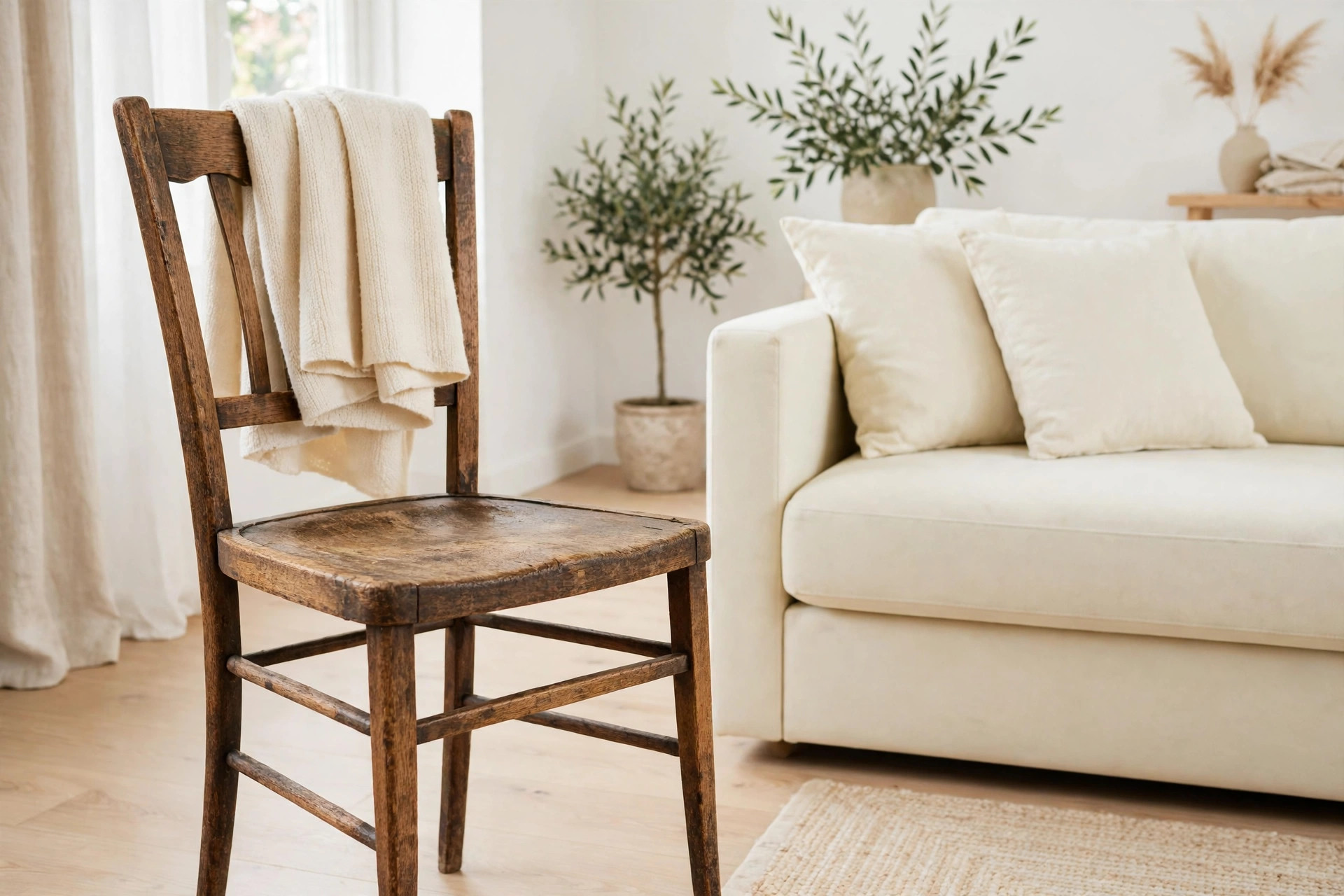
Let one vintage wooden chair add soul to the simple lines. A single older chair, maybe with a worn seat or a slightly darker tone, stops a pale room feeling too new. Place it beside the sofa with a folded throw over the back, and it becomes a useful extra seat too. One piece is usually enough.
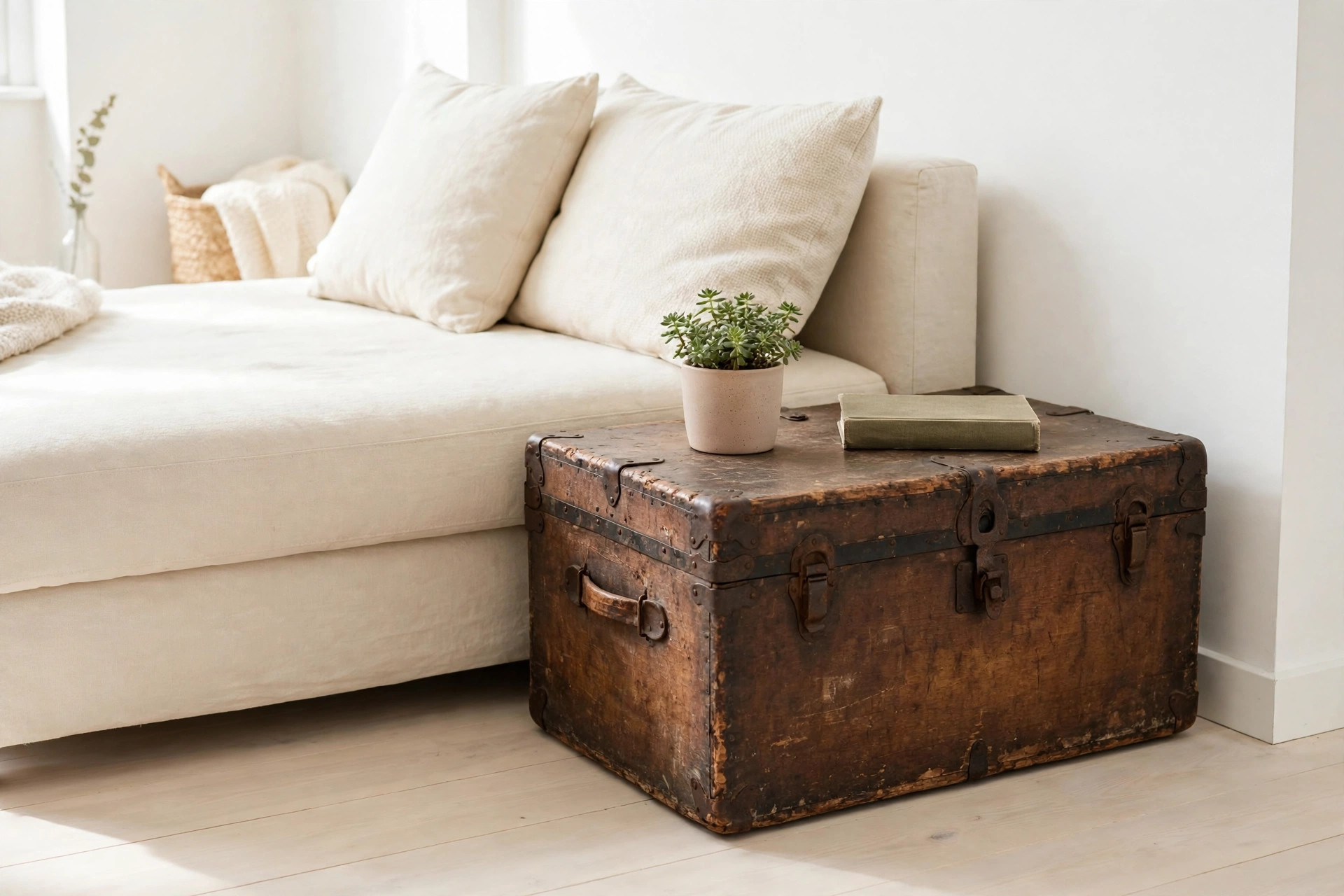
Try a small vintage stool or trunk as a flexible side table. An old stool beside an armchair or a simple worn trunk at the end of the sofa brings in history without taking much space. These pieces typically work hard, holding a cup, a book or a plant wherever you need them. Look for honest wood and simple shapes rather than anything heavily carved or dark.
Texture Without Clutter
Texture is how a pale room stays warm without adding lots of things. A few natural materials, layered thoughtfully, usually do more than a shelf full of small decor pieces.
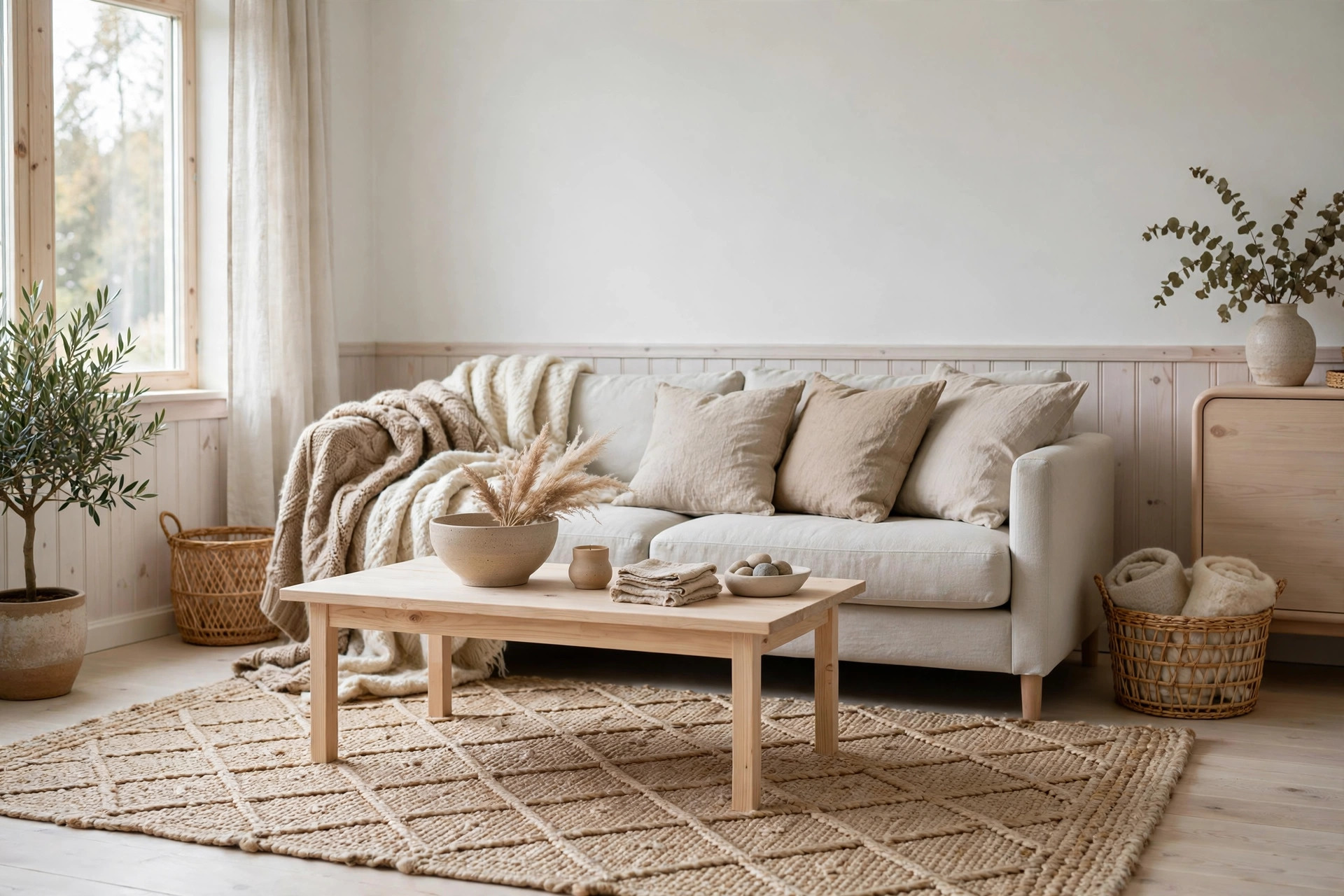
Layer a wool throw and linen cushions on your pale sofa. This is often the simplest texture mix to get right, because wool feels cozy and linen keeps it light. Stick to cream, oat and soft gray tones so the layering feels calm rather than busy. Drape the throw loosely over one arm, and let the cushions look lived in.
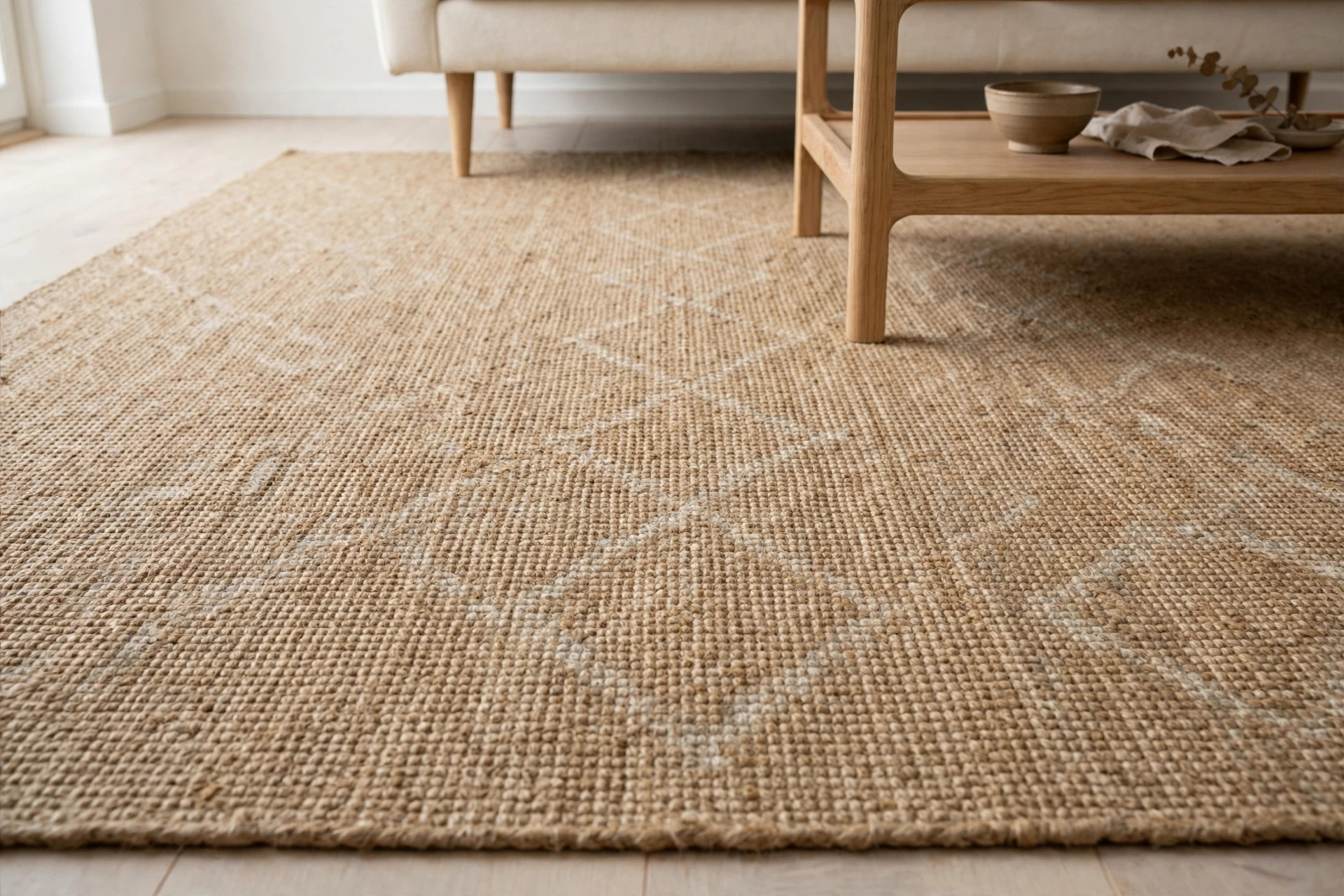
Choose a woven natural rug to soften the floor. A rug in wool, jute or a soft cotton weave adds warmth underfoot and quiets a room with hard floors. Patterns, if you want them, usually work best when they are faint and faded rather than bold. Make sure the front legs of your seating sit on the rug, because that one detail helps the whole grouping feel settled and together.
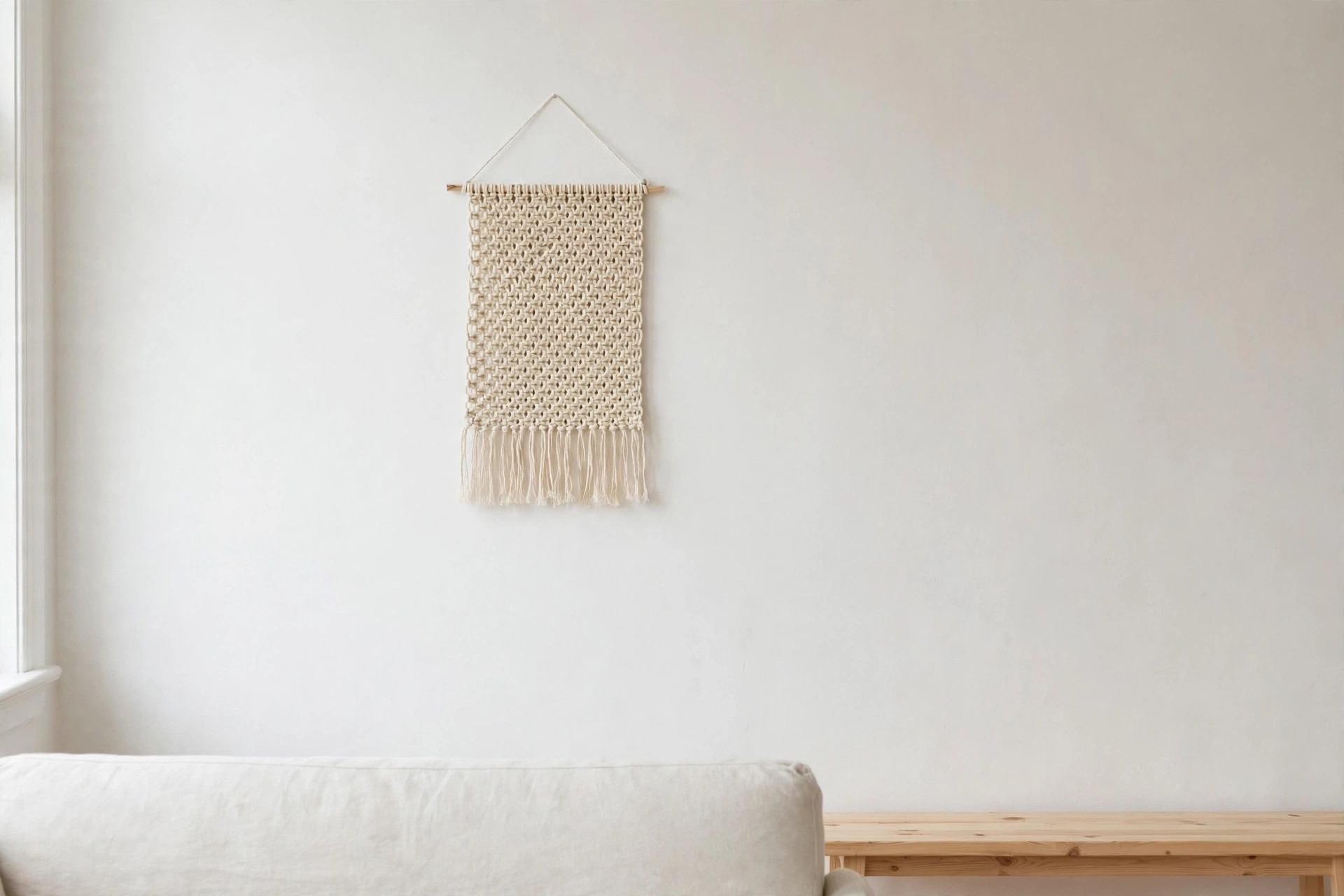
Bring texture to the walls with one simple natural piece. A woven wall hanging, a plain wooden frame or a basket hung flat can fill a bare wall without adding visual noise. Keep it to one piece per wall, and leave the rest empty so the room can breathe. That empty space is not wasted, it is honestly part of what makes this style feel so calm.
Hygge Corners
Hygge is really just the cozy part of the picture, the small corners that make you want to sit down and stay a while. Every Scandi room usually has at least one, and it does not need to be large.
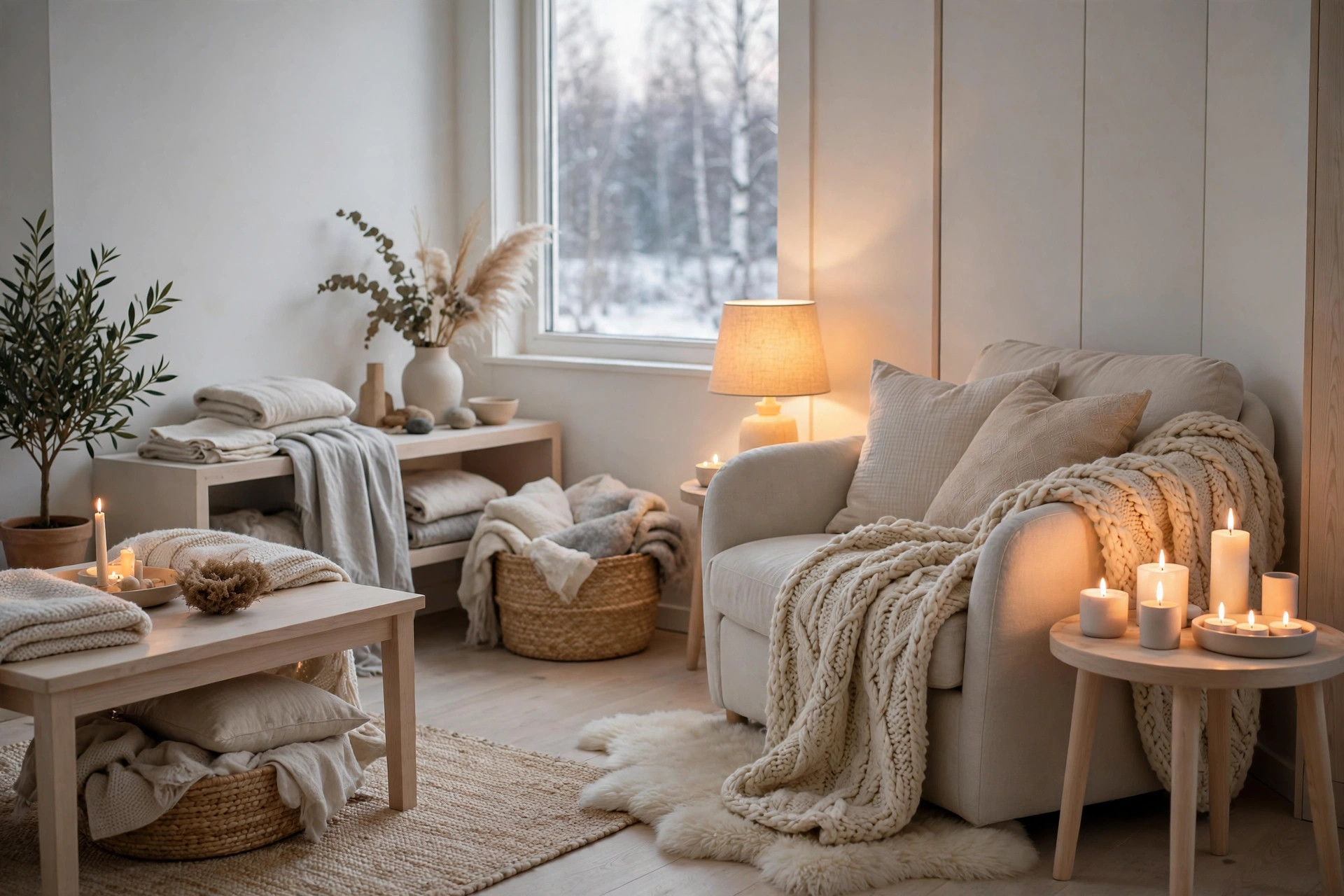
Create a reading corner with a chair, a lamp and a soft throw. Place a comfortable chair near the best light you have, add a warm lamp for the evening and keep a knitted throw within reach. A tiny side table for tea or a book finishes it. This corner often becomes the most used seat in the house.
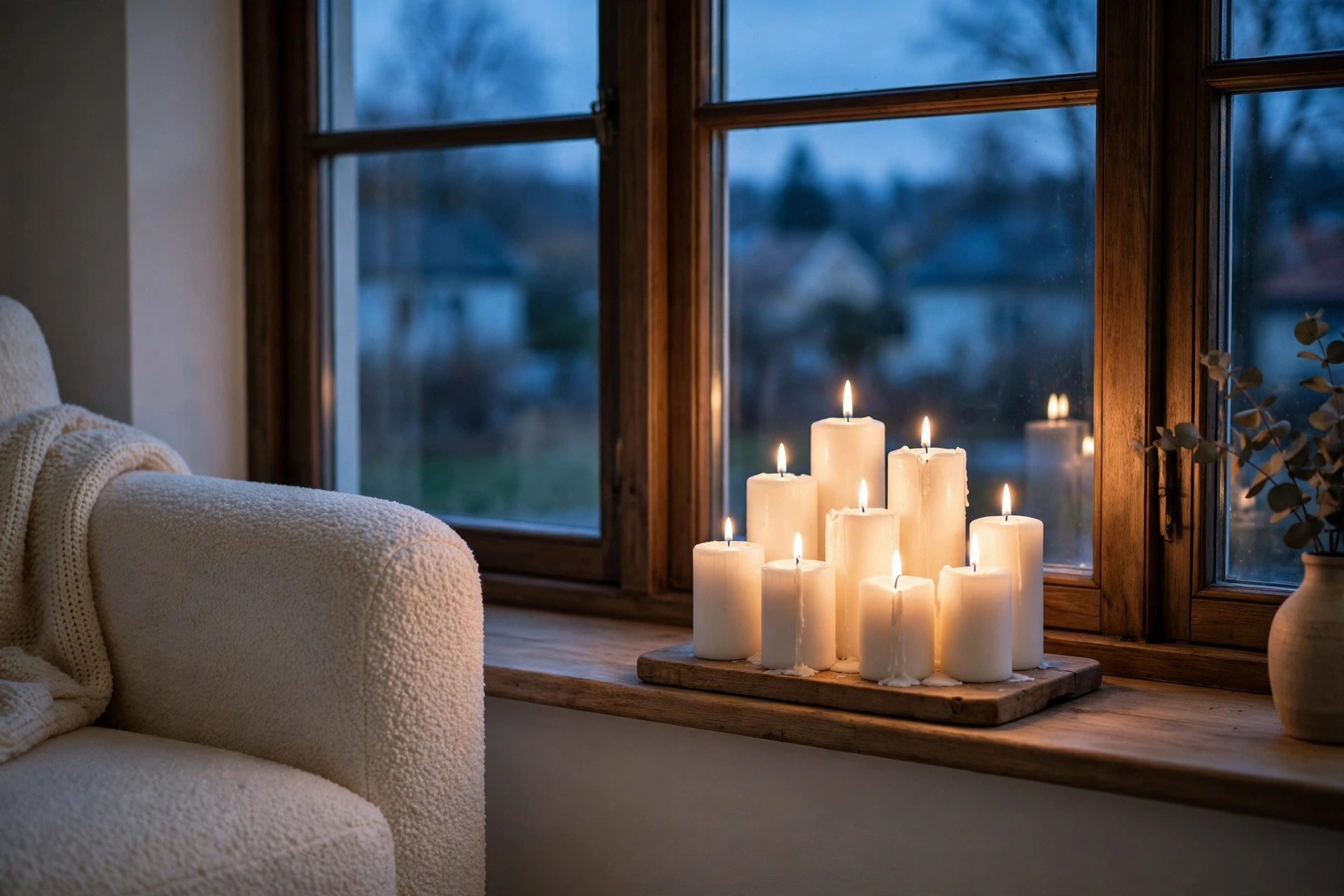
Group a few candles where you actually sit in the evening. Candlelight is a big part of the hygge feel, because it softens everything and makes even a simple room glow. Cluster a few plain candles on a tray or a windowsill rather than scattering single ones everywhere. Battery candles work too if that feels safer in your home, and they give a similar gentle flicker.
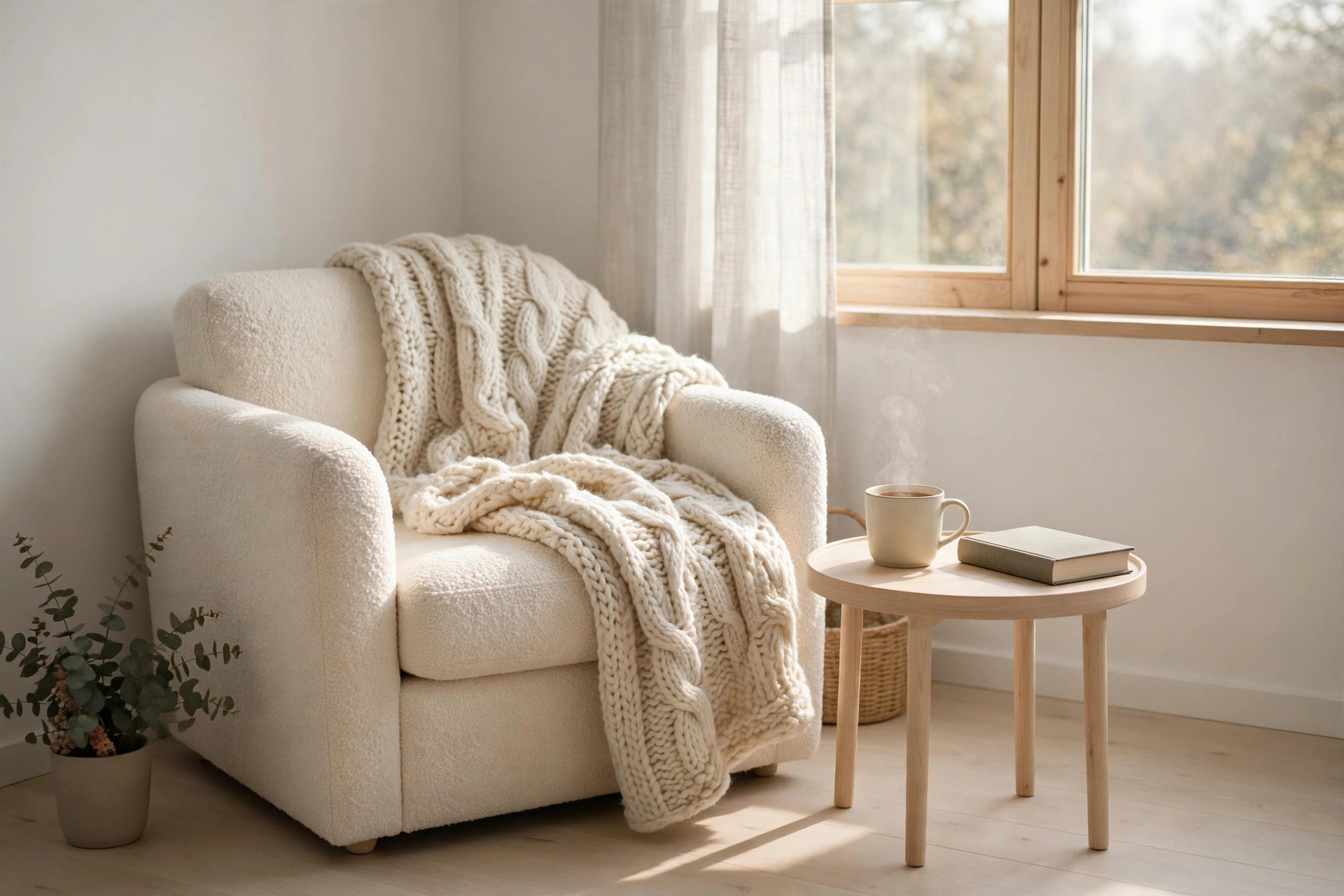
Keep a small ritual in the corner, like tea or a favorite blanket. Hygge is less about objects and more about how a corner gets used, so give yours a little daily habit. It might be morning coffee in the chair, or an evening chapter with the good blanket that lives there. When a corner has a ritual, it usually stays tidy and loved without much effort at all.
Windows Bare or Barely Dressed
Light is treated like a material in Scandinavian homes, so windows are rarely covered up heavily. The goal is usually privacy and softness, without giving away the daylight you have worked to welcome in.
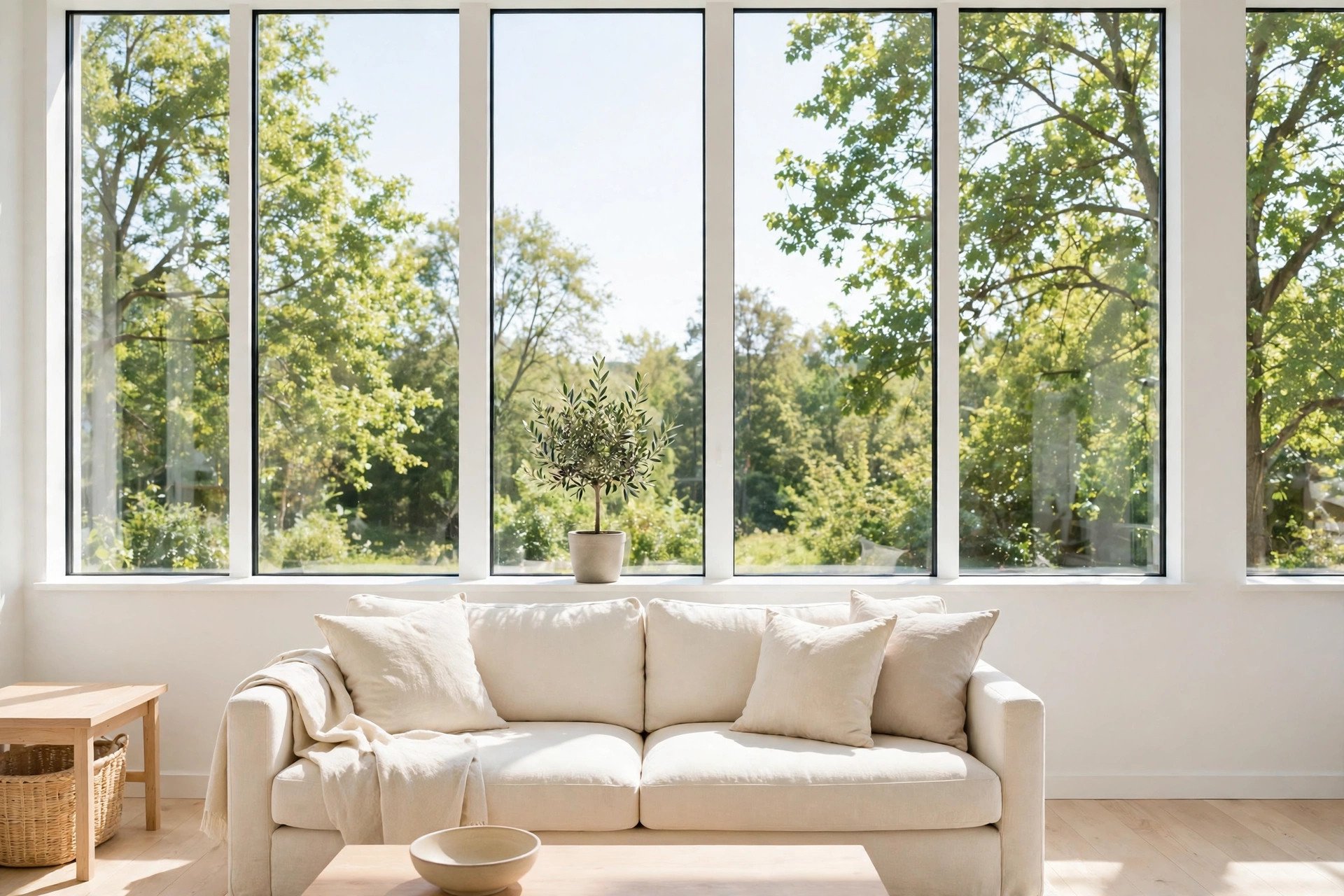
Leave windows bare if privacy already allows it. If no one can see straight in, try living with completely bare windows for a week and notice how much brighter the room feels. Clean glass matters more than you would think here, because every bit of light counts. A plant on the sill can soften the frame gently without blocking the view or the sun.
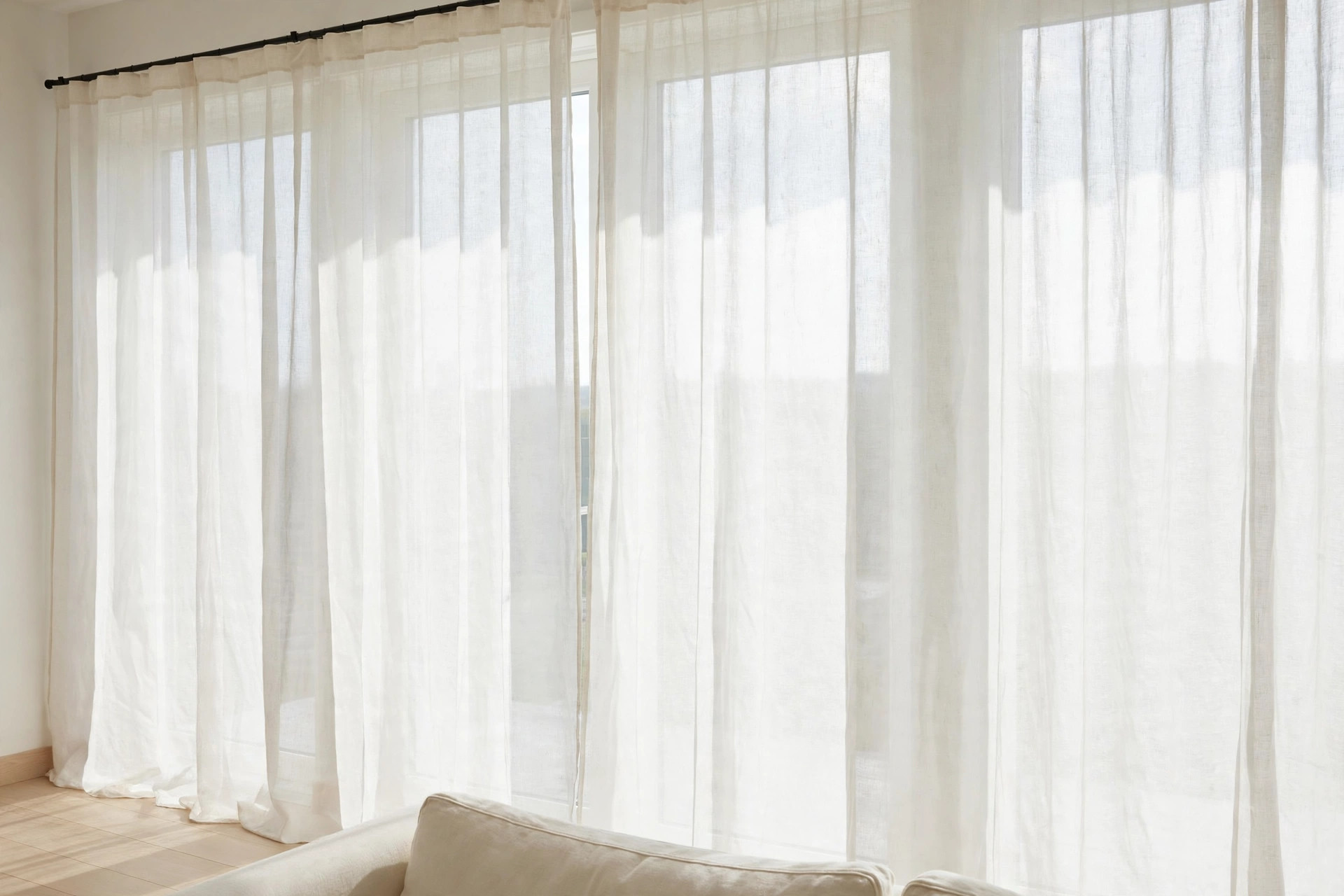
Hang simple sheer or linen curtains when you need a soft filter. A light, loose weave curtain takes the glare off and gives you privacy while the daylight still pours through. Hang them high and wide if you can, so the window feels taller and the fabric sits mostly over the wall. Plain white or natural linen typically suits this look better than patterns or heavy drapes.
Scandi on a Small Budget
The good news is that this style often costs less than others, because it is built on owning less and choosing simple things well. A small budget can be an advantage here, since it forces the editing that makes the look work.
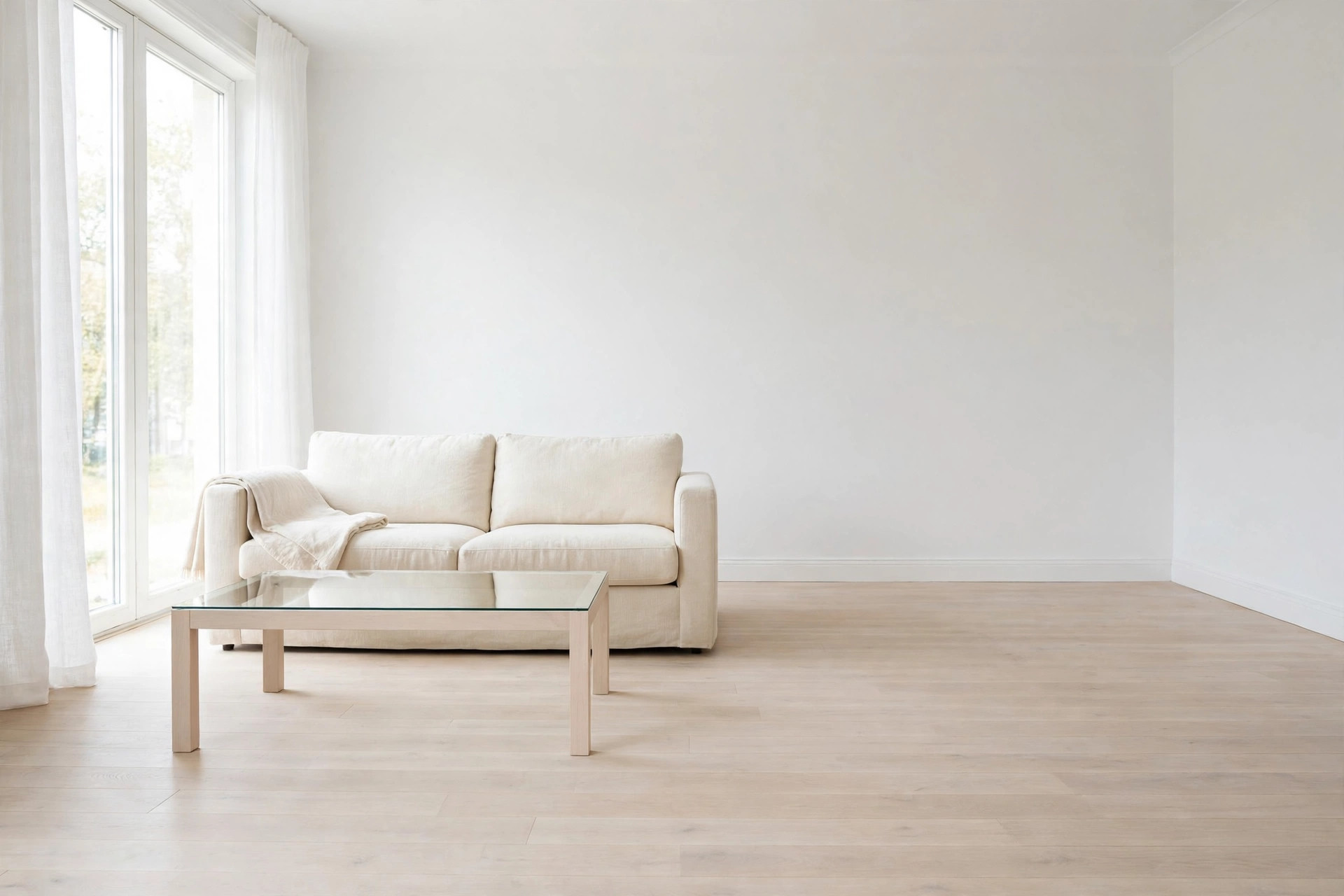
Start by removing and rearranging before you buy anything. Take out the darkest, heaviest pieces you do not love, clear the surfaces and move what is left until the room feels lighter. This step costs nothing, and it usually shows you what the room actually needs. Shop your own home first, because a pale throw or lamp from another room might be perfect.
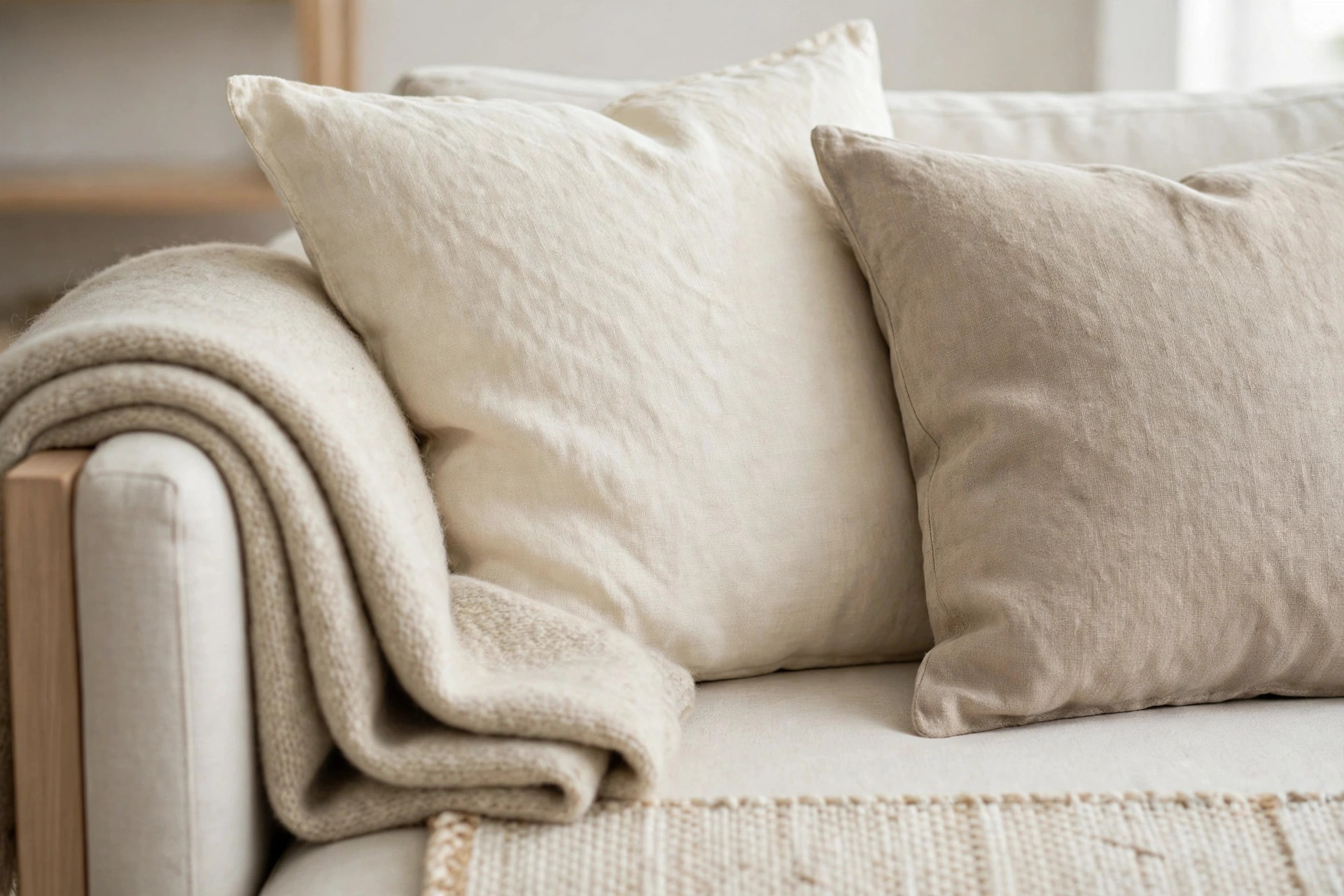
Swap textiles first, because they change the feel for the least. Cushion covers, a throw and a simple rug in pale natural tones can shift a whole room without replacing any furniture. Look for cotton, linen blends and wool looks in cream and oat, and keep the palette tight so new pieces work with what you own. One change at a time is fine, and it helps you see what is working.
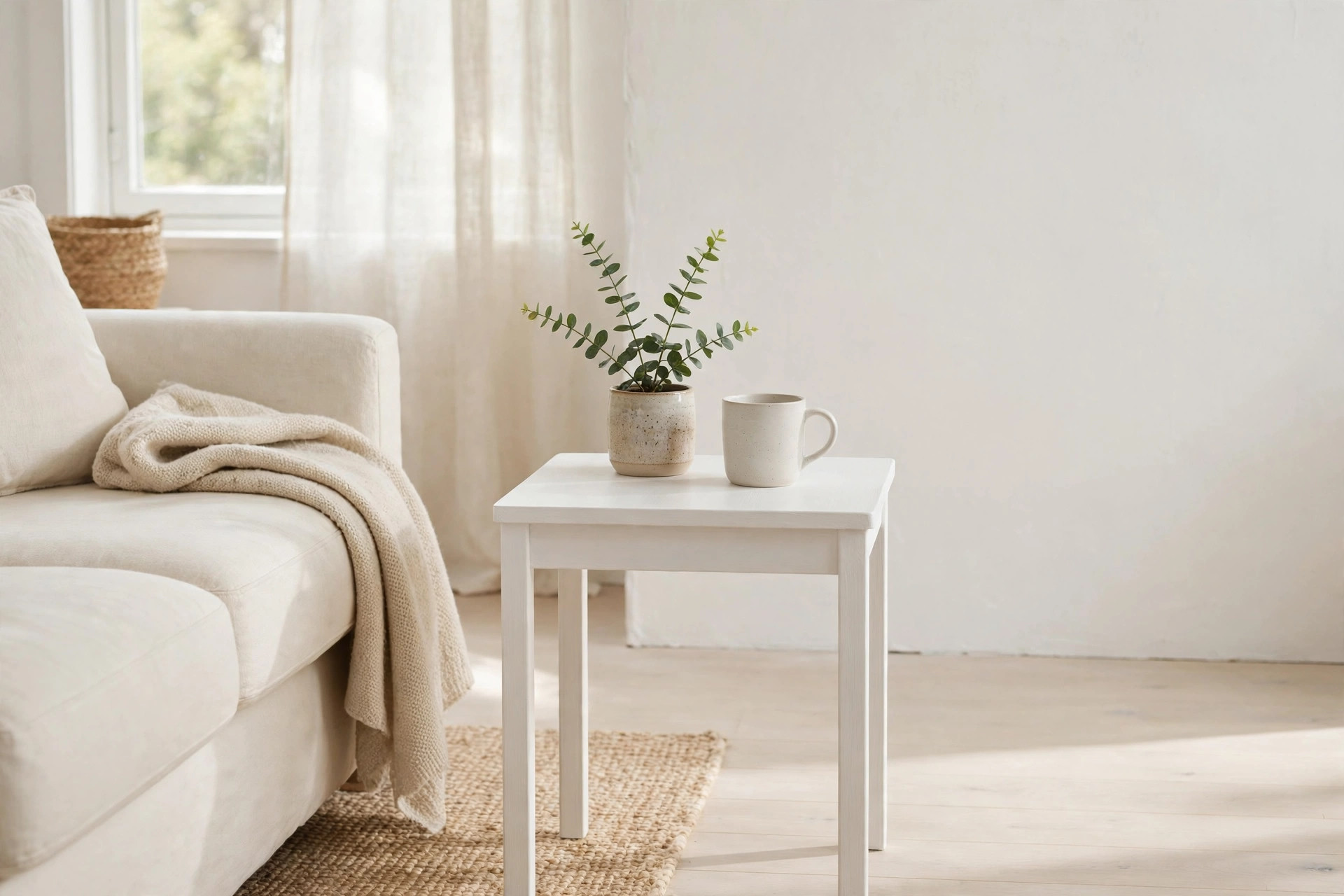
Refresh one piece of furniture with a lighter finish. Painting a dark side table in a warm white, or sanding a small wooden piece back to a paler tone, can bring what you own in line with the palette. Take your time with the finish and keep it simple and matte rather than glossy. It is usually kinder to refresh one loved piece well than to replace several things quickly.
Scandinavian style works because it asks for less, not more. Light walls, simple wood, soft texture and one cozy corner can turn an ordinary living room into a place that feels calm all day. Start with the light, edit kindly, and trust that an airy room is built one gentle choice at a time.

Leave a Reply