
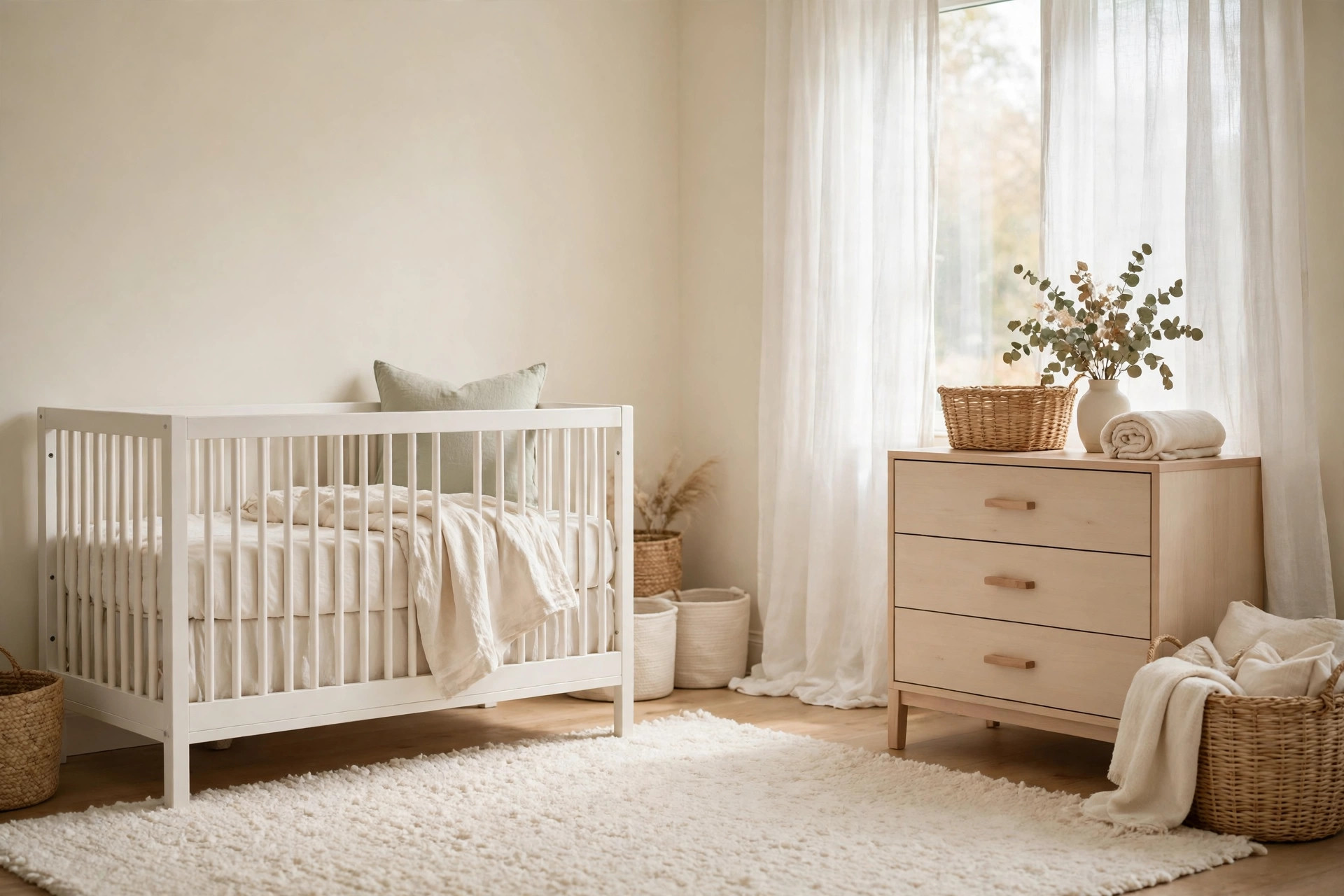
If you are dreaming up a nursery, you probably want a room that feels gentle the moment you walk in, not loud or overly themed. The sweetest nursery decor ideas usually start simple, with soft color, natural textures, and pieces that feel calm rather than busy. That kind of room soothes your baby, and honestly, it soothes you too during those long, quiet hours.
You do not need to buy everything at once or chase a perfect matching set either. A timeless nursery typically grows piece by piece, with a crib you love, a comfortable chair, and storage that actually works for tiny clothes and blankets. When the basics are soft and simple, it is easy to add personal touches later without starting over.
Below are twenty ideas you can borrow in whole or in part, starting with color and moving through the crib corner, feeding spots, storage, walls, and lighting. Take what fits your space and your routine, and leave the rest. A calm room is not about having more, it is about choosing what feels right.
A Calm Color Foundation
Color sets the mood before any furniture arrives, so it helps to choose a palette that feels restful in both daylight and lamplight.
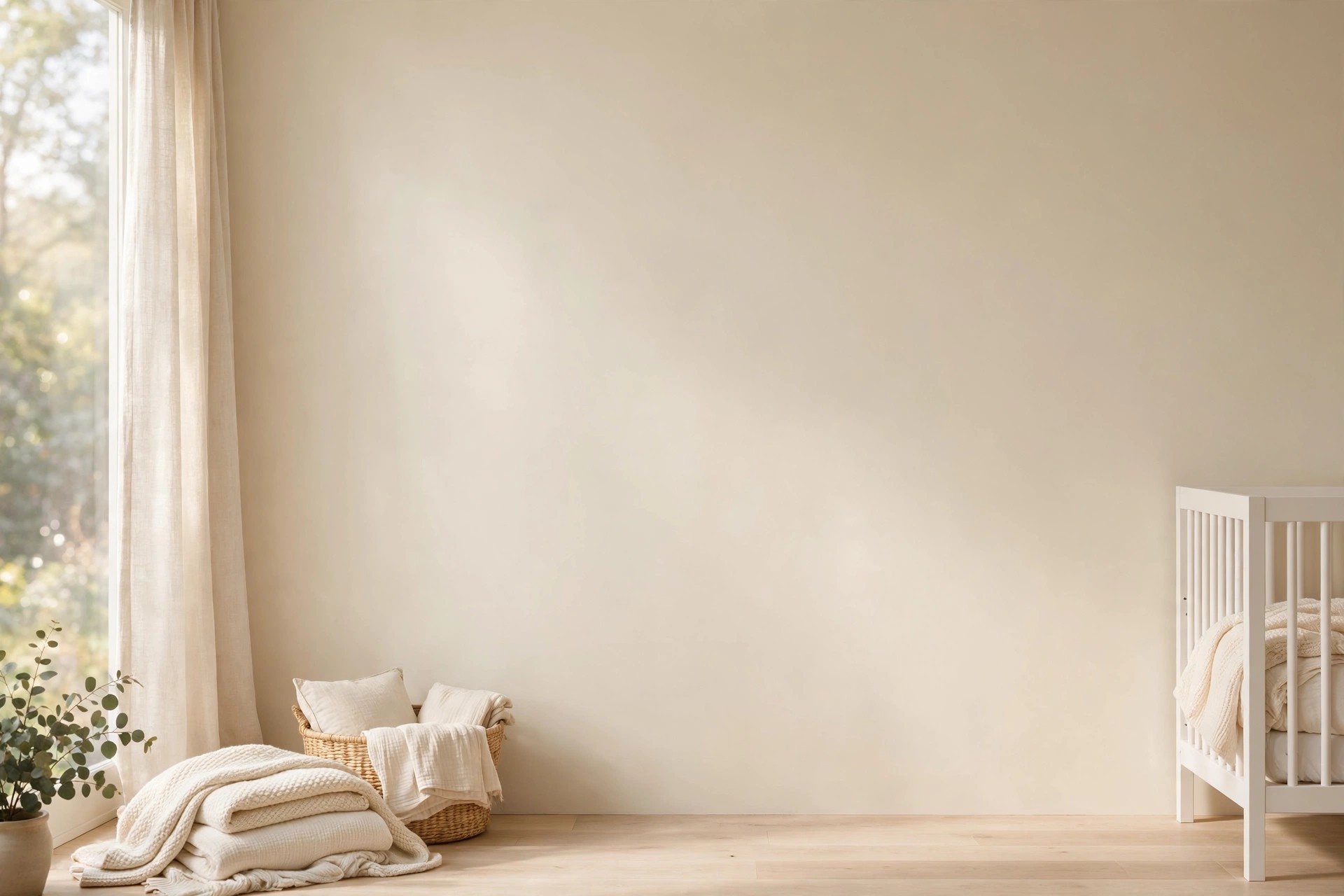
Start with warm ivory or soft cream on the walls. A warm white usually keeps a small nursery feeling bright without turning cold or stark, which is lovely for early mornings. It also gives you freedom later, because cream works with almost any accent you add. Test a patch first, since light can shift the tone a lot during the day.
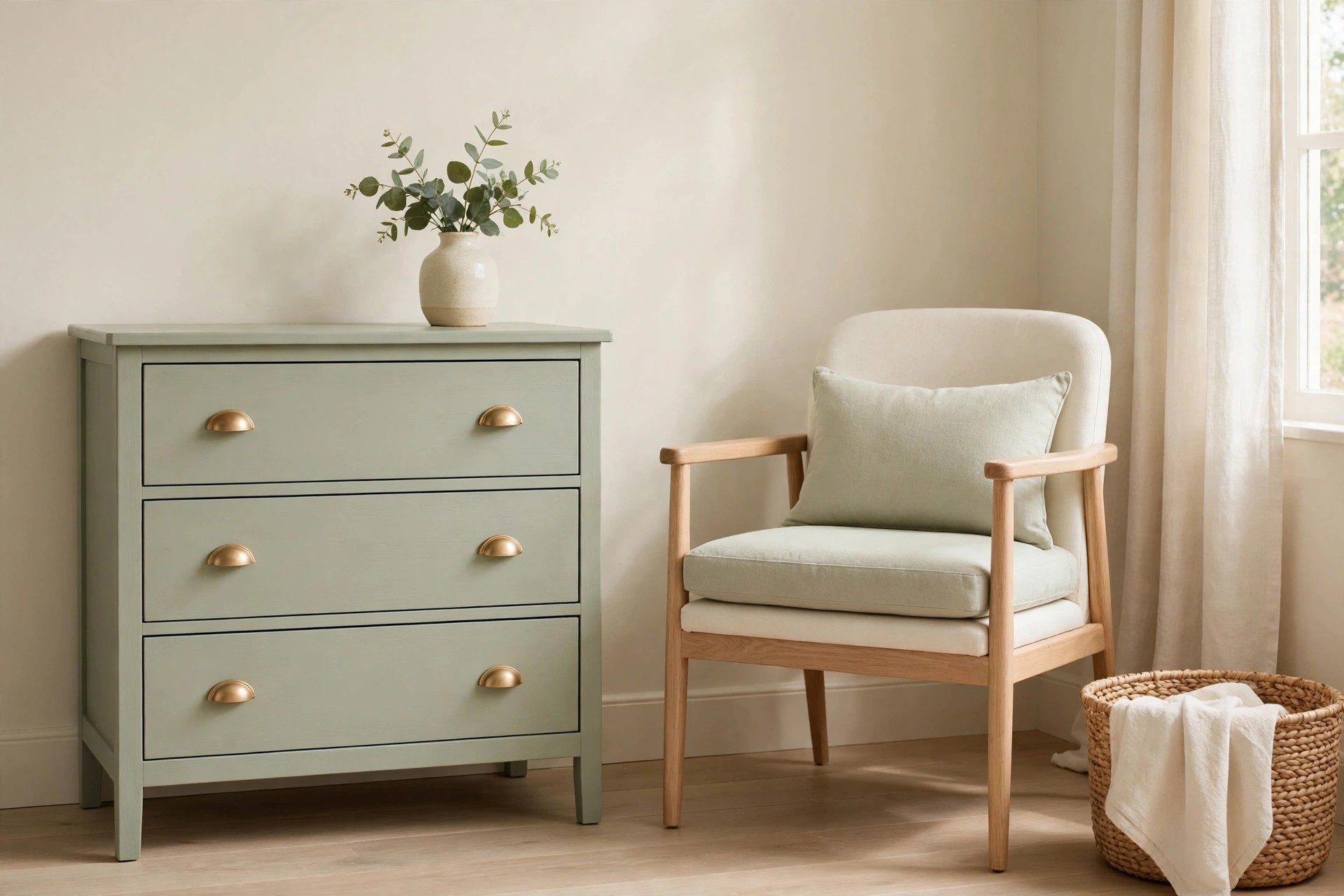
Layer in pale sage or muted eucalyptus as a gentle accent. Soft green typically feels calm and natural, and it suits both a simple cushion and a small painted dresser. It pairs beautifully with cream, light wood, and woven textures you probably already love. Keep it muted rather than bright, and the room stays restful instead of playful in a loud way.
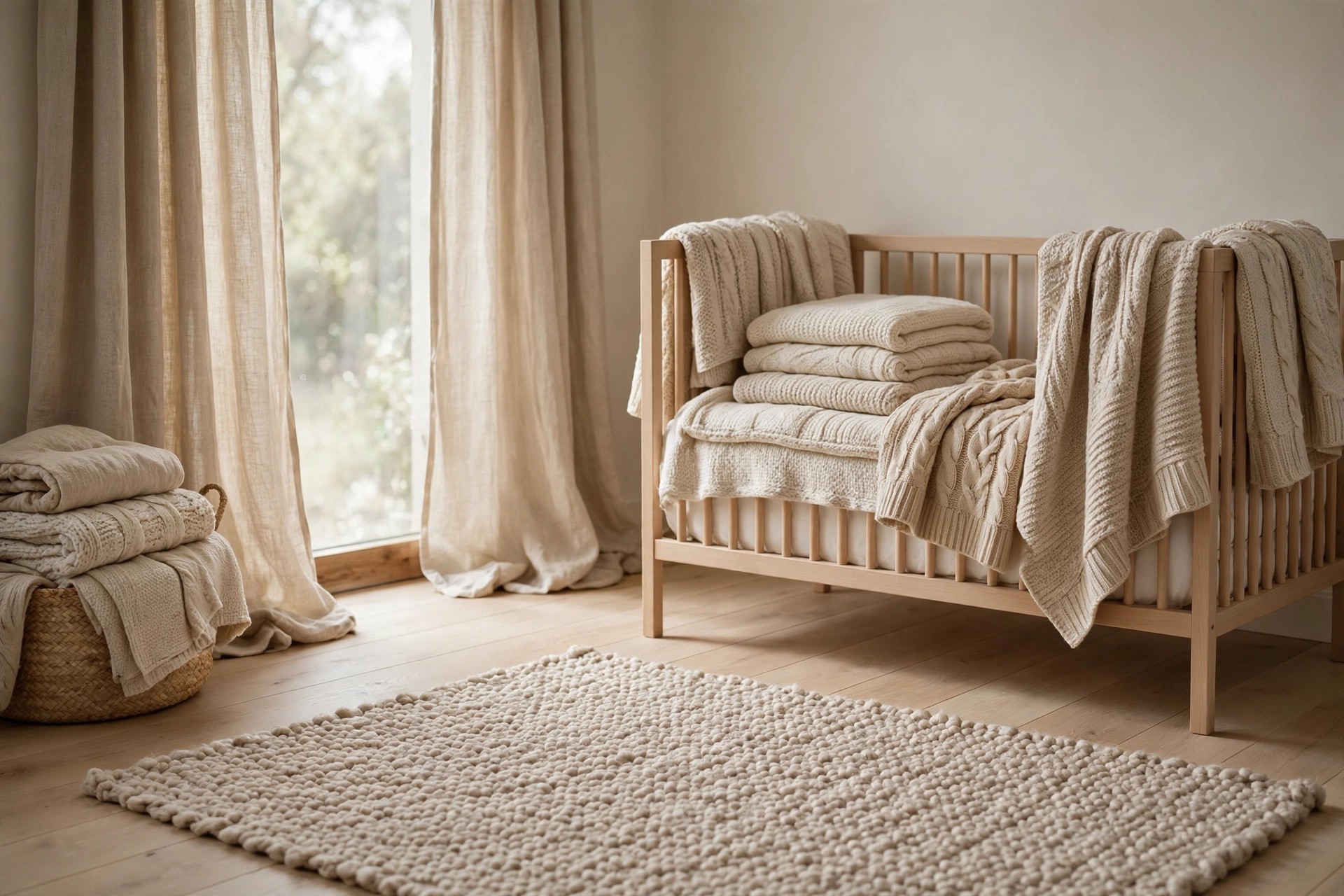
Use warm beige and oatmeal in textiles for quiet depth. When your walls are light, layered neutrals in the rug, curtains, and bedding usually stop the room feeling flat. Different tones of beige and cream add warmth without needing strong color at all. It is a forgiving approach too, because pieces do not have to match perfectly to look intentional.
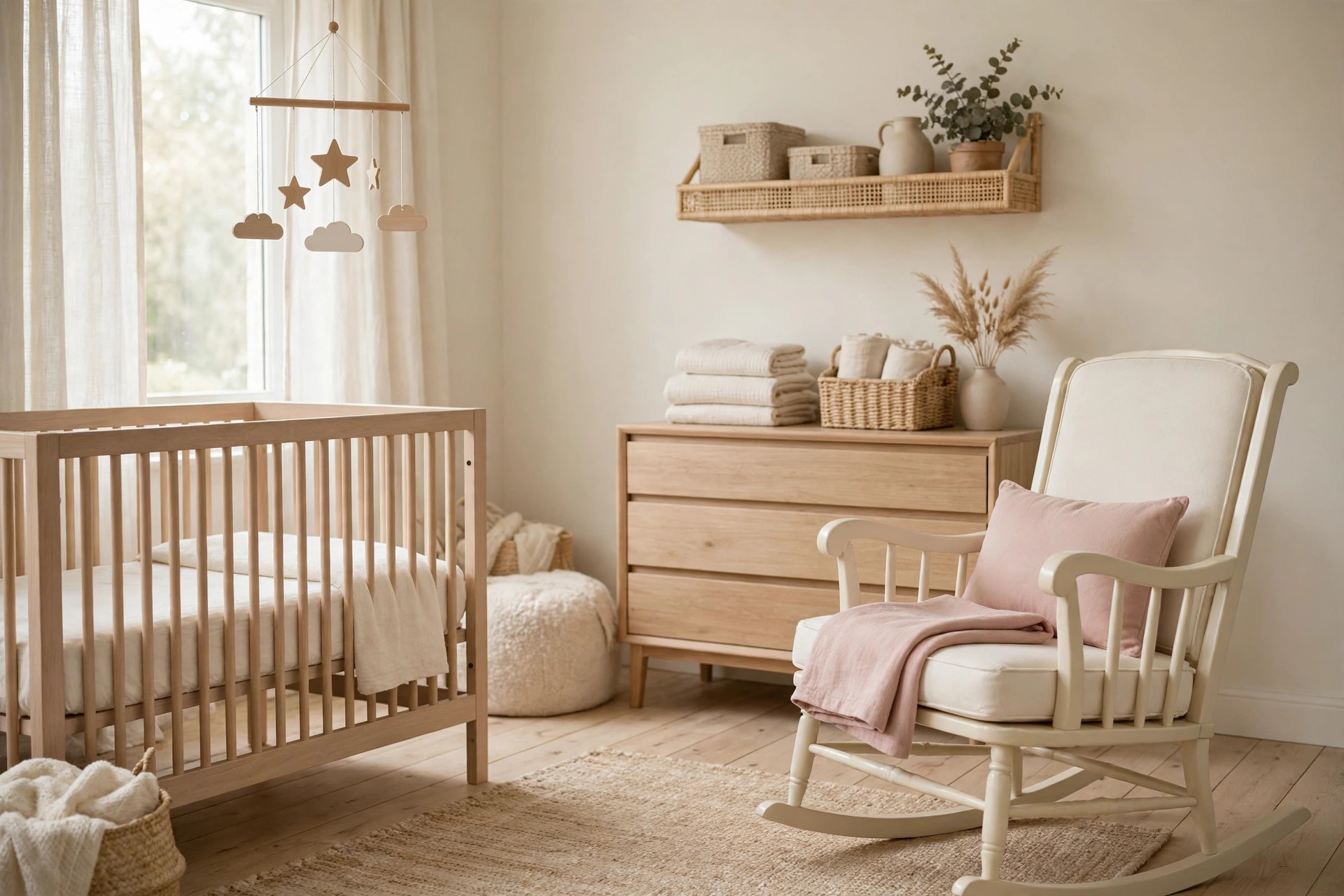
Add one soft blush or dusty blue touch, and keep it small. A single gentle accent, like a cushion or a folded throw, can give the room a little personality without locking you into a theme. That restraint typically helps the nursery grow up well, since you can swap the accent as your child gets older. Choose the softer, dustier version of the color and it will usually sit calmly.
The Crib Corner
The crib is usually the heart of the room, so this corner deserves your calmest styling and your most careful choices.
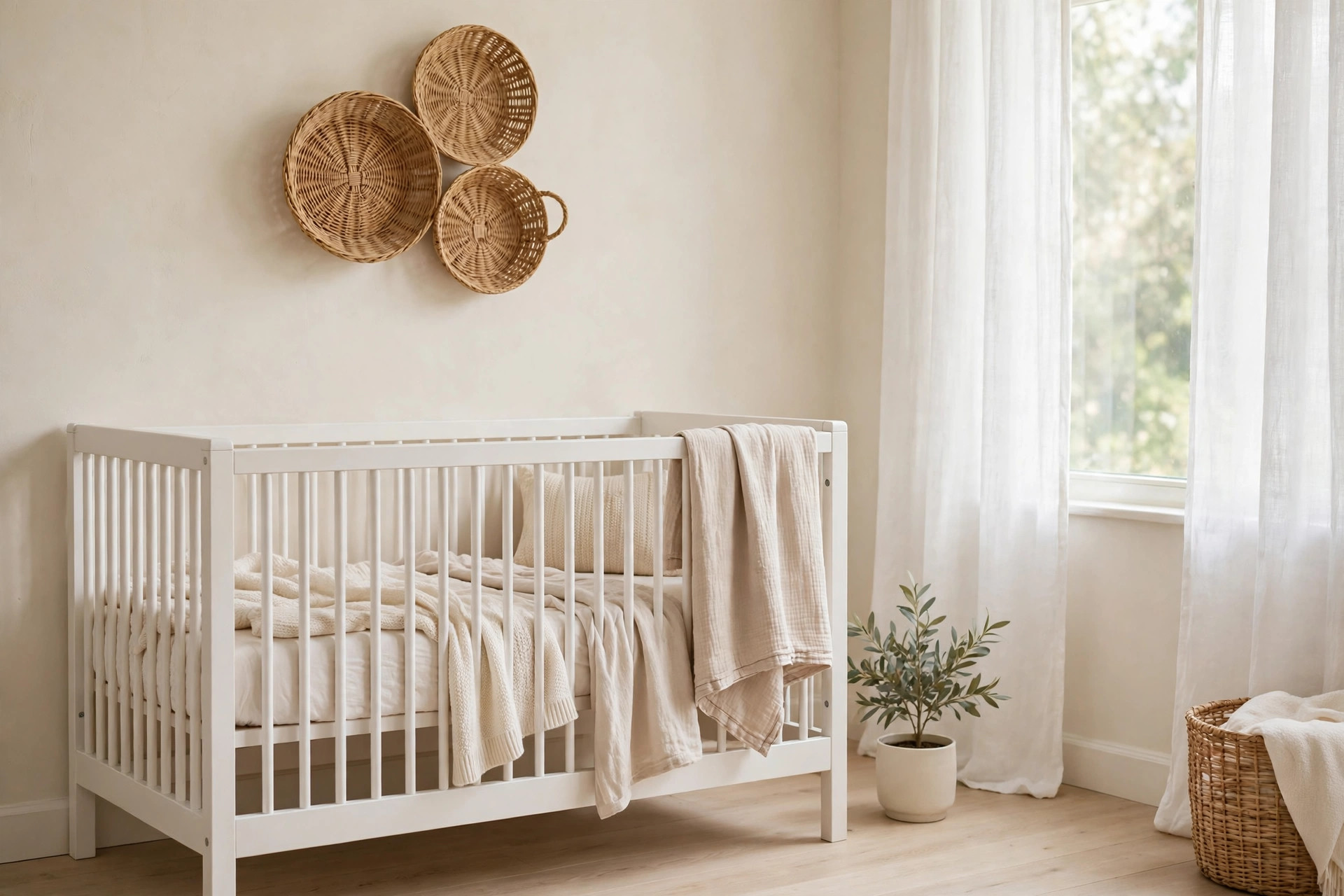
Choose a simple white or light wood crib with clean lines. A plain, classic shape typically outlasts trendier designs, and it looks lovely against almost any wall color. Light wood brings a little warmth, while white keeps things bright and airy. Either way, simple lines make the bedding and textures the soft focus instead of the frame itself.
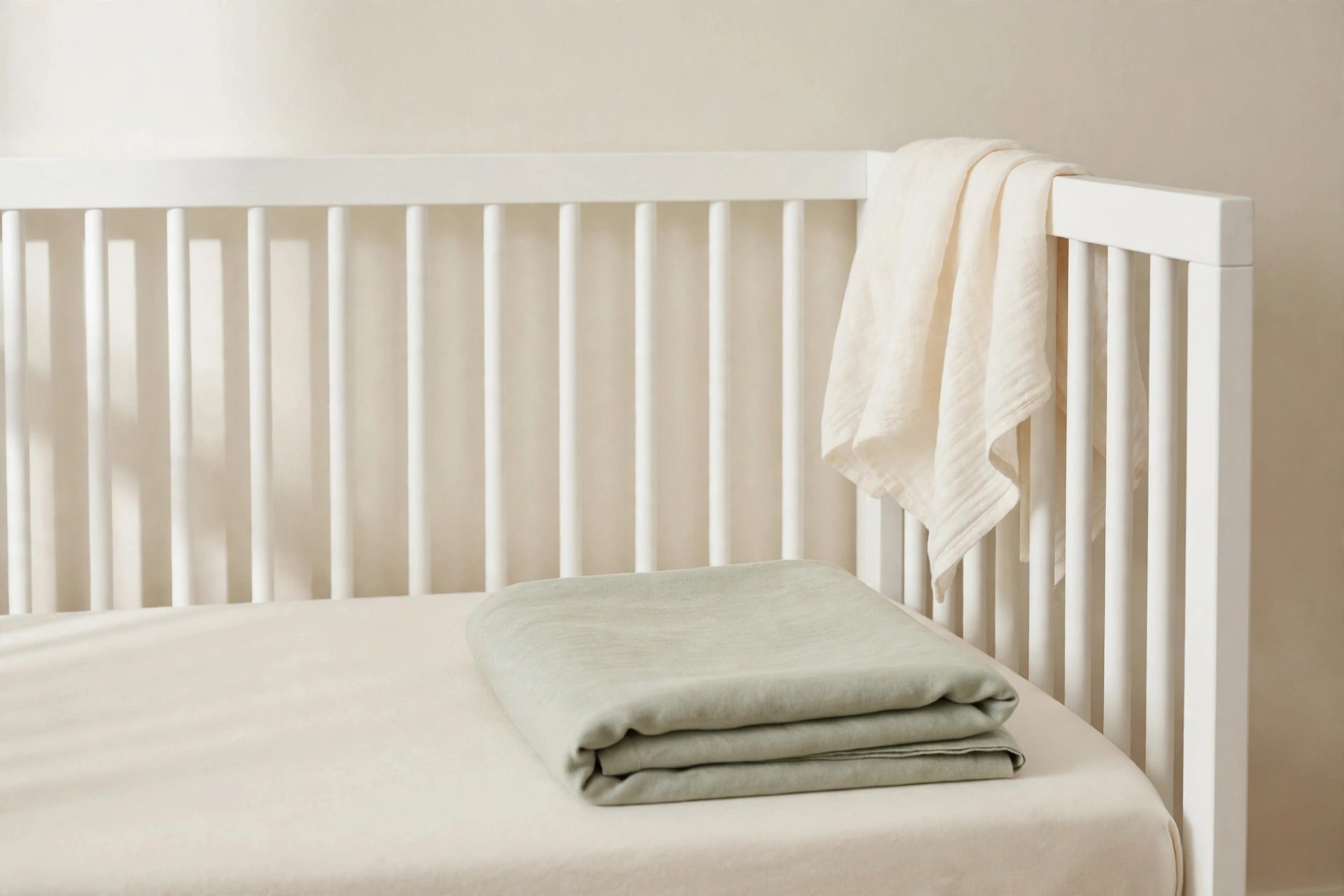
Dress the crib with plain, breathable looking layers in cream and white. Simple fitted sheets in soft neutrals usually photograph beautifully and feel calmer than busy prints right next to your baby. You can rotate a couple of plain colors, like ivory and pale sage, and the corner still feels cohesive. Keep the look uncluttered, and changing the sheet stays quick and easy too.
Safe styling basics
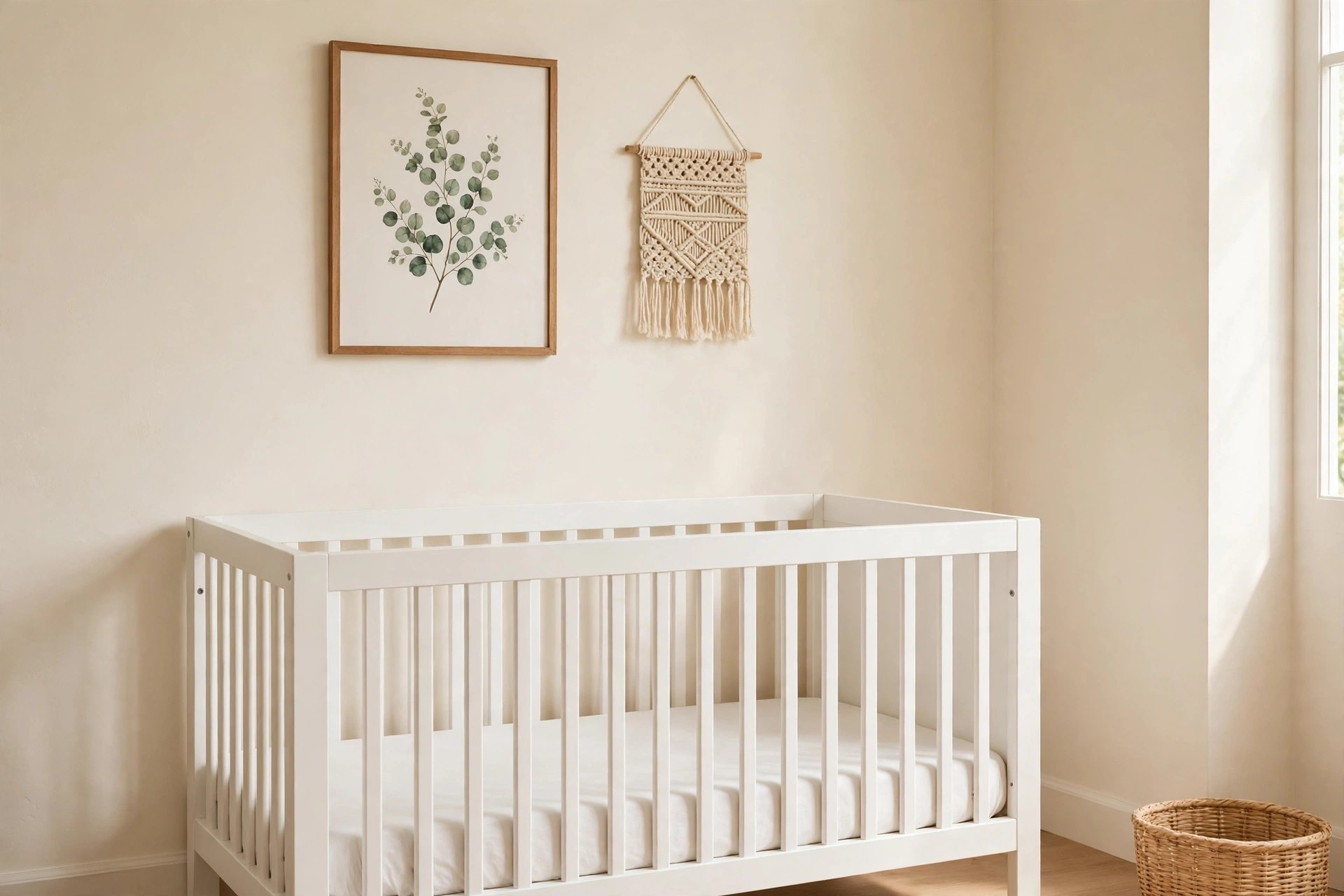
Keep the crib area clear and keep styling on the walls instead. This is the simplest habit to build, since a clear sleep space is usually the most sensible approach for everyday peace of mind. Put your pretty touches, like a framed print or a woven hanging, safely on the wall beyond reach. You still get a styled corner, just in a calmer and more practical place.
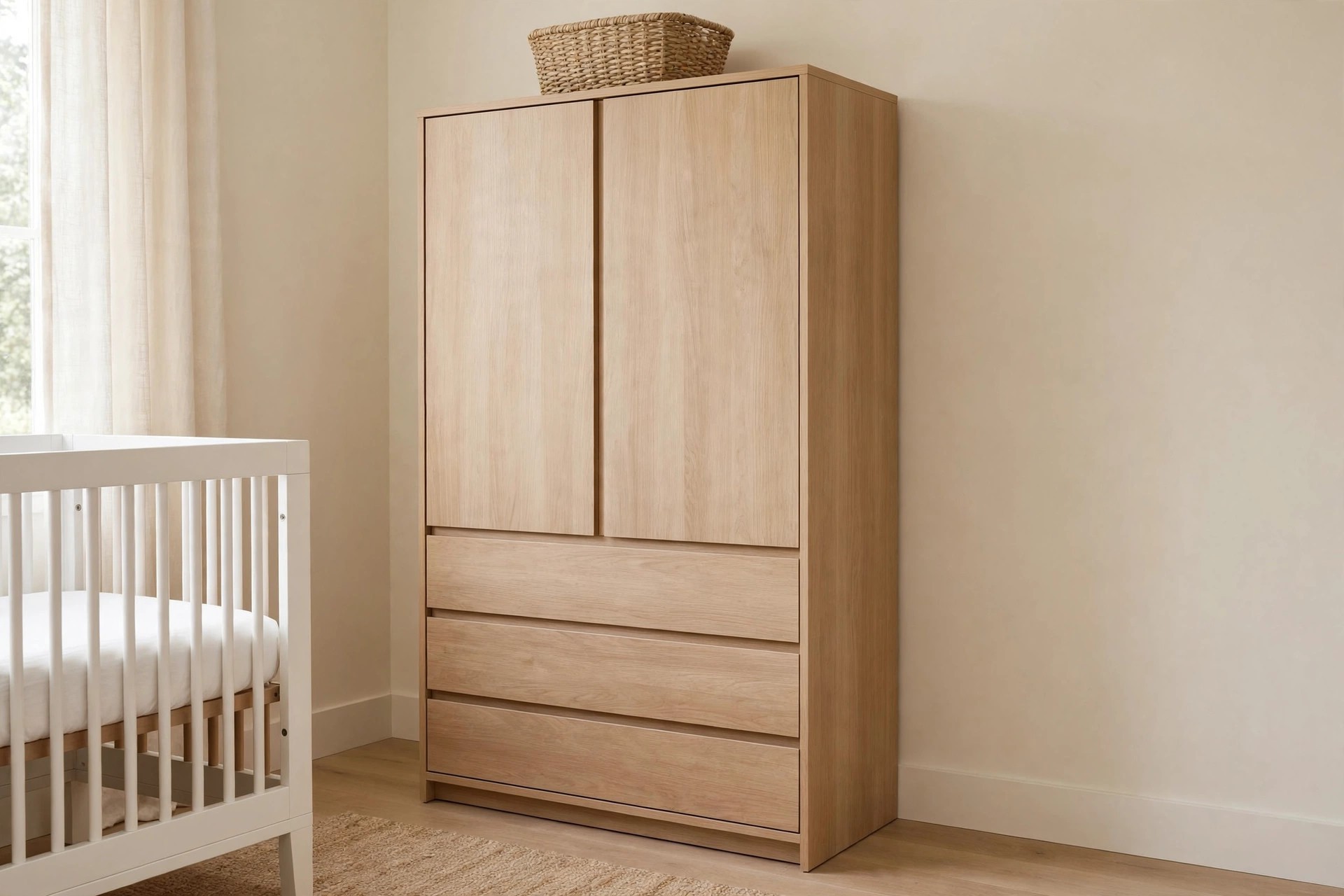
Anchor the dresser and any tall furniture securely to the wall. Babies grow into curious climbers faster than you expect, so securing heavy pieces early is typically a wise, quiet precaution. It takes little time once the furniture is in place, and then you do not have to think about it again. Keep cords and small objects out of reach nearby as well, and the corner stays tidy.
Feeding and Rocking Corners
A comfortable feeding corner usually becomes your favorite spot in the house, especially during quiet night feeds.
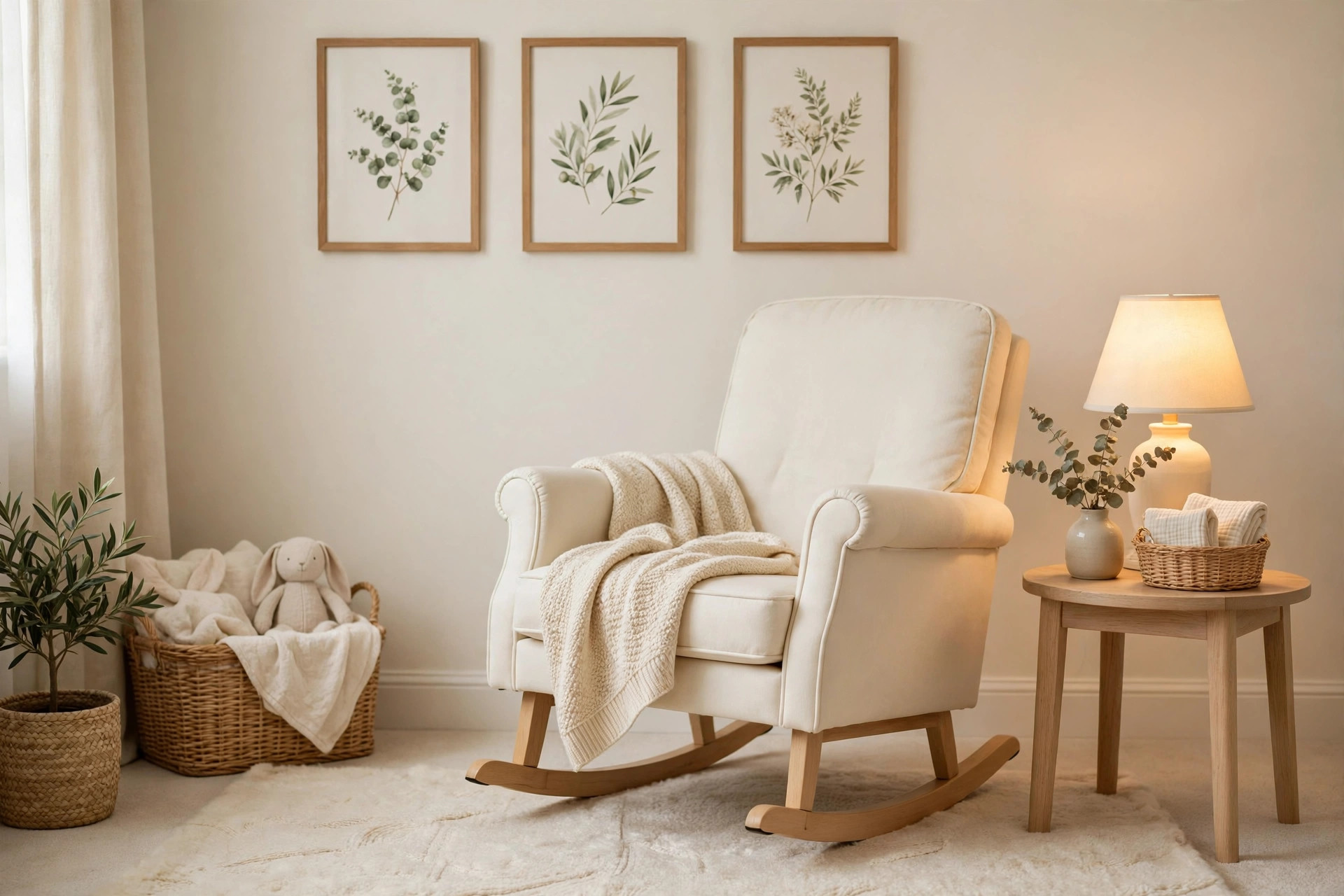
Pick a generously cushioned rocking chair or glider in cream. You will spend a lot of time here, so comfort usually matters more than a perfect designer look. A soft, washable looking fabric in a pale neutral hides everyday wear more kindly than you might expect. Try to sit in it before you buy if you can, because support makes those long holds much easier.
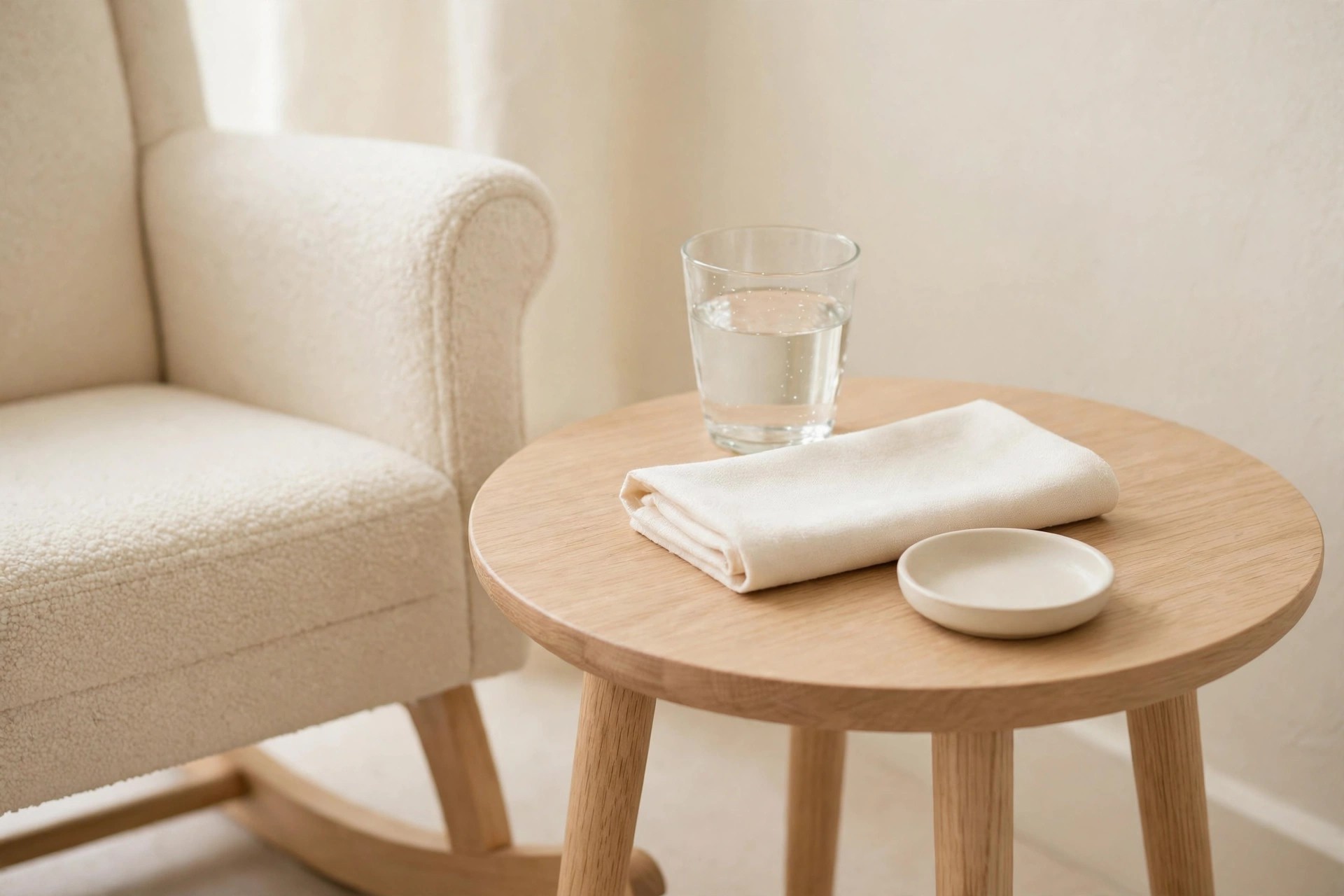
Add a small side table within easy reach of the chair. It sounds simple, but having a spot for water, a cloth, and your phone typically makes feeds feel calmer and less fumbly. A light wood or white table keeps the corner airy and matches almost any chair. Choose a stable, simple shape, and keep the surface mostly clear.
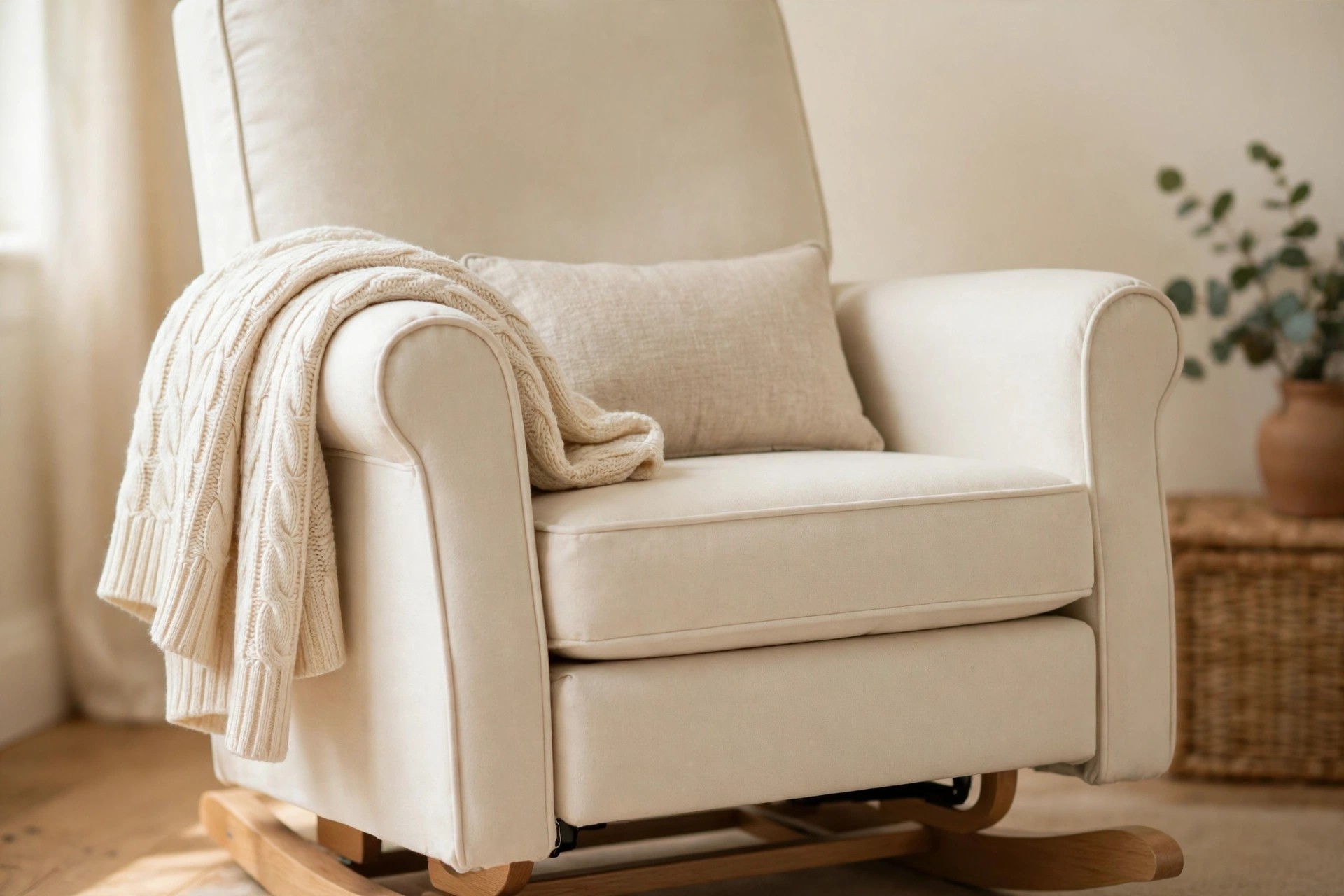
Layer a soft throw and a small cushion for extra comfort. A folded knit throw over the arm of the chair usually adds warmth on cooler nights and softens the whole corner visually. A small lumbar cushion can help you settle in more comfortably too, especially in the early weeks. Stick to cream, oatmeal, or pale sage, and it will blend right in.
Storage for Tiny Things
Tiny clothes and blankets multiply quickly, so calm storage usually makes the whole room feel more restful.
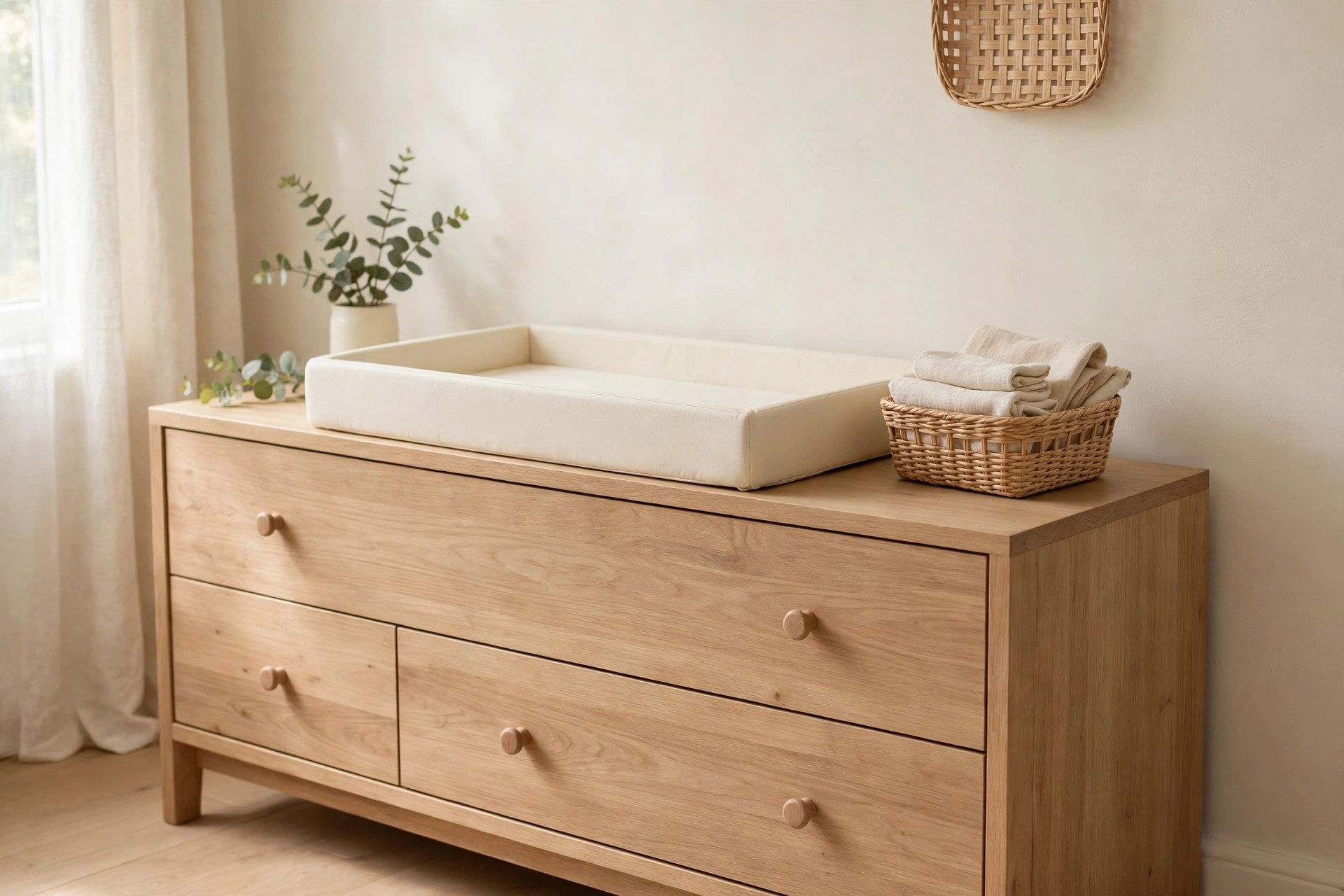
Use a dresser that doubles as a changing surface. A sturdy, low dresser typically saves space and gives you drawers for clothes right where you need them. Light natural wood keeps it feeling warm and timeless, and it can move to a bedroom later without looking out of place. Keep daily essentials in the top drawer, and mornings usually run a little smoother.
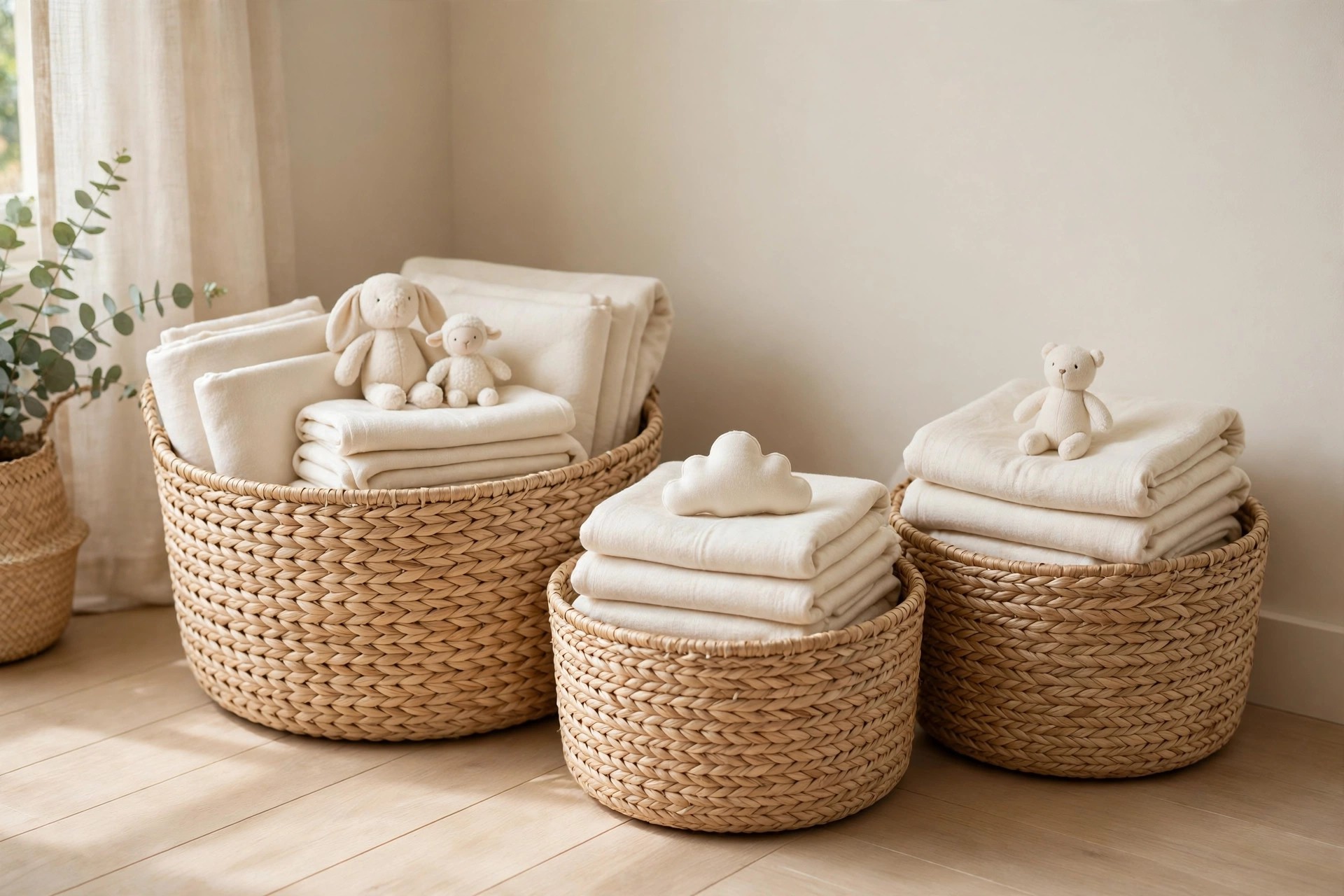
Rely on woven baskets for blankets, toys, and everyday bits. Baskets add that soft, natural texture a calm nursery loves, and they hide clutter in the kindest way. They are easy to move from corner to corner, which is handy when your routine changes week to week. A few matching baskets usually look calmer than lots of different containers.
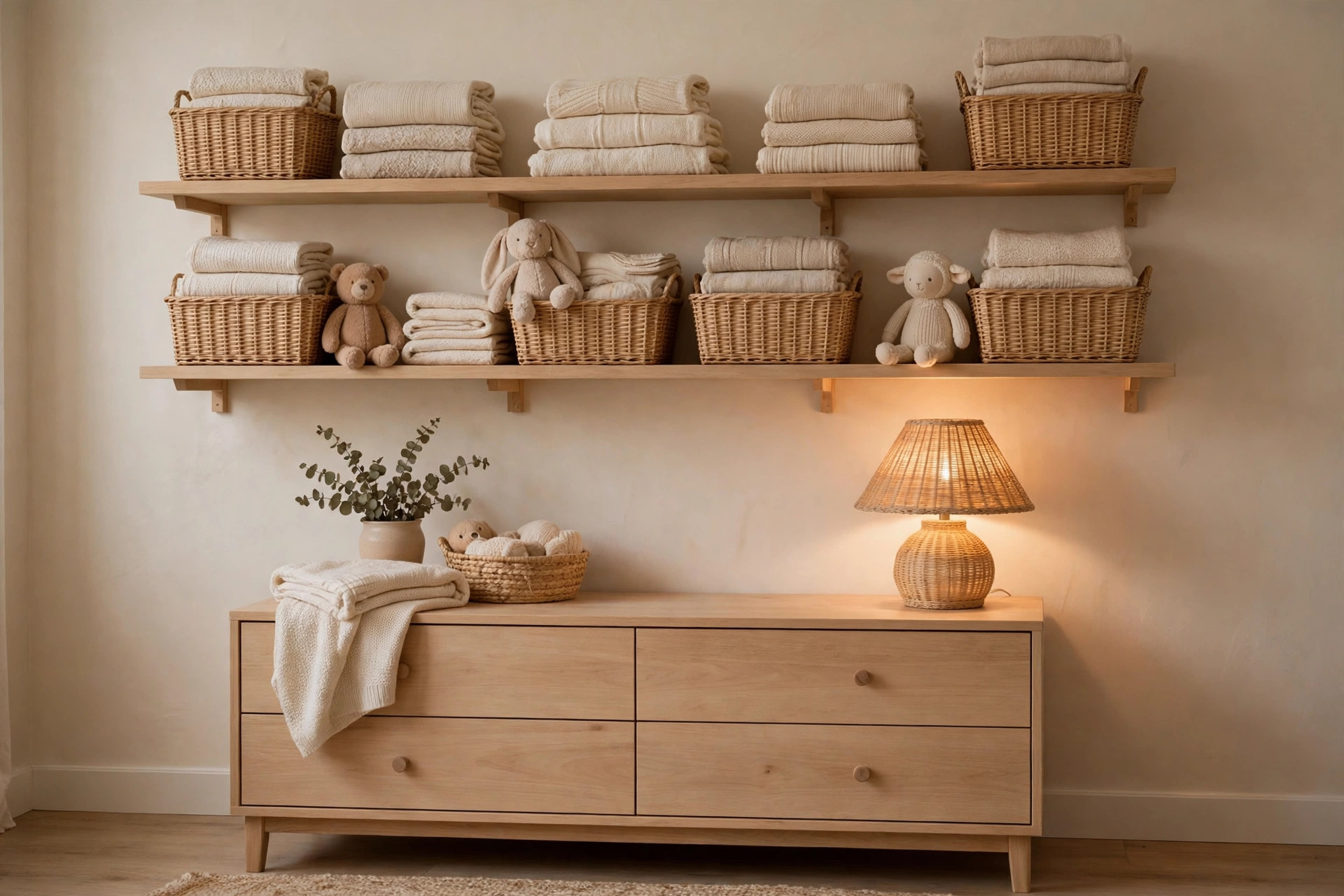
Try open shelves for folded knits and a few favorite keepsakes. One or two simple shelves can hold pretty stacks of cream blankets and a small plant or framed photo. Keeping the shelves lightly filled typically makes them feel styled rather than crowded. Secure them well and keep everyday breakable items higher up, out of curious reach.
Wall Decor That Grows Up Well
Walls are where a nursery can feel sweet now and still make sense later, if you choose pieces with a little staying power.
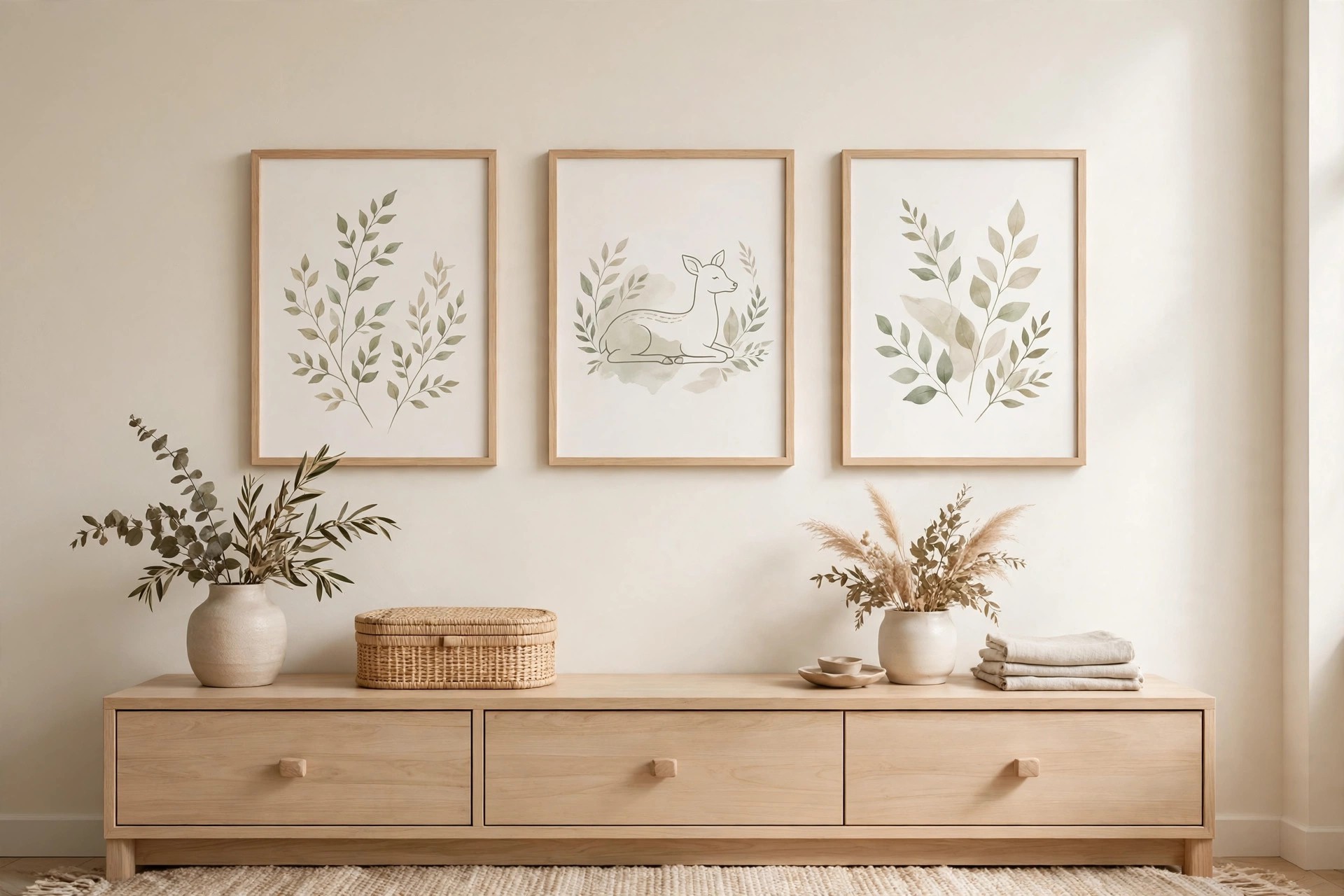
Hang simple framed prints with soft, nature inspired shapes. Gentle botanical or animal outlines in muted tones usually feel baby friendly without looking overly themed. A small group of matching frames in light wood typically looks calm and intentional above a dresser. Because the art is simple, it can stay up happily as the room becomes a toddler space.
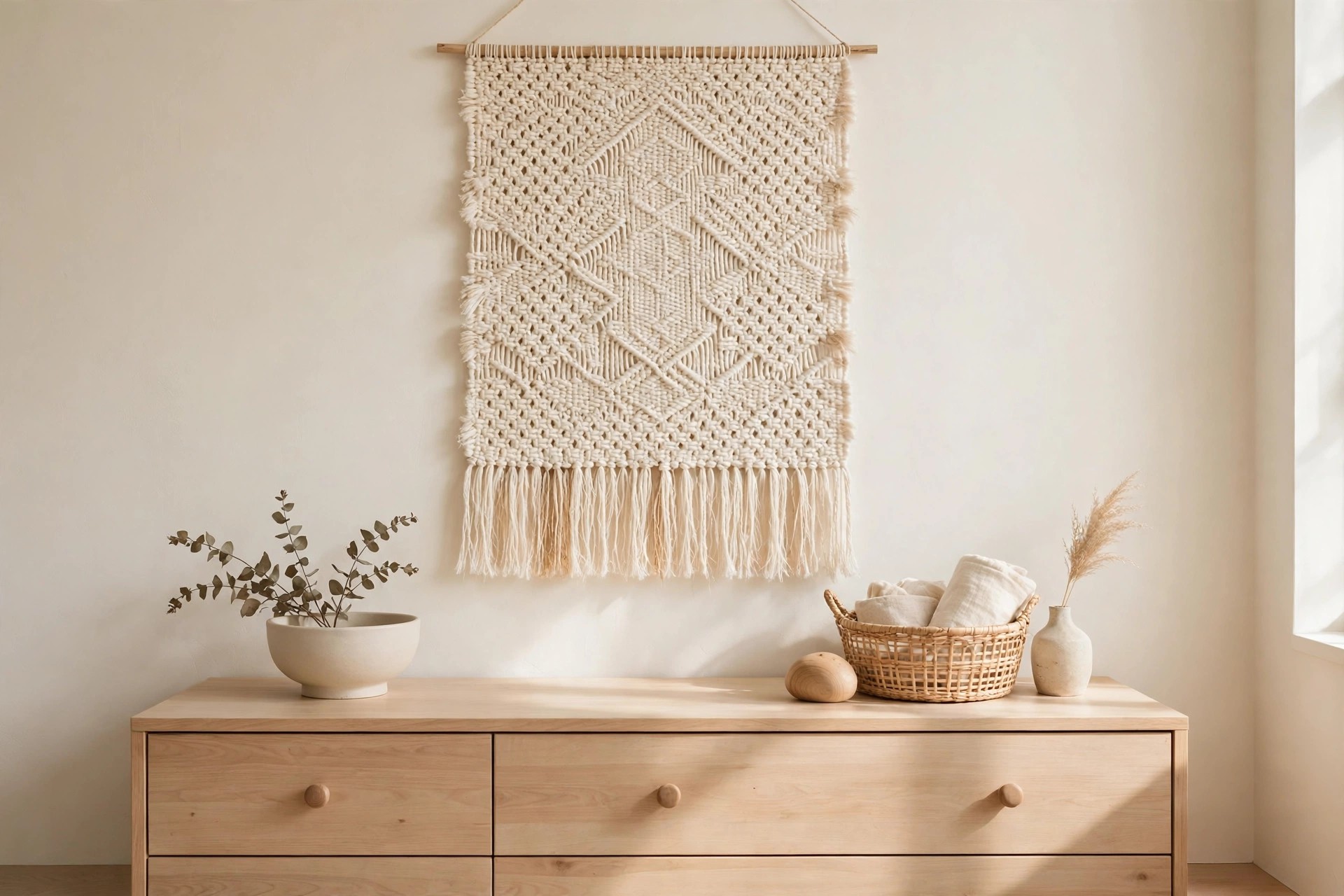
Add one woven wall hanging or a soft textile piece. A little woven texture usually warms up plain walls and softens sound a bit in a quiet room. Cream and natural fibers blend with almost any calm palette, so you do not have to commit to a color story. Hang it securely and place it where it will not hang over the sleep area.
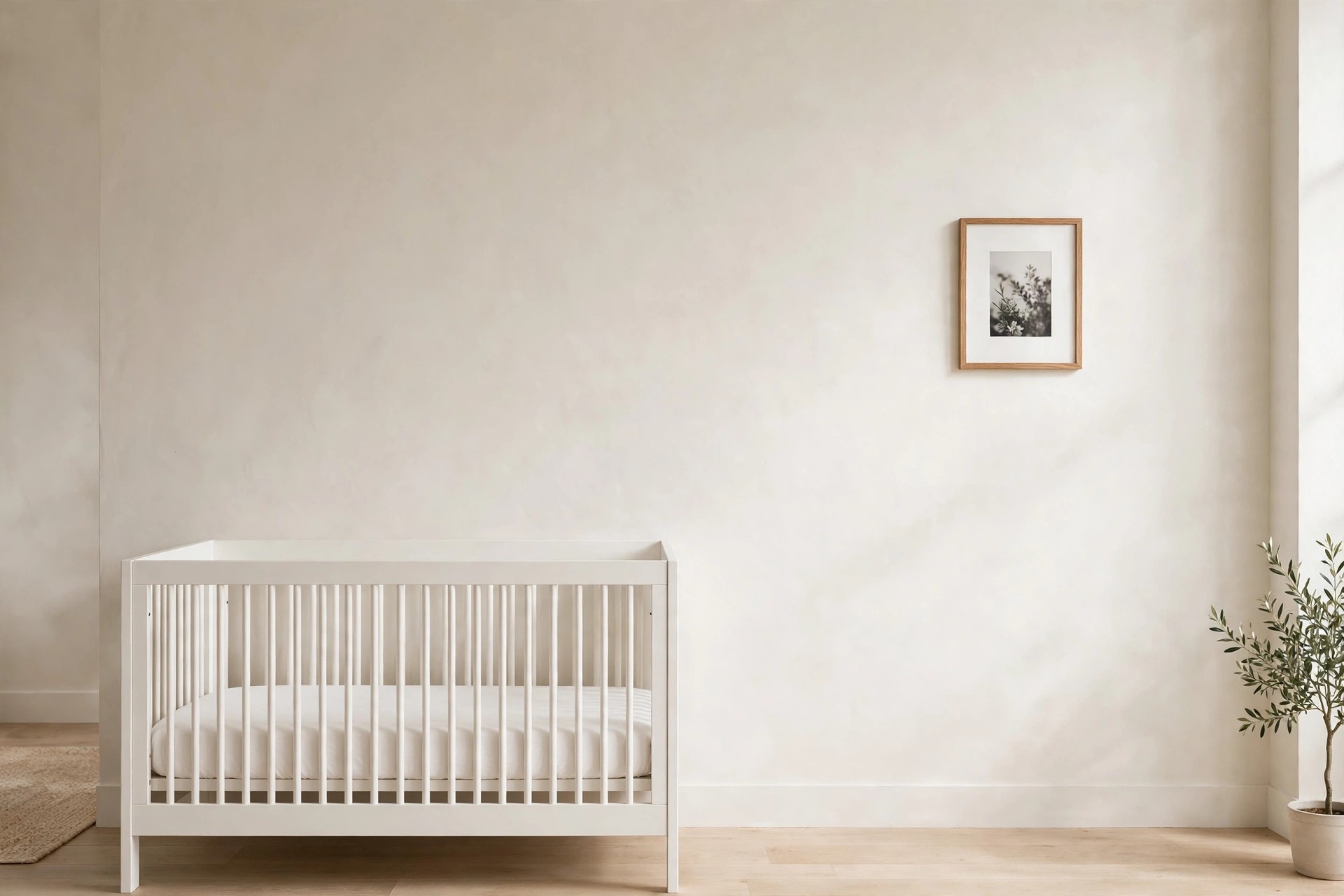
Leave some wall space empty on purpose. It is tempting to fill every inch, but breathing room typically makes a nursery feel calmer and more timeless. Empty space also lets your favorite pieces stand out instead of competing with each other. You can always add a photo or keepsake later, when you know what you truly want to keep.
Lighting for Night Feeds
Soft, layered lighting usually matters more at night than at any other time, so it is worth planning this part gently.
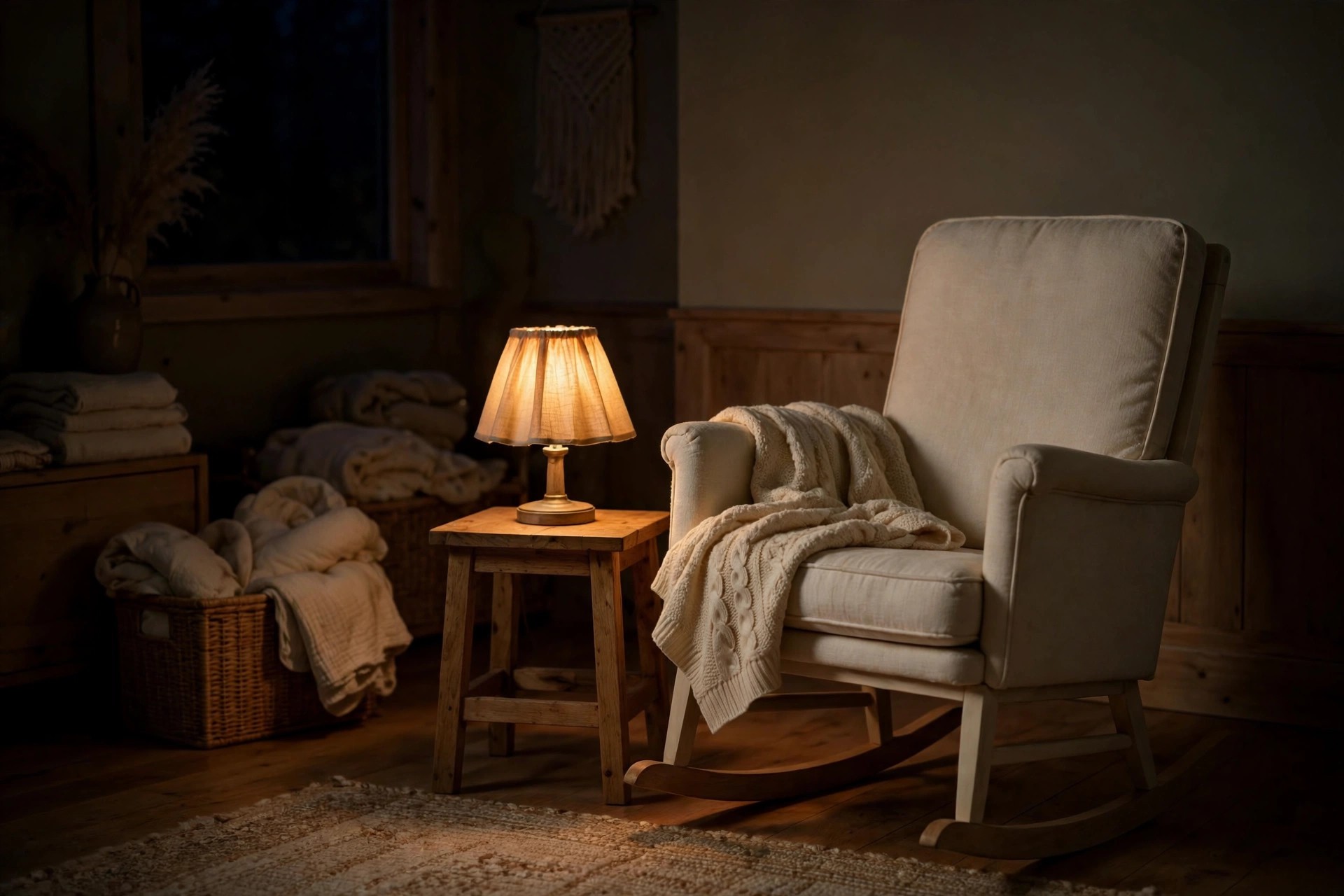
Use a warm, low lamp near the feeding chair. A small table lamp with a soft shade typically gives you enough light to see without waking the room up completely. Warm light feels kinder in the middle of the night than a bright overhead bulb. Place it where you can reach it easily from the chair, and feeds stay quieter.
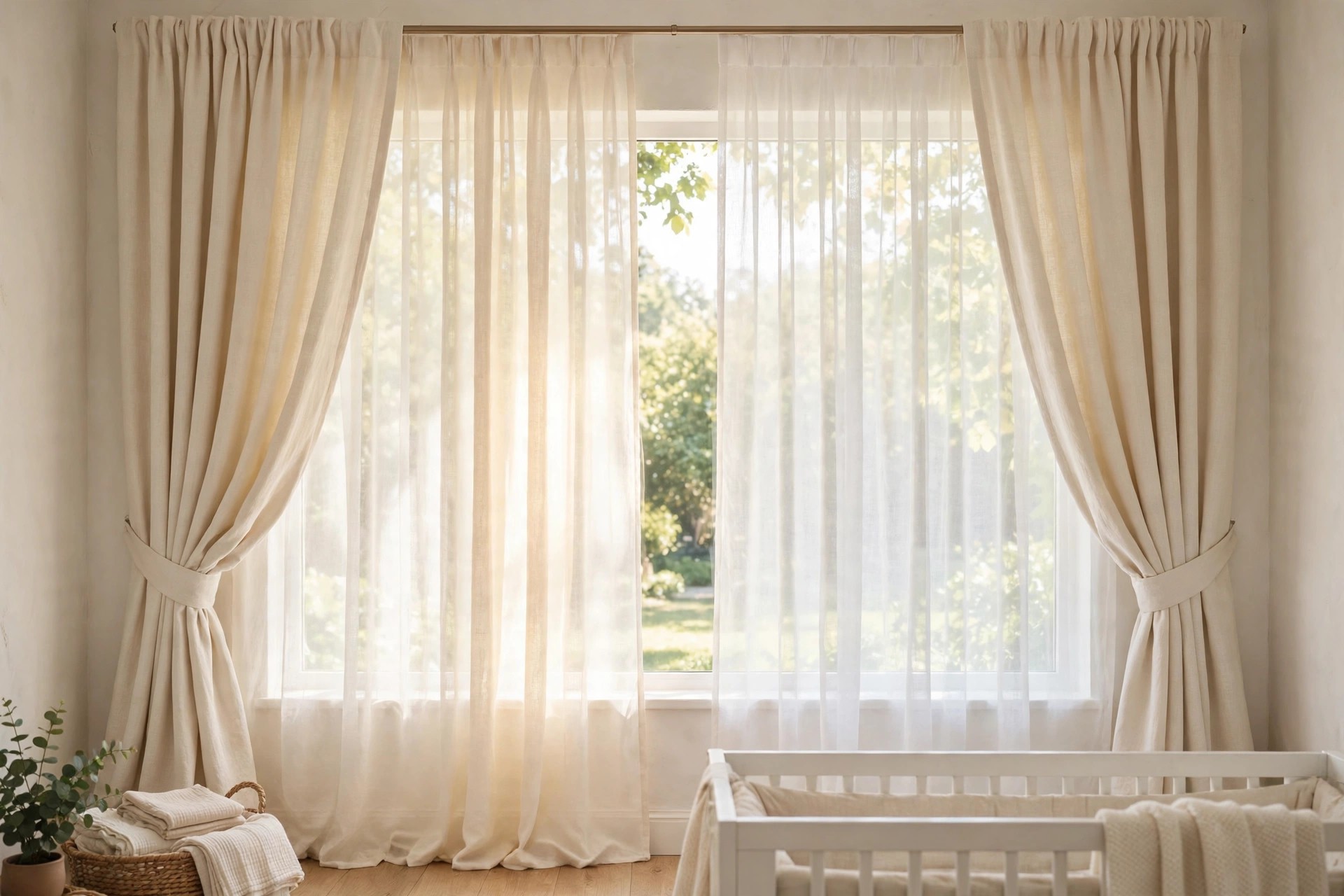
Add blackout lined curtains over sheer, daylight panels. Sheers keep the room bright and airy during the day, while a lined layer helps darken the space for naps. Cream or ivory curtains usually suit a calm palette and soften the window frame nicely. Make sure cords are kept safely out of reach, as with any window covering.
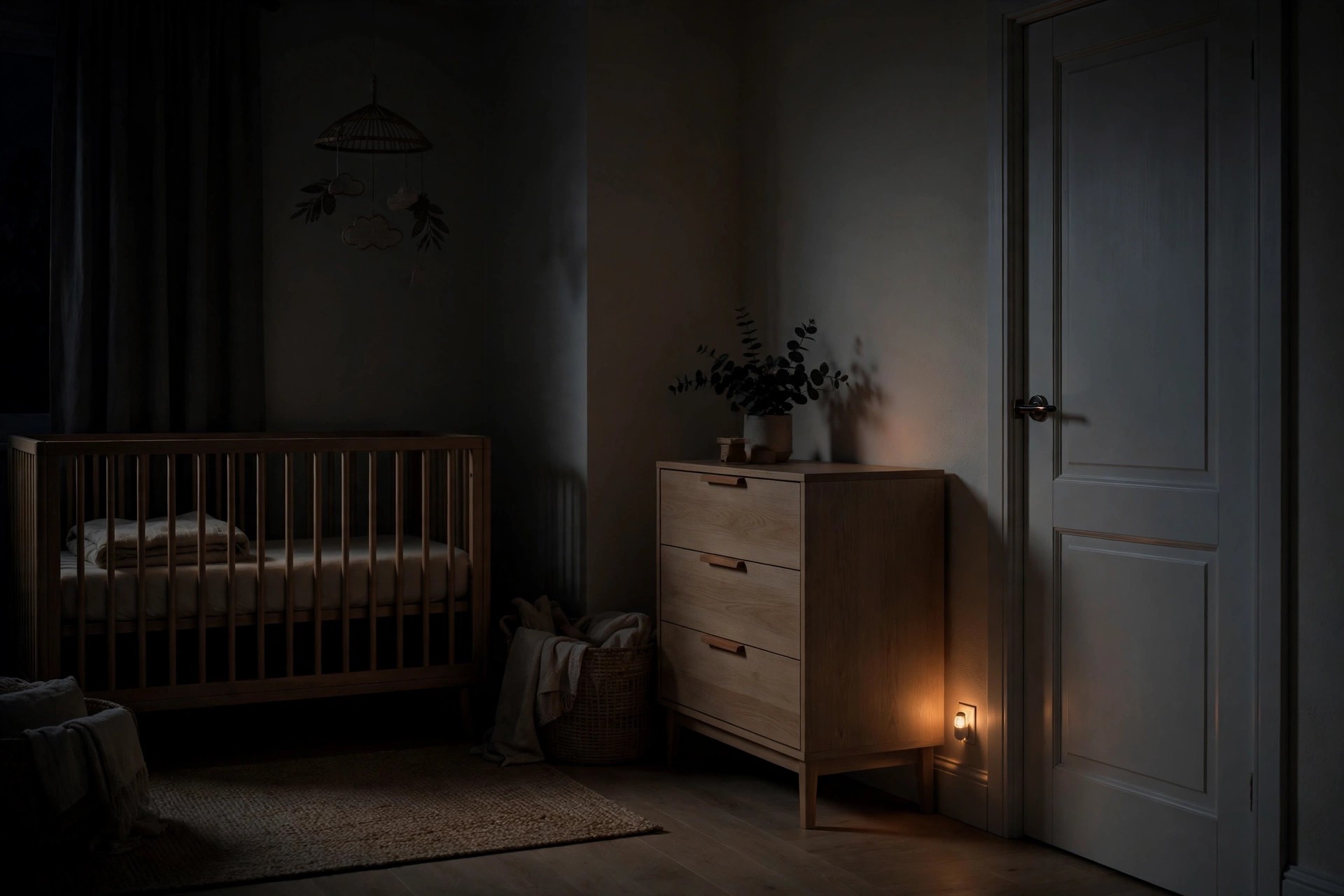
Keep one very soft night light for moving around safely. A gentle, low glow can help you check on your baby and find your way without switching on a main light. Choose the warmest, dimmest option you like, since bright light at night typically feels jarring for everyone. Tuck it near the door or dresser, and the crib corner stays restfully dim.
At the end of the day, the loveliest nurseries are usually not the most decorated ones, they are the ones that feel soft, unhurried, and easy to live in. Start with calm color, keep the crib corner simple and clear, and add comfort where you will actually sit and feed. Your baby will not remember the decor, but you will remember how peaceful those early days felt in that room, and that is what makes it timeless.




Leave a Reply