
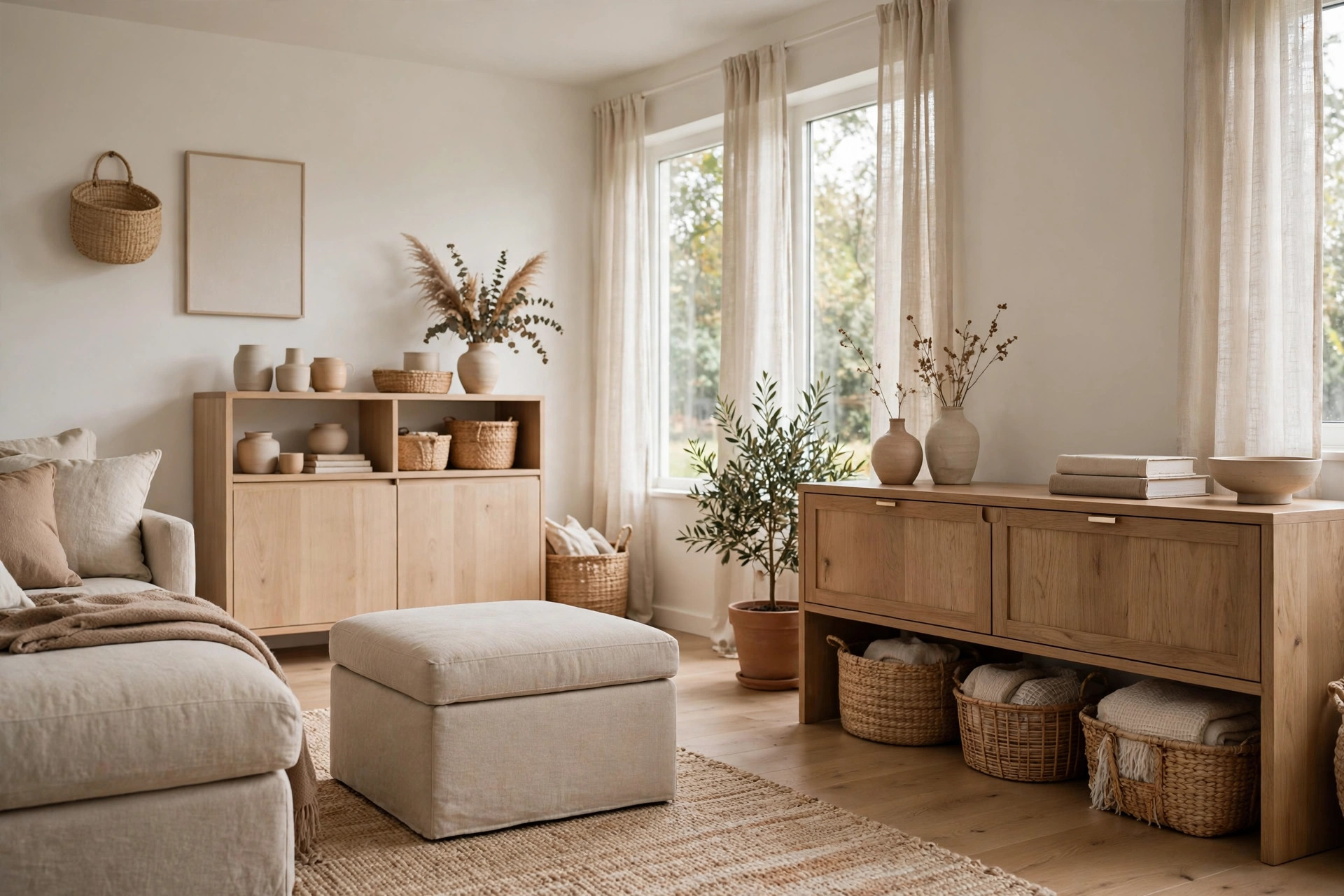
A living room can be tidy at breakfast and somehow look like a small storm passed through by evening. It is usually not a mess problem at all. It is a storage problem, because everyday things like remotes, throws, chargers and magazines simply do not have an easy home.
The calmer rooms you save online almost always have one thing in common. Storage is built into the furniture and the walls, so tidying up takes minutes instead of a whole Saturday. Most of these ideas work in rentals and smaller spaces too.
Below are 23 living room storage ideas, from furniture that quietly holds more to shelves that use your walls properly and hidden spots for the clutter that shows up every single day.
Furniture That Stores
The easiest storage is the kind you do not have to walk to. When the big pieces in the room can hold things too, clutter tends to disappear right where it lands.
Start with a storage ottoman in the middle of the room. It works as a footrest, extra seating and a coffee table with a tray on top, and the inside usually swallows throws, board games or the kids craft supplies. Because it sits where everyone gathers, it is typically the hardest working piece you will own.
Choose a media console with closed cabinets. Open consoles look lovely in photos, but doors hide the tangle of boxes, cables and game cases that real life brings. A light wood console with a mix of cabinets and one open shelf gives you hidden storage plus a spot to style something pretty.
Pick a coffee table with a drawer or a lower shelf. A slim drawer keeps remotes, coasters and reading glasses out of sight but within reach. The lower shelf is a good home for a stack of books or a shallow basket. It is a small change that usually makes the whole seating area feel calmer.
Let your side tables earn their keep. A drum table or a small cabinet style side table can hide chargers, notebooks and the novel you are halfway through. If your current tables are just legs and a top, swapping one for a closed version adds storage without adding any visual clutter at all.
Add a sideboard against the longest wall. Sideboards are not just for dining rooms. A low, long one under the window or behind a floating sofa can hold games, candles, paperwork and seasonal decor. The top still gives you a styling surface for a lamp, a plant and a few framed photos.
Consider a storage chaise or a sofa with a hidden compartment. Many sectionals now lift up on the chaise side to reveal a deep well that is perfect for spare bedding and bulky blankets. It is storage you literally sit on every day, and guests never need to know it is there.
Use a bookcase with cabinets at the base. Open shelves up top keep the room feeling light, while closed cabinets below hide the less photogenic things like board games, photo albums and spare cables. This mix is usually why styled bookcases look so calm in the first place. The pretty things show, and the practical things hide.
Bring in a small armoire or storage cabinet. If your living room doubles as a playroom, craft space or home office, one tall cabinet can hold the whole second life of the room. Close the doors and it reads as a handsome piece of furniture. It is a friendlier option than plastic bins stacked in a corner.
Shelves, Nooks and Vertical Space
Walls are storage waiting to happen. Going up instead of out keeps your floor clear, which usually makes even a small living room feel bigger and easier to breathe in.
Built ins
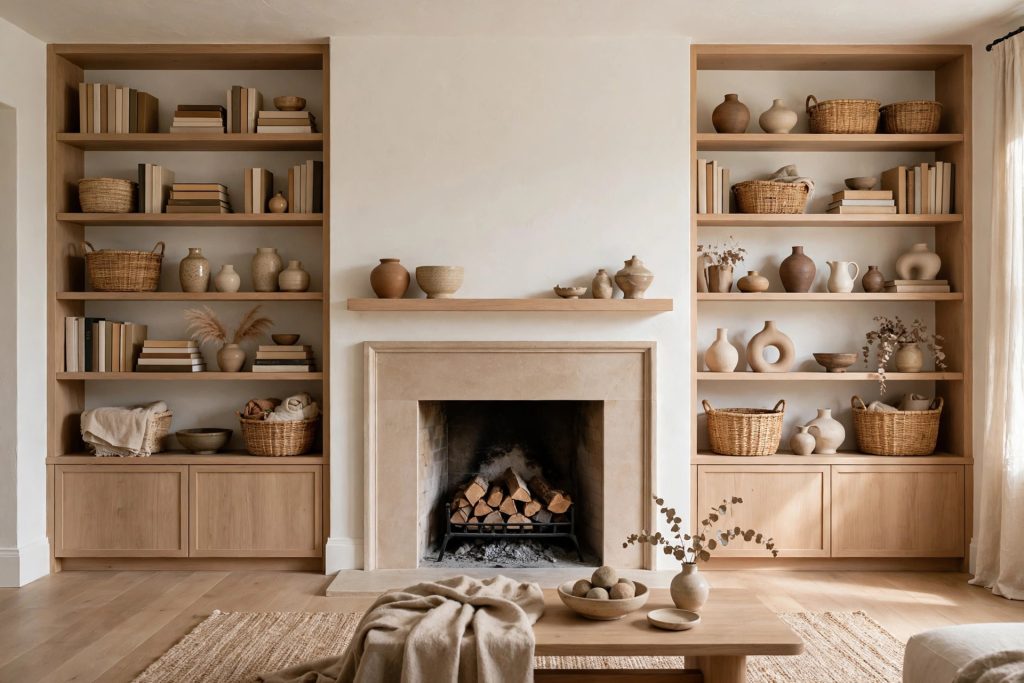
Build shelves around the fireplace. The spaces on either side of a chimney breast are often wasted, and fitted shelves turn them into a proper library wall. Balance books with baskets and ceramics so it feels collected rather than crowded. This is typically the storage that makes a room look finished.
Fill alcoves with fitted shelves and a cabinet below. Awkward nooks beside a fireplace or in a corner become useful the moment shelves follow their exact shape. A cabinet at the bottom hides bulkier items, and the shelves above can stay light and decorative. Even one alcove done well adds a surprising amount of room.
Add a window seat with storage underneath. A simple bench seat under the window gives you a reading spot and a deep box for blankets, cushions or toys. Hinged lids or drawers both work, and a few soft cushions on top make it look inviting rather than practical. It usually becomes the seat everyone quietly fights over.
Take one wall floor to ceiling. A full wall of shallow built ins sounds dramatic, but painted in the same color as the walls it tends to feel calm and architectural. Use the lower sections for closed storage and the uppers for books and objects. It is a bigger project, though it can replace several freestanding pieces at once.
Floating shelves
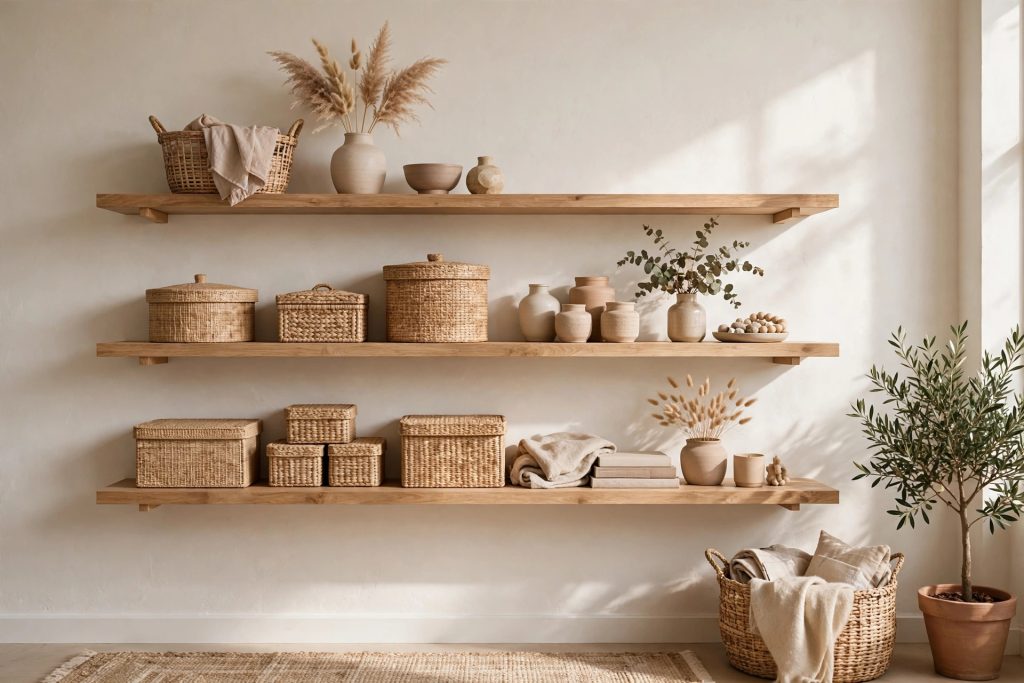
Float shelves above the sofa. The wall over a sofa is prime space that often holds only one picture. Two simple wood shelves give you room for books, small plants and framed prints, and they lift the eye upward. Just keep the styling loose, with a little breathing room between objects.
Run a long picture ledge instead of deep shelves. A shallow ledge holds art, books facing forward and small ceramics in one tidy line. It is perfect for narrow walls and hall style living rooms where deep shelves would feel heavy. You can shuffle the display in minutes whenever the room needs a refresh.
Use corner floating shelves. Corners are easy to forget, but two or three short shelves turning a corner can hold a plant, a speaker and a small stack of books. They soften an empty angle and make the whole room feel more considered. Keep heavier items on the lowest shelf so the arrangement feels grounded.
Style shelves with boxes and baskets, not just objects. A lidded box on a shelf is storage in disguise, and it is ideal for batteries, spare remotes, sewing bits and all the tiny things that usually end up on the coffee table. Matching boxes in wood, linen or woven textures keep open shelves looking tidy instead of busy.
Hidden Storage for Everyday Clutter
Every home has a daily drift of small things. These ideas give that drift a landing place, so a five minute reset at night is all it usually takes to feel calm again.
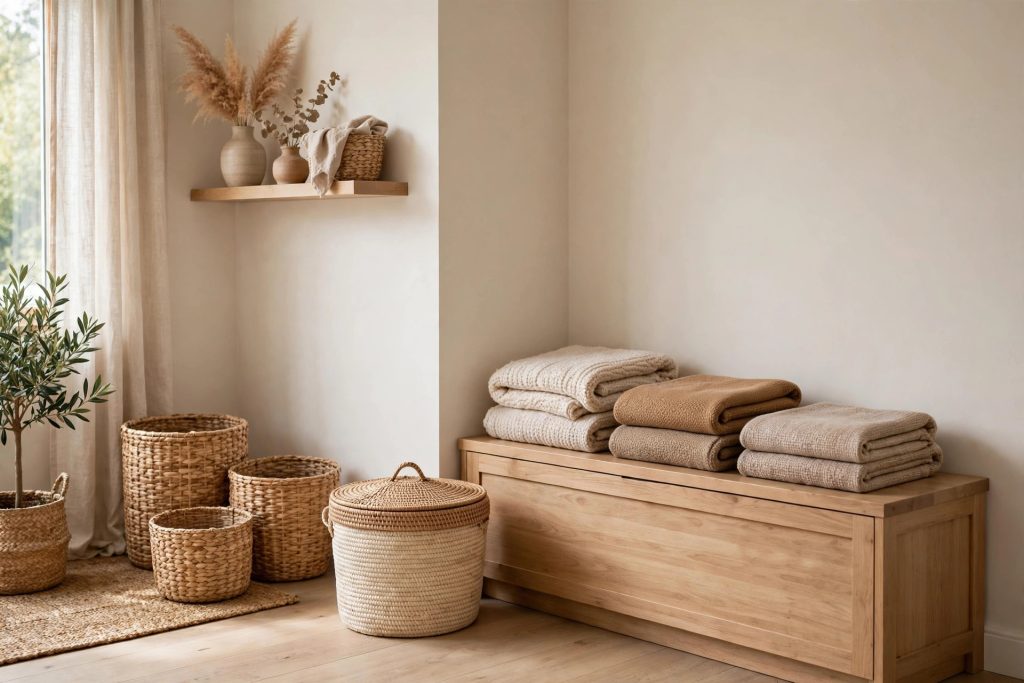
Give remotes and chargers one lidded home. A small woven basket or wooden box on the console keeps remotes, glasses and charging cables together and out of sight. One home means nobody has to hunt down the sofa cushions again. It sounds tiny, and honestly it changes the whole feel of the evening reset.
Hide the cable tangle in a simple cable box. A lidded box behind the console can hold the power strip and the knot of cords that usually lives on the floor. It makes vacuuming easier and the corner instantly looks cleaner. If heat worries you, choose a ventilated style and keep it loosely packed.
Set up a small drop zone by the door. A tray or shallow bowl on a console near the entrance catches keys, mail and sunglasses before they spread across the room. Add one small basket underneath for letters that need action later. Containing the entry clutter usually stops it reaching the sofa at all.
Corral throws in one generous basket. Instead of blankets draped over every arm, keep one big woven basket beside the sofa and fold or roll the throws into it. It looks cozy, it reads as decor, and it takes ten seconds to tidy. A lidded version in the corner works beautifully if you prefer everything fully hidden.
Tuck a low basket under the coffee table or console. That empty space underneath furniture is ideal for a flat basket holding magazines, a laptop or the current puzzle. It slides out when you need it and disappears when you do not. In smaller rooms, using the space you already have usually beats buying another piece.
Keep a reset basket for the nightly round. One medium basket that travels room to room at the end of the day collects toys, books and stray bits in a single trip. Everything in it gets returned to its real home once or twice a week. It keeps surfaces clear daily without turning tidying into a big event.
Rotate toys and games behind closed doors. If the living room is also the playroom, keep only a few things out and store the rest in the ottoman, sideboard or cabinet. Swapping them every week or so makes old toys feel new again. The room stays calmer, and cleanup becomes a job kids can actually finish.
Calm does not come from owning less so much as giving what you own a sensible place to land. Start with the spot that annoys you most, add one piece of storage that suits it, and let the room get easier from there.

Leave a Reply