
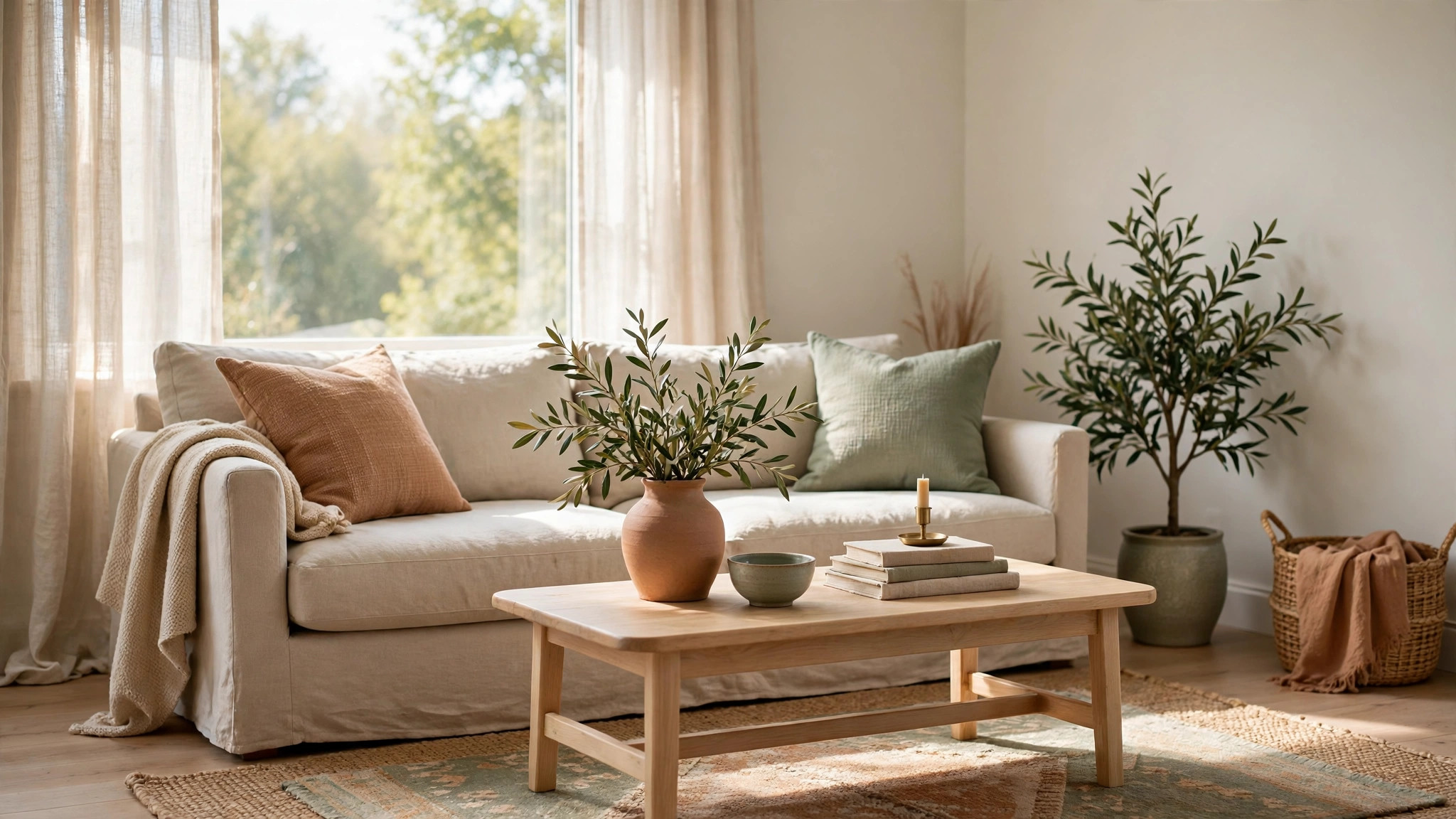
You know that feeling when every piece in your living room is perfectly nice on its own, but somehow the room still does not quite work? It happens to almost everyone. The sofa is fine, the rug is fine, the cushions are fine, yet the whole space feels like a collection of separate things instead of one room.
The good news is that a pulled together room rarely needs a full redo. It usually needs a few smart connections, the right sizes in the right places, and a finishing layer that ties everything back to one simple plan. Think of it less like decorating and more like introducing your furniture to each other.
Below you will find 26 living room decor ideas, starting with the big anchor pieces, moving through walls, windows and light, and ending with the texture and color layer that makes a room feel finished. Work through them in order if your room needs a reset, or jump to the section that matches your biggest headache.
Start With the Big Pieces
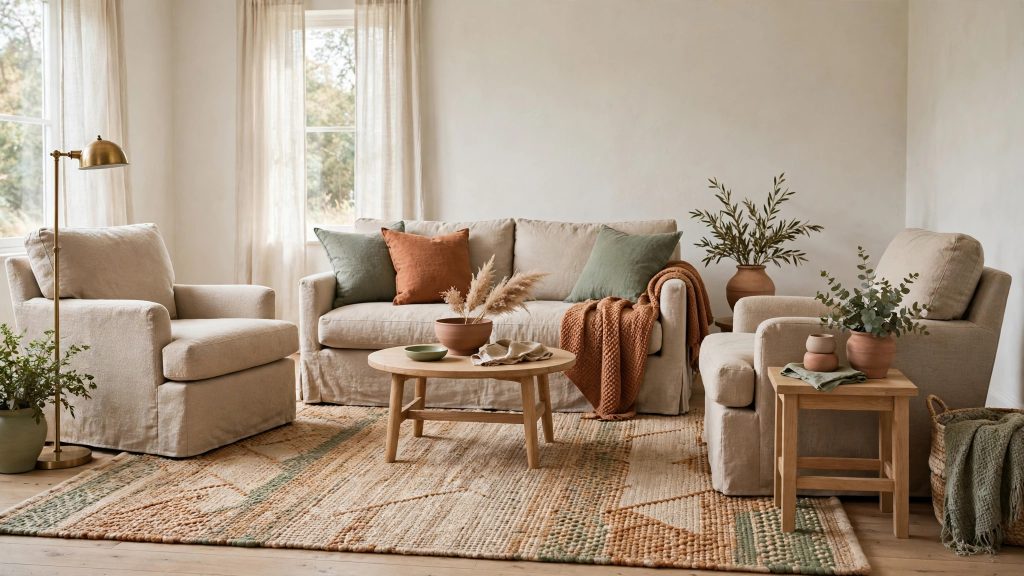
Every calm, cohesive room starts with the largest pieces behaving themselves. If the sofa, seating and rug are fighting each other, no amount of pretty accessories will fix it. Get these foundations right first, because they decide how the whole room feels before anyone notices the details.
Sofa and seating
Choose a sofa that fits the room, not the showroom. A sofa that is too big swallows the space, and one that is too small floats awkwardly. As a rough guide, leave walking space around it and let it take up a comfortable share of the main wall. When in doubt, tape the outline on the floor before you buy.
Float the sofa away from the wall when you can. Even a few inches of breathing room behind the sofa usually makes a room feel more designed and less pushed back. It works especially well in open plan spaces, where the back of the sofa can define the living zone. Add a slim console behind it if the gap looks empty.
Mix seating shapes instead of buying a matching set. A sofa, two different armchairs and maybe a small ottoman almost always look more collected than a three piece suite. Keep the heights roughly similar so conversation feels easy. One shared color or fabric tone is usually enough to link them.
Angle one chair for a relaxed, lived in feel. Rooms where every seat points in perfect parallel lines can feel stiff. Turning one armchair slightly toward the sofa softens the layout and invites people in. It is a tiny change that typically makes the whole arrangement feel friendlier.
Give every seat a surface within reach. A side table, a small stool or a shared coffee table corner means nobody is holding a mug in their lap. This is the kind of practical detail that makes a room feel finished, because it works as good as it looks.
Rugs that anchor
Size the rug up so the front legs of the sofa sit on it. This is probably the single most useful rug rule there is. A rug that connects the seating pieces turns them into one conversation zone, while a small rug floating in the middle usually makes everything look disconnected. Bigger almost always looks calmer.
Layer a patterned rug over a large natural base. If a big patterned rug is out of reach, a large plain jute or sisal style base with a smaller patterned rug on top gives you the same anchored feeling. The layering adds warmth and hides the size cheat beautifully. It is a trick designers lean on constantly.
Use the rug to set the room’s color palette. Pull two or three colors from the rug and repeat them in cushions, art and accessories. Suddenly everything looks intentional, even pieces you already owned. If you are starting from scratch, choosing the rug early makes every later decision easier.
Leave a border of floor showing around the rug. A rug that runs wall to wall can make a room feel smaller and a bit flat. A visible border of wood or tile around the edges frames the seating area and gives the room definition. Roughly a hand’s width or more on each side usually looks right.
Walls, Windows and Light
Once the furniture is settled, the walls, curtains and lighting decide the mood. These are the elements people feel more than they notice, and small changes here typically lift the whole room without buying a single new piece of furniture.
Hang art at eye level and group it with intention. Art hung too high is one of the most common reasons a room feels off. The center of a piece or grouping usually sits best around average eye level when standing. If you are grouping frames, lay the arrangement on the floor first and keep the gaps between frames consistent.
Fill a big wall with one oversized piece or a calm gallery. Tiny frames scattered on a huge wall can look lost. One large artwork, a simple grid of matching frames, or a pair of big prints gives the wall the weight it needs. Matching frame finishes help the grouping read as one idea.
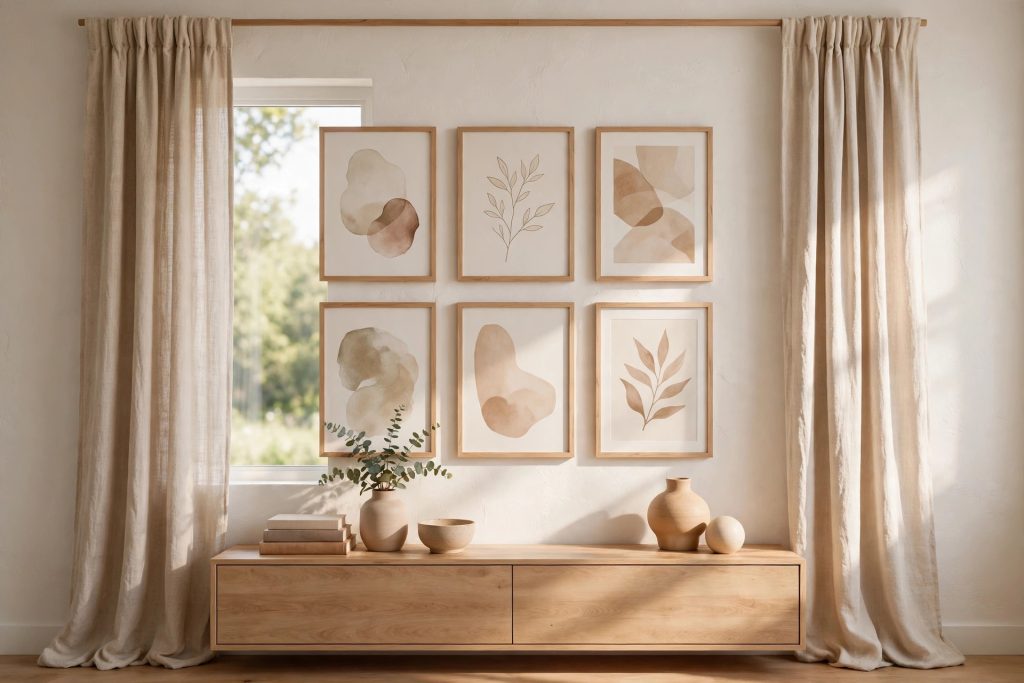
Hang curtains high and wide. Mounting the curtain rod close to the ceiling and wider than the window makes windows look taller and lets in more light when the curtains are open. The fabric should just kiss the floor or skim it lightly. This one change typically makes ceilings feel higher too.
Choose curtain fabric that echoes the room’s textures. Linen look curtains pair naturally with a calm, layered room, while heavier fabrics suit a moodier scheme. If your sofa is plain, curtains with a subtle texture or soft stripe can carry the pattern for the whole room. Keep the color within your palette so the windows support the room instead of competing with it.
Style the media console like a piece of furniture, not a tech shelf. A low console with a few books, a ceramic bowl and one plant looks intentional even with a big TV above it. Flanking the screen with art or wall sconces helps it blend into the room. Hide the tangle of cables and the whole wall instantly looks calmer.
Layer three kinds of light. A ceiling light alone usually flattens a room. Add a floor lamp by the reading chair, a table lamp on the console, and something soft like candlelight or a small lamp in a dark corner. Turning off the overhead and using the lamps in the evening is when a living room feels its coziest.
Place a mirror where it borrows light. A mirror opposite or beside a window bounces daylight around and makes the room feel bigger. A simple wood or black frame keeps it timeless. It also gives you one more place to repeat a finish used elsewhere in the room, which quietly ties things together.
Keep wall color calm and let it support the furniture. Warm white or a soft greige usually gives you the most flexible backdrop for a layered room. If you crave color, one deeper wall behind the sofa can work beautifully, especially in a room that gets good light. Test a large swatch and live with it for a day before committing.
Texture, Color and the Finishing Layer
This is the layer that turns a tidy room into a room people want to sit in. Texture, a disciplined color palette and a few personal pieces are what make a space feel collected over time rather than bought in one afternoon.
Repeat each color at least three times. This simple rule is the secret behind most pulled together rooms. If sage appears in one cushion, let it show up again in a throw, a plant pot or a piece of art. Your eye reads the repetition as a plan, and the room instantly looks more deliberate.
Mix at least three textures in every view. A linen sofa, a wool throw, a wood table and a ceramic vase give your eye plenty to enjoy without any loud pattern. Rooms that feel flat usually share one problem, everything is the same smooth finish. Adding one nubby, one soft and one hard texture fixes it fast.
Style the coffee table in small groups. A stack of books, one organic object like a bowl or branch, and something living, such as a small plant, is a combination that rarely fails. Leave some empty space on the table so it looks curated rather than crowded. A tray underneath the grouping makes tidying up take seconds.
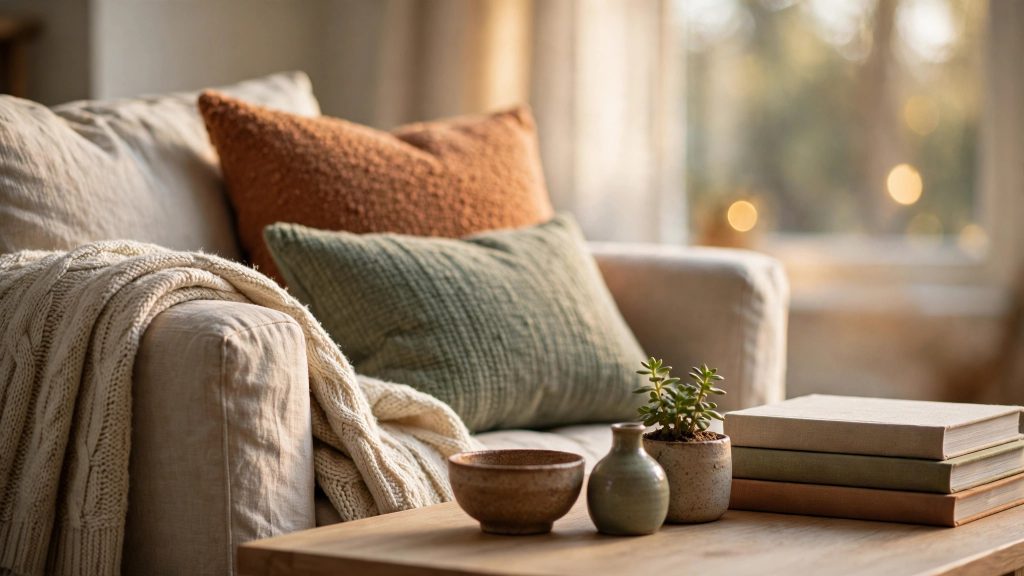
Use odd numbers when you arrange accessories. Groups of three or five usually look more natural than pairs when it comes to objects on a shelf or table. Vary the heights so your eye travels up and down. If a shelf looks messy, removing one item often helps more than adding anything.
Mix cushion sizes, shapes and fabrics. Two large squares, one smaller square and a lumbar in front is a combination that works on most sofas. Keep the fabrics varied, maybe linen, a soft stripe and one textured weave, all inside your color palette. Too many tiny cushions tend to look fussy and end up on the floor anyway.
Add one piece with a story. A vintage find, a handmade bowl or a framed photo gives a room its personality and stops it looking like a catalog page. It does not need to match anything perfectly. In fact, the slight odd one out is usually the piece guests ask about.
Bring in something green in every corner zone. Plants soften all the straight lines of furniture and add the one color that goes with everything. A tall plant fills an awkward empty corner, while a trailing one livens up a shelf. If your track record with plants is rough, start with one sturdy variety and build from there.
Let wood tones repeat without matching exactly. Coffee table, side table and picture frames do not need to be the same wood, but keeping them in the same warm family helps the room feel settled. Mixing a light oak with a warm walnut is fine. What usually jars is one very orange or very gray piece among the rest.
Edit the room at the end. When everything is in place, take one thing away. Decorators do this instinctively, because the last ten percent of clutter is what separates calm from busy. Live with the room for a week, then adjust with fresh eyes. A pulled together room is rarely finished in a day, and that is honestly part of the fun.
Pulling a living room together is less about buying more and more about connecting what you have. Anchor the seating, calm the walls and light, then repeat your colors and textures until the room starts to feel like one story. Start with the rug and the sofa, trust the process, and let the finishing touches land slowly.

Leave a Reply