You know the scene. It is bedtime, you step into your child’s room, and somewhere under the dinosaurs, dress-up capes and runaway puzzle pieces there used to be a floor. If that sounds familiar, you are definitely not alone, because toy chaos is usually not a discipline problem at all. It is a storage problem.
Here’s the thing. Kids tend to tidy up happily when putting things away is easy, obvious and within reach. The trick is to build storage that works at their height, at their speed and in a way their brains can actually follow, even on a tired Tuesday evening.
Below are 19 kids bedroom storage ideas that real families lean on, from simple bins and cubbies to clever closet zones and labels that even pre-readers can use. Start with two or three, and let the calm spread from there.
Bins, Baskets and Cubbies
Open storage is the backbone of a workable kids room, because a child who can see where things go will usually put them there. No lids to fight, no drawers to jam, just easy targets to toss things into.
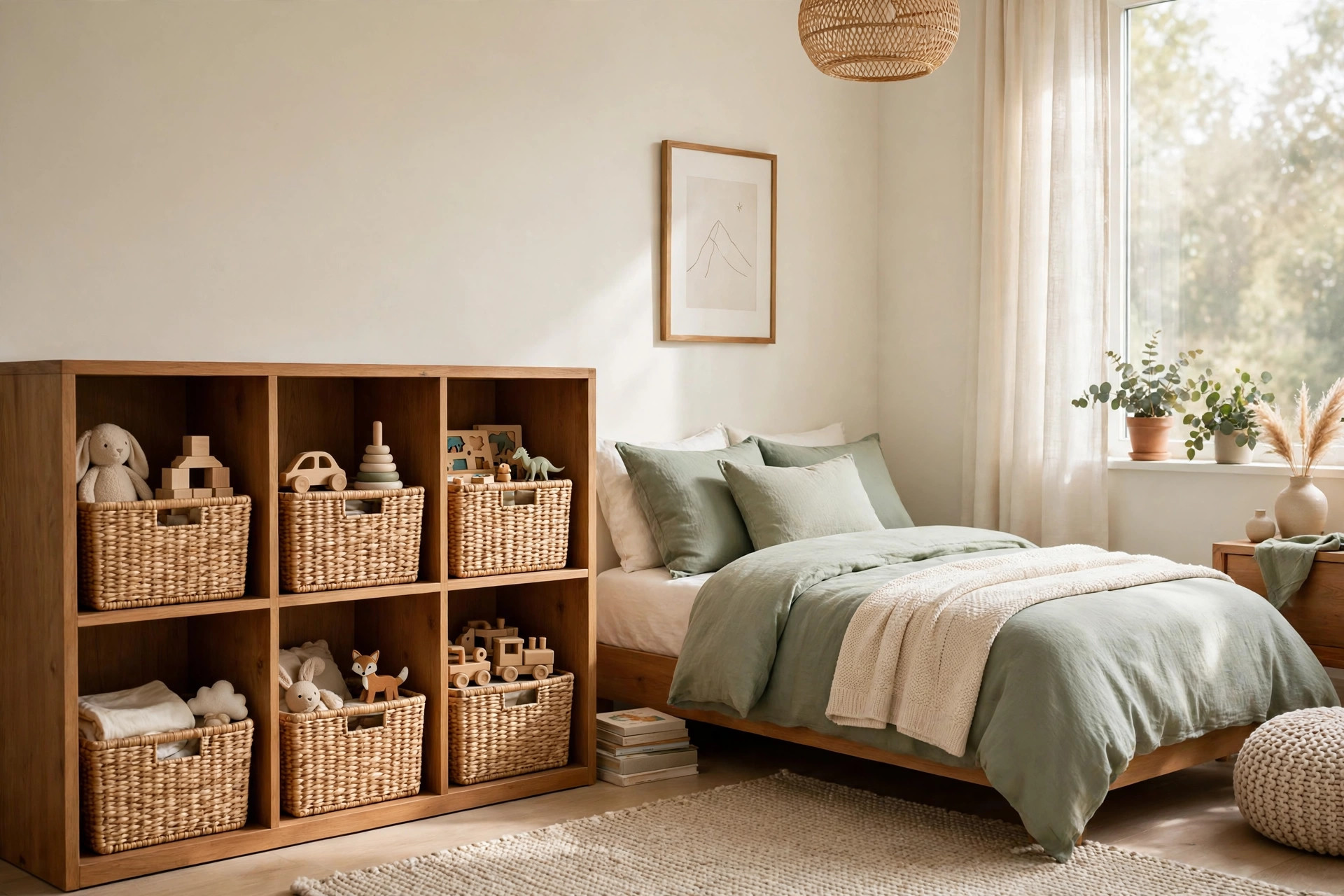
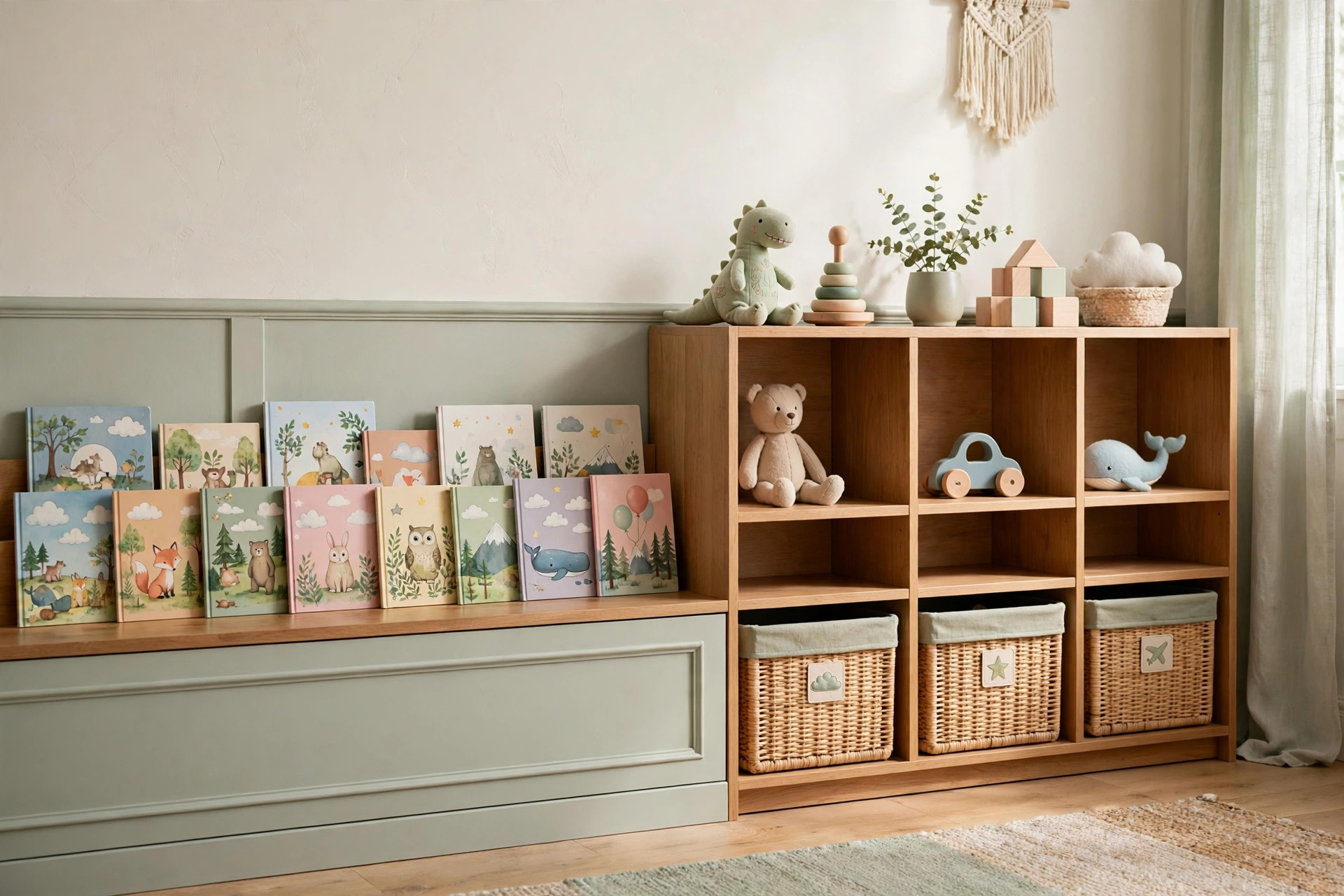
Start with a low cubby unit and open baskets. A simple cube shelf at kid height, filled with woven or fabric baskets, gives every toy family a home of its own. Because the unit is low, it doubles as a display top for a night light or a favorite stuffed animal, and nothing ever gets buried at the back of a deep cupboard.
Give small pieces clear bins with lids. Building bricks, game tokens and tiny figurines are the bits that migrate everywhere, so they need containment the big toys don’t. Clear boxes let your child find the red wheels without emptying three baskets, and a lid keeps the whole set together when it travels to the living room.
Keep one big soft toy dump basket. Plush toys are bulky, light and weirdly numerous, and they usually defeat neat folding systems. One generous basket in the corner solves it, since cleanup becomes a simple game of gathering and tossing. It typically takes under a minute, which is about the attention span most of us can count on at bedtime.
Put a few bins on wheels. A rolling crate can follow play from the bedroom to the hallway and back again, which makes the end-of-day roundup far less of a battle. Wheels also help smaller kids move their own things without dragging baskets across the floor. Just check the casters roll quietly if bedtime tidies happen after lights out.
Sort by activity, not by perfection. Instead of one bin per exact toy type, group by how your child plays, so art supplies live together, cars live together and dress-up has its own spot. Broader categories are easier for kids to remember and faster to maintain. When a bin overflows regularly, that category usually deserves two homes instead of a bigger lecture.
Closet and Under-Bed Storage
Once the open storage is sorted, the hidden spaces can take the overflow. The closet and the space under the bed typically hold as much as a whole extra dresser, if they are set up with a little intention.
Under-bed
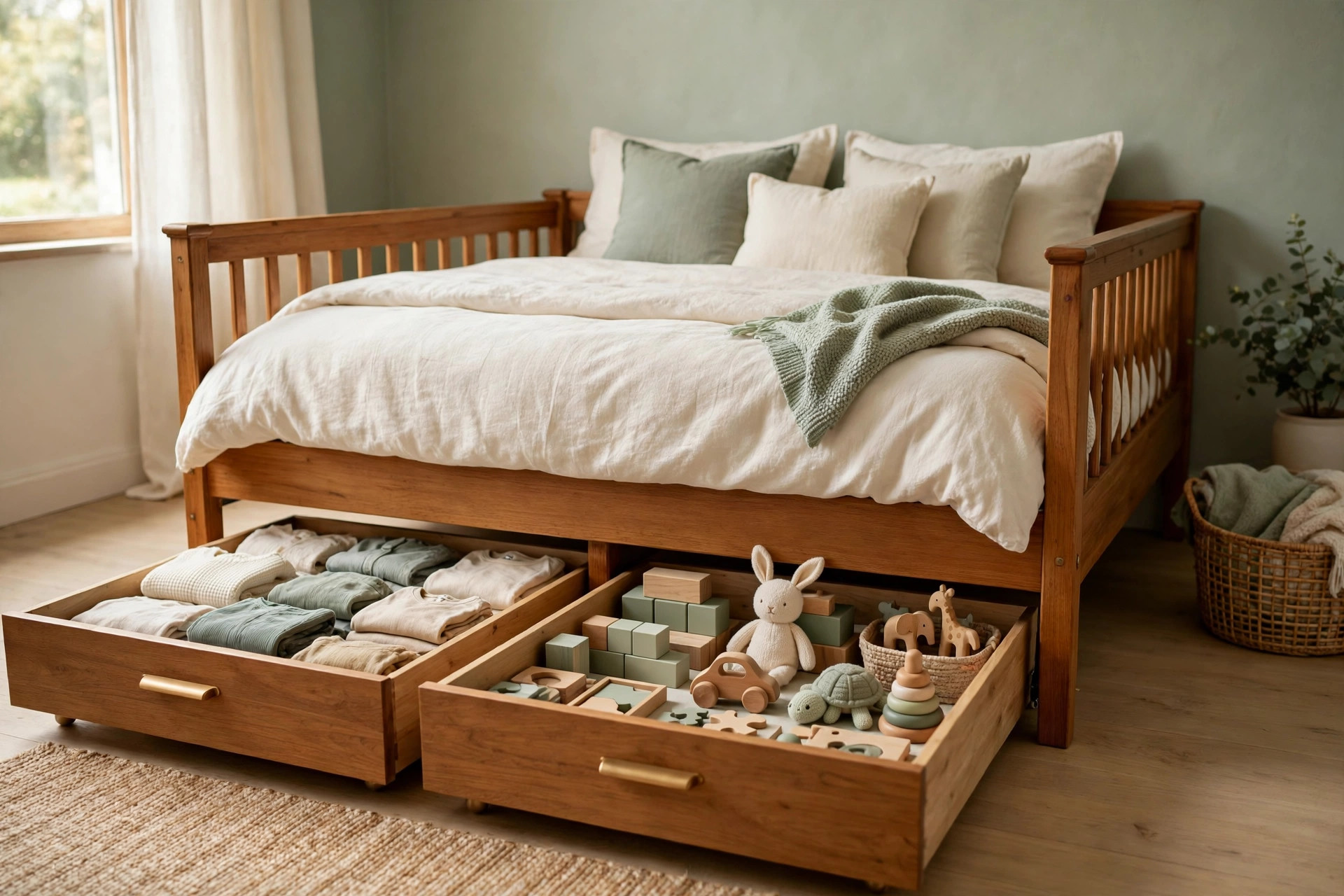
Slide in shallow drawers or rolling boxes. The space under the bed is perfect for flat, wide storage like board games, train tracks and big drawing pads. Drawers on casters are easiest for small hands, and a simple handle on the front means your child can pull them out without help. Measure the clearance first, because bed frames sit lower than most people expect.
Use under-bed space for the off-season stuff. Pajamas that are too warm for summer, spare blankets and next-size-up clothes can live under the bed where they are out of the daily rotation. This frees the closet for what your child actually wears this month. Label the end of each box so you can read it at a glance without dragging everything out.
Closet zones
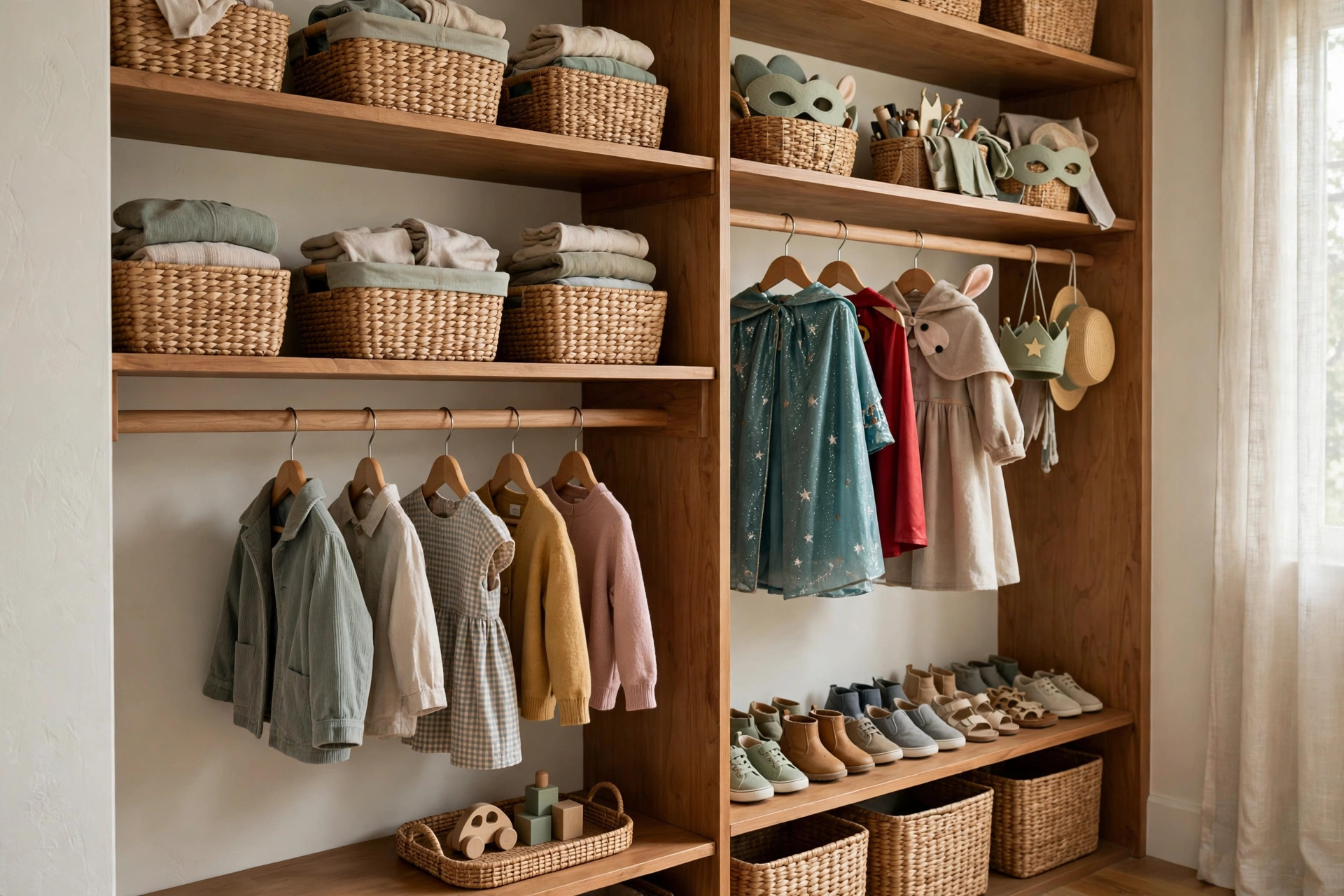
Drop one rail down to kid height. A low hanging rail lets your child reach everyday clothes, choose an outfit and hang things back up without a step stool. It sounds small, but that independence usually cuts the morning floor pile dramatically. Keep the adult-height rail for party clothes and anything that needs to stay pristine.
Divide the closet into simple zones. Think of the closet in three loose areas, one for school or daycare clothes, one for play clothes and one for dress-up. Kids understand zones far better than detailed systems, especially when each zone has its own basket or shelf. Zones also make laundry day easier, because clean clothes have an obvious place to land.
Save the top shelves for parent storage. The highest shelves are yours, and they are ideal for keepsakes, spare bedding and gifts you are hiding for later. Keeping these out of reach protects them and keeps the lower, kid-friendly zones uncluttered. A couple of matching baskets up top keeps even that storage looking calm rather than chaotic.
Book and Toy Displays
Not everything needs to be hidden away. A few toys and books on display make the room feel loved rather than stored, and displays quietly teach kids that their things deserve care.
Store books front-facing in a low shelf or sling. When covers face outward, little readers choose books the way they choose toys, by the picture that calls to them. A shallow book sling or low front-facing shelf holds a rotating handful of favorites without the spine-out squeeze of a regular bookcase. Books that get seen usually get read, and that is the whole point.
Create one small showcase shelf. A single shelf for current treasures, like a finished build, a beloved doll or this week’s favorite truck, keeps displays special instead of sprawling. When something new earns the spot, the old favorite goes back to its bin without drama. It gives kids a sense of pride and keeps surfaces from quietly filling up.
Try a simple toy rotation. Keep a portion of the toys in a closed box in the closet or under the bed, and swap them with the displayed ones every week or two. Rotated toys feel new again, which typically means fewer pleas for more stuff. It also means fewer toys out at once, so the daily tidy stays genuinely quick.
Add a reading corner basket. A soft basket beside a cushion or small chair collects the books that live outside the shelf, like bedtime stories and library loans. It stops the slow book drift toward the bed, the floor and somehow the bathroom. One basket is usually plenty, and when it fills up, something returns to the main shelf.
Label It: Systems Kids Keep
The best storage system is the one your child can run without you, and labels are what make that possible. A label turns tidying from guesswork into a matching game, and kids are surprisingly loyal to systems they helped create.
Use picture labels for pre-readers. A simple photo or drawing of the contents on each bin tells a three-year-old exactly where the blocks go, no reading required. Take a quick photo of the actual toys, print it and tape it on at kid eye level. When the contents change, swap the picture and the system stays honest.
Put labels where small eyes actually look. Labels stuck on the top of a bin or high on a shelf tend to get ignored, so place them on the front, at the height your child stands. Big, clear pictures beat fancy fonts every time. If a bin keeps collecting the wrong things, the label is usually in the wrong spot rather than the child being careless.
Create a landing strip by the door. A small tray, hook or basket just inside the door catches the things that wander in from the rest of the house, like hair ties, library books and that one sock. It gives clutter a first home before it spreads across the room. Emptying it together once a week takes just a few minutes.
Build in a five minute nightly reset. A short tidy built into the bedtime routine, with a timer and some music, keeps small messes from becoming weekend projects. Because it happens daily, nothing piles up enough to feel overwhelming. Most kids will race a timer happily, and the room wakes up calm every single morning.
Let your child help design the system. Ask where they think the cars should live and let them stick on the labels themselves, even if the placement is not what you would have chosen. Kids typically maintain systems they feel ownership of far longer than ones handed down fully formed. You can always refine it together in a few weeks once the habit has taken hold.
Toy chaos rarely disappears forever, and honestly, a kids room that looks played in is a happy room. The goal is not perfection. It is a room where cleanup takes minutes instead of meltdowns, where your child can find the good stuff and put it back without help. Pick the two or three ideas that solve your biggest headache first, and let the rest follow when you are ready.



Leave a Reply