
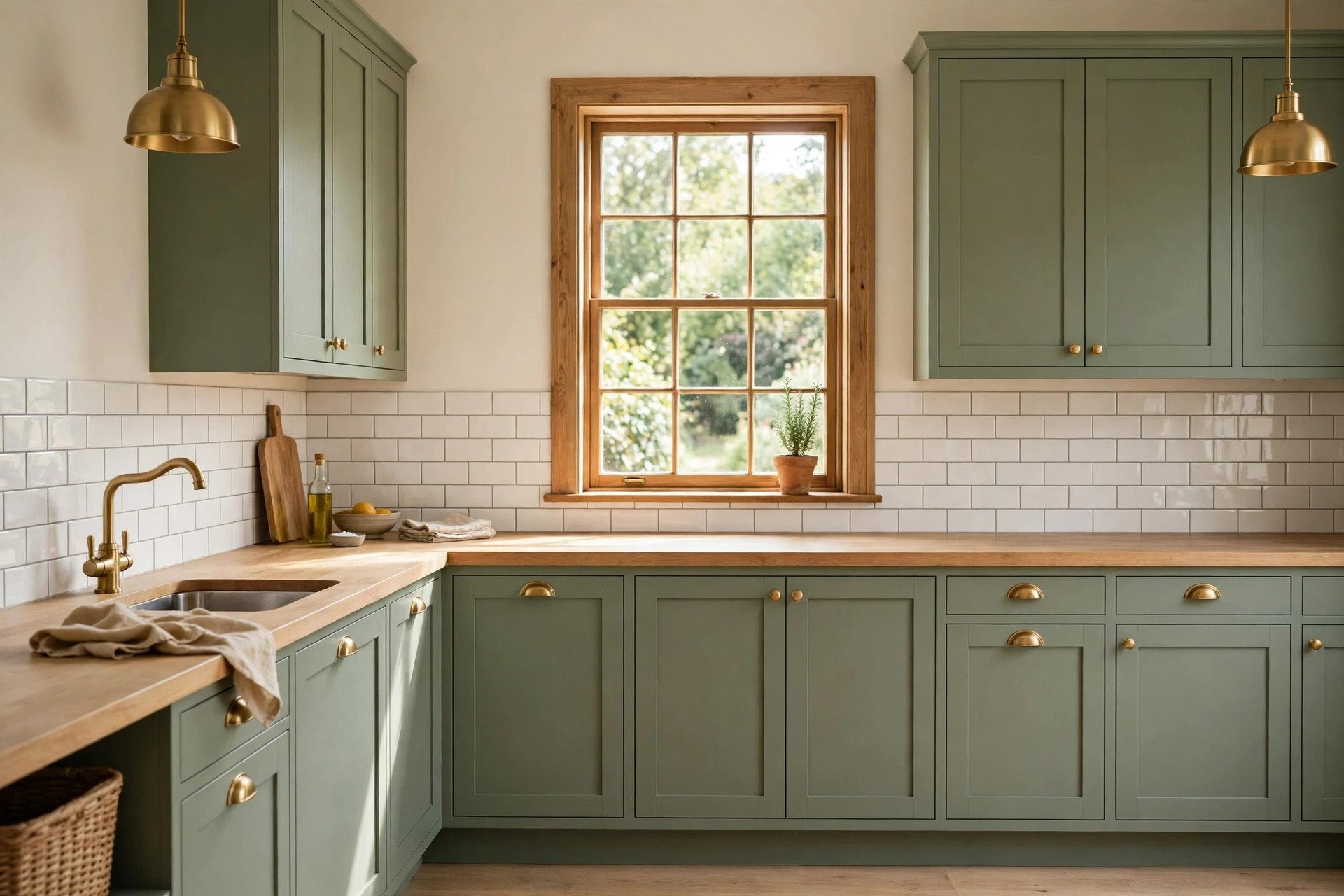
Choosing kitchen colors can feel like the biggest decision in the whole room, mostly because the cabinets cover so much of what you see. Get the cabinet color right and the rest tends to fall into place. Get it wrong, and even beautiful counters can look a little off.
Here is the good news. You do not need a daring palette to make a kitchen feel warm and current. Most of the kitchens people save and love rely on a calm base, like sage, warm white or natural wood, with one deeper tone or a warm metal doing the interesting work.
Below are 20 kitchen color ideas grouped by where the color actually lives, from the cabinets themselves to the walls behind them, two-tone combinations, and the metals that tie everything together.
Cabinet Colors
Cabinets are the largest block of color in almost every kitchen, so this is the decision to take your time with. These five shades are the ones that tend to work hardest across different sizes of kitchen and different kinds of light.
Choose soft sage green for a calm, nature inspired base. Sage sits happily between green and gray, so it feels colorful without ever shouting. It pairs beautifully with light wood counters and warm white walls, and it usually hides everyday splashes better than pale colors do. If you want color but worry about tiring of it, sage is typically the safest place to start.
Go warm white when you want light without the chill. Warm white cabinets keep a kitchen bright, but the creamy undertone stops them from feeling cold or clinical. They work with almost any counter and floor, which makes future changes much easier. Add wood handles or brass hardware and the whole scheme warms up instantly.
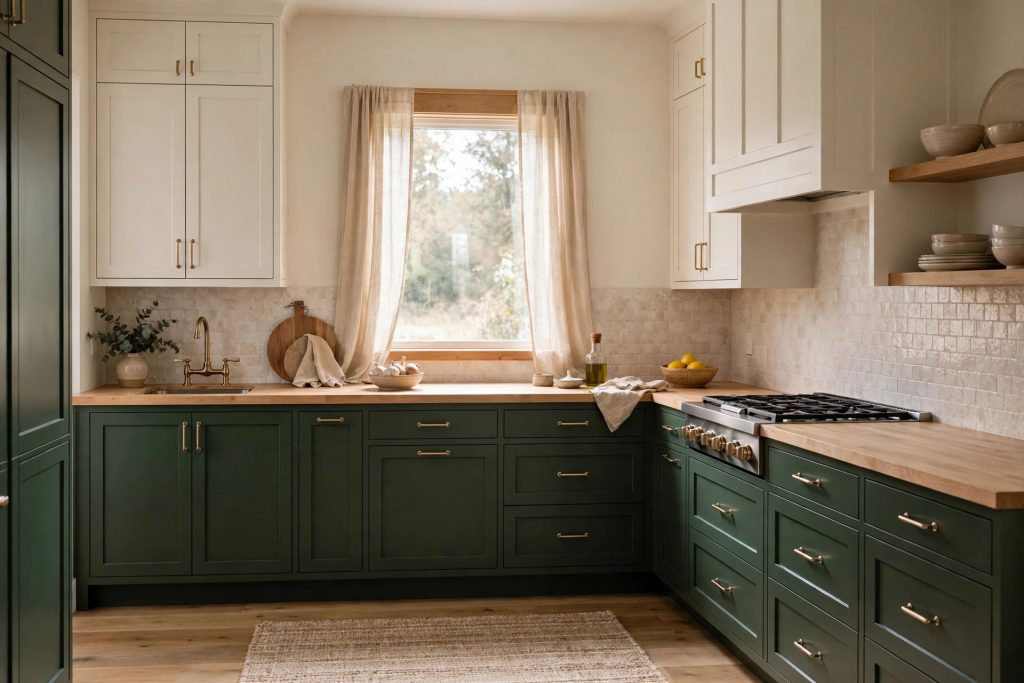
Try deep forest green for a richer, moodier kitchen. A deep green looks especially good in kitchens with decent natural light, where it reads lush rather than dark. Cream walls and light counters keep it balanced, and brass hardware glows against it in the evening. It is a confident choice, but one that usually feels timeless rather than trendy.
Let natural wood cabinets bring the warmth. Light oak or warm walnut cabinets give you color, texture and warmth in a single finish. Wood tends to soften a room full of hard surfaces, and it hides small marks gracefully. Pair it with simple warm white walls and the wood becomes the whole story.
Pick a muted greige when you cannot decide. Greige, that soft blend of gray and beige, suits kitchens that get mixed light through the day because it shifts gently with the sun. It is warmer than gray and calmer than beige, and it sits quietly behind almost any accent color. Think of it as the neutral that never argues with anything.
Wall Colors That Flatter Cabinets
Walls are the backdrop, and the right backdrop can make ordinary cabinets look expensive. The trick is choosing a wall color that supports the cabinets instead of competing with them for attention.
Warm whites
Paint walls a creamy warm white behind wood cabinets. A soft cream wall lets natural wood keep the spotlight while adding its own gentle warmth. The combination usually feels cozy in the morning and calm by lamplight. It is one of the easiest pairings to live with long term.
Use warm white walls to lift sage cabinets. Sage can look a little flat against a cool white, but a warm white makes the green look fresher and cleaner. This pairing keeps the whole kitchen light while the cabinets carry the color. It works especially well in smaller kitchens where every bit of brightness counts.
Layer warm white walls with warm white cabinets. Tone on tone sounds risky, but slightly different whites for walls and cabinets create a soft, seamless look. The difference shows up in changing light, which keeps the room from feeling flat. Texture from wood, linen and stone does the rest of the work.
Soft greens
Try pale sage walls with warm white cabinets. Flipping the usual scheme works beautifully when your cabinets are plain and your walls can take the color. A pale green wall feels fresh and garden inspired behind clean white cabinetry. Keep counters light and the room stays airy rather than busy.
Choose a soft eucalyptus tone with natural wood. Eucalyptus sits between green and blue, and against warm wood it usually reads calm and a little coastal. It is a lovely choice if your kitchen gets strong sun, since the cool tone balances the heat of the light. A few cream textiles soften the pairing even further.
Two-Tone Kitchens
Two-tone cabinets give you the best of both worlds, light where you need brightness and depth where you want grounding. These combinations are forgiving, practical and surprisingly easy to plan.
Pair warm white uppers with deep green lowers. Light cabinets at eye level keep the room feeling open, while the deeper color below grounds the space and shrugs off scuffs and splashes. This is the classic two-tone layout for a reason, and it suits most kitchen shapes. Brass handles help the two halves feel like one scheme.
Flip it with painted uppers and wood lowers. If your lower cabinets are good wood, keep them and paint only the uppers in warm white or sage. You get a fresh look for roughly half the painting work. The wood below adds warmth right where hands and feet tend to gather.
Give the island its own color. A deep green, inky blue or warm clay island against otherwise neutral cabinets creates a focal point without committing the whole room. It is also the easiest piece to repaint later if your taste changes. Matching the island to a blind, a stool or a pendant shade ties it in quietly.
Combine sage lowers with warm white uppers. This softer version of two-tone feels gentle and garden fresh, especially with light wood counters running across both. Because both colors are calm, the kitchen reads as one peaceful scheme rather than two halves. It is a good pick for open plan spaces that flow into a living area.
Use two shades from the same family. A pale green on the uppers and a mid green on the lowers gives you depth without any clash, because the undertones already agree. The effect is subtle in daylight and richer in the evening. It tends to look designed rather than decorated, which many people prefer.
Metals and Hardware Finishes
Hardware is the jewelry of the kitchen, and the finish you choose can warm a cool scheme or sharpen a soft one. These are the metals that usually earn their keep.
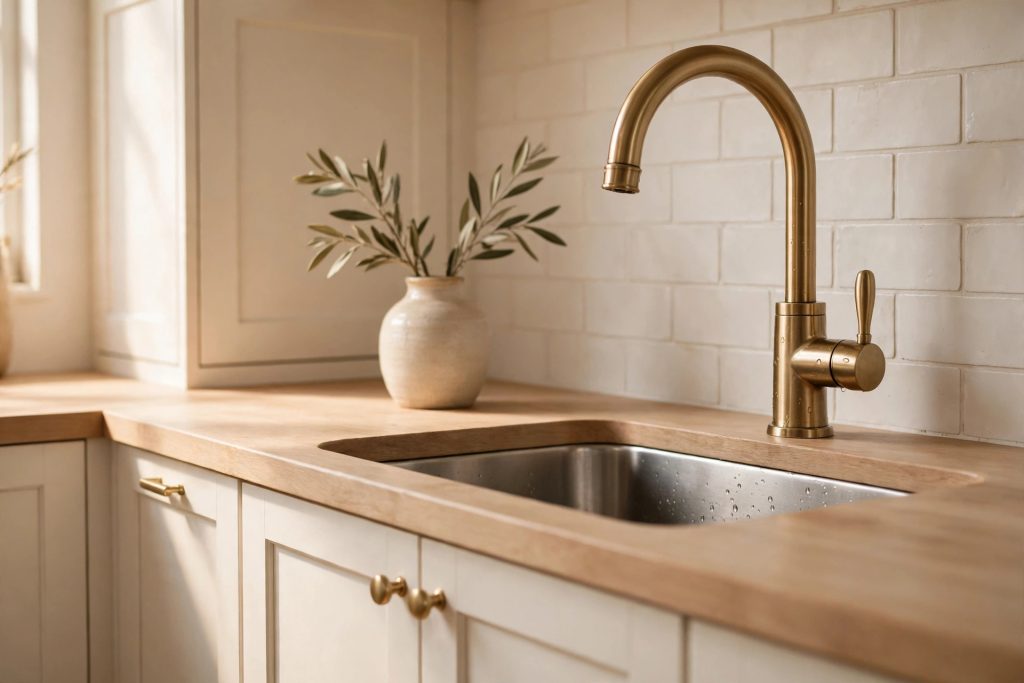
Choose brushed brass when you want warmth. Brushed brass has a soft, satin glow rather than a shiny glare, so it suits calm kitchens beautifully. It flatters sage, deep green, warm white and wood, which is nearly every color on this list. Matching the faucet to the handles makes the whole scheme feel deliberate.
Add matte black for gentle contrast. Black handles and faucets give pale cabinets definition and stop an all light kitchen from washing out. The contrast is crisp but not harsh, and it hides fingerprints better than most polished finishes. A little black goes a long way, so a few key pieces are usually enough.
Try champagne bronze as the softer middle ground. If brass feels too yellow and chrome feels too cold, champagne bronze sits happily in between with a muted, rosy warmth. It pairs well with greige and warm white cabinets. Because it is understated, it tends to age gracefully as trends move on.
Mix two metals, but give one the lead role. A kitchen can hold brass handles and a black faucet happily, as long as one metal clearly dominates and the other appears in just a few places. Repeating each finish at least twice makes the mix look intentional. Random one off finishes are what usually make a scheme feel unfinished.
Let warm metal repeat in the lighting too. Brass pendants or a warm metal rail above the counter echo the hardware and spread the warmth around the room. This small repetition is often what makes a kitchen feel pulled together in photos. Keep the bulb warmth consistent and the metals will seem to glow as one.
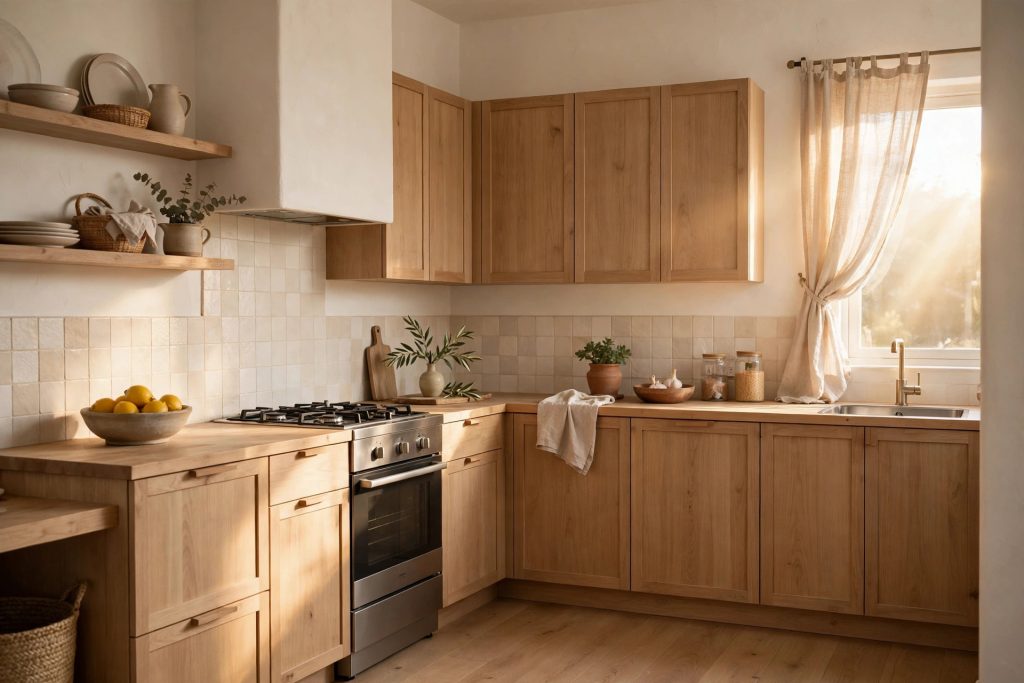
There is no single right answer here, and that is honestly the freeing part. Start with the cabinet color, let the walls support it, and finish with a warm metal that makes you happy every time you reach for a handle. A kitchen built on calm colors and warm touches is one you will still love cooking in years from now.

Leave a Reply